

Vet Visits and Grooming Days: Low‑Stress Handling at Home
Vet Visits and Grooming Days: Low‑Stress Handling at Home
Dogs often predict stressful events before they happen. Subtle cues can trigger anxiety long before a vet or grooming appointment begins. That anticipatory stress is manageable.
This guide shows you how to lower arousal at home. You will learn low-stress handling for dogs, environment setup, and short practice routines. Expect practical steps, safety limits, and a plan to build confidence.
Summary: A Clear Scenario and How to Address It
What Problem We Solve Today
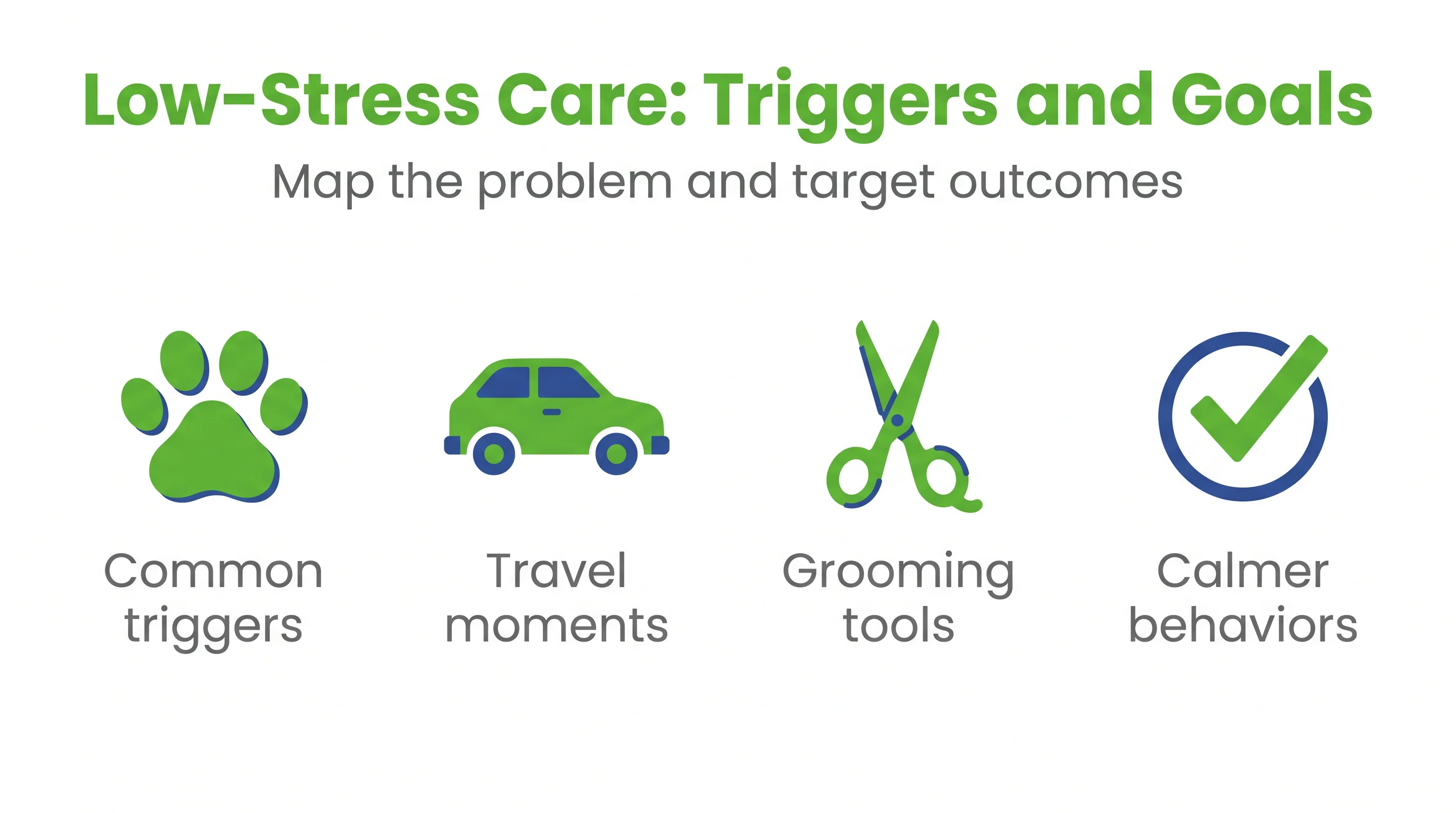
We focus on dog vet visit anxiety and dog grooming anxiety that begin at home. Common triggers include carriers, leashes, nail clippers, car doors, and clinic smells. We use desensitization and counterconditioning to reduce anticipatory stress.
Expected Outcome in 4–8 Weeks
With steady practice, many dogs show calmer travel, easier handling, and faster recovery after appointments. You should observe voluntary participation in simple handling exercises for dogs. Evidence suggests owner-prepared handling may ease clinical interactions[1].
Home Practice Plan: 10–15 Minutes, 4 Days/Week
Step 1: Pre-Cues and a Safe Zone
Designate a “safe station” at home using a non-slip mat and a stable platform. Add easy rewards, such as scatter feeding, to grow positive associations. Present a neutral “appointment cue” object, like a specific towel, only during calm practice. Feed while the cue appears, then remove it. Alternate rest days to prevent overexposure.
Step 2: Low-Stress Handling (Touches and Positions)
Teach a relaxed chin rest on your palm or a rolled towel. This creates a cooperative start button for touch. Touch one body area for one second, then treat. Gradually extend to three to five seconds. Keep your hands steady, movements slow, and surfaces stable. These handling choices align with low-stress handling guidance used in clinical settings[3].
Step 3: Simulated Exams and Grooming
Rehearse likely procedures: lifting lips, ear peeks, gentle paw spreads, brief tail lifts, and stethoscope touch. Pair every micro-step with high-value food. For nail care, begin with holding the paw, then presenting clippers, then one light tap. Keep success rates high. If your dog disengages, step back and shorten the sequence.
Step 4: Generalization With Clinic Smells and Sounds
Play low-volume clinic sounds and grooming noises while your dog relaxes and eats. Introduce mild antiseptic scents on a tissue near the mat, not on the dog. Practice calm car loading and seat settling for one to two minutes. Progress to short parking-lot visits. For persistent car tension, see travel and car anxiety strategies to smooth transport routines.
Quick Decision Guide (If X Happens, Do Y)
Mild Stress Signals
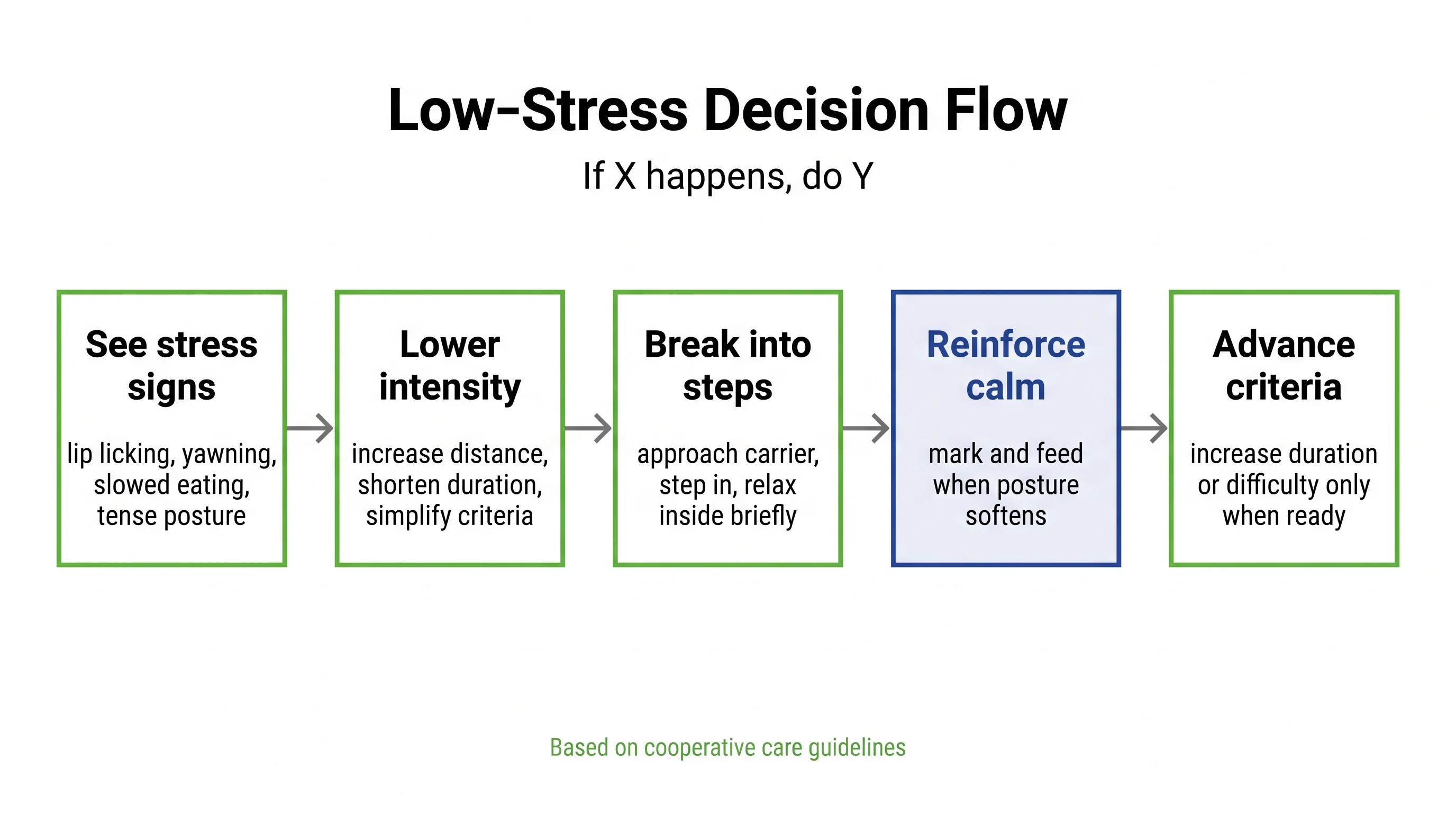
If you notice lip licking, yawning, or slowed eating, reduce intensity. Move farther from the trigger, shorten duration, and switch to easier steps. Reinforce calm posture, then end on success.
Refusal to Enter Carrier or Car
Break the task into tiny steps. Reinforce approaching the carrier, then stepping in, then relaxing inside. Use a mat and treats in the parked car. For motion concerns, review car acclimation and restraint options.
Sensitivity in Paws, Ears, or Tail
Rebuild trust with one-second touches followed by food, never forcing contact. Emphasize consent cues like a chin rest. Stable textures and calm posture support progress. Consider non-slip socks or light booties during practice sessions.
Heavy Panting or Trembling
Stop immediately and allow decompression. Offer water and a quiet space. Resume later at a much easier step. Discuss pre-visit pharmaceuticals or anti-nausea options with your veterinarian as part of a humane plan.
Mouthing the Equipment or Attempting to Flee
Use gates, a short hands-free leash, or a harness to prevent bolting. Keep equipment behind your back until the chin rest is offered. Reinforce stillness. Reset with a play break if arousal rises.
Progress Stalled for Two Weeks
Change one variable at a time. Upgrade treat value, reduce session length, or shift to a different room. Consider support from a credentialed trainer or behavior professional for tailored adjustments.
Comfort Gear and Environment That May Help
Anti-Slip Textures and Body Support
Non-slip mats, bath mats, or yoga mats reduce scrambling and brace strain. Use a rolled towel under the abdomen for stillness during brief exams. Stable footing often lowers effortful bracing that worsens stress displays.
Calming Wraps and Bandages
Gentle, evenly distributed pressure may enhance body awareness and relaxation for some dogs. Introduce wraps gradually during calm sessions, not only on appointment days. Many pet owners find Healers Therapeutic & Anxiety Front Body Wrap helpful for this task.
Hygiene and First Aid Support
Condition neutral handling to grooming tools, wipes, and gentle cleansers long before appointments. Practice brief paw and ear care outside of problem times. Keep HOCl wound cleanser, First‑Aid Kits, and soft paw protection on hand when sensitivity is a concern.
Safety and Welfare Boundaries
When to Pause or Split Sessions
Escalating signals—pupil dilation, pinned ears, tucked tail, or refusal to eat—mean you should stop. Return later with simpler steps. Keep sessions short, with frequent breaks and predictable exit cues.
When to Consult With a Professional
If reactions are intense, persistent, or related to pain, consult your veterinarian first. A qualified trainer or veterinary behaviorist can design a desensitization and counterconditioning plan and advise on pre-visit medications.
Monitoring: What to Observe at 7–14 Days and 4–8 Weeks
Early Indicators of Progress
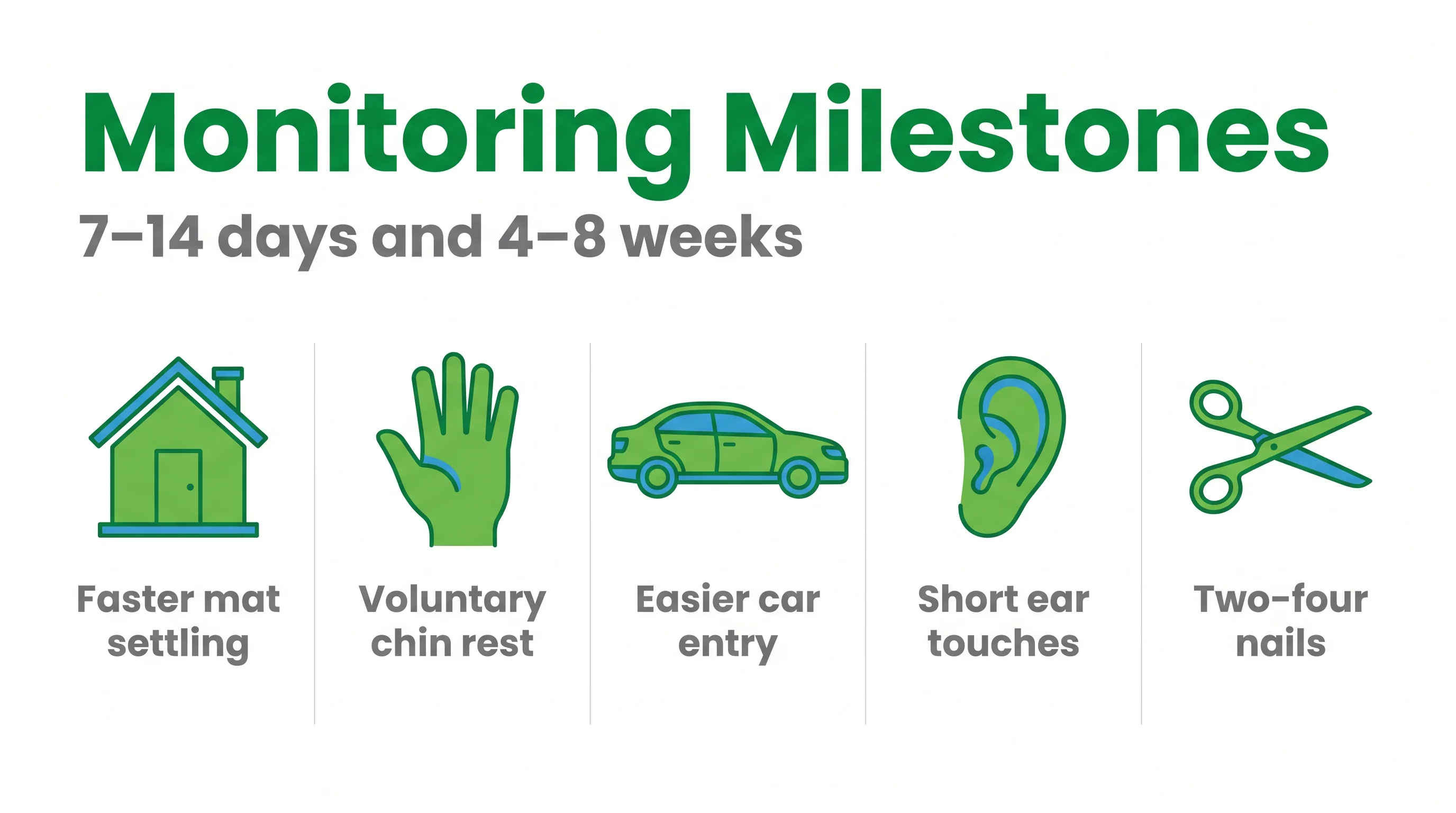
Look for quicker mat settling, softer posture, and voluntary chin rests. Eating resumes within seconds after brief handling. Car entry becomes easier with minimal coaxing. Your dog recovers faster after short practice drives.
Markers of Learning Consolidation
By weeks four to eight, expect calmer clinic arrivals and tolerated, short exams. Your dog accepts multi-second paw or ear touches and two to four nails clipped per session. Recovery times shrink consistently across environments.
State of the Evidence
What the Literature Suggests About Desensitization
Owner use of low-stress handling and cooperative care may improve perceived appointment quality and dog comfort. These strategies align with broader recommendations to reduce clinic stressors and guide gentle positioning[1][3].
Physical Handling, Wraps, and Multimodal Support
Educational resources describe stress-free handling protocols, though the research base remains emergent. Pressure wraps may help select dogs, particularly within comprehensive approaches that include training and environment management[4]. Wider pet-care settings report welfare and satisfaction gains from low-anxiety handling models[2].
Frequently Asked Questions
How long does it take to reduce my dog’s vet visit anxiety?
Early changes may appear within 1–2 weeks of consistent practice, while more durable improvements often take 4–8 weeks. Dogs with a long fear history may need a longer timeline and professional guidance.
What treats work best for low‑stress handling at home?
Use soft, high‑value foods your dog rarely gets, cut into pea‑sized pieces. If your dog has sensitivities, choose single‑ingredient options and adjust meal portions to prevent overfeeding.
Should I use an anxiety wrap for grooming practice?
Anxiety wraps may support body awareness and relaxation for some dogs when introduced gradually. Monitor for freer movement, softer posture, and ensure the fit does not restrict breathing or circulation.
Can I practice ear and paw handling if my dog had a recent injury?
Yes, but keep sessions very brief, avoid painful ranges of motion, and follow your veterinarian’s guidance. If discomfort appears, step back to non‑contact exercises and reintroduce touch later.
What if my dog refuses to enter the clinic despite home practice?
Consider parking‑lot sessions with distance from the entrance, short visits for treats only, and coordination with the clinic for minimal‑wait appointments. A credentialed trainer or behavior professional can tailor a plan.
Related Resources
Internal Links for Broader Context
- For a structured overview, see our orientation hub on dog anxiety types and priorities.
- Read about natural calming aids and body wraps as part of a multimodal plan.
- For car loading skills and transport comfort, visit travel and car anxiety strategies.
- If your dog is recovering, review post‑injury or post‑surgery anxiety support to coordinate care.
Downloadable Practice Templates (Summary)
Use daily logs to track triggers, handling durations, and recovery times. Note treat types, locations, and difficulty ratings. Summaries help you adjust steps weekly and share precise observations with your care team.
Conclusion
Reducing anticipation stress before vet and grooming days requires structured practice, calm environments, and patient progression. Short routines, clear consent cues, and appropriate calming gear for dogs can shift emotions from dread to manageable curiosity. Combine desensitization and counterconditioning with thoughtful safety limits and steady monitoring. Coordinate with your veterinary team and, when needed, a qualified behavior professional. Your dog’s comfort today builds resilience for tomorrow’s appointment.
References
- AD Carroll et al. (2022). Dog owner perceptions of veterinary handling techniques. Animals. View article
- MI Alkmim (2025). LOW-STRESS HANDLING EM PET SHOPS: IMPACTOS DO MANEJO DE BAIXA ANSIEDADE NO BEM-ESTAR ANIMAL, NA FIDELIZAÇÃO DE CLIENTES E NO …. International Integralize Scientific. View article
- L Sinnott (2025). Implementing strategies to reduce stress in the clinical setting. In Practice. View article
- SS Rosengren (2023). Stress Free Handling Methods of Dogs in the Veterinary Practice. 2023 - huveta.hu. View article


