

Urban Paw Safety: Hot Pavement, Ice Melt, and Sidewalk Hazards
Urban Paw Safety: Hot Pavement, Ice Melt, and Sidewalk Hazards
City blocks can be hard on paws. From scorching sidewalks to winter salts and gritty dust, urban surfaces deliver a steady stream of stressors that add up quickly. The good news: small, consistent habits dramatically reduce burns, chemical exposure, and micro‑abrasions.
This focused guide delivers city‑specific strategies you can use today—heat testing, route planning, rinse routines, and right‑sized boot choices—so every walk supports healthy, resilient paws.
Why Urban Paw Safety Matters
In dense neighborhoods, the combination of heat islands, traffic residues, and abrasive substrates turns everyday walks into a high‑exposure environment. For a broader framework, see our complete outdoor paw protection resource, then return here for city‑focused tactics to prevent cumulative damage.
Common city paw injuries: burns, chemicals, micro‑abrasions
Urban paw safety centers on three threats: thermal burns from sun‑loaded surfaces, chemical irritation from de‑icers and vehicle byproducts, and micro‑abrasions from aggregate, grit, and construction dust. Together, they weaken pad integrity and interdigital skin, increasing the risk of splits, hot spots, and infection.
Risk factors by season, surface, and time of day
Summer heat spikes and winter de‑icers elevate risk, while asphalt, blacktop, and metal grates heat faster than shaded concrete. Midday intensifies hazards; dusk and dawn reduce them. Clinical evaluations highlight how surface, season, and environment compound paw problems—making prevention essential.[2]
Heat Science 101: Hot Pavement and Roofed Surfaces
Urban heat islands exaggerate temperature gaps between air and ground. Assess conditions before paws touch pavement.
Back‑of‑hand heat test and IR thermometer tips
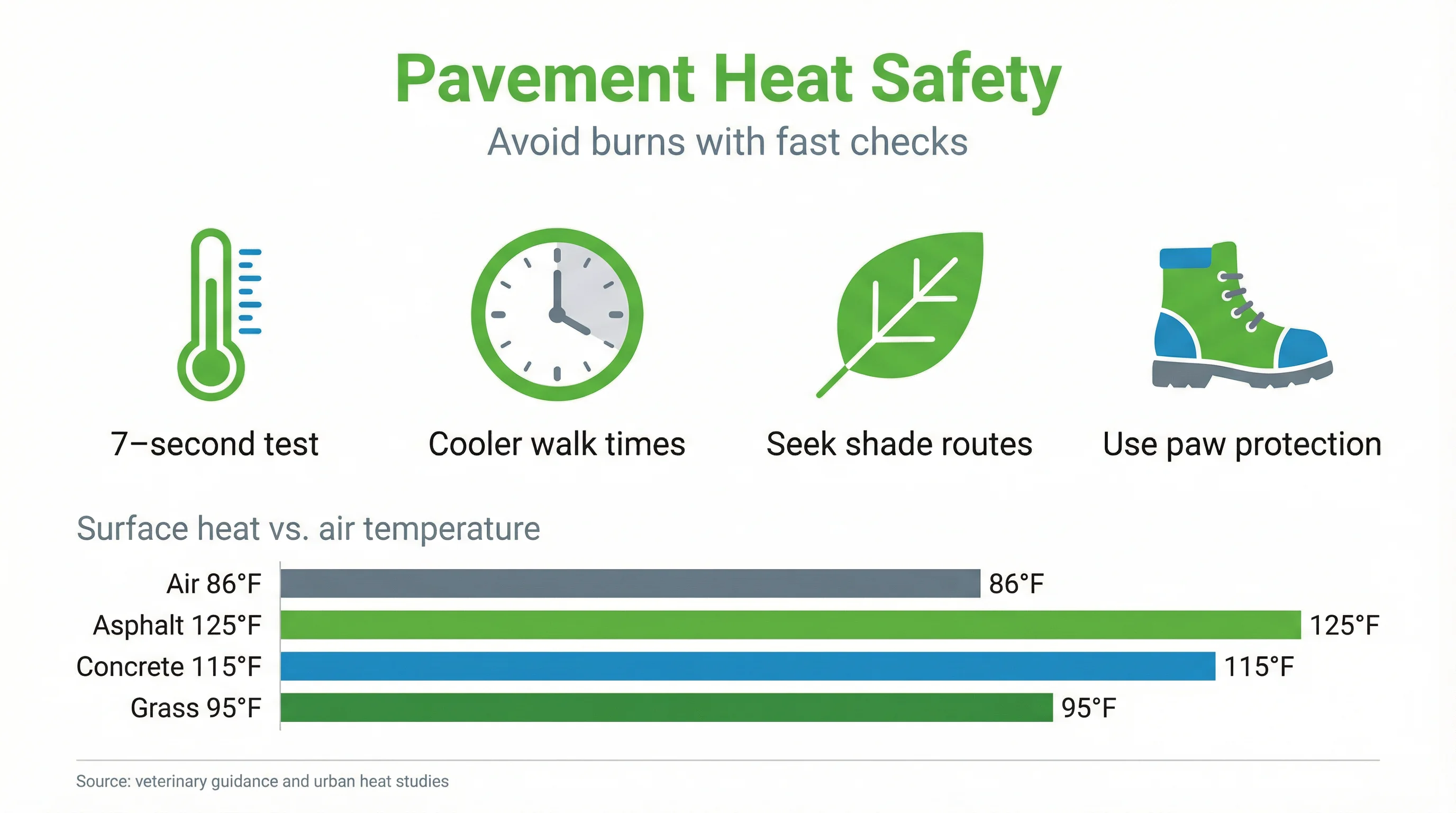
For how to test pavement heat for dogs, press the back of your hand to the surface for seven seconds. If you lift early, it’s too hot for paws. An affordable IR thermometer confirms hot pavement dog paws risks and helps log cooler routes over time.
Surface temps: asphalt vs. concrete vs. artificial turf
Asphalt absorbs heat fastest; concrete warms slower; artificial turf can trap radiant heat. Rooftops and parking decks often surpass street‑level temps due to reflected sun and limited airflow. Use this quick comparison during peak sun:
| Surface | Typical Behavior on Sunny Days |
|---|---|
| Asphalt/Blacktop | Heats rapidly; can exceed 125°F when air is ~86°F |
| Concrete | Moderate heating; cooler in shade, still risky in sun |
| Artificial Turf | Can run very hot; check frequently in direct sunlight |
Timing walks: shade mapping and heat islands
Plan city walks for early morning or later evening, and map blocks with consistent shade and tree cover. Parking lots, plazas, and rooftops intensify heat. For seasonal planning, see our Seasonal hazards and prevention checklist to avoid heat spikes and select cooler substrates.
Quick rule: if the surface fails the seven‑second hand test, switch to shade, grass, or boots—no exceptions.
Winter Risks: Ice Melt, Road Salt, and De‑icers
Cold weather swaps heat risk for chemical exposure, making rinse routines and protective layers critical.
How chlorides irritate pads and interdigital skin
Chloride‑based de‑icers draw moisture from skin and disrupt the lipid barrier. This stings broken skin and can trigger interdigital inflammation. Clinical guidance emphasizes checking paws frequently during winter conditions to prevent escalating irritation and splits.[2]
Safer de‑icer choices and route selection
Favor sidewalks maintained with pet‑labeled alternatives (urea blends) and avoid heavily salted curbs, intersections, and bus stops. Note which buildings overuse pellets. Use the Seasonal hazards and prevention checklist to prioritize cleaner, plowed routes and grass medians for safer dog ice melt safety.
Pre‑walk balms vs. boots: what actually helps
Balms form a temporary barrier but can attract grit and require reapplication. In heavy salt, well‑fitted dog paw protection boots provide superior protection and prevent licking of residues. For light salt exposure, combine balm plus prompt rinsing after the walk.
Sidewalk Hazards You Can’t See
Urban surfaces often harbor abrasive particles and invisible residues that irritate skin and weaken pads.
Micro‑abrasions from aggregate, grit, and construction dust
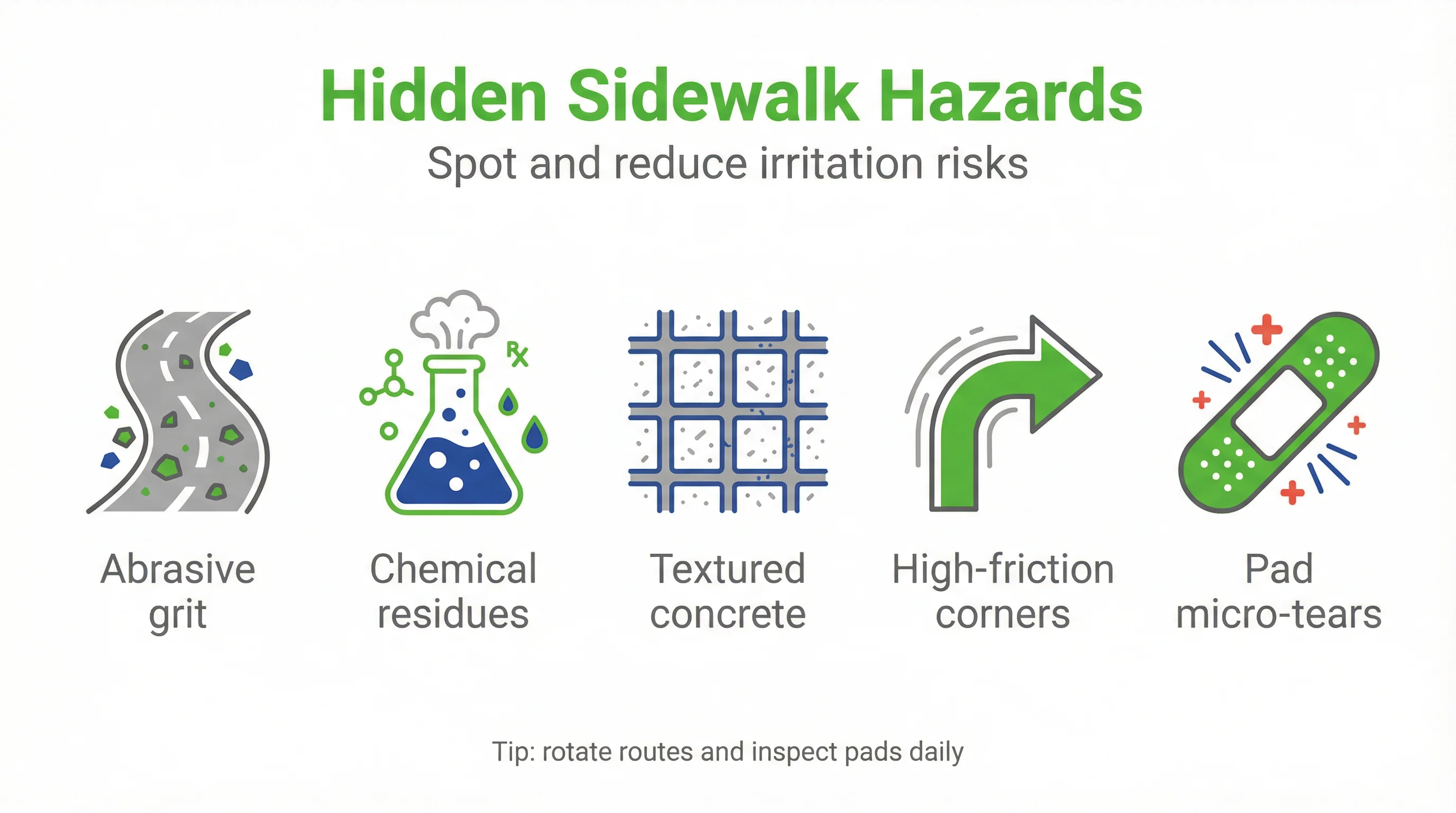
Fine grit and aggregate act like sandpaper, especially on high‑friction corners and textured concrete. Repeated exposure causes micro‑tears that worsen with heat or salt. Regular inspection and protection reduce cumulative damage and related dermatologic issues.[2]
Hidden risks: glass shards, metal grates, and potholes
Broken glass at curb lines, sharp gravel near work zones, and metal grates are common sidewalk hazards for dogs. Detour around active construction, cross streets at smooth crosswalks, and slow down near delivery zones, where debris accumulates.
Allergen and pollutant buildup on urban surfaces
Exhaust particulates, pollen, and mold cling to damp sidewalks and turf. Residues work into fur and interdigital spaces, provoking itching and licking cycles. Routine post‑walk rinses keep allergen loads down and reduce flare‑ups over time.
Route Planning for City Walks
Strategic routes minimize thermal and chemical stress while preserving exercise time.
Shade corridors, green strips, and cooler substrates
Prioritize tree‑lined blocks, building shade, and park edges. Favor concrete over blacktop and grass medians over salted curbs. On multi‑block routes, alternate surfaces to limit continuous exposure to any one hazard profile.
Avoiding hot spots: blacktop, parking lots, rooftops
Midday parking lots, open plazas, and rooftops intensify solar gain and radiant heat. Re‑route to shaded sidewalks, underpasses, or windward sides of tall buildings. Use alleys cautiously—check for glass and slick residues before proceeding.
Weather apps, heat indices, and paw safety thresholds
Combine air temperature, UV index, and surface checks to prevent hot pavement dog paws injuries. Prevention‑focused planning is associated with better welfare outcomes and fewer activity‑related injuries across canine cohorts.[4]
Post‑Walk Rinse and Inspect Routine
A quick, repeatable routine removes salts and grit before they cause problems.
Fast rinse sequence to remove salts and residues
For dog ice melt safety and urban grime, use this 90‑second sequence:
- Rinse paws with lukewarm water or wipe with a damp cloth.
- Spread toes; flush interdigital spaces and nail beds.
- Wipe wrists and hocks where splashback collects.
- Pat dry thoroughly.
Drying, pad checks, and when to use HOCl cleanser
After drying, check pads for thinning skin, discoloration, or flaking; inspect for lodged grit. If redness or minor abrasions are present, apply a gentle hypochlorous acid cleanser and allow to air‑dry before any protective covering.[3]
Boot cleaning and maintenance best practices
Brush soles to remove grit, then hand‑wash in mild soap, rinse well, and air‑dry away from heat. For care schedules and troubleshooting, see Boot cleaning and maintenance to prevent odor, preserve traction, and extend boot life.
Choosing Everyday Boots vs. Medical Boots
Match boot type to the job—daily protection differs from therapeutic support.
Fit, materials, and breathability for daily use
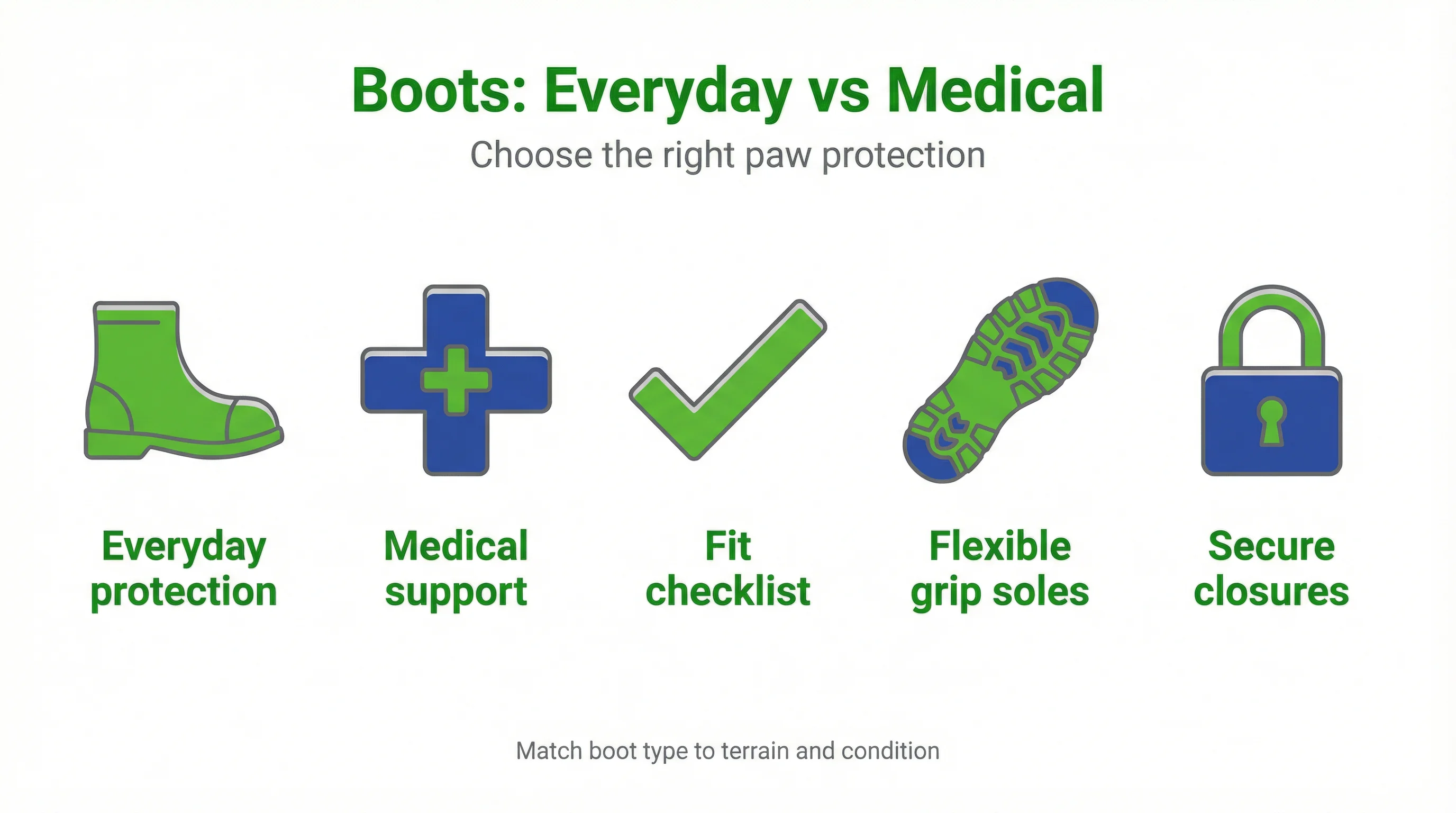
Look for breathable uppers, secure closures, and flexible, grippy soles. Properly fitted dog paw protection boots reduce abrasion without compromising gait mechanics; poor fit can alter loading patterns and slip resistance.[1]
When to switch to medical boots for injuries
For pad splits, sutured wounds, or post‑procedure recovery, use medical boots that stabilize and protect bandaging. Supportive protection from physical stress helps irritated pads heal efficiently and reduces re‑injury risk during controlled activity.[3]
Sizing, acclimation, and gait safety tips
Measure width with weight on the paw, test indoors first, and reward short practice sessions. Choose lightweight, breathable options for daily city walks—many pet owners find Urban Walkers III helpful for this task. Recheck fit seasonally as nails, coat, and pads change.
First‑Aid Basics for Paw Irritation and Minor Wounds
Early action limits damage and speeds recovery.
Signs of burns, chemical irritation, and abrasions
Watch for limping, licking, pad discoloration, flaking, interdigital redness, and sensitivity on touch. Blistering or a strong aversion to particular substrates signal thermal or chemical injury requiring prompt cooling, cleansing, and protective measures.
Immediate steps: cool, cleanse, protect
- Cool: flush with room‑temperature water for several minutes—avoid ice.
- Cleanse: use gentle, non‑stinging wound cleanser; blot dry.
- Protect: cover with a breathable boot or light bandage; restrict high‑friction activity until comfortable.
When to see a veterinarian
Seek care if pain persists, bleeding or blistering appears, swelling spreads, or the paw shows foul odor or discharge. A clinical evaluation identifies underlying causes and guides appropriate protection and follow‑up care.[2]
Frequently Asked Questions
How hot is too hot for my dog’s paws on pavement?
If you cannot hold the back of your hand on the surface for 7 seconds, it’s too hot. Asphalt can exceed 125°F on 86°F days; use shade, grass, or boots.
Are pet‑safe ice melts completely safe for dogs?
They are generally less irritating but not risk‑free. Minimize exposure, avoid ingestion, and rinse paws after walks to remove any residues.
What’s the best way to rinse and dry paws after urban walks?
Use lukewarm water or a damp cloth to remove salts and grime, pat dry between toes, and inspect pads. Apply gentle wound cleanser if you see irritation.
Do dogs need boots in summer and winter?
Boots can prevent burns in summer and salt irritation in winter, and also guard against micro‑abrasions year‑round. Choose breathable everyday boots and ensure proper fit.
How can I plan a safer city walking route?
Favor shaded sidewalks, grass medians, and cooler substrates. Avoid blacktop at peak heat, check heat index apps, and walk during early morning or late evening.
Conclusion
Urban paw safety is built on consistent habits: test surfaces, plan cooler routes, rinse and inspect, and protect when conditions demand. Heat and chemicals are predictable; preparation neutralizes both. By combining practical tools—IR checks, shade mapping, quick cleanses, and well‑fitted everyday boots—you can prevent burns, reduce chemical exposure, and stop micro‑abrasions from compounding. Keep your routine short, evidence‑informed, and repeatable. City walks should strengthen health, not wear it down.
References
- B Bieber et al. (2022). Changes in ground reaction forces and center of pressure parameters of paws when wearing dog boots in dogs. Frontiers in veterinary …. View article
- I Wiberg (2024). The Influence of Risk Factors on the Health of Dogs' Paws and the Importance of Clinical Evaluation of the Paw in Clinical Practice. 2024 - search.proquest.com. View article
- M Utzmann et al. (2025). Clinical Signs and Treatment Responses of 14 Dogs With Split Paw Pad Dermatosis. Veterinary …. View article
- A Essner et al. (2024). Injuries and Associated Factors in Swedish Sporting and Utility Trial Dogs—A Cross-Sectional Study. Animals. View article


