%27%3E%3Crect%20x=%27-35%27%20y=%27-26%27%20width=%2770%27%20height=%2752%27%20rx=%2713%27%20fill=%27%2364BA5D%27/%3E%3Cpath%20d=%27M-10%2024l0%2016l16%20-16z%27%20fill=%27%2364BA5D%27/%3E%3Cg%20fill=%27%23fff%27%3E%3Cellipse%20cx=%270%27%20cy=%277%27%20rx=%2712%27%20ry=%2710%27/%3E%3Cellipse%20cx=%27-13%27%20cy=%27-8%27%20rx=%275%27%20ry=%276.5%27/%3E%3Cellipse%20cx=%27-5%27%20cy=%27-15%27%20rx=%275%27%20ry=%276.5%27/%3E%3Cellipse%20cx=%275%27%20cy=%27-15%27%20rx=%275%27%20ry=%276.5%27/%3E%3Cellipse%20cx=%2713%27%20cy=%27-8%27%20rx=%275%27%20ry=%276.5%27/%3E%3C/g%3E%3C/g%3E%3Cpath%20id=%27b%27%20d=%27M58%20100a42%2042%200%200%200%2084%200%27%20fill=%27none%27/%3E%3Ctext%20font-family=%27Arial,Helvetica,sans-serif%27%20font-weight=%27bold%27%20font-size=%2711%27%20fill=%27%2364BA5D%27%20letter-spacing=%272.5%27%3E%3CtextPath%20href=%27%23b%27%20startOffset=%2750%25%27%20text-anchor=%27middle%27%3EHEALERS%20PET%20CARE%3C/textPath%3E%3C/text%3E%3C/svg%3E)

Separation Anxiety: A 30‑Day Starter Plan for Calmer Alone Time
Separation Anxiety: A 30‑Day Starter Plan for Calmer Alone Time
Separation distress can improve when training is simple, repeatable, and measurable. This plan narrows to one goal. It helps your dog stay calm when you step out.
Why this matters is clear. Calm, confident exits protect your dog’s welfare and your schedule. Use this as your step‑by‑step guide. For wider context, visit our Dog Anxiety Support orientation hub. You will learn how to set a baseline, run tiny departures, use enrichment, and track progress.
Why this 30‑day plan focuses on tiny, repeatable wins
The single scenario we’re solving: distress when left alone
This protocol targets one behavior pattern. Your dog shows anxiety when you leave home. We limit variables and train only the alone-time scenario. That tight focus supports cleaner data and faster learning.
How success is defined: relaxed initiation + steady duration
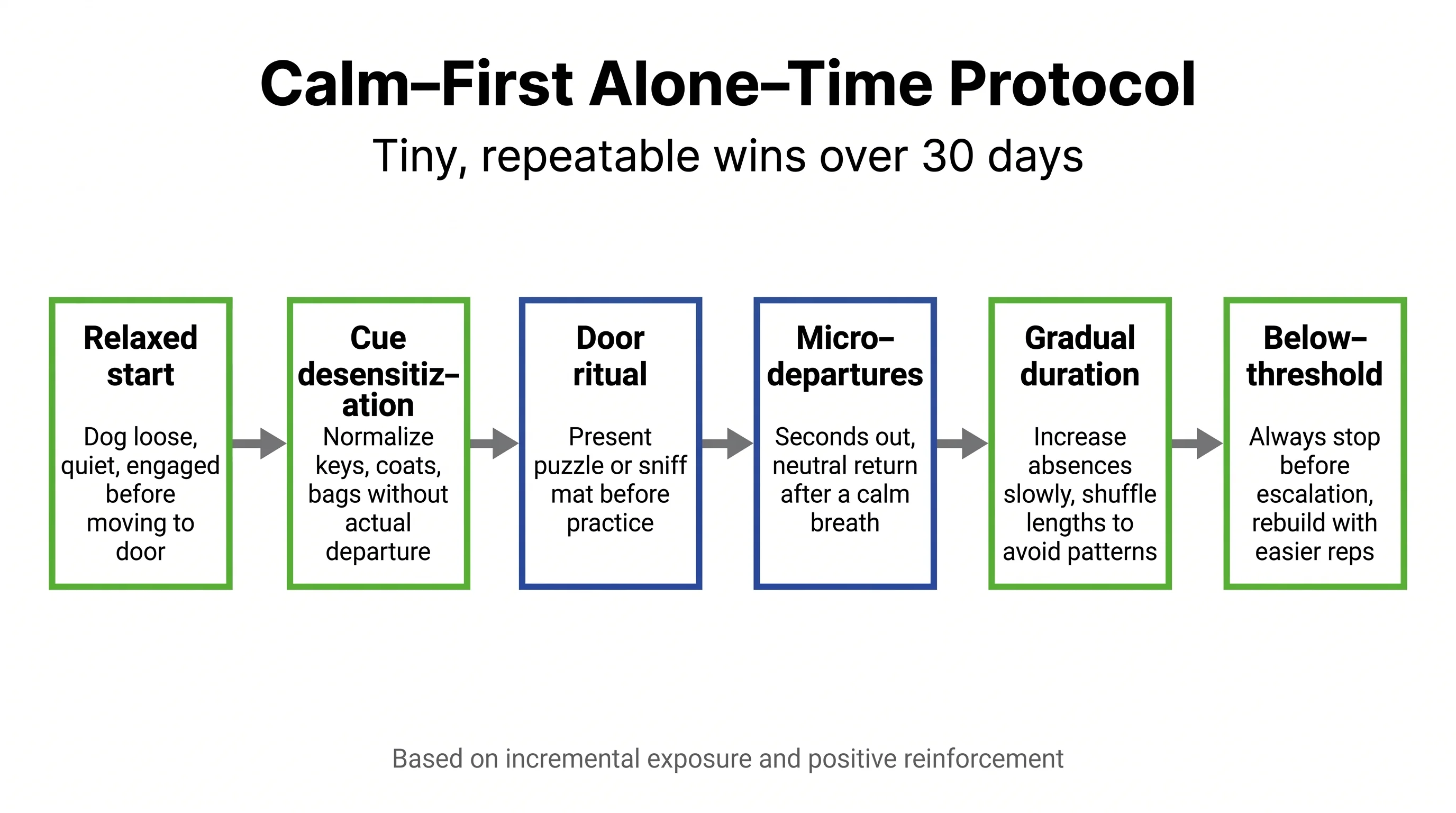
Success begins with a relaxed start. Your dog remains loose, quiet, and engaged as you move toward the door. Then duration builds gradually without vocalizing, pacing, or frantic monitoring. Calm starts predict calm stretches.
Set your baseline in 2 days
Home alone baseline test (video + checklist)
Set up a camera with audio. Do one short absence at your normal routine. Capture first five minutes. Note earliest stress signs, peak intensity, and when distress eases. Keep this test brief for safety.
Calm triggers and stress indicators to log
List cues that raise arousal: keys, shoes, coat, or phone in pocket. Track stress indicators: fixed staring, panting, whining, pacing, door scratching, and yawns. These markers will guide distance, duration, and difficulty.
Days 1–10: Build calm at the door without leaving
Pattern training: approach, handle keys, step away
Run 10–15 micro-reps daily. Approach the door, touch the handle, jingle keys, and return to sit. Pair with quiet praise and a small treat toss away from the door. End before arousal rises.
Enrichment routine that starts before you exit
Establish a predictable pre-exit ritual. Present a simple food puzzle or sniff mat two minutes before any practice. This canine enrichment for anxiety may lower anticipatory arousal and build calmer alone time for dogs.
Days 11–20: Micro‑departures that feel boring
5–60 second absences with clean returns
Begin with 5–10 seconds out the door. Return quietly, wait for a breath of calm, then reward on a bed away from the entry. Keep exits and returns neutral. Aim for uneventful, boring practice.
Session structure: reps, rest, and recordkeeping
Run 3–5 mini-sessions per day. Each includes 4–6 exits with 30–60 seconds of rest between. Record duration, dog’s body language, and enrichment used. Data guides adjustments and reduces guesswork in dog separation anxiety training.
Days 21–30: Extend to meaningful minutes
Stair‑step durations while avoiding stress spikes
Increase absences in small increments: 30 seconds to 45, then 60, then 90. Shuffle durations to avoid predictable patterns. If your dog stays loose and quiet, nudge by 10–20 percent per session.
Fallback rules if the dog vocalizes or paces
If whining, panting, or pacing begins, shorten the next rep immediately. Insert two easier repetitions before resuming longer trials. The goal is clean, calm repetitions that rewire expectations through gradual desensitization for dogs.

Quick decision guide
If panting or whining appears in under 10 seconds, step back
End the repetition and return before escalation. Resume with shorter durations or just door-touch patterns. Protect confidence by ensuring your dog rehearses calm behaviors, not distress responses, during each training set.
If food puzzles are ignored, reduce duration by 50 percent
When your dog declines a usually valued puzzle, arousal is likely too high. Halve the current absence length. Rebuild at that easier level until eating resumes promptly after your exit and return.
If calm holds for three sessions in a row, increase by 20–30 percent
Use a modest increase to prevent threshold jumps. Vary durations around the new level. For example: 60, 45, 75 seconds. Then test 90 seconds. Maintain more easy wins than hard asks each day.
If the time of day raises anxiety, train in a different window
Traffic, deliveries, and hallway activity may shift by hour. Select quieter periods to stack calm wins. Later, generalize to busier windows with added sound masking and easier durations to preserve confidence.
If hallway noises trigger stress, add background sound
Use consistent sound masking at low volume. A fan or neutral playlist may soften sudden noises. Pair with simpler durations. Gradually reduce reliance as your dog demonstrates stable calm across sessions.
If your dog shadows you, reinforce settling on a bed
Teach a mat relaxation routine. Reward head-down, hip-sit, or chin-on-paws positions. Start while you move within the room. Progress to one-step door approaches before any exits to decouple your movement from worry.
If a scare causes regression, step back two to three levels
Unexpected events happen. After a scare, treat the next 48 hours as recovery. Work shorter durations and increase reinforcement. Reclaim recent wins before testing former thresholds. Protect momentum by rebuilding systematically.
Monitoring and metrics of progress
What to observe at 7–14 days
Look for faster recovery after exits, resuming puzzle engagement within 15–30 seconds, and fewer vocal bursts. Video may show more lounging and less door-focused scanning. Shorter, cleaner sessions indicate learning is taking hold.[3]
What to observe at 4–8 weeks
Targets include 3–10 minutes of quiet alone time, stable eating of enrichment, and relaxed body language at the door. Consistent improvement often follows structured, threshold-aware plans and automated shaping strategies.[1]
Practical safety boundaries
Warning signs that require a pause or consultation
Stop and consult your veterinarian or a certified behavior professional if you see self-injury, persistent refusal to eat, continuous howling, or destructive escape attempts. Some cases benefit from a multimodal plan, including medication support.[2]
Exit-proof environment: safe departure and appropriate chews
Dog‑proof doors and windows. Use baby gates or a safe room. Offer vet‑approved chews sized to prevent choking. If your work schedule is demanding, see Crate and Alone‑Time Training for Working Households for management options and routine planning.
What the evidence says (with caution)
Gradual desensitization and counterconditioning
Evidence supports incremental exposures below threshold combined with positive outcomes. This learning model addresses the dog’s prediction errors around departures and returns. Progress is typically strongest with clear criteria and consistent reinforcement.[3]
Food enrichment and scent activity
Structured feeding puzzles and light scent work may reduce predeparture arousal and occupy the initial minutes post-exit. They should complement, not replace, desensitization steps for separation-related distress.[3]
Gentle pressure and body wraps
Evenly distributed pressure may help some dogs downshift during quiet periods. It is best used as an adjunct within a broader plan. Many pet owners find Healers Therapeutic & Anxiety Front Body Wrap helpful as they rehearse calm. Results vary across individuals and programs.[4] For more context on adjunct tools, see Natural Calming Aids and Body Wraps: What Helps and When.
Nutritional and anti-inflammatory support
Veterinary guidance is recommended before adding supplements or medication. Some cases may benefit from pharmacological support to reduce arousal and enable learning, especially during early stages or severe presentations.[2]
30‑day daily plan at a glance
Week 1: pre‑departure rituals and neutral signals
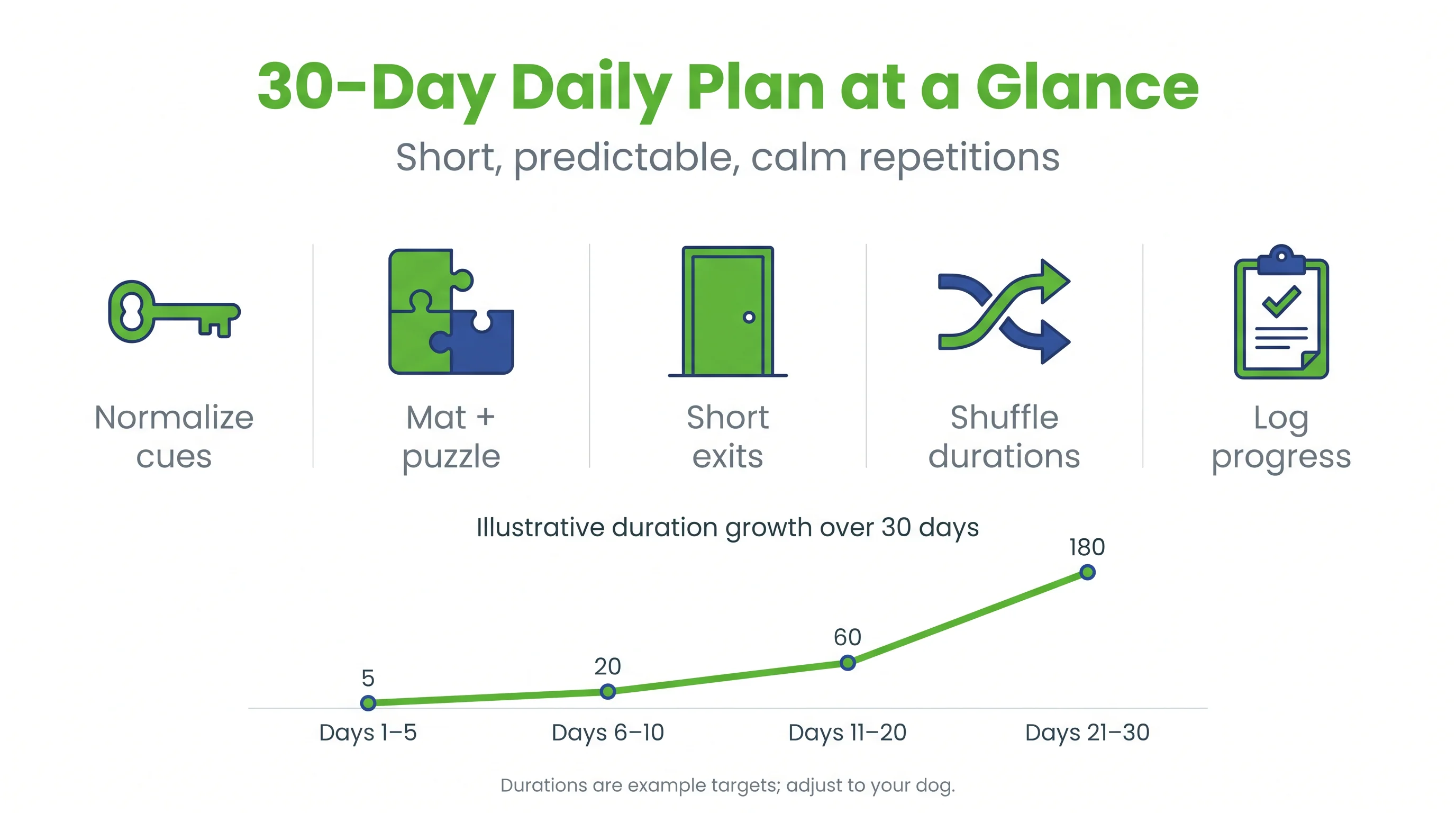
Normalize cues by touching keys, coats, and bags throughout the day without leaving. Pair with mat relaxations and small treats. Introduce a simple puzzle pre‑practice. Keep all repetitions under the earliest stress threshold.
Week 2: micro‑exits 5–30 seconds
Run several short sessions with four to six departures daily. Use clean, boring exits and returns. Shuffle durations. Log body language and enrichment response. Link back to fundamentals via the Dog Anxiety Support: An Orientation Hub for Pet Parents when troubleshooting thresholds.
Week 3: 30–180 seconds with variability
Build toward one to three minutes while protecting success streaks. Use variable durations with more easy than challenging repetitions. Maintain your enrichment routine and reinforce relaxed starts at the door before each exit.
Week 4: 3–10 minutes with generalization
Extend to meaningful minutes in quieter time windows. Then generalize to busier periods by shortening durations and adding sound masking. When stable, add small context changes like different shoes or bags to proof cues.
Frequently Asked Questions
How long does it take to see improvement with separation anxiety?
Early changes may appear within 1–2 weeks if sessions stay under the dog’s stress threshold. More stable alone time often takes several weeks to months depending on severity.
Should I leave my dog to ‘cry it out’ during training?
Letting distress escalate can sensitize the dog. Evidence suggests keeping departures below the point where whining, frantic pacing, or drooling begins may support better outcomes.
Do enrichment toys actually help with separation anxiety?
Food puzzles and scent work may reduce pre‑departure arousal and occupy the first minutes after you leave. They work best alongside gradual desensitization steps.
Can anxiety wraps calm my dog when left alone?
Gentle, evenly distributed pressure may support relaxation for some dogs. Use wraps as an adjunct to training rather than a standalone fix, and monitor for comfort and fit.
What if my schedule makes daily training hard?
Short, consistent sessions (5–10 minutes) can still help. Consider management like dog sitters or day care to avoid long absences that exceed your dog’s current threshold.
Conclusion
This 30‑day starter plan builds calm through simple, repeatable steps. You measure, adjust, and protect confidence at every stage. Keep durations below your dog’s threshold and reinforce relaxed starts. If progress stalls, reduce difficulty and rebuild wins. When needed, consult a veterinarian or behavior professional for tailored support. With consistency and data-driven decisions, many dogs learn that departures predict safety, comfort, and quiet recovery.
References
- P Mundell et al. (2020). An automated behavior-shaping intervention reduces signs of separation anxiety–related distress in a mixed-breed dog. Journal of veterinary behavior. View article
- T Meneses et al. (2021). Development of and pharmacological treatment options and future research opportunities for separation anxiety in dogs. Journal of the …. View article
- BJ Burton (2018). Literature Review: Behavior Modification for Canine Separation Anxiety. IAABC Journal. View article
- IR Dinwoodie et al. (2022). An investigation into the effectiveness of various professionals and behavior modification programs, with or without medication, for the treatment of canine fears. Journal of Veterinary Behavior. View article


