

Senior Dogs: Nighttime Restlessness and Cognitive Changes
Senior Dogs: Nighttime Restlessness and Cognitive Changes
Even-keeled seniors can become agitated after dusk. That shift feels sudden, and it often disrupts the entire household. If you notice senior dogs nighttime restlessness, you are not alone.
Targeted routines can reduce evening anxiety and protect sleep. This guide explains sundowning-like behavior in older dogs, with practical actions you can start tonight. If you need broader context first, visit our foundational anxiety guide.
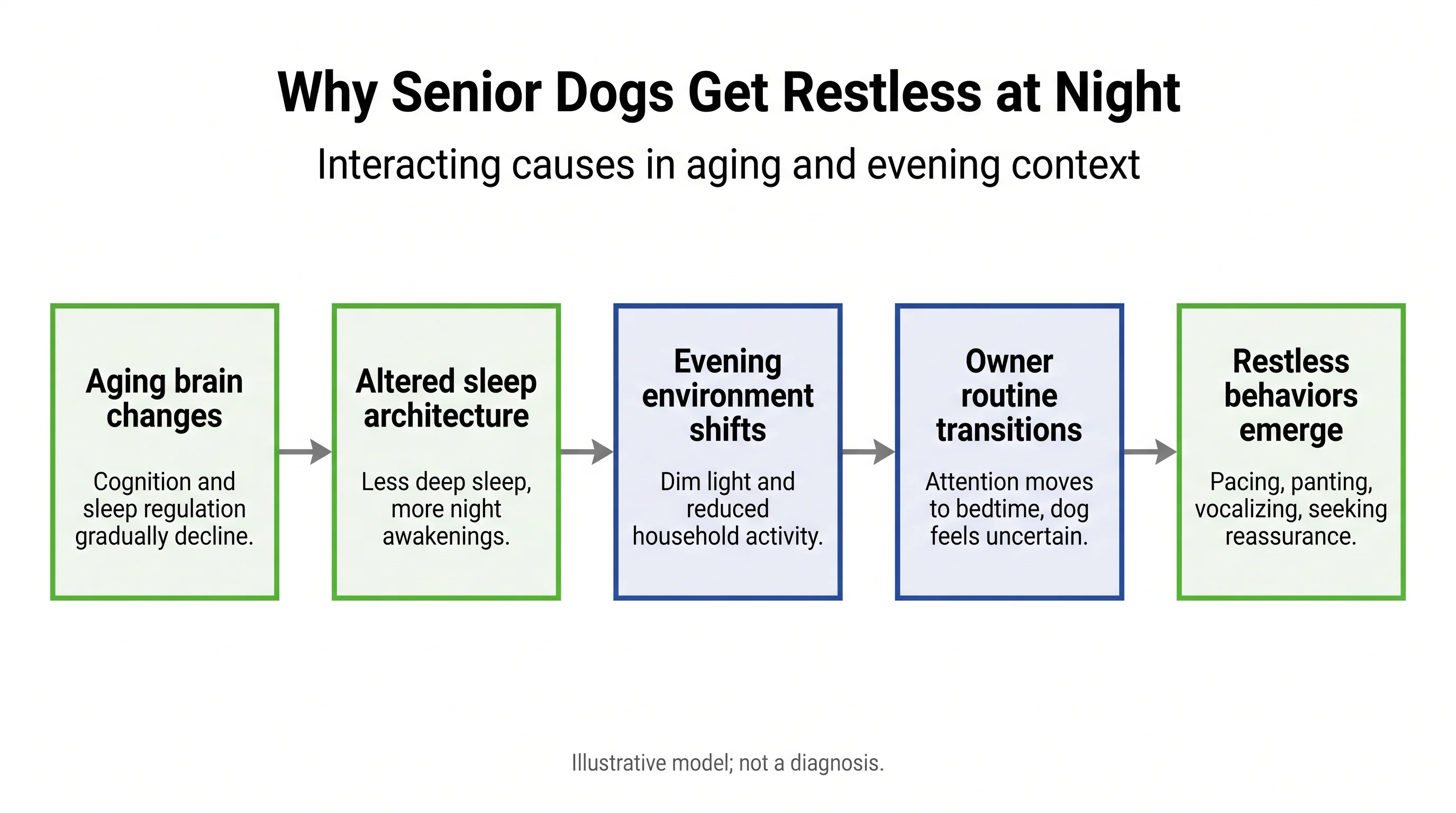
Why senior dogs get restless at night
Cognitive changes vs. medical discomfort
Older dogs may show signs consistent with canine cognitive dysfunction. These include confusion, altered interaction, and a disrupted sleep–wake cycle with nighttime restlessness and daytime napping. Such signs can appear gradually and worsen over time.[3] Recent guidelines emphasize evaluating multiple behavior domains, including night behaviors, to diagnose and monitor cognitive decline thoughtfully.[1]
Environmental and routine factors that amplify anxiety
Dim light, lower household activity, and owner attention shifting to bedtime can create uncertainty. Aging also alters sleep architecture, which may heighten arousals and reduce deep sleep continuity, compounding evening sensitivity.[2] Small changes to cues, timing, and comfort often reduce older dog anxiety at night.
Focused scenario: Your older dog paces, pants, and vocalizes after dusk
A 7–10 pm pattern that disrupts sleep
Many caregivers report a predictable window. As daylight fades, the dog begins pacing, panting, or vocalizing. This dog sundowning pattern may reflect fading sensory input, cognitive fatigue, or unmet needs. The best response is calm structure: predictable cues, gentle activity, and deliberate wind-down.
Quick decision guide
5–7 common nighttime situations and immediate steps
- If pacing starts after dinner, then offer a five- to ten-minute sniff walk or garden “find-it” to discharge energy and elevate mood.
- If panting continues indoors, then check temperature, provide water access, and add a fan or cooling pad. Offer a bathroom break before settling.
- If vocalizing increases with darkness, then turn on a warm lamp or nightlight. Add soft white noise to mask minor sounds.
- If your dog stares at doors or seems lost, then calmly guide to a familiar bed using a leash. Keep directions short and consistent.
- If attention-seeking escalates, then cue a practiced mat settle with high-value chews or a stuffed puzzle feeder to occupy and soothe.
- If startling at household sounds, then close curtains, reduce visual flow, and start low-volume background audio before sundown.
- If agitation persists beyond 20–30 minutes, then pause interaction. Sit nearby, breathe slowly, and avoid exciting play or new cues.
Sleep hygiene that may calm sundowning-like anxiety
Light, sound, and scent cues
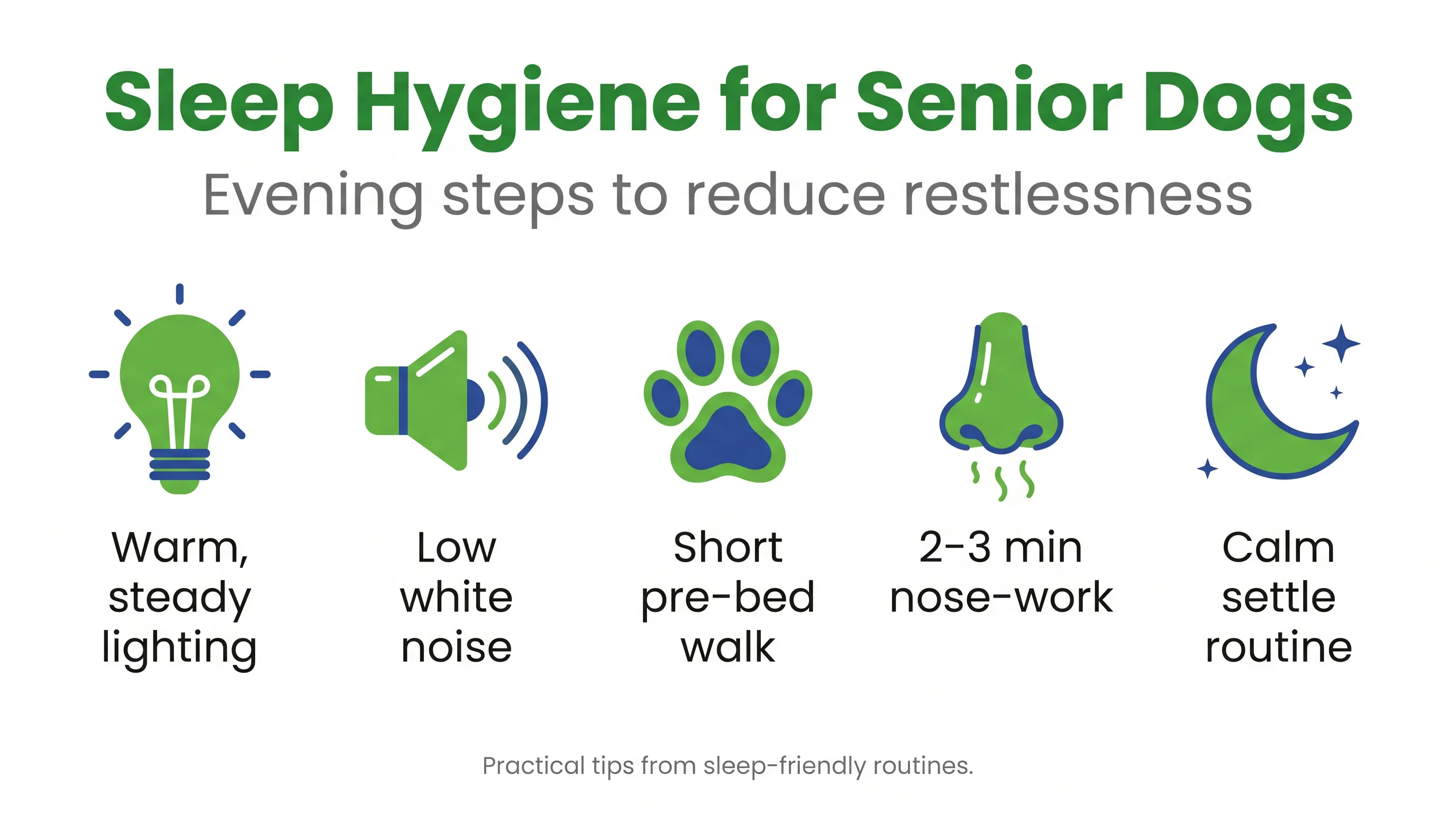
Anchor lighting before dusk. Use a warm, steady lamp and keep a small nightlight near sleeping areas. Add consistent low white noise to buffer minor household or outdoor sounds. For sound-sensitive dogs, review strategies in our noise phobias calm-down protocol. Familiar bedding with your scent may also provide orientation and comfort.
Gentle evening activity and enrichment
Schedule a short, unhurried walk one to two hours before bedtime. Pair with light sniffing and two to three minutes of nose-work indoors. Avoid high-arousal games at night. Offer a simple food puzzle to encourage licking and foraging, which may promote calm post-activity.
Timing food, water, meds, and bathroom breaks
Adjust dinner to earlier evening if late meals trigger discomfort. Offer water access, but consider lifting bowls 60–90 minutes before bed for dogs with frequent urination. Add a final bathroom break 15–20 minutes before lights out. Time medications consistently, and discuss evening dosing with your veterinarian.
Low-stress comfort tools and at-home supports
Pressure wraps and body comfort
Even, gentle pressure may reduce arousal for some dogs. Introduce wraps gradually in daylight sessions, then use during the evening window. Many pet owners find Healers Therapeutic & Anxiety Front Body Wrap helpful for this task. For broader considerations on when and how to use calming aids, see our overview on natural calming aids and body wraps.
Temperature regulation and bedding
Senior joints appreciate consistent temperature and supportive surfaces. Provide an orthopedic bed with bolsters for head support. Add a cooling pad or breathable blanket based on your dog’s comfort. Place the bed away from drafts and high-traffic walkways to reduce night stimuli and tripping risks.
Supplements that may support calm and brain health
Some nutraceuticals may support relaxation or cognitive health, though responses vary. Discuss omega-3s, antioxidants, and calming botanicals with your veterinarian. Introduce one product at a time and monitor for appetite, stool, and alertness changes. Evidence suggests multi-modal plans perform best when individualized.
When to call the vet: Red flags and workup basics
Pain clues, nighttime GI/urinary issues, and medication review
Pain can masquerade as anxiety. Look for hesitation on stairs, stiffness, sensitivity to touch, or restless repositioning. Nighttime house soiling, frequent urination, or reflux signs may also drive agitation. A veterinary exam can assess for pain, organ function, and sensory loss. Consider reviewing current medications and possible evening dosing changes or drug interactions that affect sleep or cognition.[4]
Monitoring progress: 7–14 days and 4–8 weeks
What to log, what improvement looks like, and what to adjust
Track bedtime, evening activities, lighting, sound, and any aids used. Log episodes by duration, intensity, and behaviors: panting, pacing, vocalizing, disorientation, and house accidents. Over 7–14 days, improvement often appears as shorter episodes and smoother settling. Over 4–8 weeks, aim for fewer nights with agitation, faster return to rest, and stable sleep blocks. Adjust one variable at a time: timing walks, bath breaks, meal schedule, or wrap use. Review logs with your veterinarian to refine medical and behavioral supports.
Practical safety boundaries at night
Safe spaces, mobility aids, and hazard control
Set clear, low-risk zones for nighttime. Use baby gates to block stairs. Place non-slip runners along common paths and add nightlights at corners. For dogs settling best in a covered crate, ensure proper sizing, ventilation, and a predictable routine; if crate skills need work, see crate and alone-time training for working households. Consider ramps for beds or couches and remove clutter that could catch paws or nails.

What the evidence says (and what it doesn’t)
Sleep hygiene, enrichment, pressure garments, and nutraceuticals
Research links aging, sleep fragmentation, and cognitive decline in dogs, supporting sleep-friendly routines and enrichment as part of care.[2] Clinical guidelines highlight structured assessment and ongoing monitoring for canine cognitive dysfunction, which includes nighttime behavior tracking.[1] Pressure garments and supplements may help individual dogs, but evidence is mixed and dosing varies; collaborate with your veterinarian for best-fit options.[4] For a broader framework to organize your plan, visit our orientation hub for pet parents.
Frequently Asked Questions
Is nighttime restlessness in senior dogs the same as canine cognitive dysfunction (CCD)?
Not always. Restlessness can stem from CCD, but pain, anxiety, vision/hearing decline, or urinary/GI issues may also play a role. A vet exam helps distinguish causes and guide treatment.
How can I quickly calm my older dog when sundowning starts?
Dim harsh lights but add a warm lamp or nightlight, play low white noise, offer a brief sniff walk or puzzle feeder, and use a well-fitted pressure wrap. Keep interactions calm and predictable.
What changes should I try for better sleep hygiene?
Anchor a consistent evening routine, schedule a gentle walk before dusk, time last water and bathroom breaks, and provide a supportive bed away from drafts with stable lighting and noise.
When should I see a veterinarian for nighttime anxiety?
Seek care if there is new or escalating pacing, vocalization, confusion, accidents, panting at rest, pain signs, or any sudden behavior change. Rapid onset or distress warrants timely evaluation.
Do supplements help with senior dog sundowning-like behavior?
Some ingredients may support calm or cognitive health, but responses vary. Discuss options and dosing with your veterinarian, especially if your dog takes other medications.
Brief introduction
Set reader expectations and link to foundational anxiety guide
This focused guide addresses sundowning-like anxiety in older dogs. You learned sleep hygiene steps, quick decisions, safety boundaries, and vet triggers. For broad anxiety principles and planning tools, explore our foundational anxiety guide.
References
- NJ Olby et al. (2026). The Canine Cognitive Dysfunction Syndrome Working Group guidelines for diagnosis and monitoring of canine cognitive dysfunction syndrome. Journal of the …. View article
- A Mondino et al. (2023). Sleep and cognition in aging dogs. A polysomnographic study. Frontiers in Veterinary …. View article
- CW Dewey et al. (2019). Canine cognitive dysfunction: pathophysiology, diagnosis, and treatment. … Clinics: Small Animal …. View article
- M Dondi et al. (2026). Evidence-Based Clinical Management of Canine Cognitive Dysfunction Syndrome: Diagnostic Algorithms, Practical Guidelines, Critical Appraisal of …. Animals. View article


