

Seasonal Paw Hazards: Summer Heat, Winter Salt, and Shoulder‑Season Risks
Seasonal Paw Hazards: Summer Heat, Winter Salt, and Shoulder‑Season Risks
Surfaces change with the seasons, and your dog’s paws feel every shift. From blistering asphalt to corrosive road salt and hidden trail debris, prevention is your best protection strategy. This guide focuses on the highest‑risk seasonal threats and how to prepare for them by region, season, and routine.
We will break down heat, chemical, and debris hazards, then equip you with gear, timing, and inspection protocols. Use this as your field manual to keep paws resilient year‑round without missing the adventures you love.
Why Seasonal Paw Hazards Matter: Anatomy, Injury Types, and Recovery Risks
How paw pads respond to heat, cold, chemicals, and abrasion
Paw pads are living, innervated tissues, not tire rubber. Heat softens pad keratin; cold reduces perfusion and sensation. Chemicals and grit strip natural lipids, compounding abrasion risk and microtears.[4]
Common injuries: burns, chemical dermatitis, cuts, foreign bodies, and infections
Expect pad burns on hot surfaces, contact dermatitis from salt or melt products, lacerations from glass or rock, and embedded foxtails. Any breach invites infection, especially with moisture or excessive licking.[2]
When to seek veterinary care vs. at‑home first aid
See a veterinarian for limping, deep cuts, raw pads, foul odor, spreading redness, or suspected foreign bodies. Manage minor abrasions at home with cleansing, protection, and rest. Reassess daily for change.
Summer Heat: Hot Asphalt, Sand, and Dehydration Risks
Heat index for paws: asphalt/sand temperatures vs. air temp
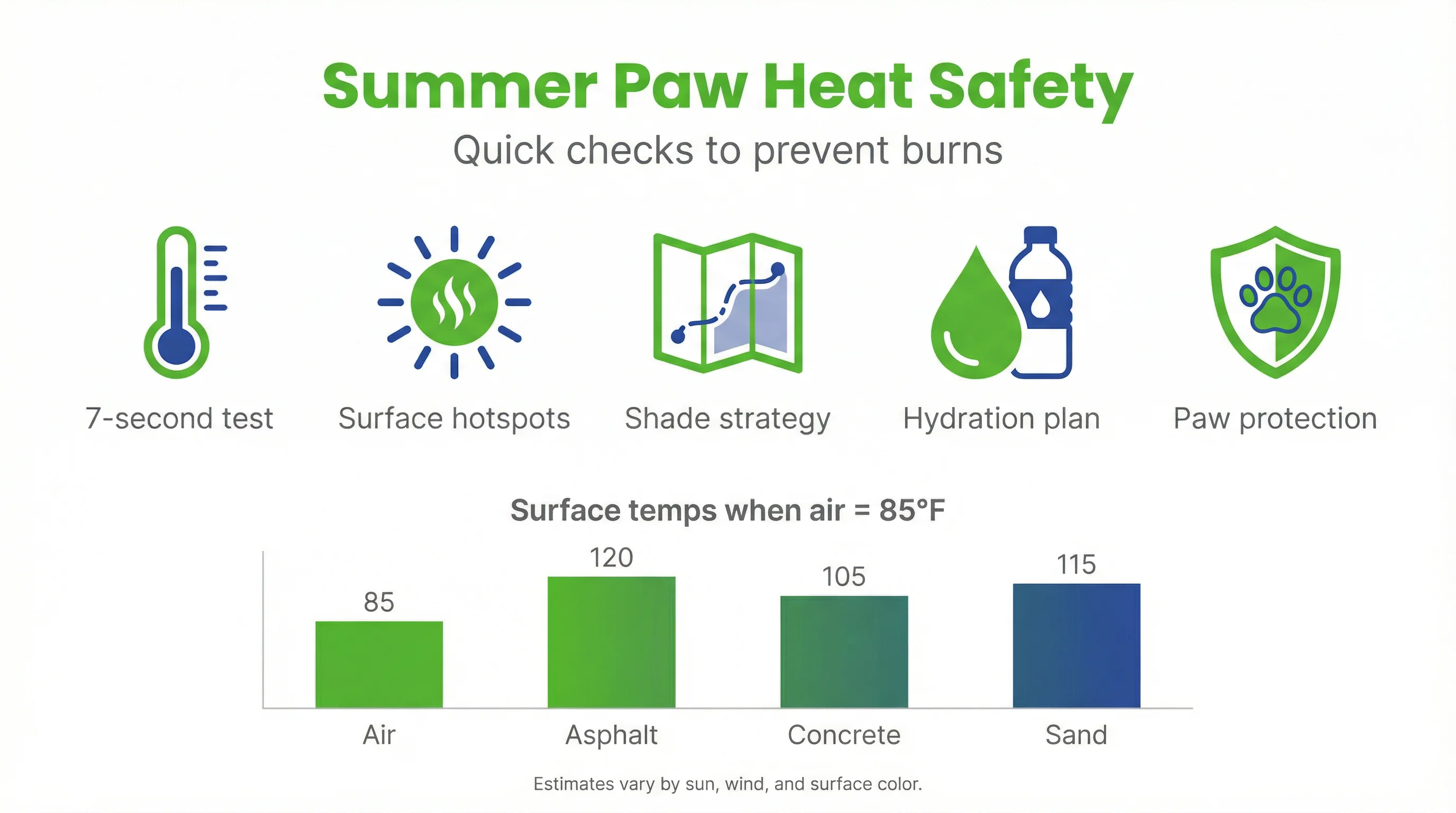
Surface temperatures often far exceed air readings. Use these benchmarks as conservative guidance.
| Air Temp | Asphalt Temp |
|---|---|
| 77°F | 125°F |
| 86°F | 135°F |
| 95°F | 150°F+ |
Timing walks, shade routes, and hydration routines
Walk at sunrise or after dusk. Choose shaded routes, grassy medians, and cooler surfaces. Carry water; offer frequent sips. Plan rest stops. Prioritize summer heat paw protection on consecutive hot days.
Testing surfaces and using breathable paw protection
Use the seven‑second hand test on asphalt or sand. Opt for breathable boots that vent heat yet shield abrasion. Fit matters; improper boots alter gait, emphasizing break‑in and sizing.[1]
After‑care: cooling, cleansing, and monitoring for burns
Cool paws with tepid water, not ice. Gently cleanse grit, then dry thoroughly. Check for redness, softness, or sloughing. Limit activity 24 hours after a hot‑surface exposure to reduce damage.
Winter Hazards: Ice, Snow, and De‑Icing Chemicals
Road salt and ice melt chemistry: irritation and ingestion risks
Chloride and acetate salts are desiccants that crack pads and sting. Residues licked from fur can upset the GI tract. Proactive barrier and booting reduce dermal and ingestion exposure.[2]
Paw prep: fur trimming, barrier balms, and boot fit
Trim fur between pads to prevent ice balls. Apply a light barrier balm before boots. Prioritize snug, high‑ankle closures. This is essential winter salt dog paws protection on salted sidewalks.
Decontamination routine after walks: rinse, HOCl cleanse, dry
- Rinse with lukewarm water.
- Apply HOCl cleanser.
- Pat dry, check webbing.
Repeat after every salted-walk to limit dermatitis and licking.
Regional notes: Northeast/Midwest road salt vs. Pacific Northwest slush
Expect heavy rock salt in the Northeast/Midwest; rinse thoroughly. The Pacific Northwest’s wet slush prolongs exposure; dry completely. For city routes, see Urban paw safety in heat and salt for sidewalk tactics.
Shoulder‑Season Risks: Foxtails, Burrs, Thorns, and Trail Debris
Identifying foxtails and how they migrate into tissue
Foxtails are barbed grass awns that move unidirectionally. They can penetrate skin between pads and migrate, causing abscesses. Recognize dried, arrowlike seeds common in late spring and fall—foxtails and burrs dogs hazards.
Pre‑hike prep: paw hair management and route planning
Trim feathering around pads to reduce snagging. Choose trails with recent maintenance. Review seasonal advisories. Plan contingencies using our Trail and hiking paw protection plan for route and kit checklists.
On‑trail checks and post‑adventure inspection protocol
Pause at trailheads and midway to inspect pads and webbing. Remove visible debris promptly. After the hike, rinse, dry, and recheck under bright light. Note any localized licking or limping.
When debris requires imaging or urgent veterinary care
Seek care if swelling persists, a draining tract appears, or you suspect a deep awn. Do not probe. Radiographs or ultrasound may be necessary to locate migrating foreign material accurately.
Regional Guidance for the United States
Southwest & South: extreme surface temps, cactus spines, and red clay
Plan pre‑dawn outings and carry boot backups. Watch for cactus spines and abrasive red clay that embeds in pad creases. Hydrate frequently and schedule rest on shade‑cooled surfaces.
Northeast & Midwest: freeze‑thaw cycles, rock salt, and black ice
Expect alternating melt and refreeze that sharpens ice edges. Use traction boots and rinse salt immediately. Choose plowed but less‑salted side streets to lower exposure and slipping risk.
Pacific Northwest & Rockies: wet cold, debridement risk, trail scree
Persistent moisture macerates pads. Dry thoroughly after every outing to avoid soft, friable skin. On scree, lightweight boots prevent cuts and improve grip on wet, shifting surfaces.
Southeast & Gulf Coast: humidity, fungal hot spots, and coastal sand
High humidity fosters yeast in webbing. Rinse and dry between toes. Hot coastal sand burns quickly; check surface heat. Saltwater dries skin—freshwater rinse after beach runs.
Gear and Routine Checklists by Season
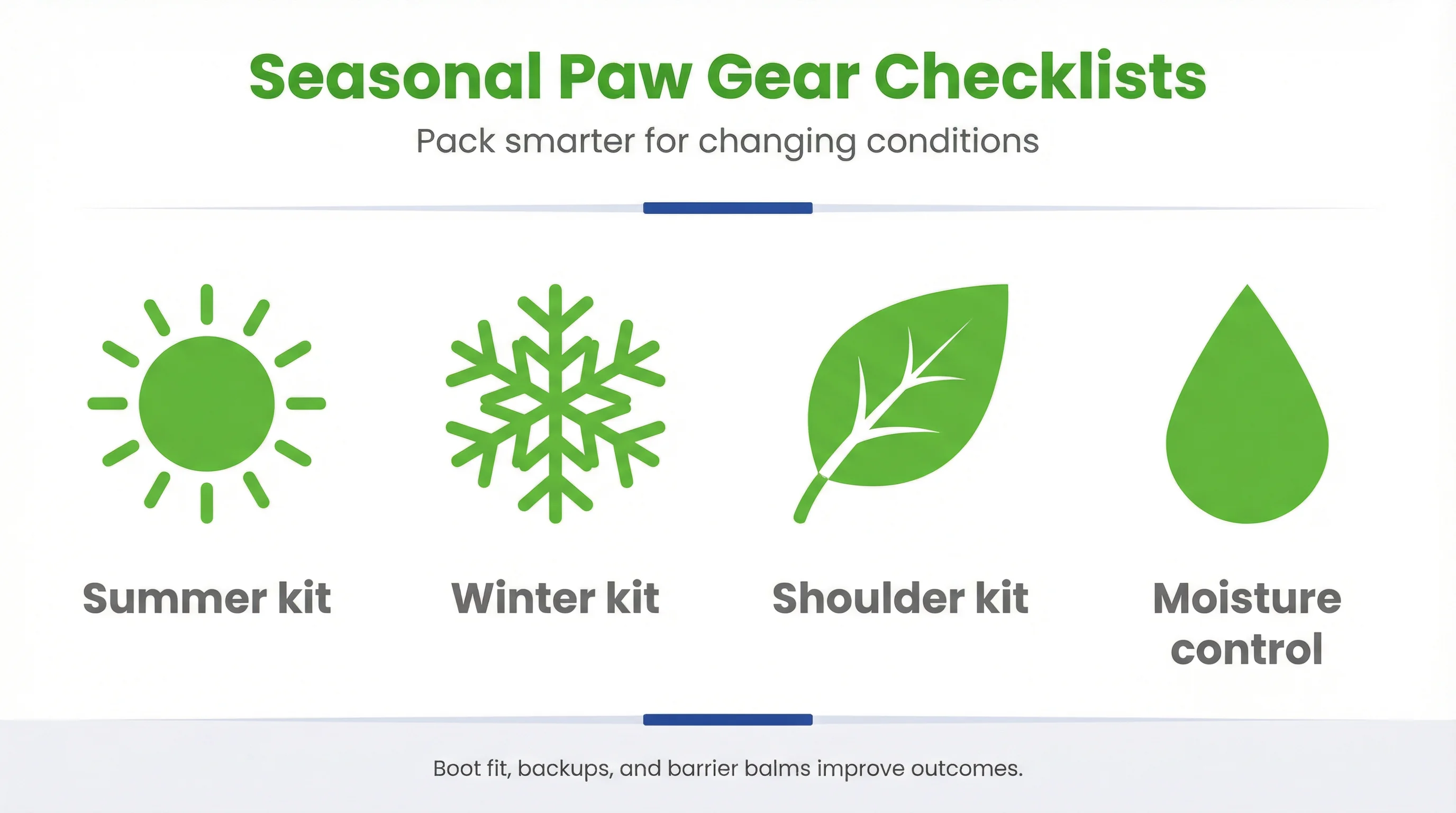
Summer kit: breathable booties, cooling, and hydration tools
- Breathable boots for hot surfaces.
- Collapsible bowl and water.
- Cooling towel; shade plan.
Many pet owners find Urban Walkers III helpful for this task.
Winter kit: traction boots, rinse bottle, HOCl cleanser, drying towels
- Traction boots with tall cuffs.
- Rinse bottle for curbside decon.
- HOCl spray; microfiber towels.
Pack spare socks/liners to manage moisture.
Shoulder‑season kit: tweezers, gauze, elastic wraps, light boots
- Tweezers and headlamp.
- Non‑stick pads; self‑adhesive wrap.
- Lightweight boots for scree.
Add saline for flushing embedded debris.
Fit and material basics: breathable vs. waterproof, traction, and sizing
Choose breathable mesh for heat; waterproof for slush. Rubber outsoles improve grip. Measure width and nail length for sizing. Replace worn treads promptly to maintain traction and stability.
At‑Home First Aid for Paw Injuries
Immediate steps for cuts, abrasions, and pad burns
Leash and calm the dog. Control bleeding with gentle pressure. Rinse contaminants, then pat dry. Restrict activity. Use a protective sock or boot to keep dressings clean between checks.
HOCl wound care vs. harsh antiseptics
Choose skin‑safe hypochlorous acid for broad‑spectrum cleansing without sting. Alcohol, peroxide, or full‑strength chlorhexidine can delay healing. Learn protocol in HOCl wound care for dogs and apply as directed.
Bandaging basics: non‑stick layers and elastic wraps
Layer a non‑adherent pad, soft gauze, then a light elastic wrap. Avoid tightness; leave two toes visible to monitor swelling. Use dog booties for injured paws to protect the bandage outdoors.
Monitoring for infection and escalating to a veterinarian
Check twice daily for heat, swelling, discharge, odor, or increased pain. Any worsening warrants veterinary evaluation. Deep pad loss, foreign bodies, or spreading cellulitis escalate quickly and need professional care.[4]
Training Your Dog to Accept Paw Handling and Boots
Desensitization steps: touch, hold, and brief wear sessions
Start with calm paw touches. Progress to gentle holds, then a single boot for seconds. Gradually increase time and number of boots. Keep sessions short and end before frustration.
Positive reinforcement and short practice walks
Pair handling and booting with high‑value rewards. Practice indoors on non‑slip floors, then short outdoor loops. Celebrate relaxed strides. Consistency builds tolerance and confident movement.
Troubleshooting slippage, chafing, and refusal
Refit boots and adjust closures. Add thin liners to reduce chafe. If gait looks altered, shorten sessions and recheck size; improperly fitted boots can change loading patterns.[1]
Maintenance: Daily, Weekly, and Seasonal Paw Care Routines
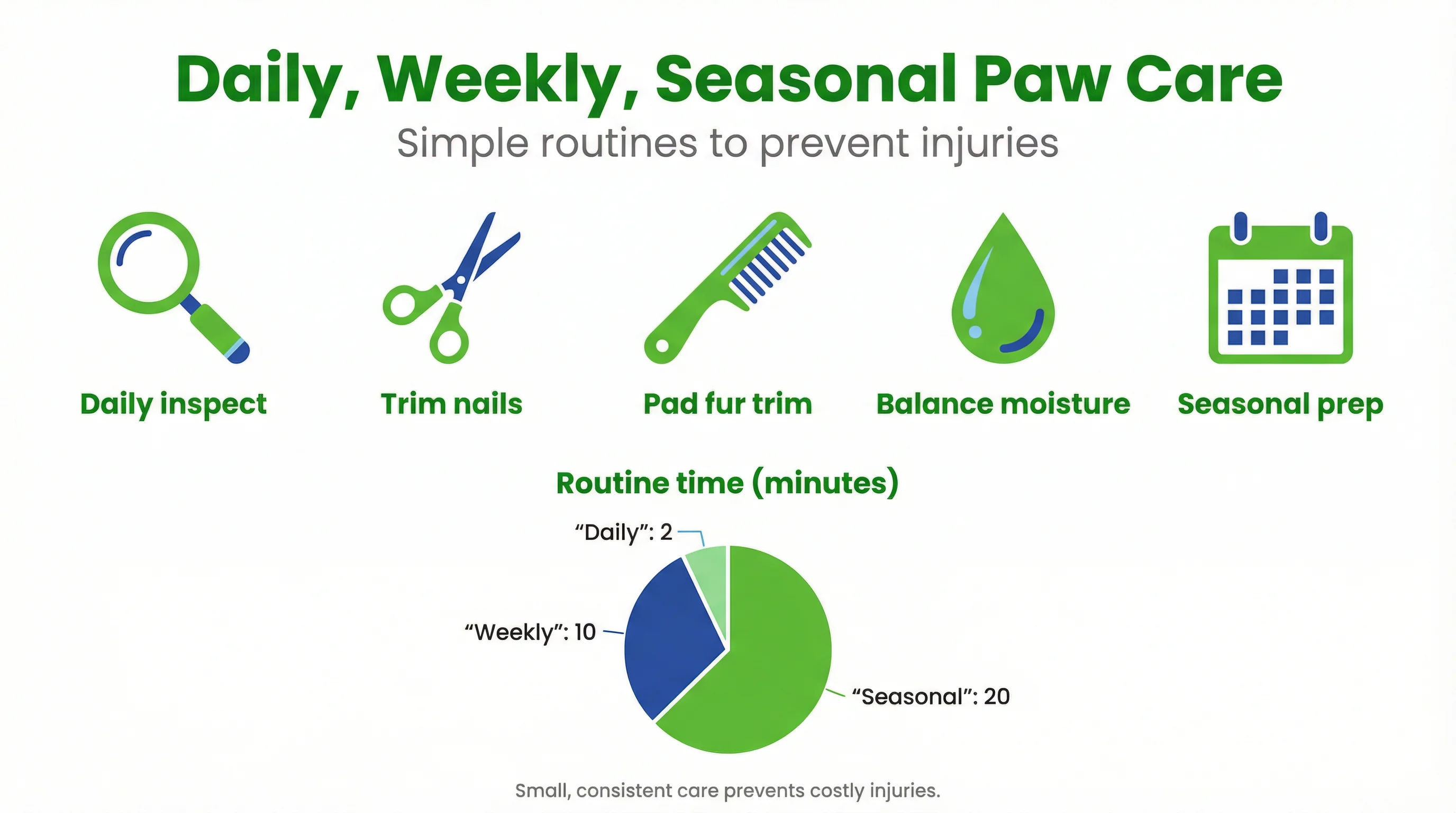
Daily checks: cracks, hotspots, debris, and licking flags
Inspect pads and webbing after walks. Remove grit, dry thoroughly, and note any licking focus. Early attention prevents small issues from becoming ulcerations or infections.
Weekly grooming: nail length, pad fur, moisture balance
Keep nails short to optimize toe splay and traction. Trim pad fur to limit matting and debris. Balance moisture with light balm only when skin is dry, not macerated.
Seasonal swap‑outs: boot tread, wraps, and first‑aid restock
Replace worn boot treads, expired cleansers, and stretched wraps. Refresh hydration tools before heat waves and add decon supplies ahead of snow. Inventory trail gear before shoulder‑season hikes.
Takeaway: Inspect, protect, decontaminate, and rest—repeat this seasonal loop to keep paws sound.
Related Guides and Planning Resources
For a comprehensive framework that ties these seasonal tactics together, see our Outdoor Paw Protection main guide. City walkers can apply sidewalk‑specific tactics, and trail teams can adapt to altitude, scree, and brush hazards effectively.
- City routes and salted sidewalks: use Urban paw safety in heat and salt for timing, decontamination, and route planning.
- Backcountry planning: build a kit and schedule with our Trail and hiking paw protection plan.
For step‑by‑step wound protocols and bandaging details, review HOCl wound care for dogs before the next season starts.
Frequently Asked Questions
How hot is too hot for dog paws on asphalt or sand?
If you cannot hold the back of your hand on the surface for 7 seconds, it’s unsafe for paws. Asphalt can exceed 120°F when air temps are only 85°F; schedule walks for early morning or late evening and use protective booties as needed.
What should I do if my dog’s paws are irritated by road salt?
Rinse paws with lukewarm water after the walk, then cleanse with an HOCl wound cleanser and dry thoroughly. Monitor for redness, cracking, or licking; use protective boots and avoid salt‑heavy routes when possible.
How can I tell if a foxtail is embedded in my dog’s paw?
Watch for sudden limping, persistent licking at one spot, swelling, or a small draining tract. Because foxtails can migrate, seek veterinary evaluation promptly rather than attempting deep removal at home.
Do dogs need boots in summer and winter or only when injured?
Boots help prevent burns, chemical irritation, cuts, and frost injuries even in healthy dogs, especially in extreme heat or salted streets. Medical or recovery boots add protection when paws are already sensitive or injured.
What first‑aid supplies should I keep for paw injuries?
Stock sterile saline or HOCl cleanser, non‑stick pads, gauze, elastic wraps, tweezers, small scissors, and protective booties. Add a rinse bottle and absorbent towel for winter decontamination.
Conclusion
Seasonal paw hazards are predictable—and preventable—with the right timing, gear, and routines. Prioritize cool surfaces in summer, decontamination in winter, and debris vigilance in shoulder seasons. Tailor your approach to regional realities and surface conditions. Build a compact kit, rehearse inspections, and train for calm paw handling before emergencies strike. With disciplined preparation and evidence‑based first aid, you can protect pads, preserve traction, and keep your dog active and comfortable across every season.
References
- B Bieber et al. (2022). Changes in ground reaction forces and center of pressure parameters of paws when wearing dog boots in dogs. Frontiers in veterinary …. View article
- I Wiberg (2024). The Influence of Risk Factors on the Health of Dogs' Paws and the Importance of Clinical Evaluation of the Paw in Clinical Practice. 2024 - search.proquest.com. View article
- P Lafuente et al. (2018). A retrospective survey of injuries occurring in dogs and handlers participating in canicross. Veterinary and comparative orthopaedics …. View article
- L Palmer (2021). Operational canine. Veterinary Clinics: Small Animal Practice. View article


