

Seasonal Paw Hazards: Salt, Heat, Ice, and Foxtails
Seasonal Paw Hazards: Salt, Heat, Ice, and Foxtails
Seasonal changes quietly raise the risk to your dog's paws. Street salt, hot pavement, ice buildup, and plant awns can turn a routine walk into an injury risk.
Why this matters is simple. Paw pads are your dog's shock absorbers and traction control. Protect them, and every stride stays confident. In this guide, you will learn prevention tactics, fast decisions, a three‑minute cleaning routine, and sensible monitoring so small issues do not become major problems.
Why seasonal paw hazards matter (one problem, four seasons)
How salt, heat, ice, and foxtails injure paws
Deicer salt can dry and chemically irritate pads, causing a dog paw salt burn. Hot pavement dog paws face thermal injury that may blister sensitive pad tissue. Ice compresses between toes and creates abrasion. Plants and lawns, including foxtails, can puncture skin and migrate, risking infection.
Signs your dog's paws need attention immediately
Watch for flinching on hot surfaces, frequent licking after winter walks, or sudden limping on rough trails. Check for splayed toes, torn pad edges, lodged debris, and malodor. Redness, cracked pads, or a hesitant gait signal immediate cleaning, possible treatment, and rest are needed.
Quick decision guide: if X happens, do Y
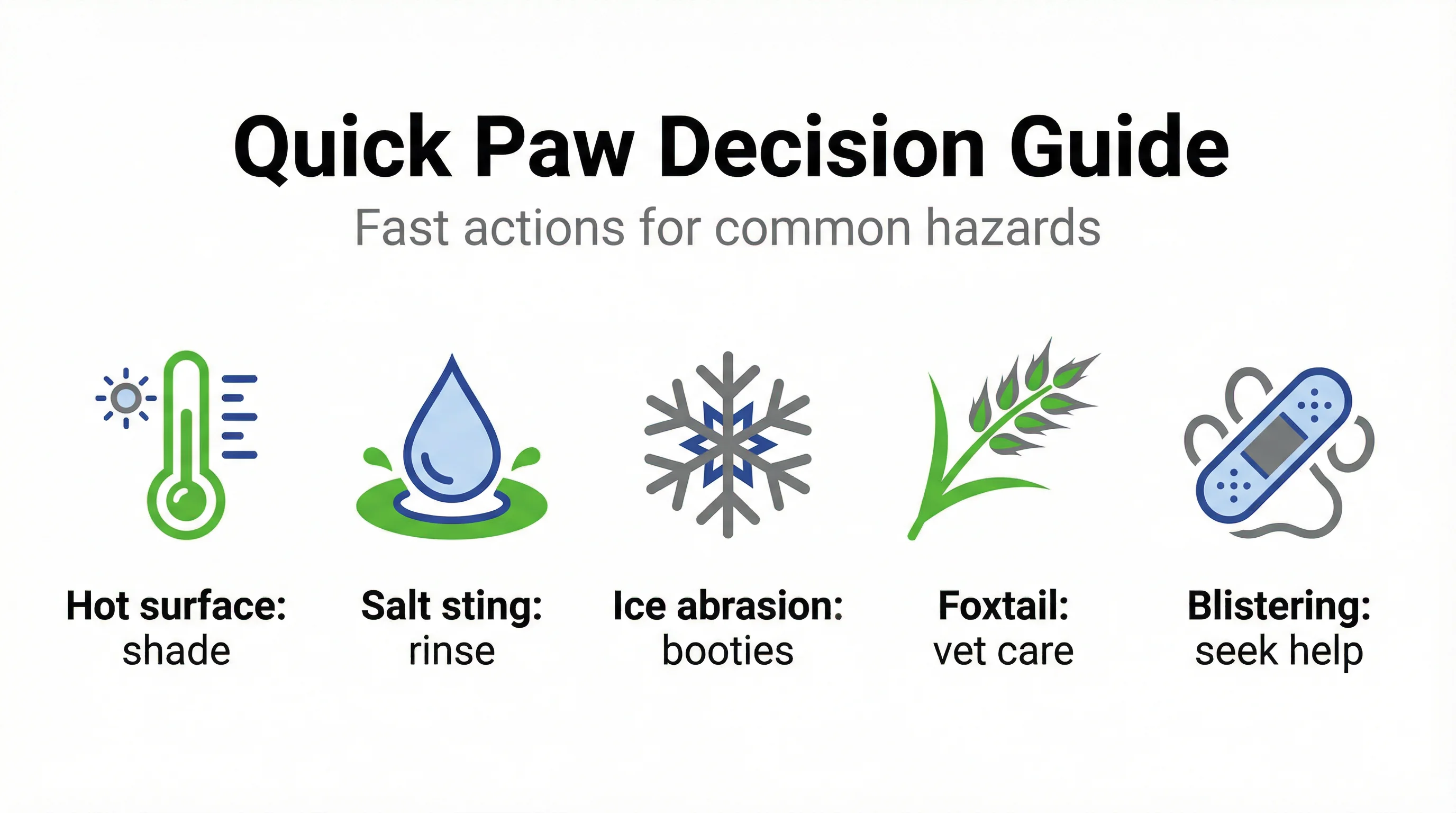
5–7 rapid actions tailored to salt, heat, ice, foxtails, and cuts
- If you walked through deicer salt, rinse paws in lukewarm water, blot dry, then inspect webbing and nails for residue. Limit exposure for 24–48 hours if irritation appears.
- If pavement feels hot, move to shade or grass immediately. Carry your dog if pads feel tacky or sensitive. Resume walks at cooler times only.
- If ice balls form between toes, stop, thaw with warm water, and gently remove. Trim interdigital hair before the next outing to reduce recurrence.
- If a foxtail is visible and superficial, remove with tweezers if it slides easily. If resistance, swelling, or pain occurs, seek veterinary care to prevent migration.
- If a pad is scraped or nicked, clean with lukewarm water, apply gentle wound hygiene, and rest 24 hours. Reassess for swelling or discharge the next day.
- If your dog suddenly limps, stop activity, examine each pad and nail, and avoid hard surfaces for 48 hours. If limping persists, consult a veterinarian.
Prevention playbook by condition
Deicer salt: barrier, route choices, rinse routine
Choose low‑traffic sidewalks and avoid visibly salted curbs. Apply a thin barrier balm before walks, focusing on pad edges and between toes. Use well‑fitted boots, recognizing that boot use may alter gait and should be introduced gradually to avoid overloading other structures[1]. Rinse and blot after each outing to remove residues.
Hot pavement: temperature checks and timing walks
Test surfaces with the back of your hand for seven seconds. If it is uncomfortable, it can injure pads. Prioritize shaded routes, grassy verges, and cooler hours. Carry water for brief paw cooling. Build heat tolerance cautiously and keep sessions short in early summer.
Ice and snow: trimming, balm, and boot fit
Keep interdigital hair neatly trimmed to reduce ice balls dog paws. Apply a light balm before snow exposure to limit adhesion. Fit boots snugly, not tightly, and perform short practice sessions indoors. Field care guidelines suggest paw protection reduces abrasion but needs individualized fitting to maintain natural stride[4].
Foxtails: route avoidance and post-walk checks
Avoid overgrown trails during peak awn season. Choose maintained paths with short turf. After walks, inspect between toes and around nail beds. Swift removal may prevent deeper migration, discomfort, and infection risks.
After-walk cleaning and inspection routine
Rinse, blot, and inspect in under 3 minutes
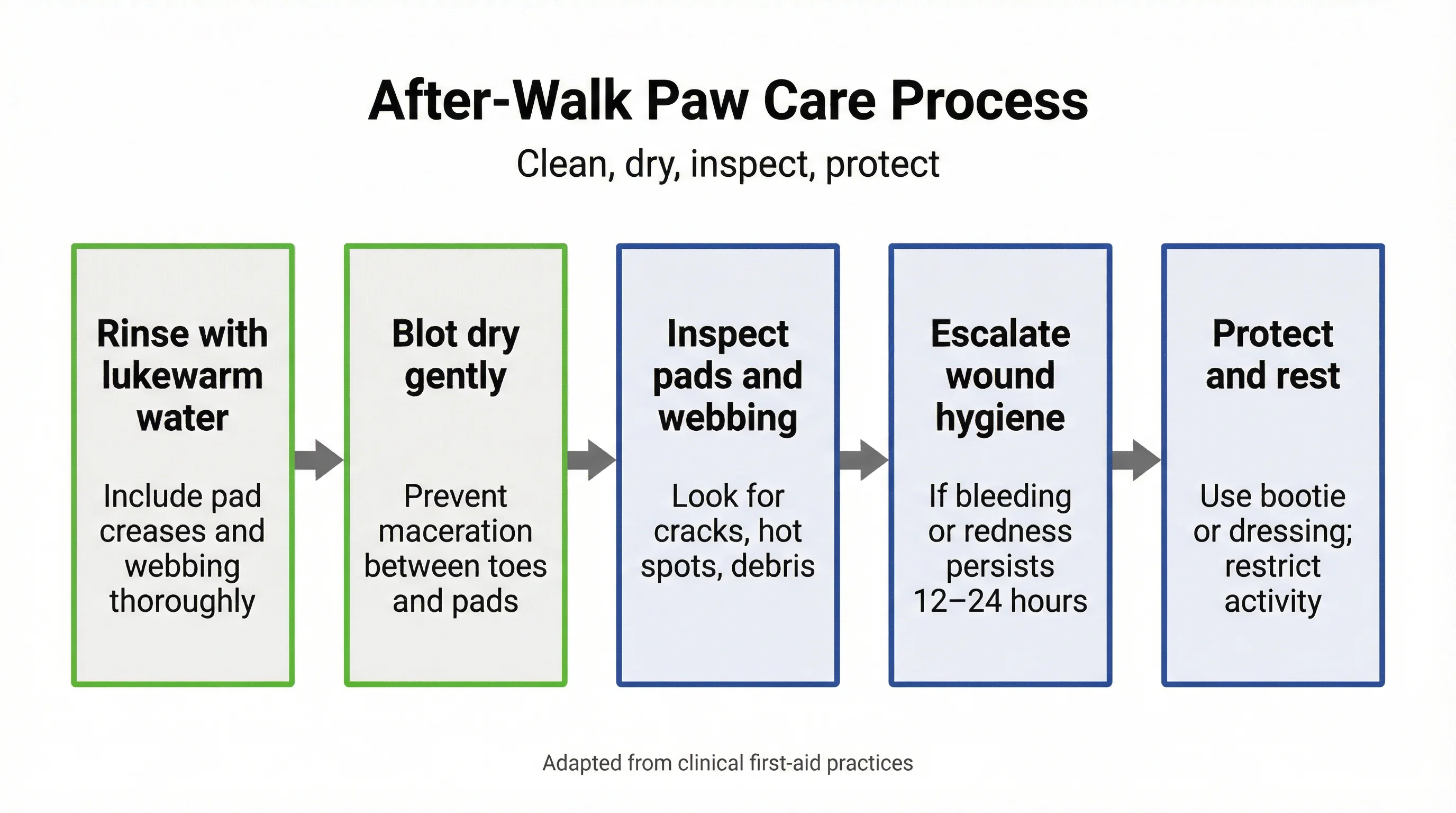
Use lukewarm water to rinse each paw, including pad creases and webbing. Blot dry with a clean towel to prevent maceration. Inspect for cracks, hot spots, abrasions, and lodged grit. A no‑rinse HOCl spray may support gentle daily hygiene between rinses; many pet owners find Healers Skin & Coat Grooming Solution helpful for this task.
When to switch to first-aid care
Escalate from a rinse to wound hygiene if you see bleeding, raw tissue, or persistent redness after 12–24 hours. Keep the area clean and protected. For technique details on small wounds, review our guide on safe care for minor cuts and scrapes. If infection signs develop, consult your veterinarian promptly.
Monitoring guidance: what to watch over 7–14 days and 4–8 weeks
Short-term healing and comfort markers
In 7–14 days, expect reduced licking, normal weight bearing, and smoother, less cracked pads. Mild scuffing may persist but should trend downward. If you are using light support or dressings, ensure they remain clean and dry to prevent moisture‑related irritation[4]. Revisit your cleaning method if itch or odor returns—see strategies to break the lick‑itch cycle in yeasty or smelly paws.
Longer-term resilience and recurrence
Across 4–8 weeks, pads may toughen modestly with controlled activity. Recurrent cracks, frequent ice buildup, or repeated foxtail exposure indicate a prevention gap. Evidence highlights the importance of routine paw evaluations to detect early issues and adjust protection strategies[3].
Practical safety boundaries you should not cross
Temperature, terrain, and time limits
Do not test heat tolerance on black asphalt in peak sun. Shift to shaded routes and short intervals. Avoid salted curbs after active road treatments. Keep snow sessions brief if ice balls recur, and pause immediately when pads show sensitivity.
When home care is not enough
Seek veterinary care if burns blister, limping persists beyond 24 hours, or a suspected foxtail cannot be removed easily. Operational canine literature notes paw pad trauma is a predominant walk and field injury, warranting early intervention and structured recovery plans[4].
Evidence status: what we know and what is emerging
Deicers, thermal injury, and mechanical trauma
Clinical experience and field reports consistently associate chemical irritants, high‑temperature surfaces, and ice abrasion with paw injuries. Working dog reviews emphasize soft tissue and pad trauma as frequent, preventable issues through route planning and protection strategies[4].
Protective gear and wound hygiene—what evidence suggests
Boots offer abrasion defense but can shift ground reaction forces and center of pressure, advising careful fit and gradual use to avoid compensatory strain[1]. Survey data in canine sports indicate many paw injuries occur without protection, pointing to the potential value of barrier methods when appropriately used[2]. Routine veterinary evaluation of the paw remains fundamental, guiding tailored prevention for individual risk profiles[3].
Gear checklist aligned to each hazard
Boots, wraps, cleansers, and balms—how they may support protection and recovery
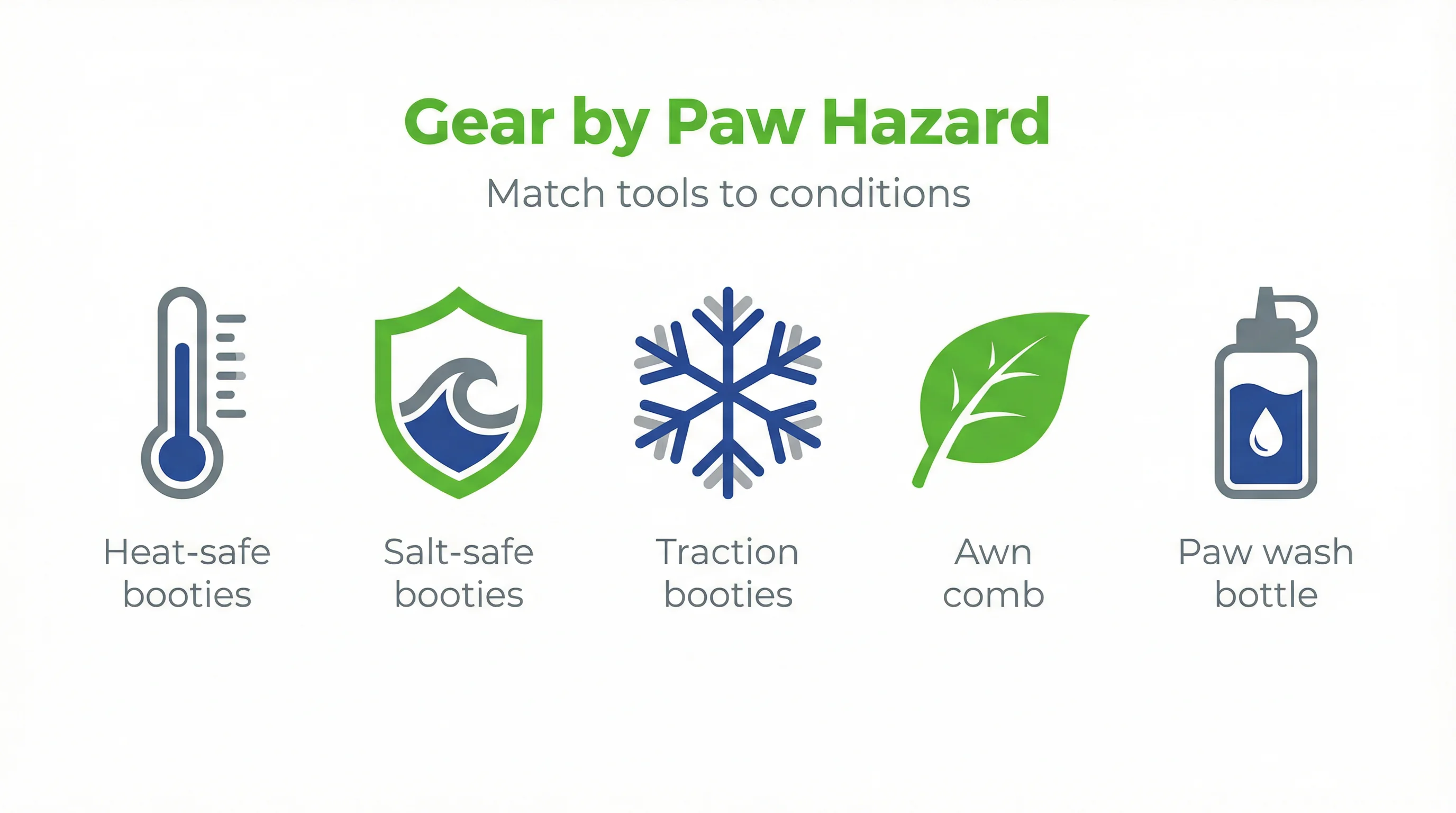
- Winter salt and slush: Barrier balm before walks; rinse and blot after. Consider well‑fitted boots for dog paw protection in high‑salt zones, introduced gradually to monitor gait changes[1].
- Heat and rough terrain: Breathable boots for abrasive trails; plan shaded routes and shorter sessions. Monitor for pad softening after long rests to avoid sudden overuse.
- Ice and snow: Interdigital hair trim; light balm; snug boots to reduce ice adhesion. Dry thoroughly post‑walk to prevent maceration.
- Foxtails and debris: Fine‑tip tweezers and a small flashlight for inspections. Keep a basic wound‑care kit ready for prompt cleaning of superficial scrapes.
- Cleanser options: Lukewarm water and soft cloths for daily care; gentle, pet‑safe sprays for quick hygiene between baths.
- Supportive wraps: Use soft, breathable wraps temporarily to protect minor pad injuries, removing daily to reassess skin condition and airflow.
Frequently Asked Questions
How can I tell if pavement is too hot for my dog's paws?
Place the back of your hand on the surface for 7 seconds; if it's uncomfortable, it may burn paws. Blacktop often exceeds air temperature by 20–40°F on sunny days.
What should I do if my dog stepped on deicer salt and is licking paws?
Rinse paws with lukewarm water, blot dry, and inspect pads and webbing. If redness, cracking, or limping develops, limit exposure and consider gentle wound hygiene; contact a veterinarian if symptoms persist.
How do I prevent ice balls forming between my dog's toes?
Keep hair between toes neatly trimmed and use well-fitted boots in slushy conditions. A light, pet-safe paw balm before walks may reduce snow adhesion.
What are foxtails and why are they risky?
Foxtails are barbed grass awns that can lodge in paws, ears, or skin and may migrate inward. Prompt removal and veterinary care are advised if you suspect a retained awn.
When should I see a vet for a paw injury?
Seek care for severe burns, deep cuts, swelling that worsens, pus, foul odor, a suspected foxtail, or limping that lasts more than 24 hours despite rest and basic care.
Summary and next steps
Integrate this routine into your broader dog hygiene plan (see dog hygiene master guide)
Seasonal hazards change, but your routine can stay steady: choose safer routes, protect before walks, clean and check after, and monitor progress. Use this system to reduce setbacks from salt, heat, ice, and awns. For broader planning across skin, ears, teeth, and minor wounds, see our dog hygiene master guide. If a scrape or hot spot complicates recovery, consult focused protocols such as rapid home triage for hot spots. When small cuts occur, revisit safe wound hygiene for active dogs to keep healing on track. Thoughtful prevention today supports confident, comfortable walks in every season.
References
- B Bieber et al. (2022). Changes in ground reaction forces and center of pressure parameters of paws when wearing dog boots in dogs. Frontiers in veterinary …. View article
- P Lafuente et al. (2018). A retrospective survey of injuries occurring in dogs and handlers participating in canicross. Veterinary and comparative orthopaedics …. View article
- I Wiberg (2024). The Influence of Risk Factors on the Health of Dogs' Paws and the Importance of Clinical Evaluation of the Paw in Clinical Practice. 2024 - search.proquest.com. View article
- L Palmer (2021). Operational canine. Veterinary Clinics: Small Animal Practice. View article


