

Post‑surgery hygiene at home: keep dog incisions clean and stress low
Post‑surgery hygiene at home: keep dog incisions clean and stress low
Your dog is home, stitched and sleepy. Now the real healing begins under your care. Good hygiene choices can protect the incision and lower stress.
This matters because small missteps may slow recovery or trigger complications. In this guide, you will learn dog incision care at home, how to prevent dog licking stitches, manage surgical discharge, and use calming aids after dog surgery safely.
Focal scenario: your dog returns home with stitches — how to keep the incision clean and recovery calm
What supplies to have ready (gentle cleaning, protection, calming)
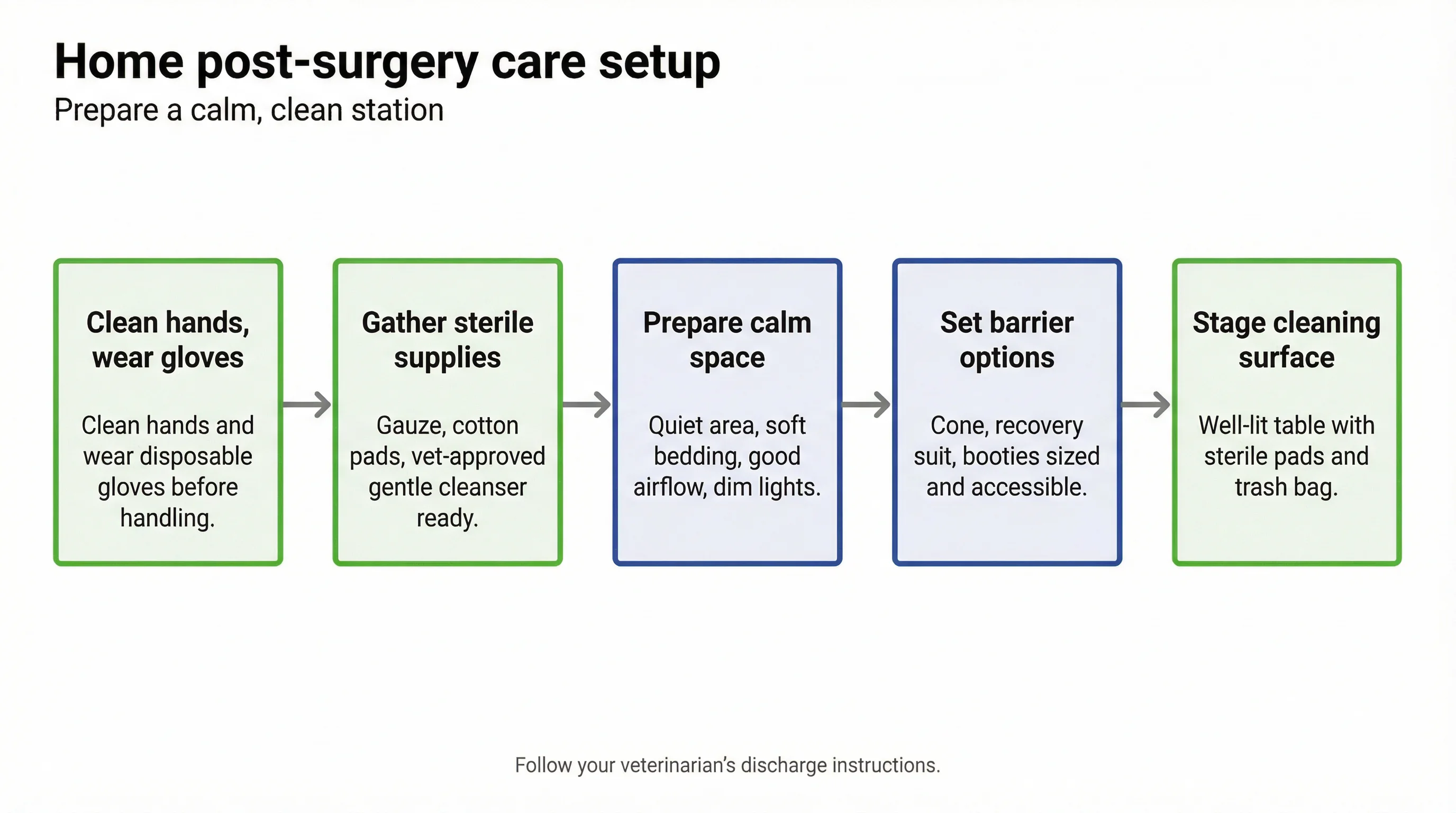
Prepare a simple station: sterile gauze, cotton pads, disposable gloves, and a veterinarian‑approved gentle cleanser. Keep a cone or recovery garment, clean towels, and spare bedding. Stock prescribed medications, including pain control, and a small flashlight for nightly checks.
Add distraction and relaxation tools: lick mats, snuffle toys, and pheromone diffusers. If paws could reach the site, have protective booties or soft socks for brief supervised use. Keep a notebook for dosing, discharge notes, and photos that document progress.
7–10 day routine: cleaning, lick protection, and rest
For the first week, prioritize a steady rhythm. Clean once or twice daily with gentle pressure only. Keep barriers on whenever you cannot supervise. Restrict jumping and stairs, and use short leash breaks.
Offer quiet enrichment, scheduled meals, and calm handling to lower arousal. Maintain a light, breathable covering only if your veterinarian advises. Track appetite, water intake, urination, stool, and behavior along with incision status.
Quick decision guide
If X happens, do Y: 6 common postoperative situations
- If your dog targets the sutures, apply a properly fitted cone or recovery suit immediately, then add calm enrichment and notify your veterinarian if it persists.
- If light, clear‑pink discharge appears, gently blot, monitor volume, and continue routine cleaning; escalate if it increases after day three.
- If redness spreads, becomes hot, or swelling worsens, stop topical products and contact your veterinarian the same day.
- If a bandage slips or becomes wet, replace it with dry, sterile layers or leave open to air per discharge notes; call if unsure.
- If stitches open, cover with a clean, non‑stick pad, prevent licking, and seek urgent veterinary attention.
- If restlessness or whining escalates, verify pain medication timing, use approved calming aids, and consult your veterinarian about analgesia adjustments.
How to clean the incision without delaying healing
Cleaning frequency and technique with gentle solutions
Use veterinarian‑recommended gentle cleansers and avoid scrubbing. Apply solution to a sterile pad, not directly onto the wound. Dab outward from the incision line, using a fresh pad for each pass.
For fur around the site, trim only if hair is matting into discharge. Avoid alcohol, hydrogen peroxide, or harsh soaps, which may impede healing and irritate tissue. Evidence‑informed protocols emphasize atraumatic cleansing to lower dehiscence risk and postoperative complications[2]. For general technique refreshers, review a safe wound‑cleaning protocol for minor injuries.
When to change dressings or leave the wound exposed
Most incisions heal faster when kept clean, dry, and lightly exposed to air, unless your veterinarian orders bandaging. Change any instructed dressings once or twice daily, or when damp or soiled.
Use non‑stick, sterile contact layers and minimal, breathable coverage. If moisture accumulates under the dressing, or skin macerates, consider supervised exposure instead. Postoperative strategies that reduce infection risks can lessen home care burdens and complications[1]. Many pet owners find Healers Skin & Coat Grooming Solution helpful for gently cleaning fur around, not on, the incision when debris collects.
Prevent licking, scratching, and rubbing
Physical barriers and proper fit
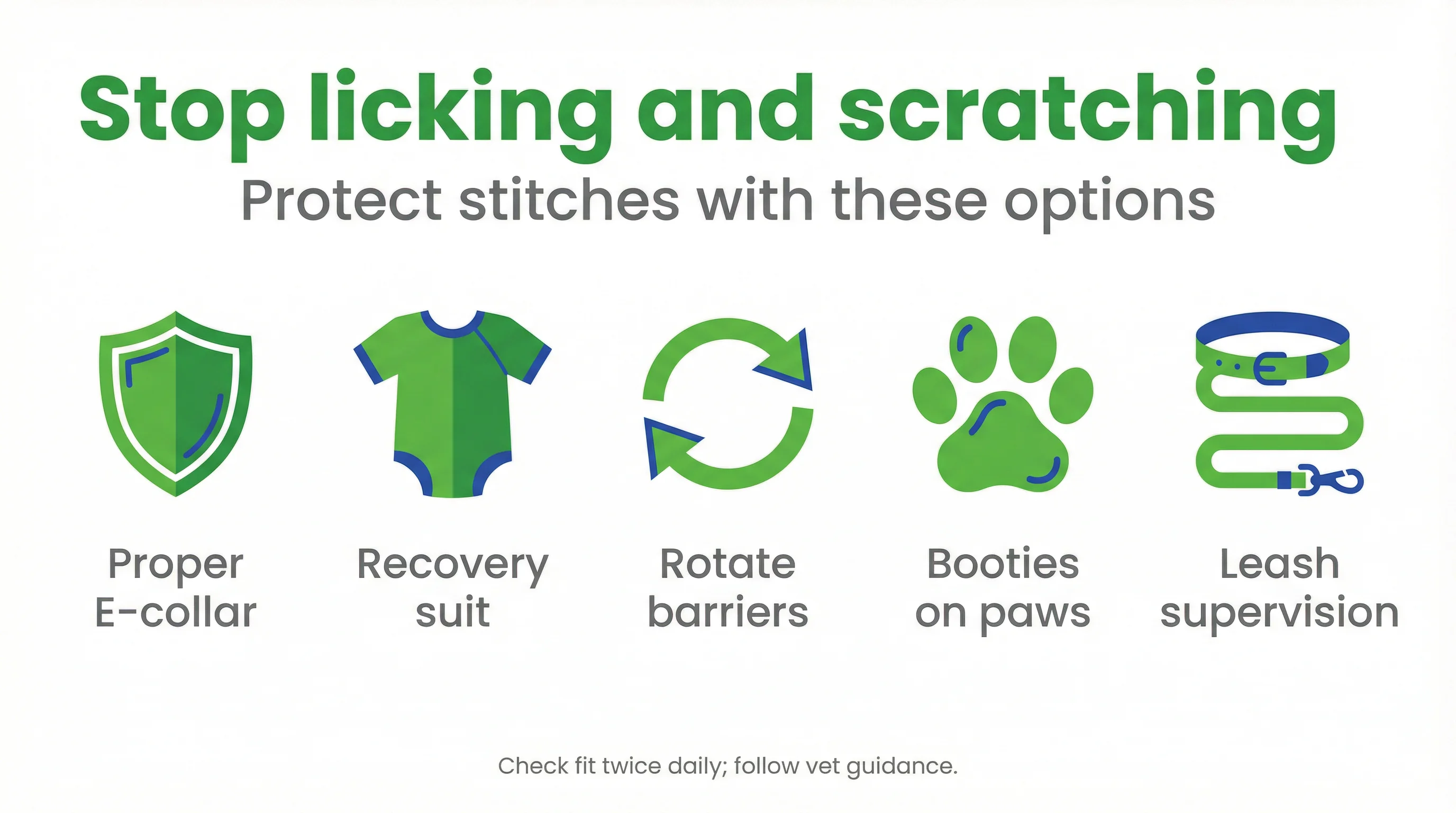
Stopping tongue and claw contact is central to preventing infection and suture damage. Use an Elizabethan collar that extends past the nose, or a recovery suit that fully covers the site.
Check fit twice daily. Adjust so your dog can pant and drink, but cannot bend to reach stitches. Rotate barrier types if your dog stresses with one style. Supervise barrier‑free periods only during quiet, calm time.
Paw protection to prevent accidental self‑injury
Paws often cause incidental trauma during scratching, stretching, or rising. Use soft booties or socks indoors when supervised. Keep nails smooth and short, and file any sharp edges.
If paw moisture or yeast drives licking, implement a gentle paw hygiene routine to break the lick‑itch cycle; see our guide on cleaning routines that break the lick‑itch cycle. During recovery, avoid rough surfaces and narrow spaces that may snag sutures.
Managing discharge and odor
What is normal vs. warning signs
Small amounts of clear to slightly pink fluid may appear for one to three days. Mild, decreasing redness and scant serous seepage can be normal.
Warning signs include thicker, yellow‑green discharge, a foul odor, heat, spreading redness, or increased pain. A sudden jump in fluid volume, especially after days of improvement, also warrants prompt veterinary advice. When uncertain, send a photo update.
Daily log: color, amount, progression
Track discharge daily by color, consistency, and quantity: a few blot marks, a small patch, or soaked gauze. Note any odor. Photograph at the same distance and lighting each day for a consistent visual record.
Correlate changes with activity, licking attempts, or bandage time. This objective log helps your veterinarian detect patterns and refine the plan. Structured monitoring may support earlier intervention and smoother recovery[2].
Reduce stress to promote healing
Environment, routines, and calming aids
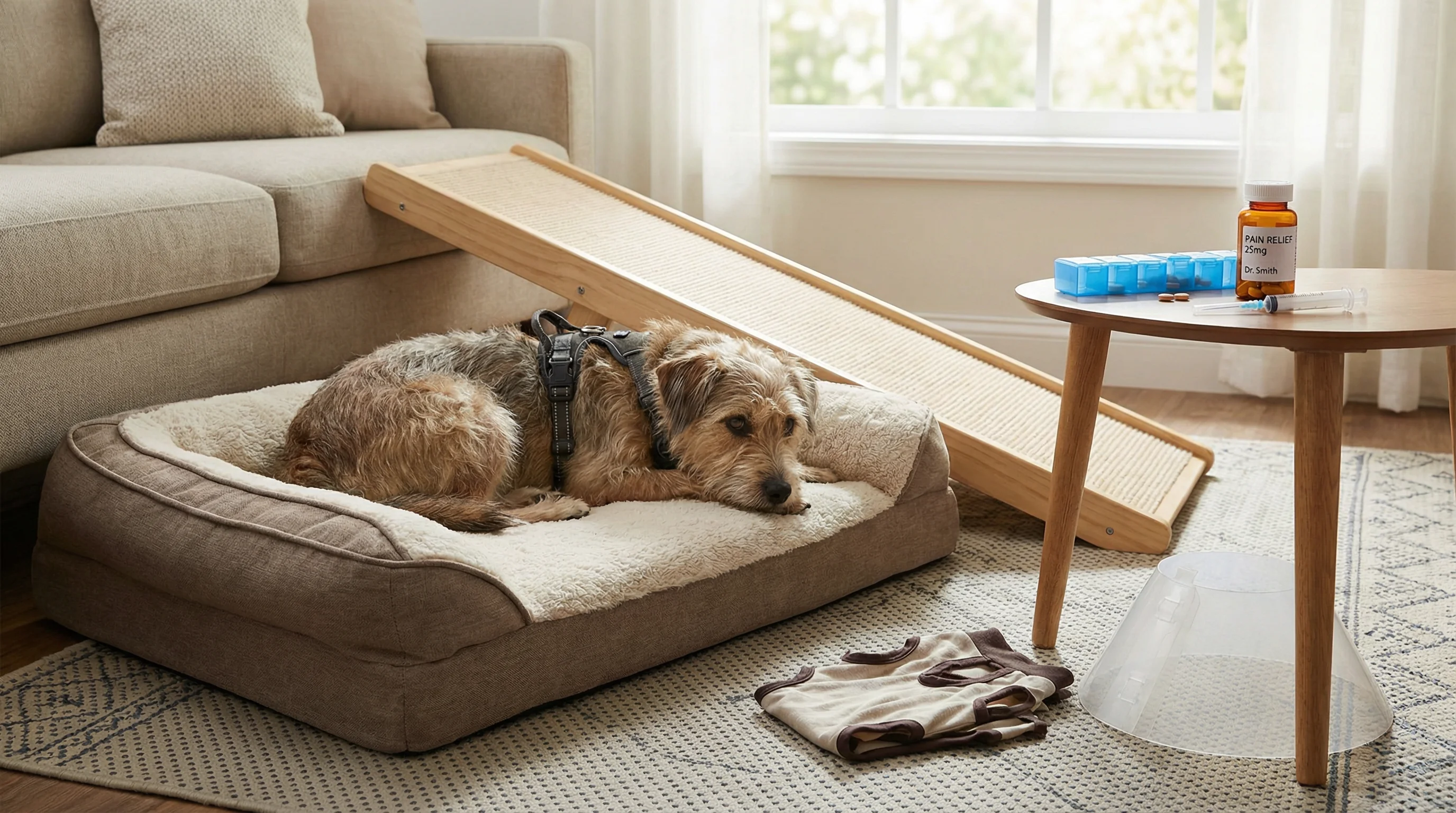
Healing accelerates in predictably calm settings. Create a den‑like space away from door traffic, with good airflow and soft bedding. Keep lights dim at night and maintain a stable schedule for meals, medications, and walks.
Use veterinarian‑approved calming aids after dog surgery, such as pheromone diffusers, gentle music, and snug but breathable wraps as an anxiety wrap for recovery. The human–animal bond, pain control, and low stress appear to influence recovery quality and behavior during convalescence[3].
Safe physical activity and quiet enrichment
Choose brief leash walks on flat ground, two to six times daily, primarily for toileting. Avoid stairs, jumping, slippery floors, and off‑leash play. Introduce quiet puzzles, snuffle mats, and stuffed chew toys to occupy the mind.
Keep sessions short and supervised. If arousal increases, pause, reset, and restart with lower intensity. For itch flares that raise agitation, see our guidance on rapid home triage and relief for hot spots and sudden itching.
Practical safety boundaries
Hygiene, mobility, medication, and when to stop practices
Hygiene: Do not apply alcohol, hydrogen peroxide, iodine tincture, powders, or ointments unless prescribed. These may irritate tissue or trap moisture. Keep the area dry; use a clean towel after rainy walks.
Mobility: Use non‑slip rugs, ramps, and a short harness lead. Avoid vigorous neck pressure from collars. Medication: Give analgesics exactly as directed, with food if recommended. If sedation or pain appears excessive or inadequate, call your veterinarian the same day.
Stop any cleaning step that causes fresh bleeding, intense resistance, or swelling. Stop bandaging if skin looks pale, cold, or soggy. When in doubt, protect with a barrier and seek guidance.
State of the evidence
What the literature suggests on HOCl cleansing, physical barriers, and stress management
Veterinary nursing literature emphasizes preoperative risk assessment and consistent postoperative wound care to reduce surgical wound dehiscence; atraumatic cleaning and early detection are recurring themes[2]. Innovations that streamline home care while limiting infection exposure also show promise for improving outcomes[1].
Gentle antiseptics such as hypochlorous acid are widely used in dog wound care HOCl protocols due to low irritation potential, though choice should align with veterinary direction. Evidence from human–animal bond research suggests that calmer environments, effective analgesia, and controlled handling may support smoother postoperative recovery[3]. Adjunct topical agents with anti‑inflammatory properties, like dexpanthenol, have demonstrated wound‑modulating effects in animal studies, though veterinary use requires case‑by‑case judgment[4].
What to monitor at 7–14 days and at 4–8 weeks
Progress criteria, plateaus, and when to consult the veterinarian
By days 7–14, expect reduced redness, dry edges, minimal discharge, and decreasing tenderness. Stitches or staples may be removed if cleared. Licking should be controlled, with barriers used less as behavior normalizes.
From weeks 4–8, the scar line should flatten and lighten, with no warmth, odor, or pain. Seek help sooner if redness spreads, discharge returns or increases, stitches gap, fever appears, or mobility regresses. Early action mitigates larger setbacks[2].
Frequently Asked Questions
How often should I clean my dog's incision at home?
Generally once or twice a day using a gentle solution recommended by your veterinarian, or as directed in your post-operative instructions. Avoid scrubbing — moisten, dab gently, and dry carefully.
Is some discharge normal after surgery?
A small amount of clear or slightly pink fluid can appear in the first few days. Thick, greenish, foul-smelling, or increasing discharge may indicate infection and requires veterinary consultation.
How do I stop my dog from licking or chewing the stitches?
Use well-fitted physical barriers such as an Elizabethan collar, recovery suit, or medical booties, and supervise any barrier-free time. Maintain calm routines and offer quiet enrichment to help reduce anxiety.
When should I be concerned about redness or swelling?
Some mild initial redness can be expected, but if it spreads, becomes intense, feels hot to the touch, or is accompanied by pain, fever, or lethargy, contact your veterinarian promptly.
Can I bathe my dog after surgery?
Full baths are often discouraged until sutures are removed or your veterinarian gives the go-ahead. Spot cleaning around the incision with appropriate materials is usually sufficient in the meantime.
Related resources
Return to the central hygiene guide for more common problems
For broader hygiene questions beyond post‑surgical care—like everyday ear, eye, and skin routines—visit our central hygiene guide. If outdoor hazards complicate recovery, see seasonal paw safety insights in salt, heat, ice, and foxtails to plan safer walks.
References
- A Marchegiani et al. (2024). A prospective, blinded, open-label clinical trial to assess the ability of fluorescent light energy to enhance wound healing after mastectomy in female dogs. Animals. View article
- AJ Curtis (2025). An overview of postoperative wound care: surgical wound dehiscence. The Veterinary Nurse. View article
- W Liu et al. (2024). The Human-Animal Bond and Its Influence on Surgical Recovery in Pets. International Journal of Molecular …. View article
- A Paliy et al. (2023). Treatment of pets with the active substance dexpanthenol in wound processes. Scientific …. View article


