

Post‑injury or Post‑surgery Anxiety: Comfort Without the Cone
Post‑injury or Post‑surgery Anxiety: Comfort Without the Cone
Dogs often feel unsettled after surgery or injury. Pain, strange sensations, and new restrictions can create stress. That stress may complicate healing if it is not managed with care.
This guide focuses on a comfort‑first routine that reduces post‑surgery dog anxiety. You will learn how to set up calm spaces, use softer protection, and pace enrichment. You will also learn when to monitor, and when to call your veterinarian.
Why dogs get anxious after surgery—and how comfort‑first care helps
Pain, restricted movement, and sensory stressors
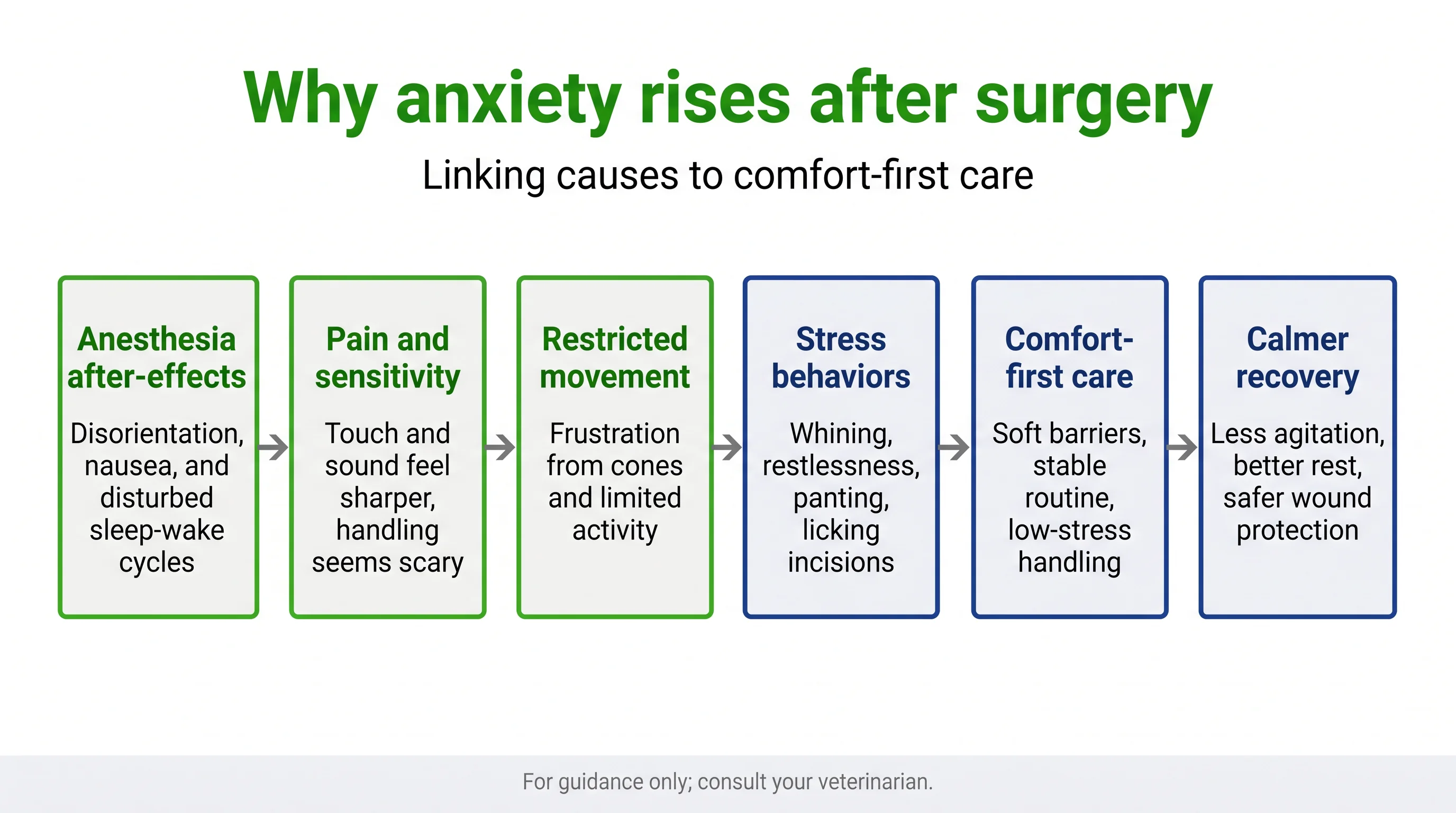
Dogs may experience discomfort, disorientation from anesthesia, and altered sleep after procedures. Sensitivity to handling and sound can rise, and coping skills may dip during recovery. Research links surgical stress and behavioral changes, including anxiety and startling, in dogs and cats.[1] Anxiety also affects perceived pain and pain scoring, making recovery observations more complex.[3] These factors explain why post-injury dog anxiety may escalate without clear triggers.
Comfort‑first principles: soft protection, predictable routine, gentle touch
Comfort‑first care emphasizes three pillars. Protect the wound with soft, breathable barriers to reduce chafing and frustration. Keep a predictable routine with regular rest, toileting, and feeding windows to reduce uncertainty. Use gentle touch and calm presence to support the bond, which may help recovery dynamics.[4] This approach helps many families manage post-surgery dog anxiety without over-reliance on harsh tools.
A comfort‑first routine for the first 14 days
Set up the recovery zone (light, sound, slip risk, temperature)
Create a quiet area with soft bedding, stable temperature, and dimmable light. Use rugs or yoga mats to reduce slips. Keep bowls nearby to minimize steps. Prepare non‑slip pathways for toileting. If your veterinarian recommends support, an elastic leg bandage can provide light stabilization without rigid bulk.
Replace hard cones when appropriate: soft barriers and targeted protection
Discuss alternatives with your veterinarian to attempt dog recovery without cone stress. For body wounds, consider t‑shirts, recovery suits, or targeted coverage over the site. For paws, canine recovery boots can deter licking while preserving mobility. Many pet owners find Healers Therapeutic & Anxiety Front Body Wrap helpful for this task.
Micro‑walks, sniff breaks, and calm engagement without overexertion
Replace long walks with 3–6 brief, on‑leash potty breaks. Add 2–3 minutes of slow sniffing to reduce arousal. Evidence suggests environmental enrichment can lessen postoperative anxiety and support comfort in dogs after spinal surgery.[2] Keep movements linear and controlled.
Wound‑care basics: cleanse, cover, and monitor
For dog wound care at home, follow your veterinarian’s protocol. Cleanse with an appropriate solution, pat dry, and apply breathable coverage if advised. Monitor for redness, swelling, discharge, heat, or odor. Keep dressings dry and change them if damp or soiled. Do not self‑apply ointments without veterinary guidance.
Quick decision guide
If the hard cone causes panic, then try a soft alternative plus targeted coverage
Switch to a soft collar, recovery suit, or localized barrier after veterinary approval. Combine this with supervision during higher‑risk times, such as after meals or at bedtime, when licking impulses may increase.
If paw or leg licking risks the incision, then use medical booties or elastic wraps
Medical booties can protect sutures and bandages while maintaining traction. An elastic wrap should be snug but not tight. Check toes for warmth and normal color. Remove or adjust if swelling or dampness occurs.
If pacing and whining increase at night, then adjust pain control timing and environment
Ask your veterinarian about shifting dosing toward evening. Create a darker, quieter bedroom zone. Add a low fan for consistent sound. Offer a brief pre‑bed sniff walk to release tension without overexertion.
If movement must be limited, then use short, frequent enrichment instead of long sessions
Offer two to five minutes of food puzzles, lick mats, or cue‑and‑treat focus games three to five times daily. Keep arousal low. Stop before your dog escalates. This approach supports calm engagement.
If bandage moisture is present, then change the dressing and add breathable protection
Moisture invites maceration. Replace the dressing, dry the area, and cover with breathable layers. Use a protective booty for outdoor toileting. Prevent licking by supervising during the first 30 minutes after rebandaging.
If appetite dips mildly, then split meals and reduce nausea triggers
Offer smaller, more frequent feedings during medication phases. Avoid high‑fat or highly novel foods. Keep water available at all times. Contact your veterinarian if appetite does not improve within 24–48 hours.
If anxiety spikes during rechecks, then practice low‑stress transport routines
Condition the car with short, calm sessions before appointments. Use non‑slip bedding and safe restraint. Review travel and car anxiety strategies and practice low‑stress handling at home before clinic days to reduce escalation.
Monitoring guidance: what to expect at 7–14 days and 4–8 weeks
7–14 days: comfort markers, incision status, activity tolerance
By two weeks, many dogs show steadier sleep, consistent toileting, and tolerance for brief, supervised ambulation. Anxiety that was tied to acute pain may improve with effective analgesia and routine.[3] Incisions should be closed, dry, and less pink. Mild stiffness after rest may persist.
4–8 weeks: mobility, resilience to triggers, tapering supports
Over weeks four to eight, expect gradual increases in controlled activity, smoother transitions between rest and movement, and fewer stress spikes. Gentle caregiver presence may support resilience as activity widens.[4] Discuss tapering wraps, booties, and barriers with your veterinarian.

Practical safety boundaries
When to stop and call your veterinarian
Stop activity and call immediately for fever, marked swelling, foul odor, bleeding, sudden limping, vomiting, or lethargy. Escalating anxiety with pain vocalization, or persistent incision attention, also warrants prompt veterinary guidance.
Fit, hygiene, and environment safeguards
Check all protective gear twice daily for rubbing, moisture, or heat buildup. Keep floors dry and walkways clear. Wash reusable items routinely. Avoid tight elastic that indents skin. Supervise when new barriers are introduced.
Evidence status: what research suggests and where gaps remain
Pain control and anxiety interaction
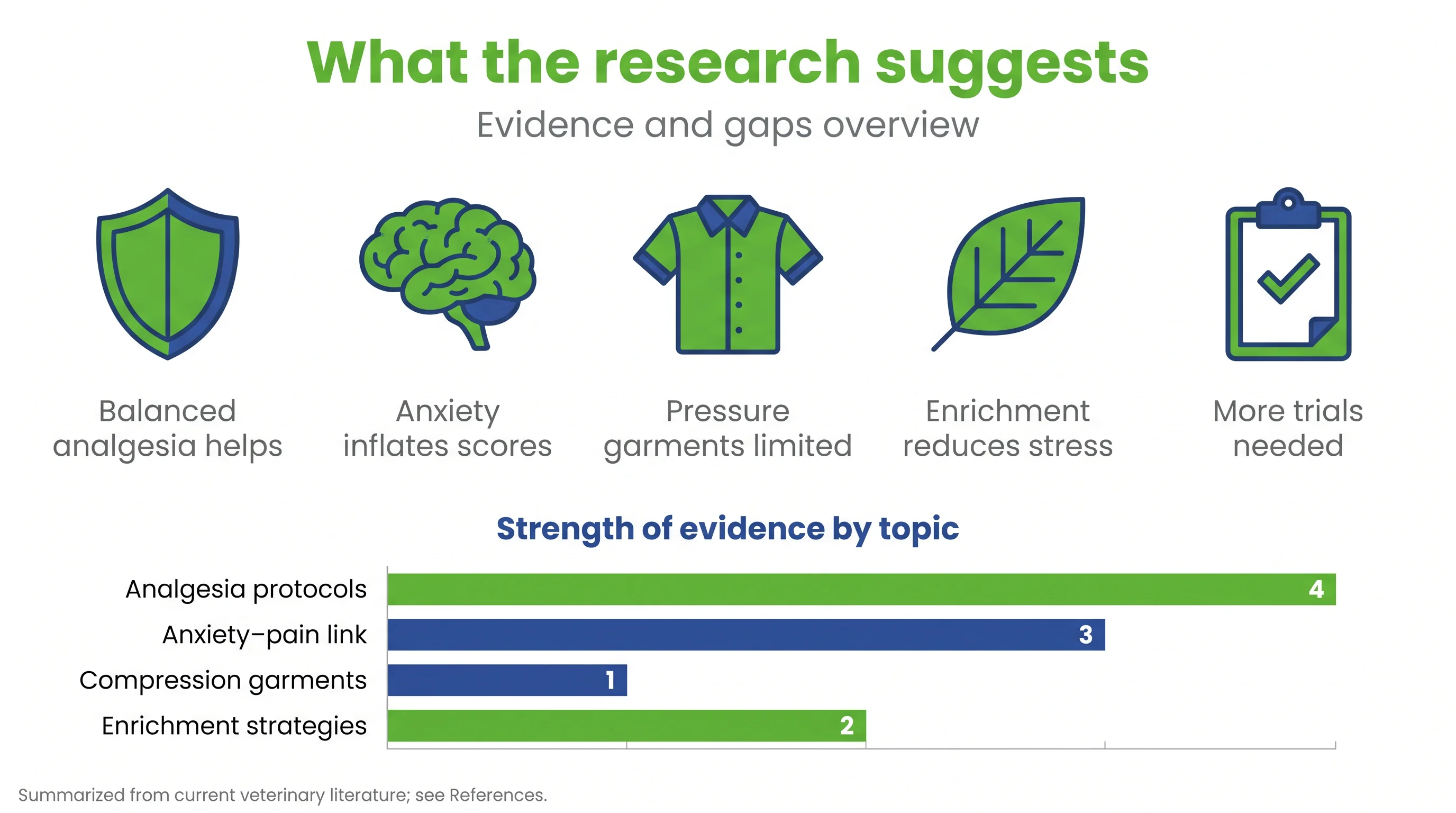
Anxiety can heighten pain expression and complicate pain scoring in dogs.[3] Surgical stress also alters behavior during recovery.[1] Balanced analgesia, predictable routines, and gentle handling may support calmer recoveries, though individual response varies.
Compression and wrap‑style calming
Pressure‑based garments aim to provide steady, low‑level compression. Direct, high‑quality evidence remains limited in postoperative contexts. Enrichment and predictable caregiving show promise for reducing anxiety.[2] For broader context, see Natural Calming Aids and Body Wraps: What Helps and When. Many families also explore an anxiety wrap for dogs alongside veterinary advice.
Topicals and HOCl wound hygiene
Hygienic wound care reduces infection risks while avoiding harsh irritants. Postoperative complications can stem from insufficient pain and infection control, which also influence behavior.[1] Discuss HOCl wound cleanser options with your veterinarian to maintain a clean, low‑sting routine at home.
Turmeric and inflammation support
Turmeric and curcumin are often suggested for inflammation. However, dosing, bioavailability, and interactions with medications can vary widely. Evidence in postoperative canine recovery is not definitive. Seek veterinary guidance before adding supplements.
Step‑by‑step: swap the cone for targeted comfort
Hands‑on fitting: booties and elastic wraps
Measure paws when your dog is standing. Choose booties that allow natural splay and traction. For limbs, apply an elastic wrap with even tension, leaving toes visible. Check every few hours for warmth, dryness, and normal color.
Layering soft barriers with supervision
Combine a light garment with focused coverage over the incision zone. Keep the neck and shoulders free to prevent chafing. Supervise during first trials to confirm your dog cannot access the site or chew gear.
Calming routine: touch, scent, and predictable cues
Use slow strokes along the chest and shoulders, paired with a soft verbal marker. Offer a familiar scent item and a short lick‑mat session. Close with a consistent cue, then guide your dog to rest.
Frequently Asked Questions
How do I know if my dog’s anxiety is from pain or from the cone?
If anxiety eases after pain medication but returns with handling or cone application, both factors may contribute. Observe changes 60–90 minutes after dosing and during supervised cone‑free periods with targeted protection. Note patterns.
Can I safely replace the hard cone after surgery?
In some cases, a soft barrier and targeted protection like booties or wraps may reduce stress while preventing licking. Confirm with your veterinarian for your dog’s specific incision location and risk level. Supervise early trials.
What enrichment is safe during restricted activity?
Short scent games, lick mats, and low‑arousal training may support calm engagement. Avoid jumping, tugging, and fast turns until your veterinarian clears activity. Keep sessions brief, frequent, and predictable to reduce overexcitement and strain.
How often should I check the incision and bandages?
Check at least twice daily for redness, heat, discharge, odor, or gaps. Replace any wet or soiled bandage promptly and contact your veterinarian if changes escalate. Note trends in comfort, appetite, and sleep.
When should I be concerned about ongoing anxiety?
If anxiety persists or worsens after 7–10 days despite pain control and environmental adjustments, consult your veterinarian. Some dogs may benefit from additional medical or behavioral support. Early intervention helps prevent setbacks.
Further reading and tools
Recovery checklists and home first‑aid essentials
Prepare a recovery station with non‑slip mats, breathable barriers, clean wraps, and a stocked first‑aid kit. Review calming strategies and enrichment ideas in advance. Use checklists to track medication timing, appetite, toileting, and incision notes.
Explore the Dog Anxiety Support hub
For a broader view on anxiety triggers, low‑stress handling, and training frameworks that complement recovery, visit our Dog Anxiety Support hub. It connects comfort‑first tactics with long‑term resilience as activity gradually returns.
References
- I Hernández-Avalos et al. (2021). Neurobiology of anesthetic-surgical stress and induced behavioral changes in dogs and cats: a review. Veterinary …. View article
- E Pennington et al. (2023). Evaluation of different methods of environmental enrichment to control anxiety in dogs undergoing hemilaminectomy after acute intervertebral disc extrusion: a …. Frontiers in Veterinary …. View article
- B Ellwood et al. (2022). Investigating the effect of anxiety on pain scores in dogs. Veterinary anaesthesia and analgesia. View article
- W Liu et al. (2024). The Human-Animal Bond and Its Influence on Surgical Recovery in Pets. International Journal of Molecular …. View article


