

Noise Phobias in Dogs: A 3‑Phase Calm‑Down Protocol for Thunder and Fireworks
Noise Phobias in Dogs: A 3‑Phase Calm‑Down Protocol for Thunder and Fireworks
Thunder and fireworks can turn a calm evening into chaos. Dogs with noise phobias may panic, hide, or attempt escape. Some refuse food and shake uncontrollably.
Preparation and structure reduce fear and speed recovery. This focused plan addresses dog thunder anxiety and dog fireworks anxiety. You will learn pre‑event setup, in‑the‑moment soothing, and post‑event decompression steps. You will also see monitoring checkpoints and safety limits.
What This Protocol Solves (and When to Use It)
One scenario: predictable storms and holiday fireworks
Use this protocol when the forecast or calendar predicts loud events. It is ideal for canine noise sensitivity involving thunder or neighborhood fireworks. It also helps when you must calm dog during fireworks quickly.
How this 3‑phase plan reduces arousal and speeds recovery
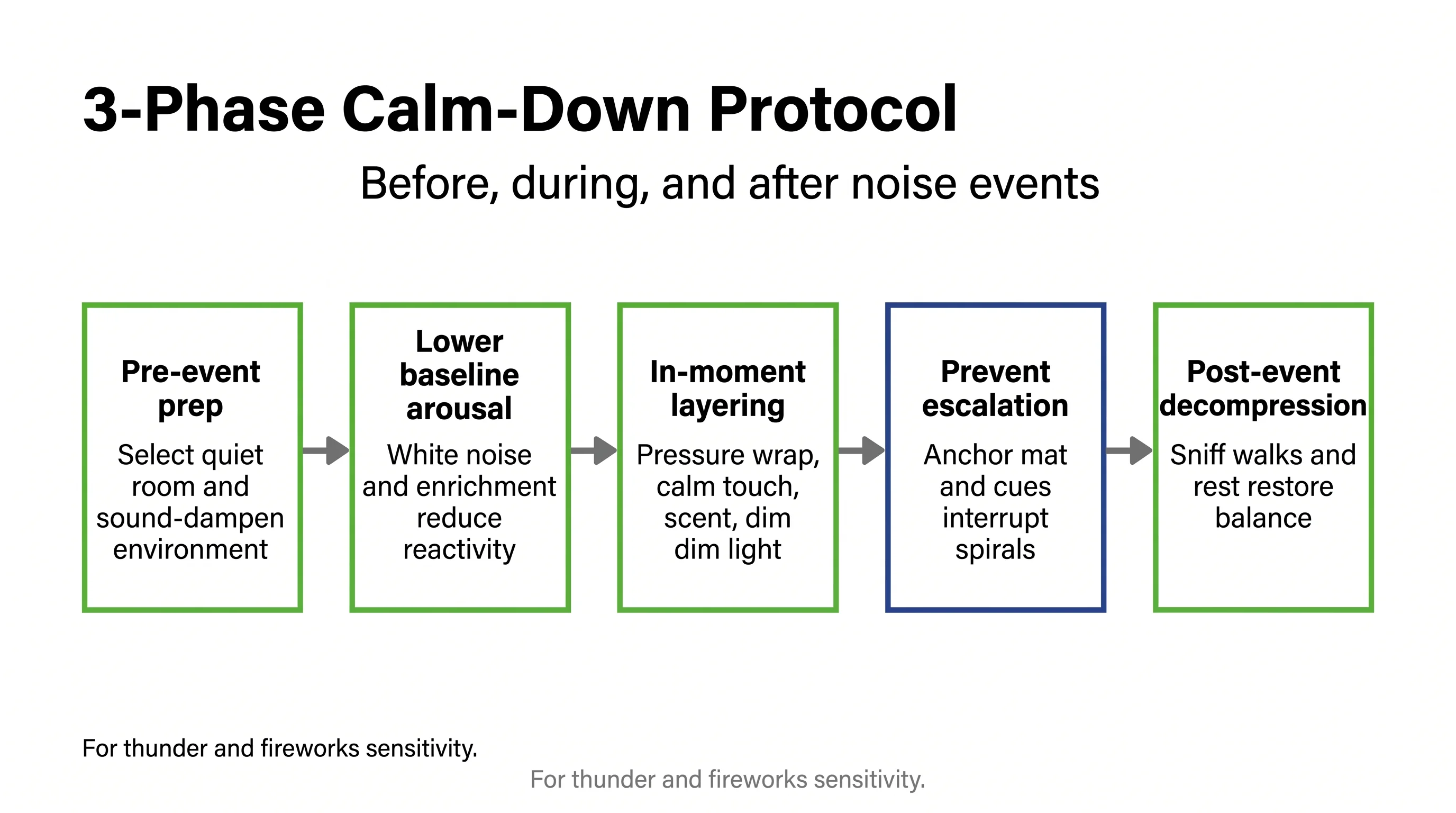
Structured preparation lowers baseline arousal. Calm cues and sensory layering during noise may prevent escalation. Post‑event decompression restores normal physiology and behavior. Even single intense noise events can trigger lasting fear, so planning matters[3].
Phase 1: Pre‑Event Prep (24–48 Hours Before)
Set the environment: sound‑dampened safe room and white noise
Choose an interior room with minimal windows. Close curtains and add rugs, blankets, or acoustic panels to reduce echoes. Use steady white noise or low‑volume brown noise. Keep lighting bright to blunt flashes.
Stock your toolkit: wraps, chews, long‑lasting licks, enrichment
Prepare frozen lick mats, stuffed Kongs, and durable chews. Stage a weighted blanket alternative and a fitted anxiety wrap. Add snuffle mats, scent pouches, and puzzle feeders. Keep water available and a familiar bed or mat.
Prime with micro‑exposures and counter‑conditioning
Run brief, low‑volume storm or fireworks tracks. Pair each session with high‑value food, calm praise, or play. Keep intensity below startle thresholds. Evidence supports gradual desensitization with positive pairing for noise phobias in dogs[1].
Nutrition and supplements that may support calm
Offer easy‑to‑digest meals and steady hydration. Some dogs benefit from calming nutraceuticals with evidence for mild anxiolytic effects. Discuss options with your veterinarian. Pharmacologic plans may complement training if sensitivity is severe[2].
Phase 2: In‑the‑Moment Soothing (During Thunder/Fireworks)
Settle protocol: anchor mat, rhythmic touch, and slow‑breathing cues
Guide your dog to an anchor mat taught during quiet times. Use steady, predictable touch down the shoulders and chest. Breathe slowly and speak in low, even tones. Reinforce any head‑down, still, or sigh behaviors.
Use of anxiety wraps and sensory layering
Apply a snug, well‑fitted pressure wrap to provide gentle, consistent input. Layer white noise, dim light, and a familiar scent. Many pet owners find Healers Therapeutic & Anxiety Front Body Wrap helpful for this task. Fit and comfort should always be verified.
Engagement alternatives: scent games, lick mats, snuffle work
Encourage nose‑down activities that promote self‑soothing. Use scatter feeding, sniff boxes, or simple foraging trails. Present frozen licks to extend calm focus. Keep sessions brief and stop before interest drops.
When to pause interaction and reduce stimuli
If your dog refuses food, shakes intensely, or paces nonstop, reduce input. Turn off training games and lower light and noise. Sit quietly nearby. Avoid pressure to engage until breathing slows.
Phase 3: Post‑Event Decompression (0–48 Hours After)
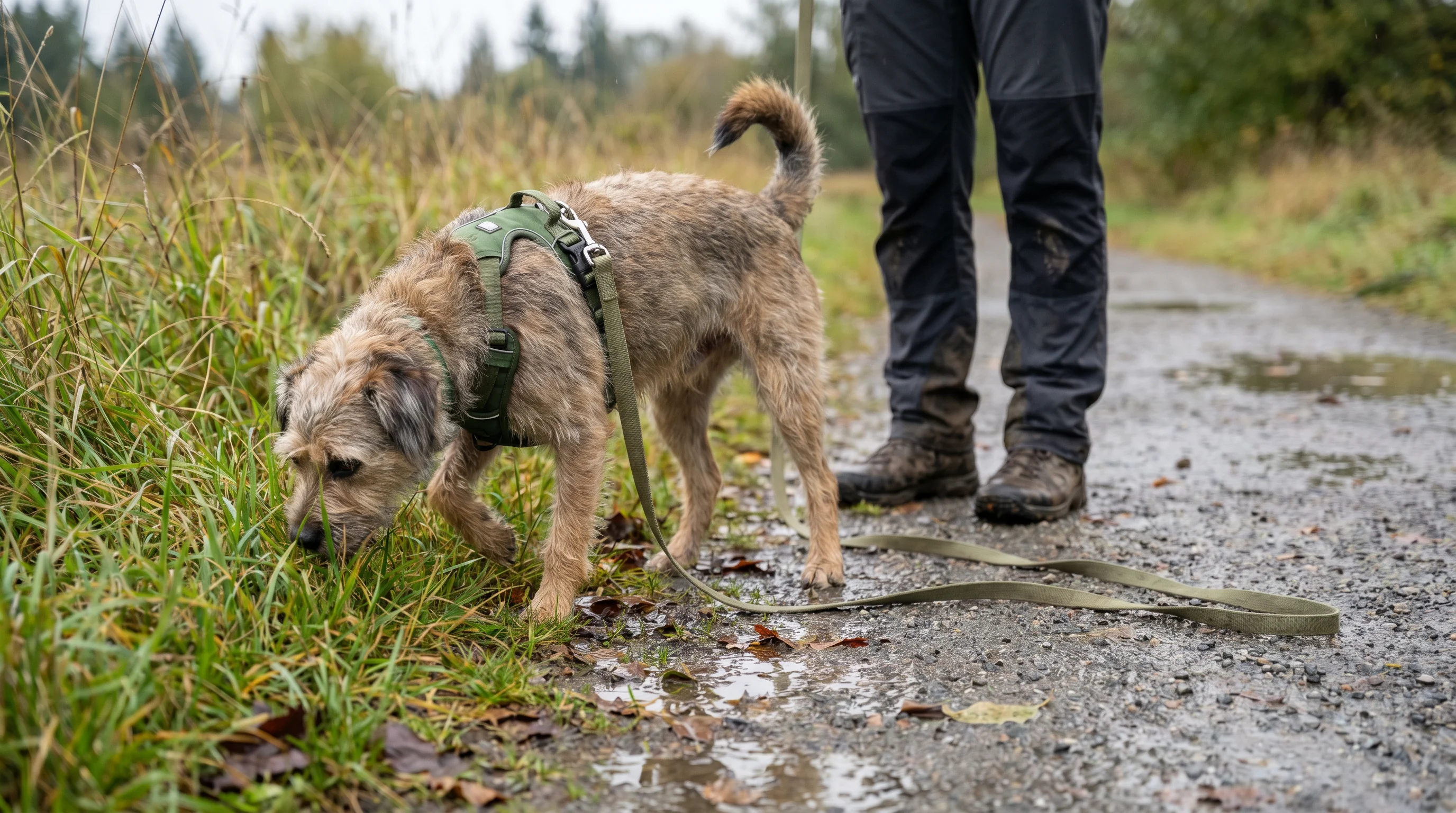
Active decompression: sniff walks and foraging
Schedule unhurried sniff walks in low‑traffic areas. Use long‑line exploration or yard foraging. Keep duration moderate and prioritize agency. Sniffing may help normalize arousal after dog fireworks anxiety episodes.
Sleep hygiene and gentle body care
Protect 12–16 hours of distributed rest. Offer a warm, padded bed in a quiet area. Brush gently and check for scrapes from frantic movement. Keep first‑aid essentials handy for minor paw or skin issues.
Reset training: short calm‑capture sessions
Mark and reward spontaneous calm like chin‑on‑paws or soft eyes. Keep sessions under two minutes. Use high‑value rewards and end while your dog remains settled. This rebuilds reinforcement history for relaxation.
Quick Decision Guide
- If thunder is forecast tonight, prepare the safe room now and run two five‑minute micro‑exposure sessions at lunch and early evening.
- If fireworks start unexpectedly, move to the safe room, start white noise, apply the wrap, and present a frozen lick within two minutes.
- If your dog will not take food, stop training. Dim lights, reduce voice, and sit still. Try scent scattering only when breathing slows.
- If pacing persists over 15 minutes, add gentle pressure touch in 10 strokes, then pause. If no change, hold quiet proximity without talking.
- If your dog fixates on doors or windows, block access with gates or crates used positively. Offer a mat and slow licking activity.
- If startling intensifies mid‑session, reduce sound levels or move rooms. Switch to passive coping: bed, white noise, and low lighting.
- If morning after rest is poor, schedule a sniff walk, a foraging box, and an early nap window with minimal household disruptions.
Monitoring Guidance: What to Track at 7–14 Days and 4–8 Weeks
Behavior metrics, tolerance windows, and recovery curves
Track startle intensity, time to accept food, and duration to settle post‑noise. Note tolerance windows for volume and distance from windows. Over weeks, aim for shorter recoveries and more frequent mat settles[1].
When to escalate to a veterinarian or certified behaviorist
Escalate if your dog cannot take food for multiple events, exhibits escape attempts, or worsens despite careful desensitization. Medication‑assisted plans may improve welfare and training responsiveness for severe cases[2].
Practical Safety Boundaries
Signs of distress and red‑flag symptoms
Red flags include frantic scratching at doors, panting with glazed eyes, dilated pupils, trembling that persists, and refusal to drink. Self‑injury, house‑soiling from panic, or escape attempts warrant urgent professional guidance.
Handling do’s and don’ts during acute panic
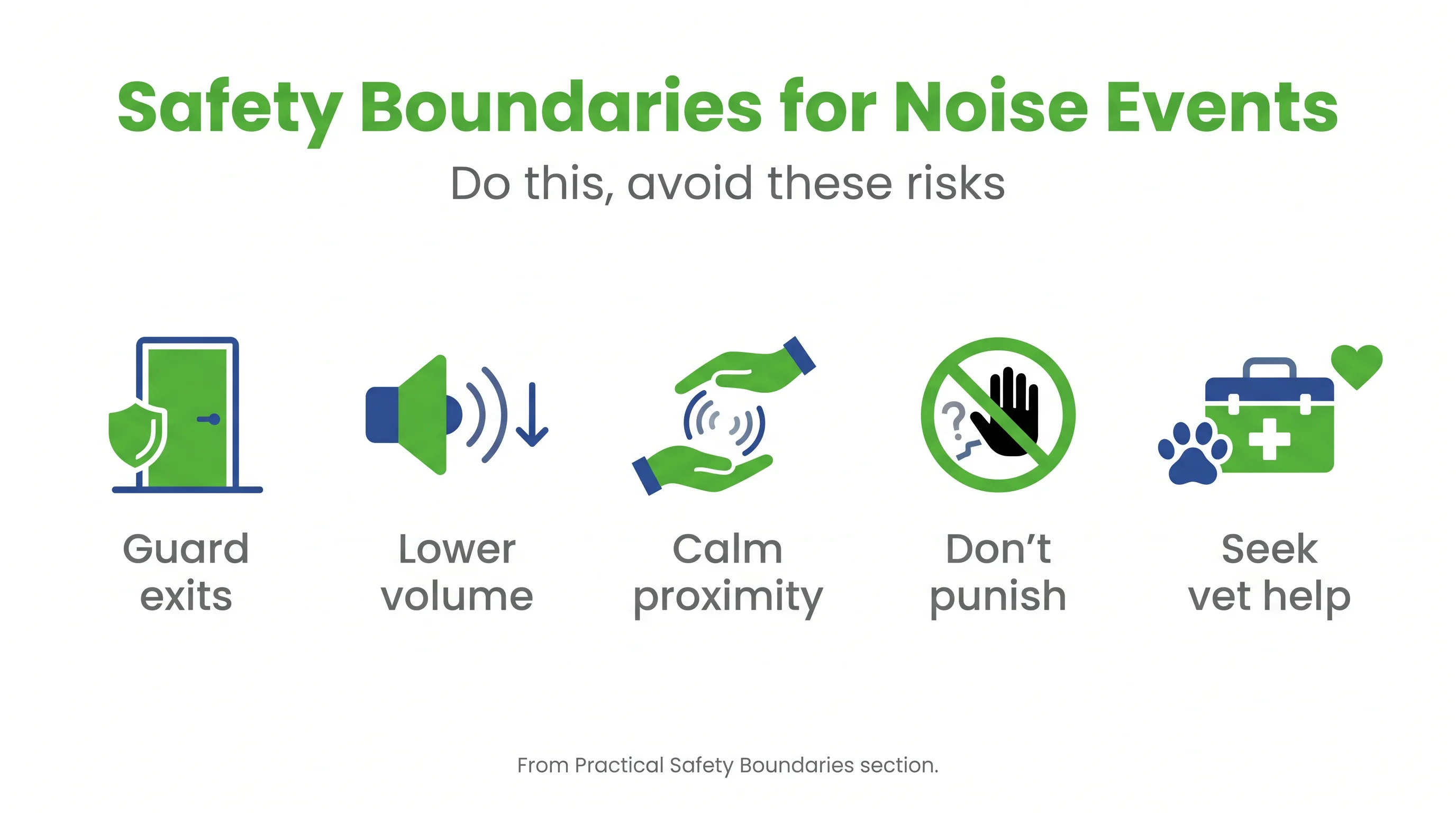
Do minimize demands, reduce stimuli, and guard exits. Do use calm proximity and predictable routines. Do not punish vocalizing or clinging. Do not restrain forcibly unless necessary for safety. Avoid crowding or repeated coaxing.
Evidence Status: What Research Suggests
Desensitization and counter‑conditioning
Gradual sound exposure paired with high‑value rewards is a core strategy. Reviews suggest these methods reduce fear when applied consistently below threshold and tailored to the individual dog[1][4].
Pressure wraps and sensory strategies
Gentle, evenly distributed pressure may lower arousal in some dogs. Best results appear when wraps complement a broader, positive plan rather than act alone. Fit, timing, and dog preference remain key variables[1].
Nutraceuticals and calming aids
Evidence for nutraceuticals is mixed but promising for select compounds. Consider veterinary input for combination plans that address pain, inflammation, and anxiety. Some owners explore options like turmeric paste for dogs to support overall comfort alongside training[1].
Step‑by‑Step Checklist: The 3‑Phase Calm‑Down Protocol
Printable sequence for prep, during, and after
- Twenty‑four to forty‑eight hours prior: set safe room, stage tools, and run two to four five‑minute micro‑exposures below threshold with treats.
- Six to twelve hours prior: freeze lick mats, pre‑portion rewards, rehearse mat settles for two minutes, and confirm wrap fit.
- At event onset: move to safe room, start white noise, apply wrap, cue mat, reinforce calm, and begin licking or scent foraging.
- During peaks: reduce talk, maintain slow breathing, provide rhythmic touch, and rotate enrichment every 10–15 minutes as tolerated.
- After the event: schedule a quiet sniff walk, protect nap time, check for minor injuries, and log recovery time and food interest.
- Next day: run a short, sub‑threshold sound session with high‑value pairing, and reinforce multiple spontaneous calm moments.
Troubleshooting: When Results Stall
Adjusting intensity, duration, and reinforcement timing
If progress plateaus, lower sound intensity or shorten sessions. Increase reward value and deliver reinforcers sooner after calm behaviors. Simplify tasks and rebuild fluency. Ensure the dog remains sub‑threshold during all exposures[4].
Frequently Asked Questions
How do I calm my dog during fireworks without medication?
Create a sound‑dampened safe room, use white noise, employ an anxiety wrap, and offer high‑value licking or sniffing tasks. Keep lights on, close curtains, and reward any calm behavior.
Do anxiety wraps help dogs with thunder anxiety?
Evidence suggests gentle, consistent pressure may reduce arousal for some dogs. Fit matters; pair wraps with behavior strategies like counter‑conditioning for better outcomes.
Can I start desensitization close to a holiday?
You can begin with very low‑volume sound sessions and positive pairing, but meaningful progress often takes weeks. Keep exposures sub‑threshold and avoid sudden intensity jumps.
What should I track to know if my dog is improving?
Log startle intensity, recovery time, ability to take food, and time spent settled. Over 4–8 weeks, look for shorter recoveries and more frequent calm behaviors.
When should I seek veterinary help for noise phobia?
If your dog cannot eat, pace continuously, vocalizes for hours, or shows self‑injury or escape attempts, consult a veterinarian or behaviorist. Medical options may be appropriate.
Where This Fits in Your Anxiety Plan
This 3‑phase protocol is one component of a comprehensive anxiety strategy. Integrate it with regular mat relaxation training, low‑stress handling, and enrichment suited to your dog’s preferences. Consistency across caregivers improves results.
For households balancing work schedules, coordinate quiet crate time and recovery naps to prevent overtired reactivity. See guidance on routine building and alone‑time skills to support balanced arousal across days: crate and alone‑time training approaches.
Dogs with layered stressors, such as medical recovery or grooming sensitivities, may need additional accommodations. Explore complementary strategies that reduce handling stress and refine body care routines: home handling tips for vet and grooming days. For product selection and fit considerations, review calming aids and body wrap best practices before high‑noise seasons.
For broader strategies, return to the main Dog Anxiety Support guide.
References
- S Riemer (2023). Therapy and prevention of noise fears in dogs—A review of the current evidence for practitioners. Animals. View article
- AC Muñoz Amezcua et al. (2024). … efficacy and safety of long-term oral imepitoin treatment for control of (thunder) storm-associated noise phobia/noise aversion in dogs using an individualized …. Animals. View article
- A Bremhorst et al. (2024). Noise-related fear in dogs. Companion Animal. View article
- KC Ballantyne (2023). Noise aversion. Behavior Problems of the Dog and Cat-E-Book …. View article


