%27%3E%3Crect%20x=%27-35%27%20y=%27-26%27%20width=%2770%27%20height=%2752%27%20rx=%2713%27%20fill=%27%2364BA5D%27/%3E%3Cpath%20d=%27M-10%2024l0%2016l16%20-16z%27%20fill=%27%2364BA5D%27/%3E%3Cg%20fill=%27%23fff%27%3E%3Cellipse%20cx=%270%27%20cy=%277%27%20rx=%2712%27%20ry=%2710%27/%3E%3Cellipse%20cx=%27-13%27%20cy=%27-8%27%20rx=%275%27%20ry=%276.5%27/%3E%3Cellipse%20cx=%27-5%27%20cy=%27-15%27%20rx=%275%27%20ry=%276.5%27/%3E%3Cellipse%20cx=%275%27%20cy=%27-15%27%20rx=%275%27%20ry=%276.5%27/%3E%3Cellipse%20cx=%2713%27%20cy=%27-8%27%20rx=%275%27%20ry=%276.5%27/%3E%3C/g%3E%3C/g%3E%3Cpath%20id=%27b%27%20d=%27M58%20100a42%2042%200%200%200%2084%200%27%20fill=%27none%27/%3E%3Ctext%20font-family=%27Arial,Helvetica,sans-serif%27%20font-weight=%27bold%27%20font-size=%2711%27%20fill=%27%2364BA5D%27%20letter-spacing=%272.5%27%3E%3CtextPath%20href=%27%23b%27%20startOffset=%2750%25%27%20text-anchor=%27middle%27%3EHEALERS%20PET%20CARE%3C/textPath%3E%3C/text%3E%3C/svg%3E)

Newly Adopted or Rescue Dogs: 6‑Week Decompression Plan for Anxiety
Newly Adopted or Rescue Dogs: 6‑Week Decompression Plan for Anxiety
Bringing home a rescue dog is rewarding and delicate. Your dog enters a new world of sounds, scents, and expectations. Predictability makes that world safer.
This rescue dog decompression plan builds a humane routine for the first six weeks. It matters because a newly adopted dog routine eases uncertainty and reduces stress. You will learn a calm schedule, decision cues, and safe boundaries. For broader frameworks, see our Dog Anxiety Support orientation hub.
Why a 6‑Week Decompression Plan Helps Newly Adopted Dogs
Adoption transitions can amplify stress behaviors as dogs adjust to unfamiliar homes and routines. Research and adopter narratives suggest predictable structure may reduce anxiety while behavior patterns continue evolving over weeks to months.[2][1]
Core objective: predictability reduces uncertainty
A steady schedule lowers cognitive load. It limits choices and guesswork for the dog. Consistent feeding, potty, sleep, and walks shape safe expectations. That predictability becomes a daily calming plan for dogs.
One scenario we solve: anxious dogs in unfamiliar homes
Dogs arriving from shelters or instability may startle, pace, or shut down. This plan builds gradual exposure, not pressure. It respects the dog adjustment period 3‑3‑3 rule while adding measurable structure.
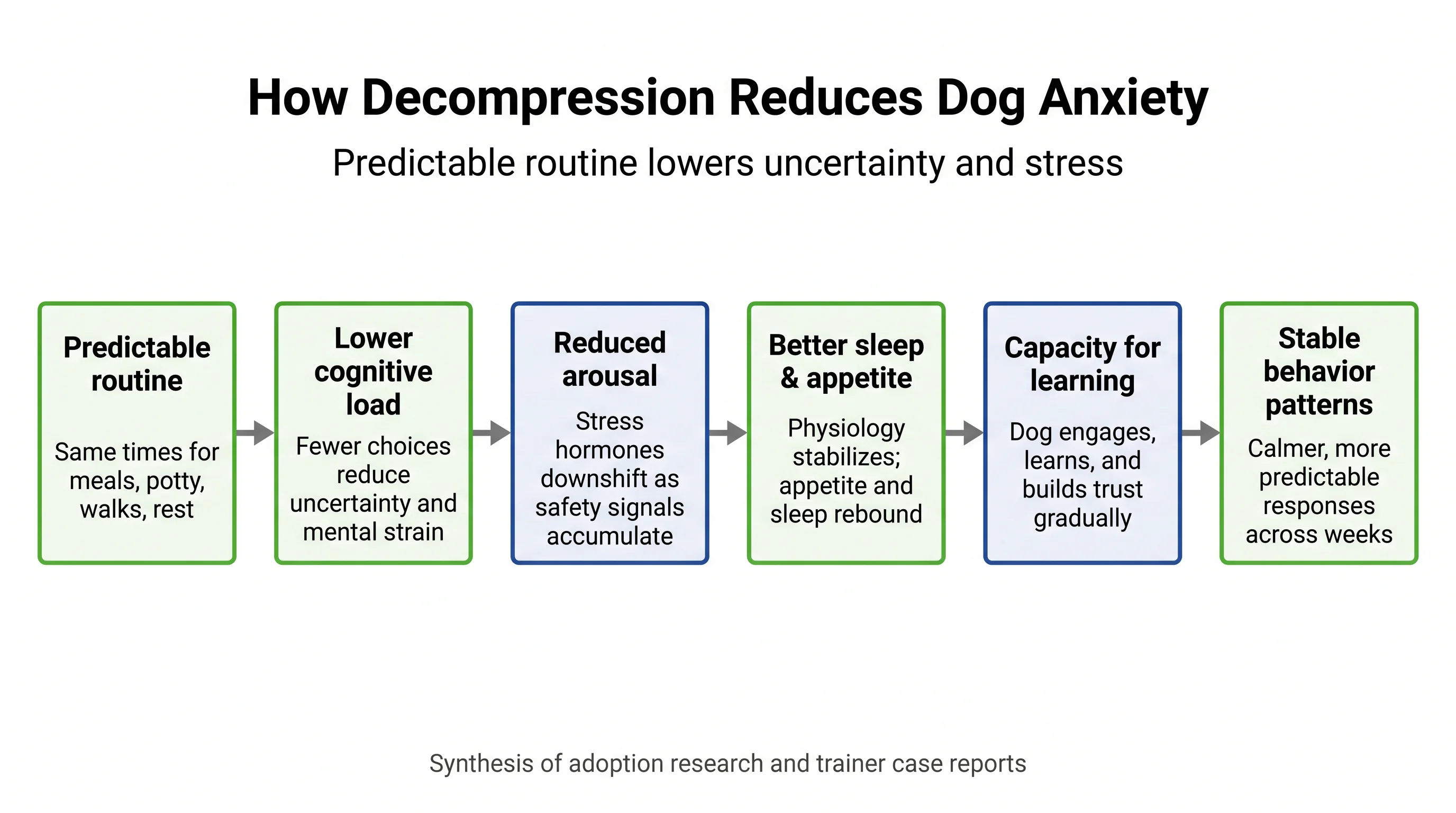
Weeks 1–6: Step‑by‑Step Structure
Use the same wake, feed, walk, rest, and enrichment blocks daily. Keep notes so small wins are visible and repeatable.
Week 1: Quiet arrival, safe space, low demands
Limit visitors. Set up a gated calm area with bed, water, and chew. Offer short backyard potty breaks. Speak softly. Keep walks minimal or skip if the dog seems overwhelmed.
Week 2: Gentle routine, short decompression walks
Establish two to three short, quiet walks daily. Follow one route. Feed at consistent times. Start alone‑time practice with very brief departures, returning before distress escalates.
Week 3: Pattern building, micro‑training, enrichment
Introduce two to three minutes of simple cues, using food rewards. Add scent games and food puzzles. Keep sessions brief and upbeat. Continue predictable routes and controlled social exposure.
Week 4: Gradual novelty, supervised introductions
Add one new environment per week like a calm park corner. Introduce one friend at a time outdoors, parallel walking first. Keep duration short. End sessions while your dog remains comfortable.
Week 5: Controlled challenges, short car trips
Practice one to two short car rides with restraint and treats. Pair loading with food. Stop before signs of distress. For extra guidance, see travel and car anxiety strategies.
Week 6: Consolidate habits, evaluate next steps
Repeat successful routines. Stretch training by small increments. If alone time remains difficult, deepen structure using crate and alone‑time training. Consider professional help if progress stalls.
Quick Decision Guide
Use these fast pivots to protect progress during dog anxiety decompression.
If refuses to eat for 24 hours, then offer more aromatic food and consult if it persists
Warm wet food or add low‑sodium broth. Hand‑feed a few bites, then pause. If refusal continues beyond 24–36 hours, contact your veterinarian to exclude medical causes.
If pants and paces indoors, then reduce stimuli and shorten sessions
Close curtains, lower noise, and move to a calmer room. Shorten walks and training. Add a predictable rest block and a safe chew to encourage self‑soothing.
If barks at visitors, then pause visits and counter‑condition at distance
Cease drop‑ins for now. Practice at thresholds the dog tolerates. Pair the sight or sound of people with high‑value treats at a comfortable distance, then retreat.
If guards resources, then manage environment and feed in a separate zone
Prevent conflict by using gates and individual feeding areas. Avoid reaching for valued items. Trade for better food only when safe and reliable.
If there are accidents, then adjust schedules and limit access with an exercise pen
Increase potty breaks. Supervise closely in small areas. Clean with enzymatic products. Reinforce toileting outdoors with immediate rewards.
If destroys objects, then increase chew enrichment and rest
Provide multiple chew types and rotate options. Add structured naps in a quiet zone. Prevent access to tempting items with closed doors and storage.
If startled on walks, then switch to quiet routes and reduce duration
Walk in low‑traffic areas during off‑peak times. Keep circuits short and predictable. End on a calm note and decompress at home with sniffing games.
Monitoring and Adjustments
Track sleep, appetite, elimination, training capacity, and reactions. Look for trendlines, not perfection.
At 7–14 days: what to observe and how to adapt
Expect variable arousal and sleep rebound. Many dogs show shifting activity patterns and stress responses as routines emerge; calibrate demands accordingly.[4] Reduce novelty if food intake dips or reactivity spikes.
At 4–8 weeks: markers of progress and red flags
Progress may include steadier appetite, longer rest, faster recovery after startles, and improved cue response. Red flags include escalating aggression, persistent shutdown, or severe separation distress; seek qualified help promptly.[2]
Practical Safety Boundaries
Prevention protects decompression. Make “safe and simple” your default.
Environment management: zones, barriers and routines
Use baby gates, crates, or pens to create calm zones. Place beds away from doorways. Maintain a fixed daily schedule. Post the routine visibly so all caregivers stay consistent.
Interactions with children and other animals
Always supervise. Teach children to toss treats rather than approach. Gate feeding and resting areas. For resident pets, begin with scent exchanges, then parallel time, progressing only if both remain relaxed.
Walks and safe equipment
Use a well‑fitted harness and backup leash clip. Avoid crowded spaces. Carry high‑value treats for distance‑increasing pivots. Keep ID tags current and microchip registered before any off‑property time.

State of the Evidence
Adoption research highlights fluctuating behaviors across months, emphasizing individualized, context‑led routines rather than rigid timelines.[1][3]
What the evidence suggests about routine and enrichment
Structured routines, gradual exposure, and enrichment may support welfare and learning. Owner accounts consistently value predictability and small, achievable steps during the rescue dog first weeks.[2]
Complementary supports: wraps and supplements with plausible basis
Pressure garments and calming nutraceuticals may help some dogs when paired with training and management. Responses vary widely; introduce slowly, monitor fit and comfort, and prioritize behavior foundations first.[3]
Week 0 Checklist: Preparation
Set the stage before your dog arrives to protect the decompression arc.
Calm space, calendar, signal log
Prepare a gated rest zone with bed, water, and chews. Print a daily schedule. Start a log for appetite, sleep, eliminations, triggers, and recovery times to guide data‑based adjustments.
Basic first aid and daily care kit
Stock enzymatic cleaner, wound wash, soft brush, nail file, treats, food puzzle, and spare leash. Keep veterinarian and emergency clinic contacts visible on the fridge and saved in your phone.
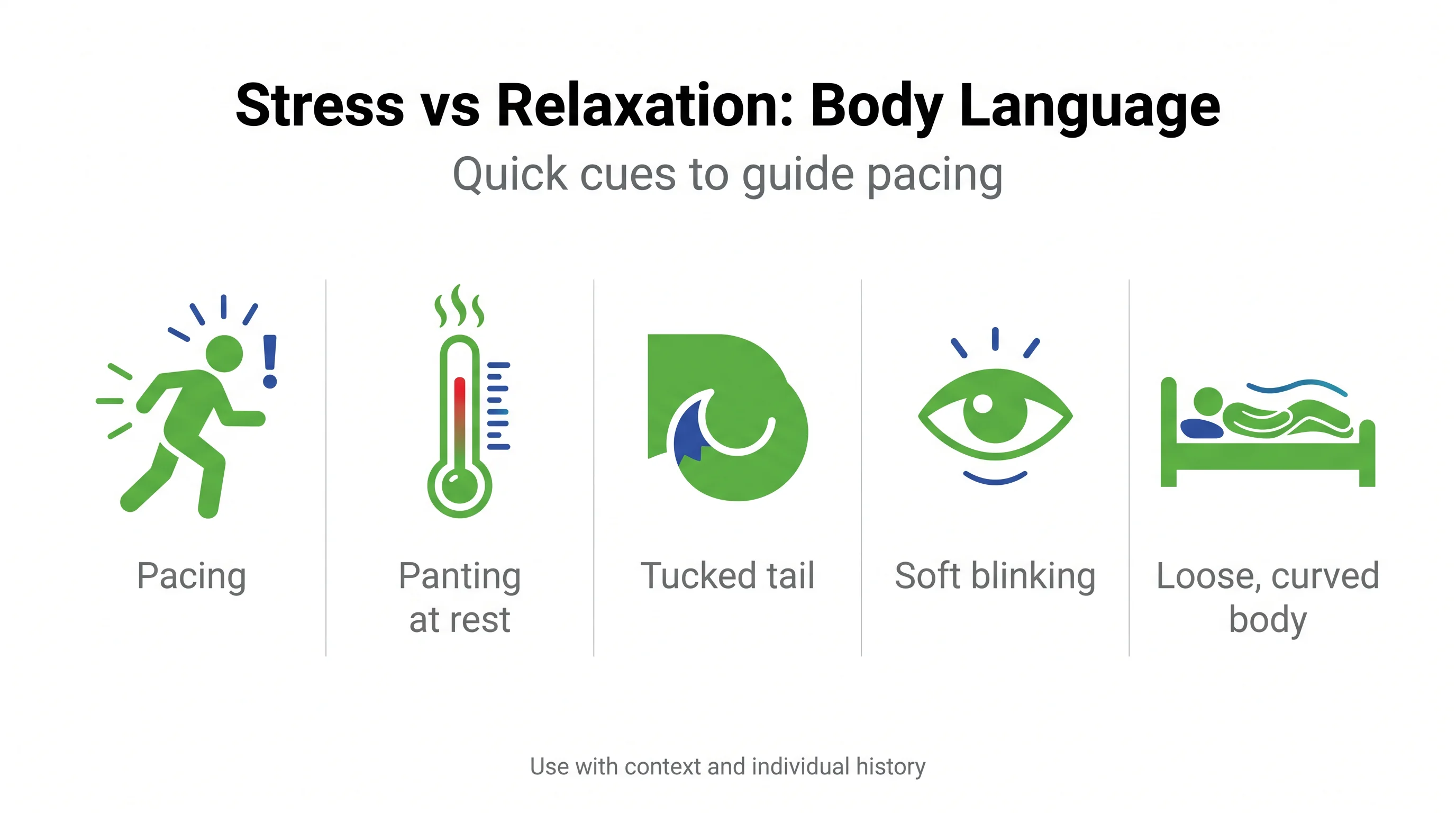
Stress vs. Relaxation: A Quick Guide
Reading body language helps you titrate challenge and rest appropriately.
Stress indicators to watch
Pacing, panting at rest, pinned ears, tucked tail, yawning outside sleep, lip licking, scanning, dilated pupils, startle stacking, and refusal of food suggest the plan needs more simplicity.
Positive adjustment signals
Looser body, soft eyes, normal appetite, exploratory sniffing, calmer recovery after surprises, and voluntary engagement in training indicate readiness for tiny increments of novelty.
How to Integrate Supporting Products Without Interrupting Decompression
Tools should fit around your routine, never replace it. Keep introductions brief and positive.
Protection and gentle paw care after walks
After quiet decompression walks, inspect paws for debris or irritation. Wipe gently and allow rest. If surfaces are rough or hot, consider soft protective booties once the dog accepts handling calmly.
Non‑pharmacological calming support
Some guardians find light pressure helpful during rest blocks. Many pet owners find Healers Therapeutic & Anxiety Front Body Wrap helpful when paired with predictability and enrichment. For evidence‑aligned options, see Natural Calming Aids and Body Wraps: What Helps and When.
Frequently Asked Questions
How long does it take a rescue dog to decompress?
Timelines vary, but many dogs begin to settle after 2–3 weeks of consistent routine and may need 6–8 weeks to show stable behavior patterns. Individual history and sensitivity influence speed.
Should I introduce my new dog to friends and dogs in week one?
It is usually better to limit novelty in week one. Evidence suggests gradual exposure at the dog’s pace may reduce stress and prevent setbacks.
What are early signs my dog is too stressed during decompression?
Watch for persistent pacing, refusal of food, panting at rest, tucked tail, dilated pupils, or startle responses. If these persist several days, reduce demands and consider a vet or behavior consult.
Can calming wraps or supplements help during decompression?
They may support relaxation when paired with routine and environmental management. Responses vary; introduce slowly and monitor comfort and fit.
When should I seek professional help?
If there is aggression, self‑injury, severe separation distress, or no improvement after 4–6 weeks, consult a veterinarian and a certified behavior professional.
Summary and Next Steps
Consolidate the routine and connect with the Dog Anxiety Support orientation hub
Predictability, humane pacing, and measured novelty create safety for anxious, newly adopted dogs. Keep sessions short, log progress, and lean on data, not guesswork. If new challenges emerge, explore targeted guides, including crate and alone‑time training and our Dog Anxiety Support orientation hub. Above all, protect calm habits and celebrate each small sign of trust.
References
- KR Bohland et al. (2023). Shelter dog behavior after adoption: Using the C-BARQ to track dog behavior changes through the first six months after adoption. Plos one. View article
- E Thumpkin et al. (2024). Coming home, staying home: Adopters' stories about transitioning their new dog into their home and family. Animals. View article
- BJ Moyer et al. (2025). A qualitative exploration of owner experiences following dog adoption. Animal Welfare. View article
- GE Phillips (2025). Changes in the Activity Levels and Physiological Welfare of Dogs Pre-and Post-Adoption. 2025 - vtechworks.lib.vt.edu. View article


