

Natural Calming Aids and Body Wraps: What Helps and When
Natural Calming Aids and Body Wraps: What Helps and When
When storms roll in or fireworks begin, some dogs spiral into panic fast. Gentle, non‑prescription options can help you intervene early with structure and care.
This guide focuses on natural calming aids for dogs that you can safely use at home. You will learn how pressure wraps, pheromones, botanicals, and routines work together. You will also get fit, monitoring, and safety tips.
Scenario: Your dog panics during storms and fireworks—what to try first
Why pressure therapy may help with noise reactivity
Noise triggers can flood a dog’s system with arousal and uncertainty. Steady, evenly distributed pressure may offer tactile grounding and reduce vigilance. This mechanism is similar to swaddling, and some dogs show visible settling within minutes. Results vary by temperament and trigger intensity. Fit and timing matter. Apply a well‑fitted anxiety wrap for dogs 20–30 minutes before the forecasted storm or event. Keep the environment controlled with blinds drawn and a consistent white‑noise buffer. Evidence for dog pressure therapy is promising but mixed, so treat it as one tool among several supports.[3]
When to add pheromones, botanicals, and routine pairing
Layer dog‑appeasing pheromones when your dog escalates from alerting to pacing or hiding. Pheromones for dog anxiety may support calmer baseline behavior in multi‑week use. Add canine calming supplements only after you map triggers and patterns. Introduce one supplement at a time and track behavior changes. Pair every aid with predictable routines—quiet room, settled chew, and soft lighting. For event‑specific planning, see a structured approach in our three‑phase noise‑phobia protocol. Review progress every two weeks, then adjust intensity or combinations thoughtfully.[2]

Quick decision guide
Matching common signs to practical next steps
Use this field guide to act quickly yet rationally. Start with the least invasive option, then scale only as needed.
- If your dog freezes, ears back, and trembles, start with a fitted pressure wrap plus white noise and closed curtains.
- If pacing and panting begin 10–20 minutes before thunder, add a DAP diffuser or collar two weeks prior to storm season.
- If your dog startles at flashes, use a dark, low‑echo room and a mat routine with a long‑lasting, safe chew.
- If whining escalates to frantic clawing, shorten exposure. Move to an interior room and use guided decompression with scatter feeding.
- If mild reactivity persists after two weeks, add a single supplement such as L‑theanine and reassess in 10–14 days.
- If distress continues despite these steps, consult your veterinarian. Multimodal plans often yield stronger outcomes than one tactic alone.[1]
How to fit and use calming body wraps safely
Sizing, tension, and session timing
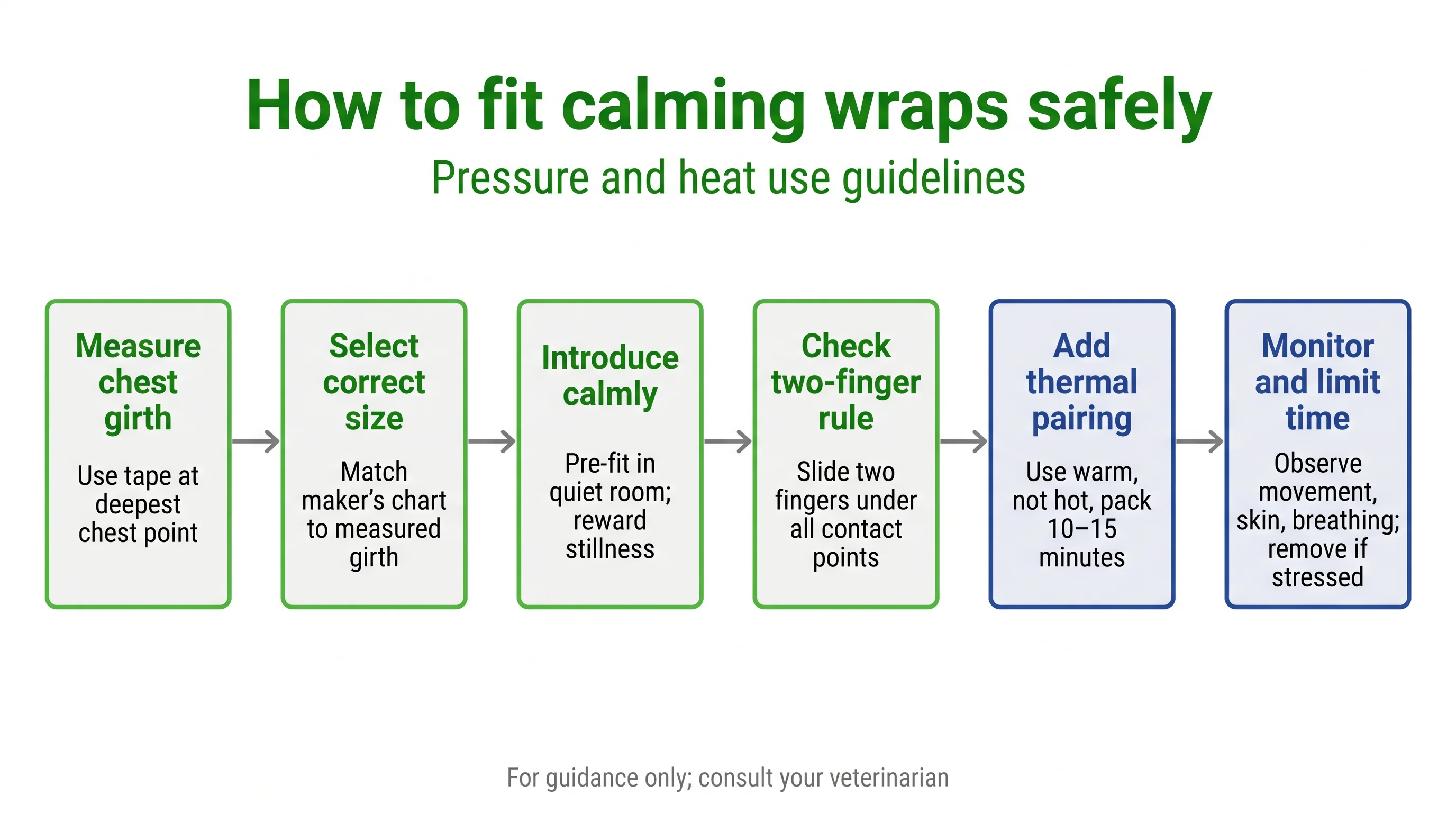
Measure girth at the deepest chest and follow the maker’s chart. Aim for snug, not tight—two fingers should slide under all contact points. Introduce in calm moments first to prevent negative associations. During storms, many dogs tolerate 30–90 minutes per session. Recheck fit after ten minutes, especially with deep‑chested or barrel‑chested breeds. For an easy, machine‑washable option, many pet owners find Healers Therapeutic & Anxiety Front Body Wrap helpful for this task. Rotate off for movement and cooling between sessions. Monitor for coat flattening, friction, or dampness that could irritate skin.
Pairing wraps with hot/cold pockets and decompression
Thermal pairing can complement pressure. Use warm packs that feel comfortably warm, never hot. Limit heat exposure to 10–15 minutes per cycle. For cold, wrap a cool pack in a towel and apply up to 10 minutes for dogs that relax with cooling. Alternate with off‑time to prevent skin stress. Pair sessions with decompression: dim lights, predictable music, and nose‑work snacks. If your dog is newly settled into your home, short decompression windows align well with the weeks 1–6 reset plan for adopted dogs.
Evidence status: what research suggests (and what’s uncertain)
Pressure wraps and tactile stimulation
Evidence for pressure garments indicates potential reductions in arousal and movement in some dogs, but results are inconsistent across populations. Variability likely reflects fit, timing, and individual coping styles. Use wraps as part of a layered plan that also adjusts sound, light, and routines. Expect to measure response over multiple exposures rather than a single “on/off” test. Clinical guidance further stresses owner context and individualized protocols, not one‑size‑fits‑all fixes.[3]
Dog‑appeasing pheromones (DAP)
Reviews suggest DAP may support calmer behavior in specific scenarios, including noise sensitivity, though effect sizes vary. Best practice is early, sustained use—allow 7–14 days to assess trends. Combine with behavior modification for stronger outcomes. Pheromones are generally well tolerated, but confirm placement and air flow for diffusers. Collars can irritate sensitive skin, so rotate position and check weekly.[2]
Botanicals and supplements (e.g., L‑theanine, turmeric)
Some canine calming supplements, such as L‑theanine, L‑tryptophan, and melatonin, may ease anxious arousal in select dogs when dosed per label. Start one product at a time and log changes over two weeks. Turmeric paste for dogs is primarily discussed for joint comfort and antioxidant support; direct anti‑anxiety evidence in dogs remains limited. Use turmeric as an adjunct for comfort, not a sole anti‑anxiety tool. Integrate all supplements within a broader, targeted plan.[2]
Monitoring plan: what to track at 7–14 days and 4–8 weeks
Behavioral metrics and comfort scores
Define three observable signs to track, such as panting rate, pacing frequency, and latency to settle on a mat. Use a 0–5 daily scale. Add context notes: weather, time, and routine changes. Record skin condition at contact points weekly. Include early stress indicators like lip licking, yawning, and head turns to capture subtler improvements. Consistent tracking reduces bias and guides next steps in your plan.[4]
Adjusting intensity, duration, and combinations
At 7–14 days, decide whether to continue, refine, or remove an aid. If settling improves by two scale points, keep the current mix. If not, adjust one variable: timing, duration, or add a pheromone or single supplement. At 4–8 weeks, re‑baseline. If progress stalls, consult your veterinarian or trainer. Evidence shows that combining environmental management with behavior strategies often outperforms single tactics for fear‑based behaviors.[1]
Safety boundaries you should not cross
Fit, heat/cold exposure limits, and interactions
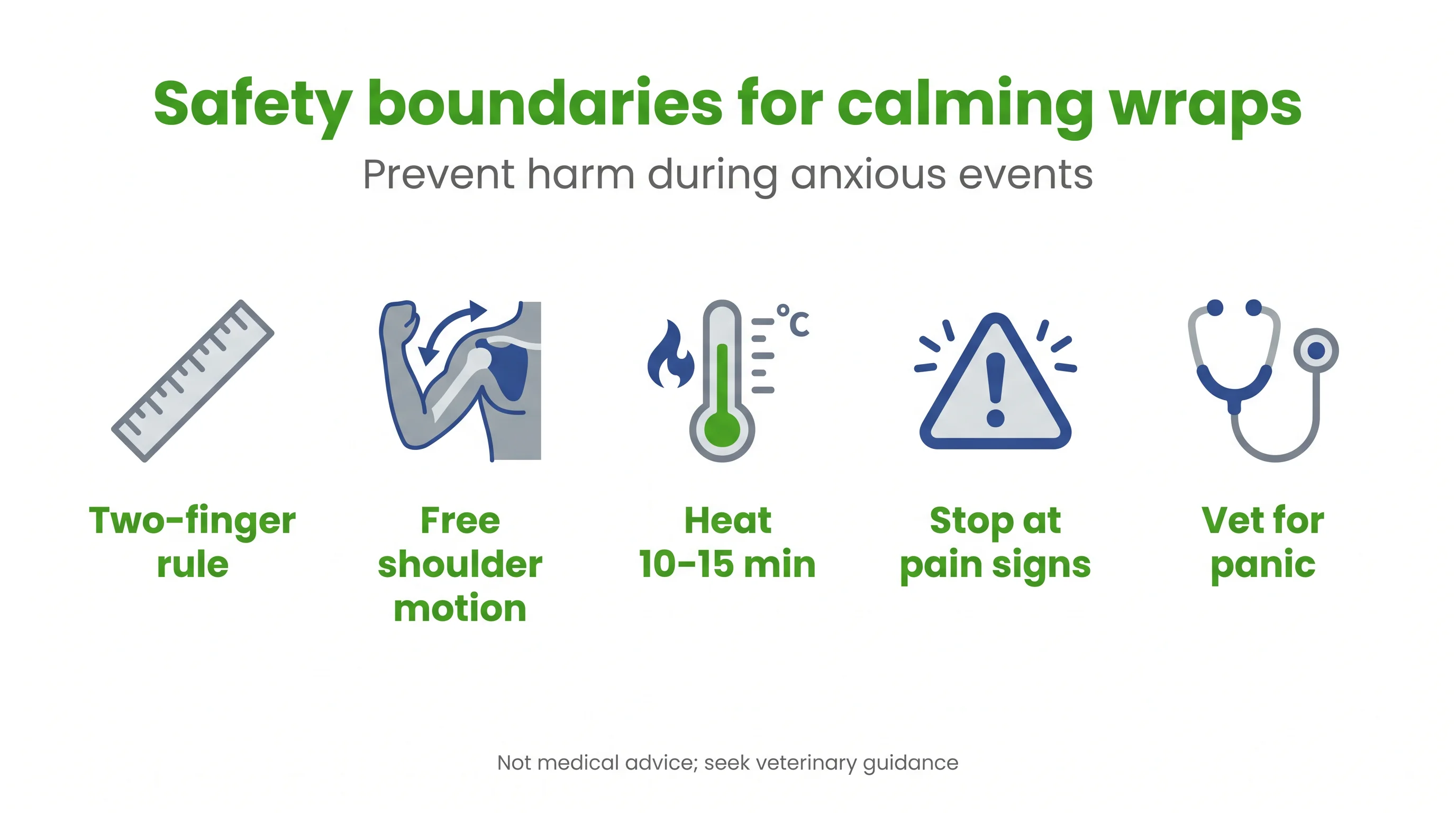
Never constrict breathing or shoulder motion. Maintain the two‑finger rule everywhere. Avoid heat packs that feel hot against your wrist; limit to 10–15 minutes. Keep cold packs wrapped and under 10 minutes. Do not combine multiple new supplements at once. If your dog takes prescription medications, ask your veterinarian about interactions, especially with serotonin‑affecting products. Stop use if you see rubbing, redness, or damp odor from the skin.
When to pause and contact your veterinarian
Pause immediately if your dog vocalizes sharply when fitted, refuses movement, or shows swelling at contact sites. Seek veterinary guidance for panic that leads to self‑injury, property destruction, or continence loss. Dogs with cardiovascular, respiratory, or dermatologic conditions need tailored protocols. If thunderstorms trigger extreme escalation despite layered supports, discuss medical options as part of a structured plan, not a last‑minute rescue.[1]
Fit and care checklist for therapeutic wraps and leg bandages
Breathable materials, skin checks, and cleaning cadence
Choose breathable, medical‑grade textiles with stretch that rebounds without rolling. Pre‑fit in a calm setting and reward stillness. Confirm two‑finger ease at chest and around forelimbs. After each session, lift fur and inspect for moisture, matting, or abrasion. Wash on a gentle cycle after heavy use or every three sessions to minimize buildup. Air dry fully before storage. For leg bandages, recheck toes for warmth and normal color within ten minutes. Replace worn fasteners early to maintain even pressure.
How this fits into broader anxiety support
Linking short‑term calm to training and environment design
Non‑prescription tools create a calmer window for learning. Use that window for gradual desensitization to recorded thunder, starting below your dog’s threshold. Reinforce relaxed postures on a mat, then add faint sound or light cues. Structure predictable pre‑storm routines—water, potty break, chew, quiet room, then wrap. For households balancing work schedules, build resilience with planned alone‑time and crate comfort; see our practical guidance for crate and alone‑time training in busy homes. For an integrated view of how noise, separation, travel, and age‑related changes interact, explore our full orientation to dog anxiety types. Multimodal plans, adjusted over weeks, typically yield steadier progress than single fixes.[2]
Frequently Asked Questions
Do calming body wraps work for all dogs with noise anxiety?
Some dogs show reduced agitation with gentle, consistent pressure, but responses vary. Start before a known trigger, monitor behavior, and combine with environmental strategies.
How long can my dog wear a calming wrap?
Many dogs tolerate 30–90 minute sessions around triggers. Ensure you can fit two fingers under the wrap, check skin every use, and allow off‑time for movement and cooling.
Are pheromone diffusers or collars safe to combine with wraps?
Often yes. Many households pair DAP with pressure therapy and routine changes. Observe for skin irritation from collars and review product guidance if your dog has sensitivities.
Which natural supplements may support calm?
Options like L‑theanine, L‑tryptophan, melatonin, and certain botanicals may help some dogs. Introduce one at a time, follow label dosing, and consult your veterinarian for interactions.
Can turmeric help with anxiety or just inflammation?
Turmeric is primarily studied for anti‑inflammatory and antioxidant support. While it may aid overall comfort, direct anti‑anxiety evidence in dogs is limited; use as part of a broader plan.
References
- IR Dinwoodie et al. (2022). An investigation into the effectiveness of various professionals and behavior modification programs, with or without medication, for the treatment of canine fears. Journal of Veterinary Behavior. View article
- G Lodrini et al. (2025). A Comprehensive Review of Canine Anxiety: Pathogenesis, Behavioral Outcomes, and Treatment. Dog behavior. View article
- ME Doane (2023). Evidence Based Canine Behaviour Interventions for aggression and fear/anxiety in Sweden. 2023 - stud.epsilon.slu.se. View article
- L Townsend et al. (2021). Recognizing and mitigating canine stress during animal assisted interventions. Veterinary Sciences. View article


