%27%3E%3Crect%20x=%27-35%27%20y=%27-26%27%20width=%2770%27%20height=%2752%27%20rx=%2713%27%20fill=%27%2364BA5D%27/%3E%3Cpath%20d=%27M-10%2024l0%2016l16%20-16z%27%20fill=%27%2364BA5D%27/%3E%3Cg%20fill=%27%23fff%27%3E%3Cellipse%20cx=%270%27%20cy=%277%27%20rx=%2712%27%20ry=%2710%27/%3E%3Cellipse%20cx=%27-13%27%20cy=%27-8%27%20rx=%275%27%20ry=%276.5%27/%3E%3Cellipse%20cx=%27-5%27%20cy=%27-15%27%20rx=%275%27%20ry=%276.5%27/%3E%3Cellipse%20cx=%275%27%20cy=%27-15%27%20rx=%275%27%20ry=%276.5%27/%3E%3Cellipse%20cx=%2713%27%20cy=%27-8%27%20rx=%275%27%20ry=%276.5%27/%3E%3C/g%3E%3C/g%3E%3Cpath%20id=%27b%27%20d=%27M58%20100a42%2042%200%200%200%2084%200%27%20fill=%27none%27/%3E%3Ctext%20font-family=%27Arial,Helvetica,sans-serif%27%20font-weight=%27bold%27%20font-size=%2711%27%20fill=%27%2364BA5D%27%20letter-spacing=%272.5%27%3E%3CtextPath%20href=%27%23b%27%20startOffset=%2750%25%27%20text-anchor=%27middle%27%3EHEALERS%20PET%20CARE%3C/textPath%3E%3C/text%3E%3C/svg%3E)

Minor Cuts and Scrapes: Safe Wound Hygiene for Active Dogs
Minor Cuts and Scrapes: Safe Wound Hygiene for Active Dogs
Outdoor play can change in seconds. A quick misstep on gravel, and your dog returns with a scraped paw. Small wounds deserve prompt, calm care.
Cleanliness supports comfort and may reduce infection risk. Thoughtful home hygiene helps superficial injuries heal smoothly. Here, you will learn how to clean a dog wound, protect it, bandage safely, and monitor for signs that veterinary care is needed.
Context: One Likely Scenario and Why Hygiene Matters
A trail run ends with a superficial paw scrape
After a trail run, you notice a shallow, oozing abrasion on a paw pad. Bleeding is minimal and slows with gentle pressure. Your dog remains bright and willing to walk, but the paw is tender.
Infection risk and comfort: what careful cleaning may prevent
Minor cuts and scrapes in dogs can trap dirt and bacteria. Gentle cleansing and protection may limit contamination, reduce stinging, and support faster closure. Smart dog wound hygiene helps prevent licking, friction, and unnecessary setbacks during recovery.

Quick Decision Guide: If This, Then Do That
Depth and bleeding control
- If bleeding stops within 5–10 minutes of steady pressure, proceed with home first aid. If it continues or spurts, seek emergency care.
- If edges are shallow and aligned, treat as superficial. If fat or deeper tissue is visible, a veterinary visit is prudent.
Location and contamination
- If the wound is on a weight-bearing pad, plan protective dressing and short, controlled walks only.
- If debris or grit is present, irrigate thoroughly. If the wound is a bite or puncture, see a veterinarian due to infection risk and hidden trauma.[4]
Allergy, medication, and vaccination considerations
- If your dog has known allergies to topical agents, choose simple, non-sensitizing cleansers.
- If your dog is immunocompromised, elderly, or on steroids, consider earlier veterinary guidance and closer monitoring.
Activity limits and recheck timing
- If pain increases with activity, reduce intensity, add a boot, and reassess daily.
- If the wound improves within 48–72 hours, continue home care. If it stalls or worsens, schedule a veterinary check.
Step‑by‑Step Hygiene for Superficial Wounds
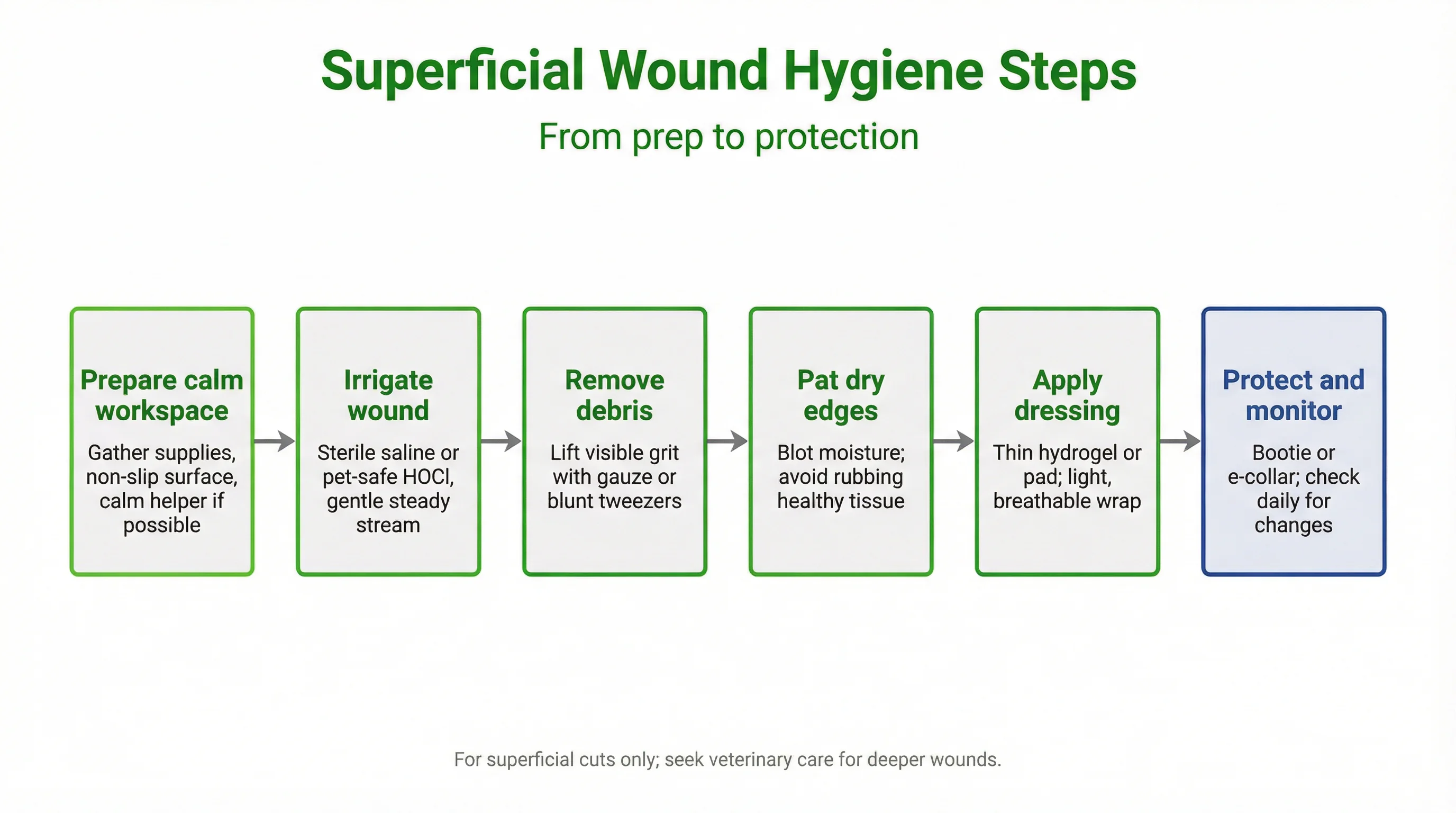
Prepare a clean area and restrain calmly
Wash your hands and clear a well-lit, low-traffic space. Use a non-slip mat. Keep supplies within reach. Have one person offer calm restraint and treats. Muzzle only if safety requires.
Rinse and flush with an appropriate cleanser
For dog first aid for cuts, start with irrigation. Use room-temperature sterile saline or a pet-safe HOCl wound cleanser for dogs. Apply steady, gentle pressure to lift debris without scrubbing, which may traumatize tissue.[1][2]
Dry, apply a light barrier, and dress
Pat the area dry with sterile gauze. Apply a thin, non-petrolatum barrier or hydrogel as advised by your veterinarian. For bandaging a dog paw, use a non-adherent pad, light gauze wrap, then a breathable outer layer.
Protect from licking and friction
Licking disrupts fragile tissue and may introduce bacteria. Use an e-collar or recovery collar if needed. When walking outdoors, consider breathable medical dog booties for paw coverage and traction on clean, dry surfaces.
Change dressings and keep the site clean
Change the dressing daily at first, or sooner if wet or soiled. Keep the bandage clean and dry. Replace any wet layers immediately. Avoid tight wraps. Fingers should easily slide beneath the outer layer.
Monitoring: What to Watch Over 7–14 Days and 4–8 Weeks
Short‑term checks (days 1–3, 4–7, 8–14)
Days 1–3: Expect mild oozing and tenderness. Edges should start to look less raw. Licking should reduce with protection. Days 4–7: Drainage decreases. Pink granulation may develop. Days 8–14: Skin contracts and sensitivity improves.
Longer‑term recovery (4–8 weeks) for active dogs
By weeks 4–8, new skin strengthens and pad toughness returns gradually. Resume activity in stages. Introduce uneven terrain slowly. If abrasion sites reopen with play, pause, re-protect, and scale back intensity.
Practical Safety Boundaries
When to pause home care and call a veterinarian
Stop and seek help if bleeding persists, swelling spreads, or discharge turns thick, green, or malodorous. If pain escalates, fever appears, or tissue turns gray or black, call your veterinarian promptly.
What not to use on dog wounds
Avoid hydrogen peroxide, rubbing alcohol, and undiluted iodine. These agents may damage healthy cells and slow closure. Choose isotonic saline or an appropriately formulated HOCl solution for gentle cleansing.[2]
Activity and environment boundaries until healed
Keep walks short and surfaces clean, dry, and level. Avoid mud, sand, salt, and heat-softened asphalt. For seasonal hazards that aggravate healing paws, review safe-surface strategies in Seasonal Paw Hazards: Salt, Heat, Ice, and Foxtails.
Evidence Status: What Research Suggests
Irrigation and infection reduction
Evidence suggests that prompt irrigation helps remove debris and reduce bacterial burden in superficial wounds, supporting uncomplicated healing when deeper structures are not involved.[1][2]
Occlusive dressings and moist healing
Modern dressings that maintain moisture may support faster epithelialization and comfort when used correctly and changed at appropriate intervals.[2][3]
Licking and self‑trauma considerations
Self-licking can macerate tissue and delay closure. Mechanical barriers and consistent hygiene are prudent to limit contamination and self-trauma during early healing stages.[1]
Tools and Supplies Checklist
Cleansers, dressings, and protective gear
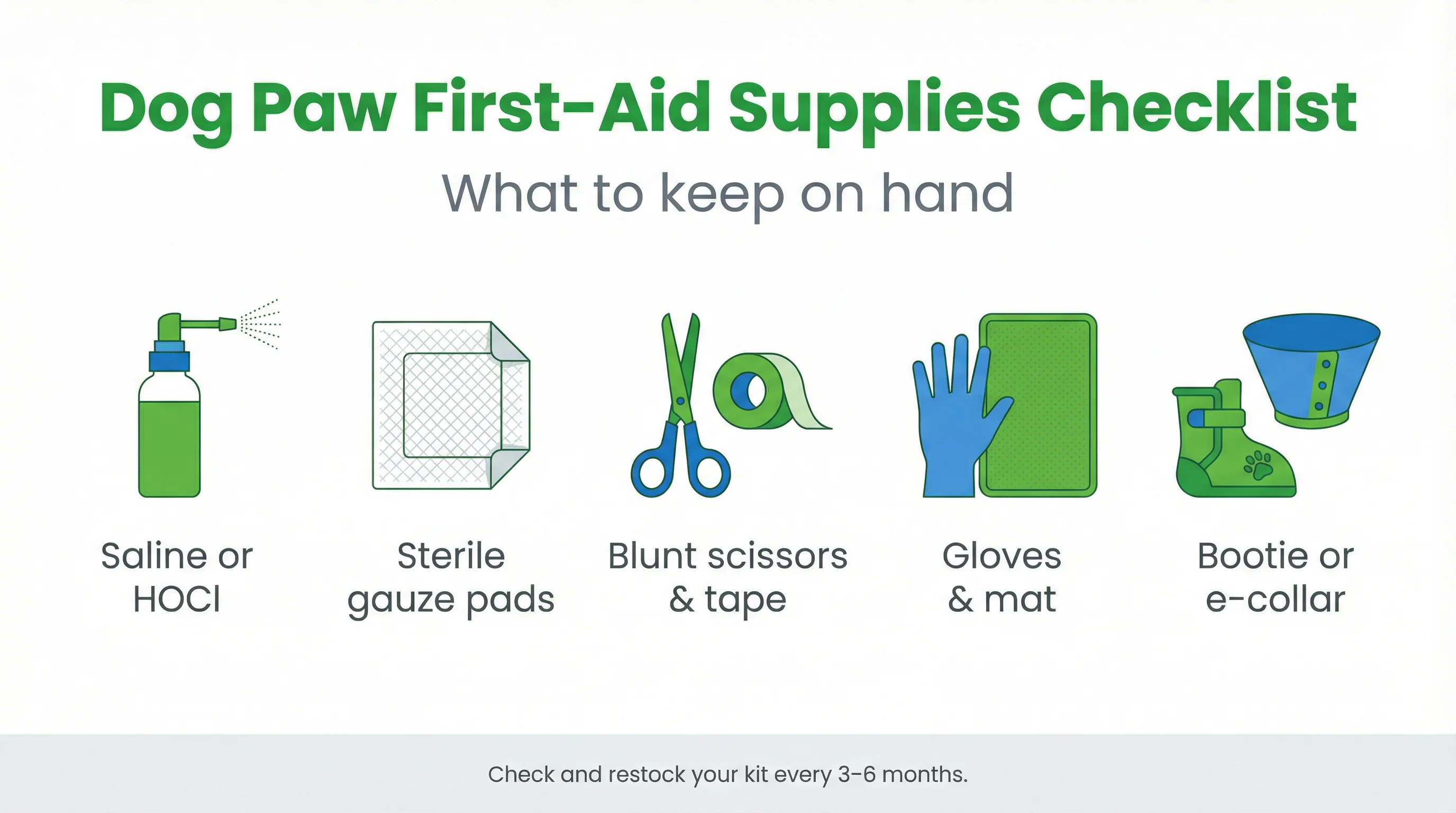
- Sterile saline or a pet-formulated HOCl cleanser.
- Non-adherent pads, sterile gauze, soft wrap, and breathable outer layer.
- E-collar or recovery collar to limit licking.
- Protective boot for outdoor steps and clean indoor traction.
Many pet owners find Healers Skin & Coat Grooming Solution helpful for this task when they need a gentle, no-rinse option to cleanse and soothe minor skin areas between full dressing changes.
Home first‑aid kit readiness for active lifestyles
Organize a compact kit with gauze, pads, saline, HOCl spray, blunt-tip scissors, tape, and gloves. For dogs prone to itchy paws that invite licking, see strategies in Yeasty or Smelly Paws: Cleaning Routines That Break the Lick‑Itch Cycle and bandage‑care pointers in Post‑Surgery Hygiene at Home: Keep Incisions Clean and Stress Low.
Troubleshooting Common Setbacks
Bandage slip, persistent moisture, or debris
If the wrap slides, reduce bulk and anchor lightly above the carpus or hock without constricting. Persistent moisture means more frequent changes. If debris remains after irrigation, reflush gently rather than scrubbing the surface.
Mild irritation vs. early infection signs
Mild redness at the edges is expected early. Worsening heat, swelling, pain, or thick discharge may indicate infection. Consider a prompt veterinary visit if changes do not improve within 24–48 hours of careful hygiene.[3]
Frequently Asked Questions
How do I know if my dog’s cut is superficial or needs stitches?
Edges that gape, bleeding that won’t slow after 10 minutes of gentle pressure, or visible fat/tissue may indicate deeper injury. Superficial scrapes are shallow, ooze lightly, and close at the edges. When in doubt, a vet exam is prudent.
What is a safe cleanser for minor dog wounds?
Isotonic saline or a pet‑safe hypochlorous acid (HOCl) solution may support gentle cleansing. Avoid hydrogen peroxide, alcohol, and undiluted iodine as they may delay healing or irritate tissue.
How often should I change my dog’s bandage?
For small, clean scrapes, once daily or sooner if wet or soiled is typical. Reduce frequency as drainage subsides, keeping the area clean and dry while you monitor for redness, swelling, heat, or discharge.
Can my dog go on walks with a bandaged paw?
Short, controlled walks on clean, dry surfaces may be acceptable if the bandage is protected by a breathable boot and checked after. Skip high‑impact or wet, dirty terrain until the skin closes and sensitivity improves.
When should I contact a veterinarian after a minor wound?
If pain worsens, swelling or redness spreads, discharge becomes thick or malodorous, fever or lethargy appears, or the wound fails to improve within 48–72 hours, seek veterinary care.
Thoughtful dog wound hygiene centers on gentle cleansing, light protection, and steady monitoring. Keep activity controlled, dressings clean, and expectations realistic. If the wound stalls or discomfort grows, timely veterinary guidance protects long‑term comfort and performance. For environmental triggers and skin flare-ups that can complicate healing, explore targeted help in Hot Spots and Sudden Itching: Rapid Home Triage and Relief. For broader context, see our overview of common hygiene issues.
References
- J Aisa et al. (2022). Local wound management: A review of modern techniques and products. Veterinary dermatology. View article
- NJ Buote (2022). Updates in wound management and dressings. Veterinary Clinics: Small Animal Practice. View article
- MM Pavletic (2018). Atlas of small animal wound management and reconstructive surgery. 2018 - books.google.com. View article
- NJ Kalnins et al. (2022). Antimicrobials in dog-to-dog bite wounds: A retrospective study of 1526 dog bite events (1999-2019). Journal of Veterinary …. View article


