%27%3E%3Crect%20x=%27-35%27%20y=%27-26%27%20width=%2770%27%20height=%2752%27%20rx=%2713%27%20fill=%27%2364BA5D%27/%3E%3Cpath%20d=%27M-10%2024l0%2016l16%20-16z%27%20fill=%27%2364BA5D%27/%3E%3Cg%20fill=%27%23fff%27%3E%3Cellipse%20cx=%270%27%20cy=%277%27%20rx=%2712%27%20ry=%2710%27/%3E%3Cellipse%20cx=%27-13%27%20cy=%27-8%27%20rx=%275%27%20ry=%276.5%27/%3E%3Cellipse%20cx=%27-5%27%20cy=%27-15%27%20rx=%275%27%20ry=%276.5%27/%3E%3Cellipse%20cx=%275%27%20cy=%27-15%27%20rx=%275%27%20ry=%276.5%27/%3E%3Cellipse%20cx=%2713%27%20cy=%27-8%27%20rx=%275%27%20ry=%276.5%27/%3E%3C/g%3E%3C/g%3E%3Cpath%20id=%27b%27%20d=%27M58%20100a42%2042%200%200%200%2084%200%27%20fill=%27none%27/%3E%3Ctext%20font-family=%27Arial,Helvetica,sans-serif%27%20font-weight=%27bold%27%20font-size=%2711%27%20fill=%27%2364BA5D%27%20letter-spacing=%272.5%27%3E%3CtextPath%20href=%27%23b%27%20startOffset=%2750%25%27%20text-anchor=%27middle%27%3EHEALERS%20PET%20CARE%3C/textPath%3E%3C/text%3E%3C/svg%3E)

Medical vs. Everyday Dog Boots: When to Use Each and Why It Matters
Medical vs. Everyday Dog Boots: When to Use Each and Why It Matters
Choosing between medical dog booties and everyday dog boots is more than a comfort decision—it determines how well you protect paws during recovery and how safely your dog moves outdoors. The right fit, features, and protocol make a measurable difference.
This guide clarifies when to use each boot type, how to decide for dual needs, and which Healers solutions map to common scenarios. You will find vet-informed practices, sizing tips, and care guidance you can apply immediately.
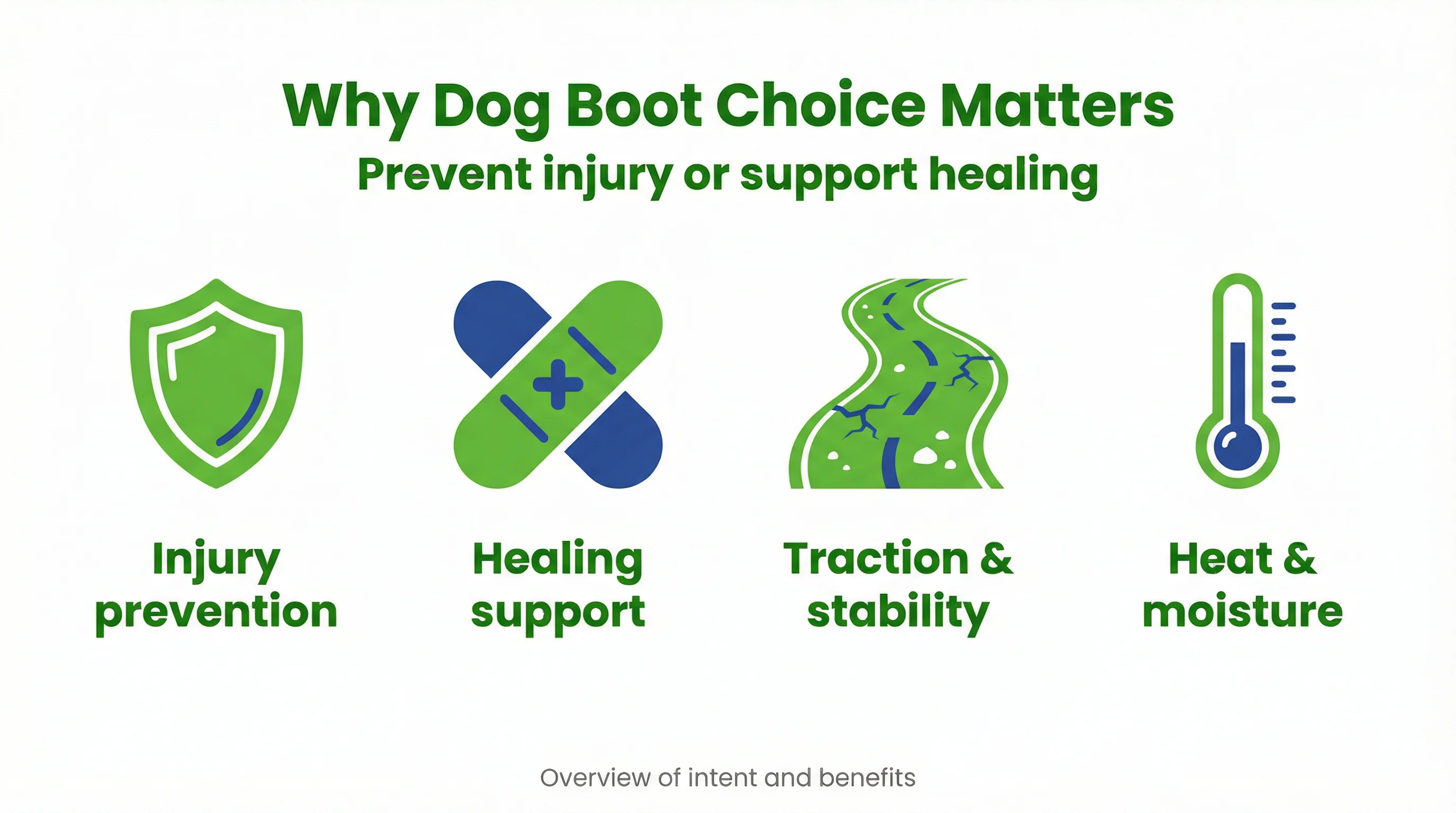
Why Choosing the Right Dog Boot Type Matters
Selecting the correct boot determines whether you are preventing injury or actively supporting healing. It also influences traction, heat management, and hygiene. Use this article as a focused companion to our complete outdoor paw protection guide for broader context.
Different goals: recovery protection vs. daily prevention
Medical dog booties protect fragile skin, surgical sites, and bandages while maintaining airflow and cleanliness. Everyday dog boots prioritize durable outsole traction and seasonal barrier protection. Each design optimizes a different goal; conflating them can compromise both comfort and outcomes.
How the wrong boot can delay healing or reduce traction
A rugged, non-breathable shell over a wound traps moisture, while a soft, medical boot used on salted sidewalks may wear quickly and slip. Misalignment increases infection risk or alters gait and ground forces, undermining stability and confidence.[1]
Medical Dog Booties: Use Cases, Features, and Fit
Focus on healing and hygiene with dog boots for injured paws.
When to use: wounds, post‑surgery, hotspots, allergies, cracked pads
Choose medical dog booties for open wounds, surgical incisions, interdigital cysts, hotspots, contact allergies, and dry, fissured pads. These cases require breathable protection over dressings and frequent inspection. For bandaging and cleansing protocols, see Paw Pad First Aid: HOCl Wound Care, Bandaging, and Booting Protocol.
Key features: breathable, non‑stick, easy on/off, sterile-friendly
Look for mesh or medical-grade fabrics that vent moisture, non-stick liners that prevent adherence to healing tissue, and fasteners that adjust without compressing. A non-slip sole helps controlled movement indoors. Many pet owners find Healers Medical Dog Booties helpful for this task.
Sizing and fitting tips for injured paws
Measure the bandaged paw at full weight-bearing and cross-check width and length against the size chart. If between sizes, select the larger, but minimize bulk to maintain circulation. Ensure a snug cuff without gaps; re-check after swelling changes.[3]
Everyday Dog Boots: Urban and Seasonal Protection
Everyday dog boots serve prevention: environmental hazards, traction, and comfort.
When to use: heat, ice, salt, rough terrain, allergens
Use everyday dog boots for hot pavement, winter ice melt, urban debris, rough trails, and seasonal allergens. These paw protection boots shield from abrasion and temperature extremes, preserving pads during regular activity and training sessions.
Key features: durable outsole, traction, weather resistance
Choose boots with a rugged rubber outsole, multidirectional tread, water resistance, and secure closures. Flexible uppers allow natural splay and stride. Proper acclimation maintains normal gait and reduces slip risk on varied surfaces.[1]
How to measure and break in everyday boots
Measure standing paw width and length, then test indoors for 10–15 minutes. Gradually extend wear over several days. For seasonal hazards and protection strategies, explore Seasonal Paw Hazards: Summer Heat, Winter Salt, and Shoulder-Season Risks.
Decision Tree: Medical vs. Everyday Boots
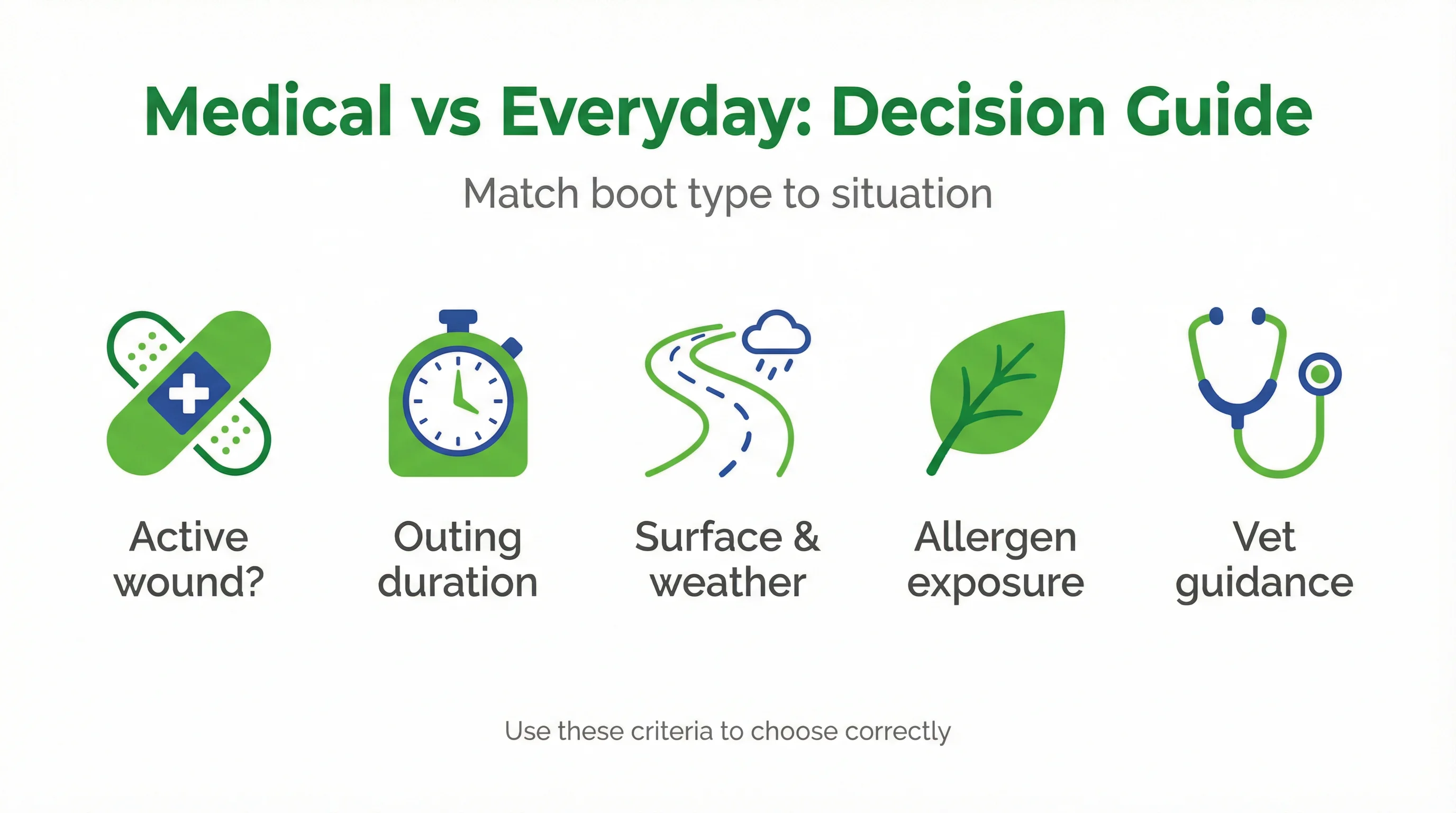
Use the questions below to match your situation to the correct boot type. When in doubt during recovery, prioritize breathable, medical-grade coverage and your veterinarian’s guidance to safeguard healing tissues and comfort.
Step‑by‑step questions to select the right boot type
- Is there a wound, incision, hotspot, or cracked pad? If yes, choose medical.
- Will the dog walk on hot, icy, or abrasive surfaces? If yes, choose everyday.
- Is bandaging present? Favor medical with non-stick liners.
- Need multi-hour outdoor use? Select everyday.
- Require sterile-friendly changes? Choose medical.
Edge cases: dual needs (injury + outdoor exposure)
For brief bathroom breaks with an active wound, layer sterile dressing under a breathable medical boot and clean immediately afterward. For longer outings, consult your vet about protective over-booting or activity limits to prevent contamination.[4]
When injury and environment collide, healing requirements take precedence; prioritize hygiene, breathability, and frequent checks before considering distance or terrain.
Product Mapping: Healers SKUs by Scenario
Match scenarios to the most appropriate Healers solutions for clarity and consistency.
Injury and recovery: Medical Dog Booties + Elastic Leg Bandage
For wounds, post-surgical care, or allergies, select medical booties with non-stick inserts and use elastic leg support to secure dressings. For protocols, see Post-injury recovery with medical booties and wraps. These canine recovery boots emphasize airflow and easy changes.[2]
Daily walks and seasons: Urban Walkers III
For heat, salt, and rough sidewalks, a durable outsole with tread is preferred. Urban Walkers III provide traction and weather resistance for routine outings, maintaining pad integrity and confidence on changing surfaces.
Complements: HOCl wound cleanser, first‑aid kits, turmeric support
Pair medical booties with HOCl cleanser and a compact first-aid setup to streamline daily changes and reduce contamination. Anti-inflammatory nutritional support may aid comfort during recovery; follow veterinary advice for dosing and compatibility.
| Scenario | Boot Type | Healers SKU | Why It Fits |
|---|---|---|---|
| Open wound, post-op | Medical | Medical Dog Booties | Non-stick liners, breathable, easy changes |
| Urban summer heat | Everyday | Urban Walkers III | Heat barrier, durable outsole, traction |
| Icy sidewalks, salt | Everyday | Urban Walkers III | Water resistance, grip, abrasion protection |
| Allergic flare / hotspots | Medical | Medical Dog Booties | Airflow + hygiene for sensitive skin |
How to Use Boots Safely: Vet‑Informed Best Practices
Adopt routines that protect skin integrity, prevent overheating, and preserve normal biomechanics during healing and everyday use.
Cleaning, dressing changes, and wear-time limits
In recovery, change dressings as directed and keep boots dry. Limit consecutive wear to a few hours before inspection and airing. Daily boots should be dried between walks to prevent moisture buildup and odor.
Traction and temperature checks before activity
Test surface temperature with your hand for five seconds; if uncomfortably hot, delay. Confirm tread grips the floor and outdoor surfaces without sliding. Boots alter ground reaction forces; acclimate gradually to maintain normal gait mechanics.[3]
Signs the boot isn’t fitting or is used incorrectly
Watch for rotating boots, splayed toes without support, red pressure lines, or damp fur after removal. Persistent slipping or licking indicates sizing, closure tension, or hygiene issues needing correction.[1]
Care and Maintenance to Maximize Boot Life
Clean, dry, and store boots correctly to extend lifespan and preserve performance. Maintenance also reduces odors and bacterial growth, which is especially important during recovery.
Cleaning protocols for medical vs. everyday boots
Medical boots: hand-wash with mild soap, rinse thoroughly, air-dry, and replace liners at each dressing change. Everyday boots: remove debris, wipe soles, and machine-wash gentle if allowed. Rotate pairs to ensure full drying between uses.
Storage, drying, and replacement intervals
Air-dry away from direct heat to protect adhesives and fabrics. Store paired boots in a breathable bag. Replace when tread flattens, closure loses grip, or fabric frays—timelines vary by mileage and environment.
Common Mistakes and How to Avoid Them
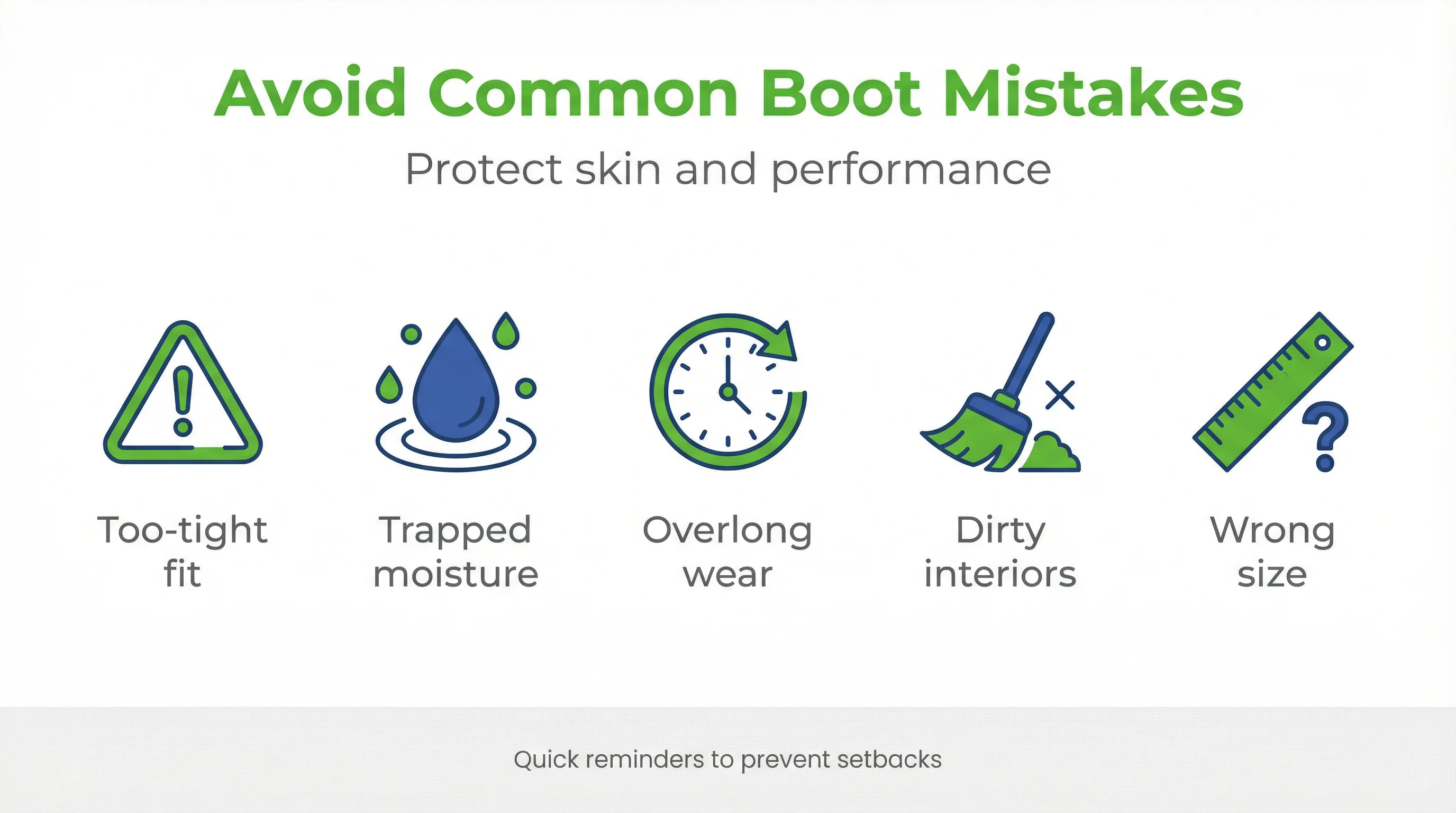
Small oversights can undo progress. Prevent setbacks with these simple corrections.
Over‑tightening wraps or boots
Excess tension restricts circulation and traps moisture. Secure closures so one fingertip slides under the cuff. Re-check tension after 10 minutes and again after exercise, especially if swelling fluctuates during recovery.[4]
Skipping acclimation and paw conditioning
Introduce boots in short indoor sessions with rewards. Gradually increase duration and complexity to normalize gait. Research indicates dogs adapt better with deliberate habituation, improving comfort and movement quality over time.[3]
Using non‑breathable coverings on wounds
Plastic bags or impermeable covers trap moisture and heat, increasing infection risk. Prioritize breathable, medical-grade materials and change damp dressings promptly to protect tissue perfusion and healing timelines.[4]
Frequently Asked Questions
When should I choose medical dog booties over everyday boots?
Use medical booties for wounds, post‑surgical protection, hotspots, cracked pads, or allergies requiring breathable, non‑stick coverage. Everyday boots are for heat, ice, salt, or rough terrain during normal activity.
Can I walk my dog outdoors in medical booties?
Short, controlled outings are fine if your vet approves and the boot remains clean and dry. For extended outdoor activity or rough surfaces, use everyday boots and protect any bandages underneath as directed.
How long can my dog wear boots at a time?
For medical booties, check paws every 2–4 hours and change dressings per guidance to prevent moisture buildup. For everyday boots, start with 10–15 minute sessions and monitor for rubbing or heat.
How do I measure my dog’s paws for the right boot size?
Have your dog stand on paper, mark the widest point of the paw and the back of the heel, then measure width and length. Compare to the brand’s size chart and size up only if between sizes and bandaging is present.
Can I use socks or wraps with dog boots?
Yes, thin boot liners or non‑adhesive gauze wraps can improve comfort and hygiene. Ensure breathability, avoid excessive bulk, and confirm the boot still fits securely without restricting circulation.
Conclusion
Choosing between medical and everyday dog boots is a matter of intent: protect healing tissue or prevent environmental injury. Use breathable, non‑stick medical solutions for recovery, and rugged, grippy everyday boots for routine outings. Apply the decision tree, map scenarios to SKUs, and follow vet-informed practices to safeguard paws with confidence. For comprehensive outdoor strategies beyond this focused guide, revisit our pillar content and keep your paw protection plan current as seasons and activities change.
References
- B Bieber et al. (2022). Changes in ground reaction forces and center of pressure parameters of paws when wearing dog boots in dogs. Frontiers in veterinary …. View article
- TE Pancotto (2023). Rehabilitation therapy for the degenerative myelopathy patient. Veterinary Clinics: Small Animal Practice. View article
- K Shorter et al. (2019). Ground force kinetic adaptations associated with canine boots. Biologia Futura. View article
- L Palmer (2021). Operational canine. Veterinary Clinics: Small Animal Practice. View article


