

Gunky or Itchy Ears in Dogs: A Vet‑Informed Home Ear‑Cleaning Protocol
Gunky or Itchy Ears in Dogs: A Vet‑Informed Home Ear‑Cleaning Protocol
Head shaking, brown wax, or mild odor can signal a simple ear hygiene problem. Addressing it early reduces discomfort and may prevent bigger issues.
This guide explains dog ear cleaning for wax buildup, occasional scratching, or mild smell. You will learn how to clean dog ears safely, what not to do, and when dog ear infection signs require a veterinarian.
Why your dog’s ears get gunky or itchy (and when home care fits)
Common causes: wax, moisture, allergies, hair and anatomy
Dog ear wax buildup happens when cerumen traps moisture, pollen, or debris. Floppy ears and narrow canals hold humidity, encouraging overgrowth of normal microbes. Frequent swimming, bathing, or humid weather increases residue. Evidence also links recurrent ear irritation to underlying allergies, particularly atopic dermatitis, which often drives chronic external ear inflammation over time.[1] Light head shaking, mild itch, and a light yeasty smell with soft, brown wax may fit at‑home, itchy dog ears home care when your dog remains comfortable.
Red flags that point beyond home cleaning
Home cleaning is not appropriate with obvious pain, swelling, bleeding, or pus‑like discharge. A strong odor, a head tilt, loss of balance, or persistent shaking suggests infection or deeper inflammation. Veterinary evaluation with ear exam and cytology enables targeted therapy and rules out ear drum damage.[3] If symptoms escalate rapidly or your dog resists touch at the ear base, stop cleaning and book a visit promptly.
Vet‑informed home ear‑cleaning protocol (step by step)
Prep and supplies: what you need and what to avoid
Choose a safe ear cleaner for dogs labeled for routine use. Look for cerumen‑loosening and drying support without harsh alcohols for sensitive ears. Many pet owners find Healers Ear & Eye Wash Solution helpful for this task. Gather cotton rounds or gauze, a clean towel, and treats. Avoid cotton swabs inside the canal, hydrogen peroxide, undiluted vinegar, and essential oils, which may irritate delicate tissue. Innovations in veterinary formulations aim to disrupt biofilm and reduce moisture while maintaining tolerability.[2]
Step‑by‑step: clean, massage, wipe, and dry
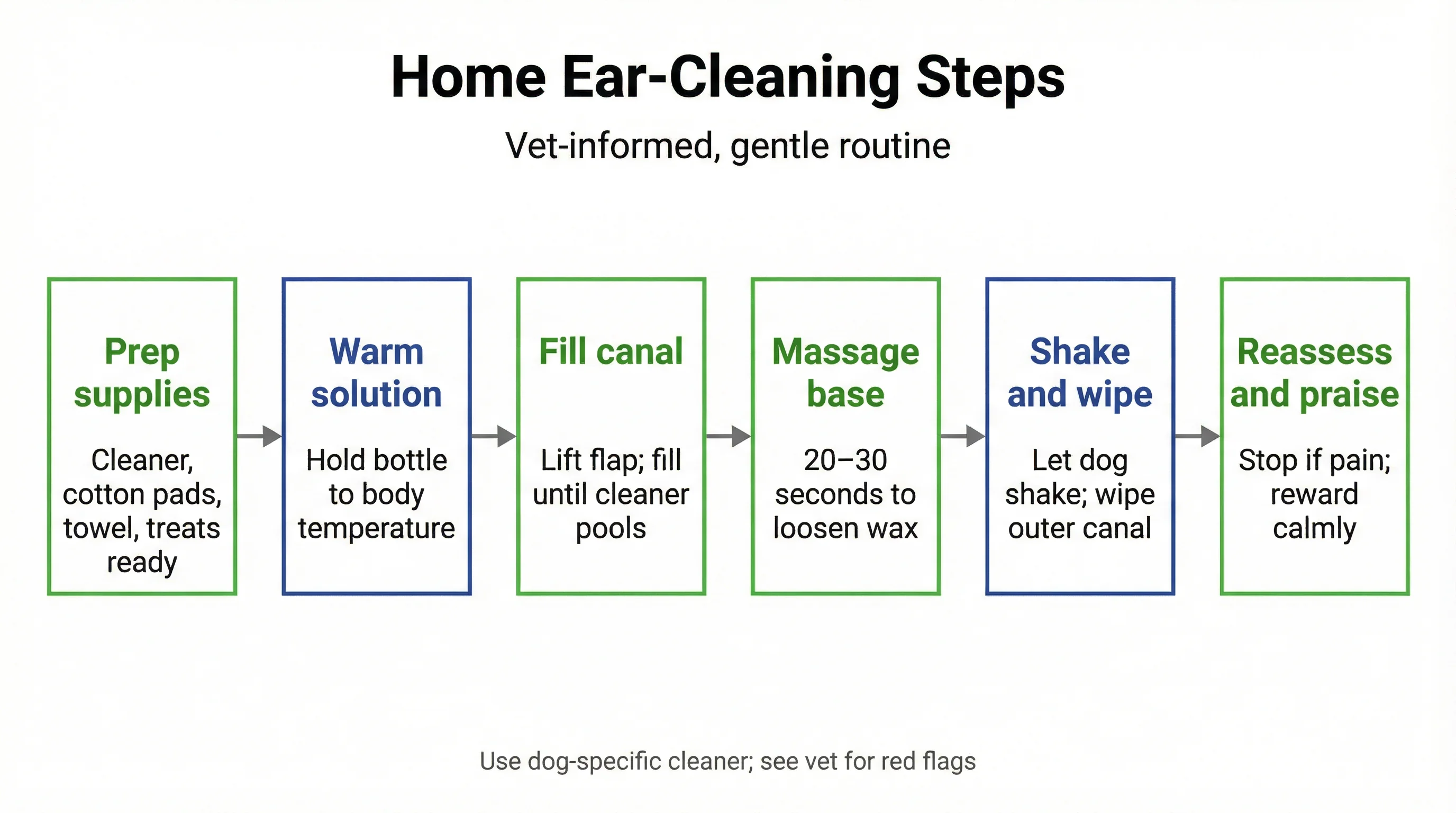
Warm the solution to body temperature by holding the bottle for a minute. Gently lift the ear flap and fill the canal until the cleaner pools. Massage the base for 20–30 seconds to loosen debris. Allow your dog to shake. Wipe the outer canal and folds with gauze until residue clears. Repeat once if needed, then pat the pinna dry. Keep sessions calm, brief, and reward generously.
Frequency by ear type and season
For most dogs, monthly maintenance suffices. Floppy‑eared, heavy‑coated, or swim‑happy dogs often need weekly cleaning during humid months. After swims or baths, a quick flush and thorough dry may help reduce moisture‑related flare‑ups. If your dog swims frequently, pair ear care with warm‑weather paw and skin precautions discussed in Seasonal Paw Hazards: Salt, Heat, Ice, and Foxtails.
If‑then quick decision guide
Fast actions based on what you see, smell, or your dog’s behavior
- If you see soft, brown wax with mild odor and occasional scratching, then clean once and recheck in 48 hours.
- If head shaking persists after one cleaning, then repeat in 72 hours and monitor for pain.
- If wax is dark coffee‑ground or tar‑like, then pause cleaning and call your veterinarian.
- If odor is strong, sweet‑yeasty, or rancid, then schedule a vet exam for cytology and targeted therapy.
- If your dog yelps, resists touch, or tilts the head, then stop cleaning and seek professional care.
- If ears look clean but itch continues, then discuss allergies and preventive options with your veterinarian.
- If fluid seems trapped after swimming, then perform a gentle dry‑down clean within a few hours.
Monitoring: what to track over 7–14 days and 4–8 weeks
Short‑term checkpoints
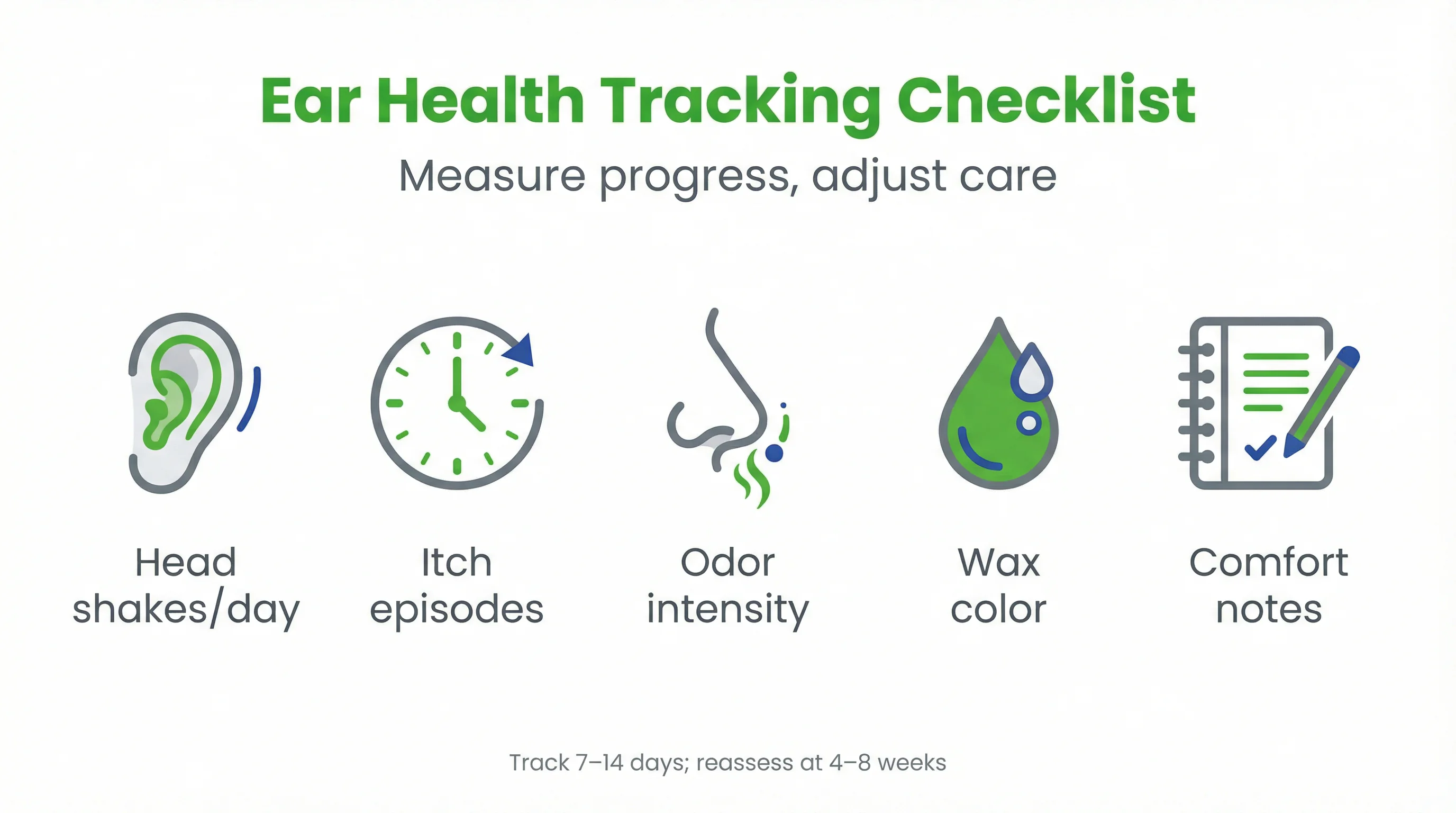
Over the next 7–14 days, track itch frequency, head shakes per day, and odor intensity. Note wax color and consistency after each cleaning. Discomfort should ease within several days if irritation was mild. If signs plateau or worsen, or discharge becomes thick or colored, book an appointment. Chronic or recurrent irritation can indicate deeper pathology that benefits from veterinary diagnostics.[4]
Longer‑term prevention markers
Across 4–8 weeks, look for fewer flare‑ups, minimal odor, and comfortable behavior during handling. Stable, light wax is normal. Repeated relapses may suggest allergy involvement, a common driver of recurrent otitis externa that needs long‑term management planning.[1] Adjust cleaning frequency by season, activity, and ear anatomy to maintain balance without over‑drying the canal.
Safety boundaries: practices to avoid and handling sensitivities
Products and tools to skip
Avoid cotton swabs inside the canal; they may push debris deeper and risk trauma. Skip hydrogen peroxide, undiluted vinegar, alcohol‑heavy formulas, and essential oils without veterinary guidance. Inappropriate products may irritate the canal and complicate future treatment decisions.[3] Keep claws trimmed and use gentle restraint to protect the ear flap and your hands. For broader at‑home preparedness, review first‑aid essentials to handle minor hygiene challenges confidently.
When to pause cleaning and seek veterinary care
Pause immediately if your dog cries, becomes defensive, or shows neurologic signs like head tilt or stumbling. Thick, pus‑like discharge, bleeding, or severe swelling warrants prompt evaluation. Veterinary teams can examine the ear drum, perform cytology, and prescribe targeted therapy as needed.[3] Home cleaning should support comfort, not replace diagnostics when infection is suspected.
Evidence status: what research and veterinary guidance suggest
Ear cleaners, drying agents, and allergy links
Veterinary ear cleaners aim to loosen cerumen, reduce moisture, and disturb microbial biofilms to support healthier ear environments.[2] Evidence also suggests that canine atopic dermatitis frequently underpins recurrent otitis externa, meaning flare control improves when allergies are addressed alongside hygiene.[1] Cleaner choice, technique, and frequency should be individualized to the dog’s anatomy, climate, and activity.
Limitations and when diagnostics matter
When inflammation persists or recurs, cytology and, in selected cases, culture guide precise therapy and reduce unnecessary medications.[3] Chronic or recurrent disease may remodel the canal, requiring comprehensive management plans and periodic reassessment.[4] Home protocols are most effective as early intervention and prevention, not as substitutes for diagnostics when dog ear infection signs emerge.
Supplies checklist for smooth, low‑stress cleanings
At‑home essentials and optional helpers
- Dog‑specific ear cleaner suited for sensitive ears.
- Cotton rounds or gauze; avoid cotton swabs in the canal.
- Small towel for shake‑off and drying.
- Treats for cooperative handling and positive reinforcement.
- Optional: hemostats for gentle hair plucking if advised by your veterinarian.
- Optional: a dedicated eye/ear wash for routine debris removal around the outer ear folds.
- Optional: timer to ensure a full 20–30 second massage.
How this topic fits your dog’s overall hygiene routine
Linking ear care with grooming and skin health
Healthy ears pair well with regular brushing, drying after baths, and moisture control following swims. Coordinate nail trims and paw inspections so your dog tolerates handling calmly. Seasonal changes may require adjusting grooming frequency and ear care to maintain comfort. For a broader perspective on problem‑spot prevention and action steps across the body, see our complete guide to common dog hygiene issues.

Frequently Asked Questions
How often should I clean my dog’s ears?
Many dogs do well with monthly cleaning, while floppy‑eared or swim‑happy dogs may need weekly maintenance. If ears look clean and your dog is comfortable, less frequent cleaning may be appropriate.
What is the safest way to clean dog ears at home?
Use a veterinary ear cleaner, fill the canal until it pools, massage the base for 20–30 seconds, let your dog shake, then wipe the outer canal with cotton pads or gauze. Avoid cotton swabs inside the canal.
When does ear odor or discharge mean infection?
Strong or sweet‑yeasty odor, persistent brown or pus‑like discharge, pain, swelling, or head tilt may indicate infection. These signs warrant a veterinary exam for cytology and targeted treatment.
Can I use hydrogen peroxide or vinegar in my dog’s ears?
Hydrogen peroxide and undiluted vinegar may irritate the canal and are generally not recommended. A dog‑specific ear cleaner is formulated to be better tolerated.
Do allergies cause recurring ear problems?
Evidence suggests environmental or food sensitivities can contribute to chronic ear inflammation. Managing underlying allergies with your veterinarian may reduce flare frequency.
Conclusion
Most mild ear wax, subtle odor, or occasional head shakes respond to careful, consistent home care. Use a gentle, dog‑specific cleaner and measured technique. Track response, and escalate to your veterinarian when signs point to infection. With structured routines, you can keep ears comfortable, reduce flare‑ups, and support overall wellness without overcleaning. When in doubt, pause and seek guidance. Confident, informed care starts with safe methods and timely decisions tailored to your dog’s needs.
References
- T Nuttall (2023). Managing recurrent otitis externa in dogs: what have we learned and what can we do better?. Journal of the American Veterinary Medical …. View article
- Y Song et al. (2025). Therapeutic and Formulation Innovations in the Management of Canine Otitis Externa. …. View article
- J Bajwa (2019). Canine otitis externa—Treatment and complications. The Canadian Veterinary Journal. View article
- G Saritha (2025). Otitis externa and its clinical management. … Ear Diseases in Dogs: Diagnosis and Management. View article


