

Dog Boot Care and Maintenance: Cleaning, Drying, and When to Replace
Dog Boot Care and Maintenance: Cleaning, Drying, and When to Replace
Clean boots equal safe paws. Whether you rely on medical booties during recovery or everyday boots for trail and city walks, proper care preserves protection and traction. This guide focuses on washing methods, odor control, drying, storage, and reliable replacement cues.
Use these steps to keep materials performing as designed, reduce odor buildup, and protect your dog’s mobility and skin health over the long term.
Why Dog Boot Care Matters for Protection and Traction
Well-maintained boots stay grippy, hygienic, and comfortable—key outcomes for safe movement and, in medical cases, faster healing and fewer complications.
Differences between medical vs. everyday boots
Medical boots prioritize cleanability, breathability, and moisture control around bandages, while everyday boots emphasize rugged traction and abrasion resistance. For example, many pet owners find Urban Walkers III helpful when daily protection from heat, ice, or rough ground is needed.
How cleanliness affects grip, healing, and durability
Soil, salt, and oils reduce outsole friction and can harbor pathogens, undermining traction and hygiene. Clean materials also last longer because grit accelerates wear. Regular disinfection is especially important around wounds and dressings to minimize contamination risks.[2] For the broader context of dog boot care, see our main outdoor paw protection hub.
Pre‑Clean Checks: Remove Debris, Inspect Fit, Protect the Paw
Before you wash, quick checks prevent grinding grit into fabrics and reveal early damage that compromises traction or sealing.
Shake out grit, rinse off salt and chemicals
Tap boots together and remove removable liners. Rinse soles and seams with lukewarm water to lift de‑icing salt, fertilizers, and mud, reducing abrasion and potential skin irritation after re‑use.
Check for tears, worn tread, and loose stitching
Examine the outsole for smooth spots, splitting, or delamination. Inspect upper fabrics for tears and strap stitching for looseness. Early repairs extend service life and improve stability underfoot.
Medical use: confirm dressings stay dry and breathable
Ensure the interior is clean and dry. Verify dressings are intact and not compressing toes. If moisture is present after wear, revisit fit and drying protocol to protect healing tissue.
Cleaning Methods: Hand Wash vs. Machine Wash
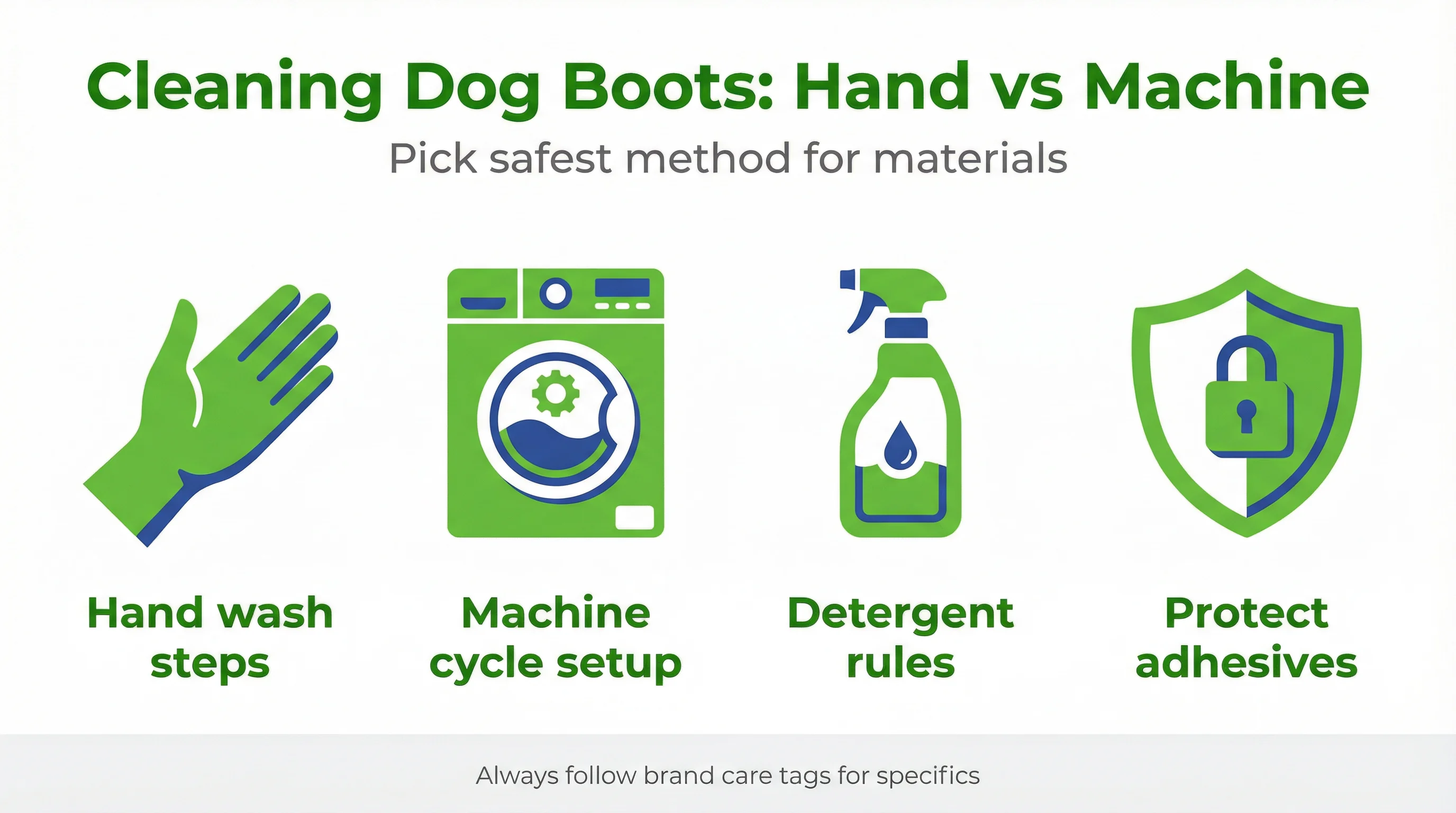
Both methods have a place. Hand washing suits daily grime; machine cycles clear embedded debris and odor from frequent use.
Hand washing steps for quick daily care
For how to clean dog boots after routine outings, hand washing is fast and protective of adhesives. Use a soft brush and mild detergent to target soles, seams, and straps without saturating unnecessarily.
- Brush off dry dirt.
- Spot‑clean with mild detergent and warm water.
- Rinse thoroughly; avoid soaking leather or adhesives.
- Gently squeeze out excess water; do not wring.
Machine washing steps for deeper cleans
Place boots in a mesh bag, wash on gentle/cold with a small amount of mild detergent, and skip the spin if adhesives are delicate. Always air‑dry to preserve structural integrity.
- Secure closures to prevent snags.
- Use a mesh bag and gentle cycle.
- Rinse twice if residue remains.
- Remove promptly and air‑dry fully.
Safe cleaners and what to avoid (bleach, fabric softeners)
Keep chemistry simple to protect breathable membranes and rubber traction. The following table summarizes appropriate choices.
| Safe Cleaners | Avoid |
|---|---|
| Mild, fragrance‑free detergent | Bleach or chlorine agents |
| HOCl pet‑safe cleanser | Fabric softeners |
| Enzymatic odor remover (pet‑safe) | Harsh solvents, essential oils |
Odor and Bacteria Control Without Damaging Materials
Effective odor control for dog boots requires removing debris, reducing microbial load, and drying completely—without harsh chemicals that degrade fabrics.
Rinse protocol after exposure to puddles, salt, or mud
Rinse boots as soon as possible to clear salt and organic residues that feed bacteria. This step is essential in shared environments, where surfaces can carry infectious agents on gear and footwear.[2]
Deodorizing options: HOCl, vinegar dilutions, and enzymatics
After rinsing, spritz with a pet‑safe hypochlorous (HOCl) cleanser or use a 1:10 white vinegar rinse, then rinse again and air‑dry. Enzymatic sprays help digest organic odor sources without masking.
When odors signal hidden moisture or microbial growth
Persistent odor often indicates trapped moisture or internal wear. In medical dog boot care, lingering odor can signify contamination risk—consider deeper cleaning and faster drying protocols to mitigate.[1]
Drying Dog Boots the Right Way
Drying dog booties correctly protects glues, foams, and breathable fabrics while restoring traction by clearing water and oils from tread surfaces.
Air‑dry technique to protect adhesives and fabrics
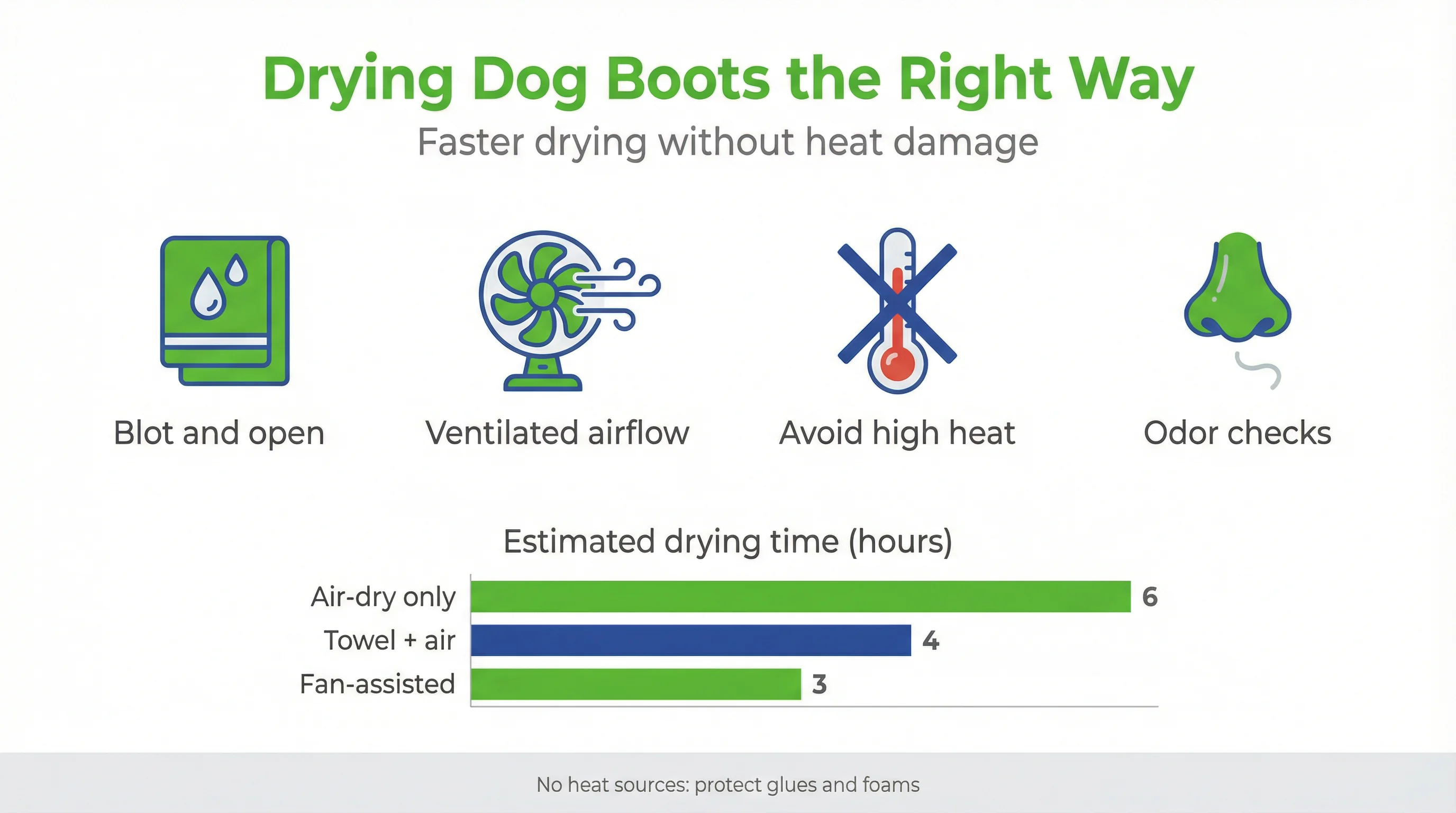
Blot with a towel, open closures fully, and set boots upright in a ventilated area to air‑dry. This preserves adhesive bonds and helps maintain upper shape and function for repeated use.
Use of fans, towel stuffing, and boot trees
Speed drying by placing boots near a circulating fan. Stuff toe boxes with dry cloth or use boot trees to keep interiors open, promoting airflow and preventing liner collapse or odor pockets.
What to avoid: direct heat, dryers, radiators, sun bake
High heat can warp rubber, crack plastics, and degrade adhesive—reducing traction and fit. Dryers and radiators accelerate these failures; choose ambient airflow instead to protect performance.[3]
Takeaway: Low heat, high airflow. Air‑drying under a fan preserves adhesives and traction better than any heated method.
Storage Best Practices to Preserve Shape and Grip
Proper storage prevents odor relapse, deformation, and accidental strap fatigue, extending the useful life of both medical and everyday boots.
Clean and fully dry before storing
Store only after boots are clean, odor‑free, and completely dry. This step stops microbial growth, protects foams and fabrics, and prevents corrosion on any metal hardware or rivets.
Cool, ventilated storage and pairing boots by size/side
Choose a cool, shaded, ventilated area. Keep pairs together and labeled by size or paw side if applicable. Avoid compression that creases uppers or collapses internal padding.
Travel and trail tips: pack a mesh bag and spare liners
Use a breathable mesh bag so damp boots can air out. Carry spare liners or cloths to swap mid‑hike for faster drying and to reduce odor on the ride home.
Wear Indicators: When to Repair vs. Replace
Tread and structural checks prevent slips and moisture intrusion. Identify issues early to choose repair or plan a timely replacement.
Tread wear, delamination, and fraying straps
Replace when tread becomes smooth, lugs flatten, or soles delaminate. Frayed straps that slip under load reduce stability and can cause rotation that undermines traction.
Moisture intrusion and lingering odors
Seepage, dampness that persists after drying, or rapidly returning odors indicate compromised membranes or seams. These signal reduced protection and warrant replacement to maintain hygiene.[2]
Fit‑related issues that mimic wear (see Fit and break-in troubleshooting)
Slippage or twisting can mimic outsole wear yet stems from poor fit. Reassess sizing or strap tension using our Fit and break-in troubleshooting to correct rotation before replacing unnecessarily.
Maintenance Schedule: Daily, Weekly, and Seasonal Care
A consistent schedule keeps traction reliable and materials healthy, especially for active dogs and frequent city walkers.
Daily wipe‑downs for active dogs
After exercise, wipe soles and closures to remove grit and oils. Quick rinses after salt or mud exposure limit abrasion and bacterial load until the next deeper clean.
Weekly deep clean and inspection checklist
Machine‑wash or thorough hand wash weekly during heavy use. Inspect tread, stitches, and closures. Document changes so you can anticipate when to replace dog boots instead of reacting to failure.[4]
Seasonal reset: winter salt and summer heat considerations
In winter, prioritize salt rinses and faster drying; in summer, prevent heat warping and check adhesives often. For hazard context, see Seasonal Paw Hazards: Summer Heat, Winter Salt, and Shoulder-Season Risks.
Special Considerations for Medical Use and Post‑Injury Care
Medical dog boot care demands extra vigilance for moisture, cleanliness, and gentle materials that protect healing tissue.
Keeping dressings dry and non‑stick surfaces clean
Change any damp liners immediately and ensure non‑stick wound pads remain dry. Clean boot interiors with HOCl and allow full airflow drying before re‑use to avoid maceration and infection.[1]
Pairing boots with elastic wraps and first‑aid essentials
Use elastic wraps to secure dressings without constriction and keep a compact kit with HOCl spray and sterile pads. For protocol details, visit Paw Pad First Aid: HOCl Wound Care, Bandaging, and Booting Protocol.
When to consult a vet for wound changes
Seek veterinary guidance for increased redness, discharge, swelling, or warmth. Reassess boot use if irritation appears; clean more frequently or switch liners to reduce friction and heat buildup.
Replacement Timing and Sizing Refresh
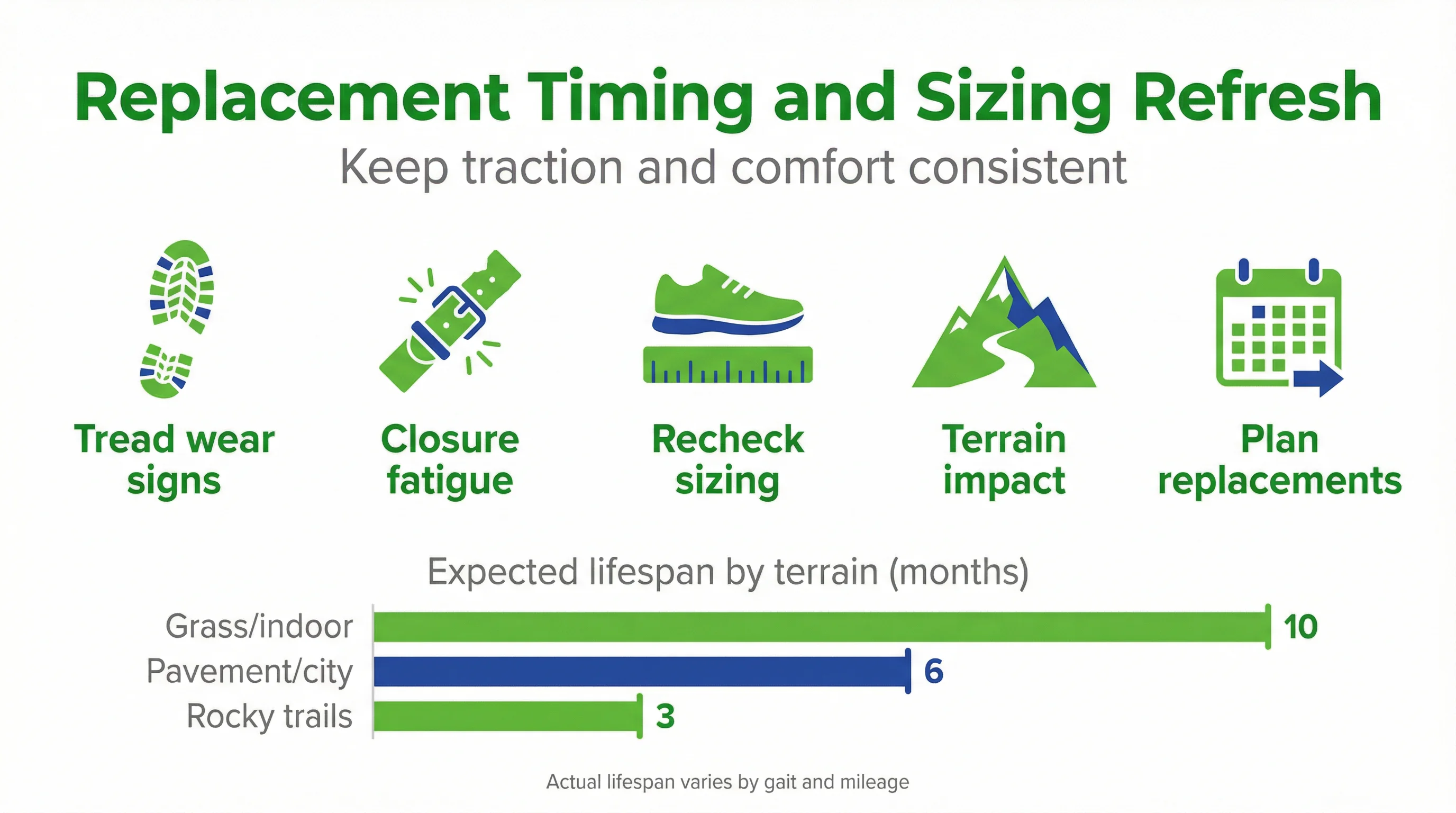
Boot lifespan varies by mileage, terrain, and gait. Plan replacements proactively to maintain reliable traction and paw protection.
Mileage and terrain impact on lifespan
Rough trails and urban concrete wear lugs faster than grass or indoor surfaces. If boots see daily pavement or rocky hikes, expect shorter intervals between replacements and monitor outsole edges closely.
Rotating pairs to extend longevity
Alternate two pairs so materials decompress fully and dry between uses. This reduces odor and preserves adhesives, especially during wet seasons or multi‑walk days.
See the Buying guide for replacements and bundles
Select the right size and value packs to minimize downtime and cost. Visit our Buying guide for replacements and bundles to match activity level, terrain, and boot materials with your maintenance routine.
Frequently Asked Questions
How often should I clean my dog’s boots?
Lightly clean after each muddy or salty outing and perform a deeper wash weekly for frequent use. Medical boots may require daily cleaning to prevent moisture and odor buildup.
Can I put dog boots in the washing machine?
Usually yes on a gentle cycle in a mesh bag with mild detergent, then air‑dry only. Avoid bleach, fabric softener, and high heat to preserve adhesives and breathable materials.
How do I remove odors from dog boots safely?
Rinse debris first, then use an HOCl pet‑safe cleanser or a diluted vinegar rinse, and air‑dry thoroughly with airflow. Persistent odor can signal hidden moisture or internal wear.
When should I replace my dog’s boots?
Replace when tread is smooth, seams or adhesives separate, straps won’t hold, the boot stays damp, or odors return quickly. For active dogs, plan for periodic replacement based on mileage and terrain.
How should I dry dog boots after washing?
Gently towel, stuff with a dry cloth, and air‑dry near a fan. Avoid dryers, radiators, or direct sun that can warp soles and degrade adhesives.
Conclusion
Clean, dry, and well‑stored boots deliver consistent traction and maintain healthy paws—especially vital for medical applications. Use quick daily wipe‑downs, weekly deep cleans, and careful air‑drying to protect materials. Watch for smooth tread, delamination, and lingering odors to know when replacement is due. For fit issues that mimic wear, revisit sizing and straps via Fit and break-in troubleshooting, and explore comprehensive context in our main outdoor paw protection hub. With the right care, your dog’s boots will keep performing when it matters most.
References
- E Doyle (2021). Canine parvovirus and other canine enteropathogens. Infectious Disease Management in Animal Shelters. View article
- KF Hurley et al. (2021). Prevention and management of infection in canine populations. Greene's Infectious Diseases of the Dog …. View article
- P Wongsirichatchai (2024). Effect of four non-slipping floor mat types on the stifle joint range of motion during walking and trotting in small breed dogs with medial patellar luxation grade 2 and …. 2024 - digital.car.chula.ac.th. View article
- A Demeco et al. (2025). Injury, Risk and Training Habits Among Dog Agility Handlers: A Cross-Sectional Study. Journal of Functional …. View article


