

Dog Anxiety Support: An Orientation Hub for Pet Parents
Dog Anxiety Support: An Orientation Hub for Pet Parents
Dog anxiety can quietly erode quality of life. It often looks like “good vigilance” until it grows into restlessness, vocalizing, or destructive coping. Small, smart changes at home make a measurable difference.
This hub gives you clear priorities and decision rules. You will learn how to read stress signals, set stabilizing routines, avoid common mistakes, and choose supportive tools. You will also know when to involve a veterinarian.
Start Here: What Dog Anxiety Is—and What to Do First
Understand: Anxiety vs. normal alertness; common body-language signs
Anxiety is persistent apprehension, not brief attention to a stimulus. Normal alertness switches off when the event passes. Anxiety lingers and often generalizes to new contexts.
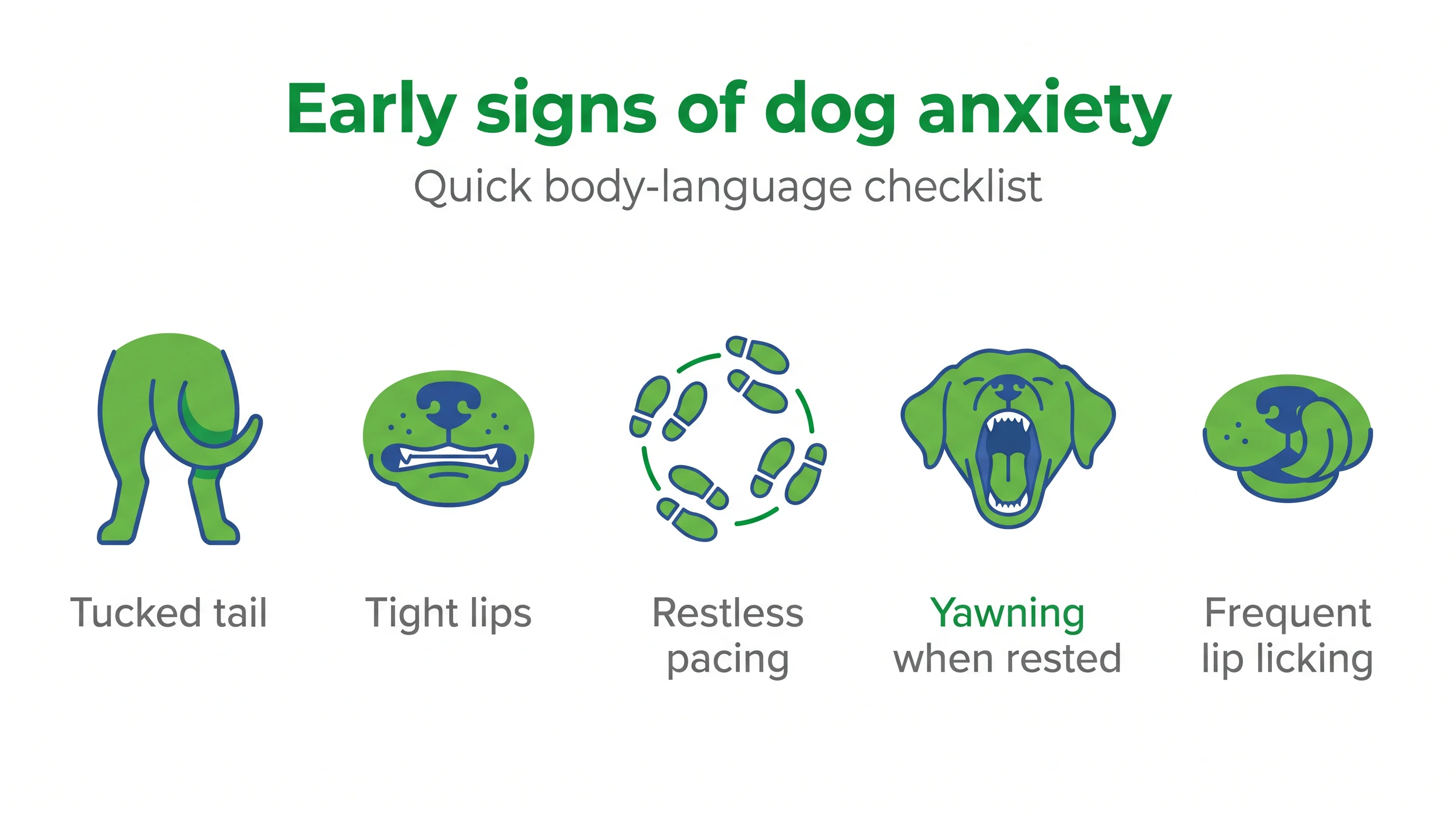
Watch for canine stress signs: tight lips, tucked tail, pacing, yawning when not tired, lip-licking, pinned ears, scanning, and sudden clinginess. Track what precedes, during, and follows these signals.
Management that creates safety and predictability forms the first layer of dog anxiety support. Establish calm routines before tackling training complexity. Prioritizing safety often reduces arousal quickly and reliably[2].
Do not try yet: Complex training plans or supplement stacks—stabilize routine first
Skip elaborate protocols until sleep, feeding, and rest areas are consistent. Layering tools before basics creates noise in the data. You will not know what helped.
Route next: See “Separation Anxiety: First 30 Days Plan” for alone‑time structure
If alone-time is difficult, start with structured departures and returns. For a clear roadmap, see Separation Anxiety: A 30‑Day Starter Plan for Calmer Alone Time.
Priorities at Home: Environment, Routine, and Basic Needs
Understand: Predictable schedules, safe resting zones, daily mental/physical outlets
Build a steady daily rhythm. Keep feeding, walks, and rest blocks predictable. Provide a low-traffic rest zone with comfortable bedding and optional white noise.
Offer mental outlets that lower arousal: scenting, foraging, chew projects, and decompression walks. Gentle enrichment satisfies needs without spiking adrenaline.
Do not try yet: Flooding exposures or marathon exercise to “tire out” anxiety
Long, intense workouts can produce a wired, overtired dog. Flooding exposures often increase fear. Aim for calm, confidence-building activities and smooth recovery periods.
Route next: “Crate and Alone-Time Training for Working Households” for schedules and setups
For practical schedule templates and environment setups, visit Crate and Alone‑Time Training for Working Households.
- Stabilize the daily routine: predictable meals, walks, rest, and bedtime.
- Create a safe, quiet zone with comfortable bedding and minimal traffic.
- Swap high-adrenaline play for foraging, sniffing, and calm chew projects.
Common Triggers: What Sets Dogs Off (and Why)
Understand: Absences, sudden noises, handling, travel, pain/recovery, and aging
Dog anxiety triggers often include departures, door and window activity, thunder or fireworks, grooming or vet handling, car motion, and novelty. Pain, recovery, and cognitive aging can lower thresholds for stress responses[3].
Mapping when and where reactions occur clarifies patterns. This helps you choose specific supports, from sound management to comfort during medical recovery periods.
Do not try yet: Full desensitization plans or DIY restraint protocols
Skip complex counter-conditioning or restraint without guidance. Poorly planned exposures can sensitize dogs further and undermine trust in caregivers.
Route next: “Noise Phobias (Thunder/Fireworks): Calm-Down Protocol” for sound events
If noise sensitivity is prominent, see Noise Phobias (Thunder, Fireworks): A 3‑Phase Calm-Down Protocol for structured event planning.
Tools That Help: Calming Aids, Body Wraps, and Simple Supports
Understand: Gentle pressure wraps, chew projects, scent, and foraging before supplements
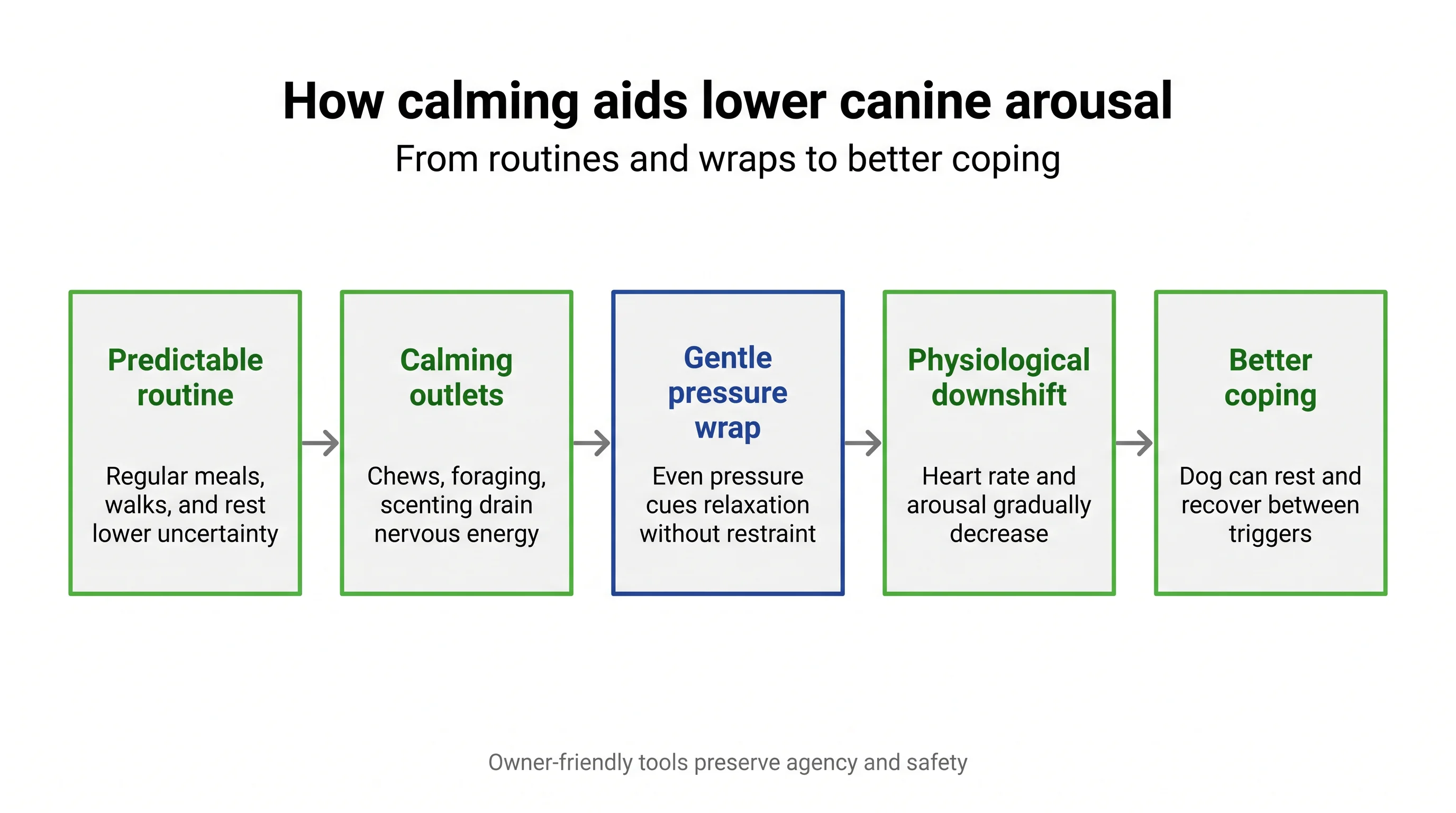
Start with low-effort, high-return supports: predictable chew time, food puzzles, and scent-based foraging. Gentle pressure from an anxiety wrap for dogs may promote relaxation for many dogs.
Evidence-based behavior plans emphasize environment and owner-friendly tools that reduce stress while preserving agency and safety[4]. Many pet owners find Healers Therapeutic & Anxiety Front Body Wrap helpful for this task.
Do not try yet: Dosage decisions, mixing multiple products, or medical claims
Avoid stacking supplements or making medical inferences. Keep the focus on calming dogs naturally through routine, environment, and appropriate enrichment first.
Route next: “Natural Calming Aids and Body Wraps: What Helps and When” for fit and safety
For decision rules on tool selection and safe fit, visit Natural Calming Aids and Body Wraps: What Helps and When.
When to Involve a Veterinarian
Understand: Red flags—injury/pain, sudden behavior change, self-harm, or regression
Seek veterinary input for sudden onset anxiety, self-injury, disrupted sleep or appetite, or post-illness changes. Clinicians may combine medical assessment with behavior plans when indicated[1].
Medical contributors such as pain, endocrine issues, or cognitive change must be addressed before behavior improves. Diagnostic clarity prevents frustration and guides next steps.
Do not try yet: Withholding care or replacing exams with home fixes
Home strategies cannot substitute for exams if red flags are present. Early intervention protects welfare and often shortens recovery time.
Route next: “Post‑Injury or Post‑Surgery Anxiety: Comfort Without the Cone” for recovery care
For recovery-specific comfort strategies and handling ideas, explore clinical guidance tailored to convalescence in your care team. If needed, ask your veterinarian about protective footwear or soft bandaging for sensitive limbs.
Mistakes to Avoid and Myths to Skip
Understand: Why punishment, flooding, or skipping enrichment backfires
Punishment masks signals and increases stress, eroding trust. Flooding often worsens fear. Skipping enrichment ignores unmet needs that fuel arousal and reactivity[2].
Do not try yet: Forcing “socialization” or chasing one‑size‑fits‑all hacks
Forced greetings and crowded venues can overwhelm anxious dogs. Prioritize controlled, positive experiences tailored to your dog’s threshold and history.
Route next: “Vet Visits and Grooming Days: Low-Stress Handling at Home” to rehearse care
For preparing predictable stressors, see Vet Visits and Grooming Days: Low‑Stress Handling at Home for stepwise home rehearsals.
Life Stages and Special Situations
Understand: Puppies/newly adopted dogs need decompression; seniors may show nighttime restlessness
Puppies and newly adopted dogs benefit from decompression, gentle schedules, and calm introductions. Seniors may experience sensory changes or cognitive shifts that heighten anxiety and disturb sleep[3].
Do not try yet: Intensive retraining during medical or cognitive decline without guidance
When medical or cognitive changes are suspected, pause intensive training. Collaborate with your veterinarian and a credentialed behavior professional for a humane, realistic plan.
Route next: “Newly Adopted or Rescue Dogs: Building Safety in Weeks 1–6” and “Senior Dogs: Nighttime Restlessness and Cognitive Changes”
For structured decompression, see Newly Adopted or Rescue Dogs: Weeks 1–6 Decompression Plan. For aging-related restlessness, see Senior Dogs: Nighttime Restlessness and Cognitive Changes.

Frequently Asked Questions
What are early signs of anxiety in dogs?
Look for changes in body language like tucked tail, pacing, yawning when not tired, pinned ears, or sudden clinginess. Context matters; note when and where it happens.
Should I exercise my anxious dog more to fix it?
Balanced activity helps, but overdoing it can create overtired, wired behavior. Pair moderate exercise with foraging, sniff walks, and predictable quiet time.
Do calming supplements replace training or vet care?
No. Use them as supportive tools after environment, routine, and enrichment are in place. Seek veterinary input if symptoms escalate or pain is suspected.
When should I see a veterinarian about my dog’s anxiety?
If anxiety appears suddenly, disrupts sleep or eating, includes self-injury, or follows illness, injury, or surgery, consult your veterinarian to rule out medical causes.
Are body wraps safe for anxious dogs?
Properly fitted wraps can offer gentle pressure and comfort. Introduce gradually, monitor movement and skin, and follow product fit guidance before extended wear.
References
- IR Dinwoodie et al. (2022). An investigation into the effectiveness of various professionals and behavior modification programs, with or without medication, for the treatment of canine fears. Journal of Veterinary Behavior. View article
- DF Horwitz (2018). Blackwell's five-minute veterinary consult clinical companion: canine and feline behavior. 2018 - books.google.com. View article
- G Lodrini et al. (2025). A Comprehensive Review of Canine Anxiety: Pathogenesis, Behavioral Outcomes, and Treatment. Dog behavior. View article
- ME Doane (2023). Evidence Based Canine Behaviour Interventions for aggression and fear/anxiety in Sweden. 2023 - stud.epsilon.slu.se. View article


