

De‑Skunking and Stubborn Dog Odors: What Actually Works
De‑Skunking and Stubborn Dog Odors: What Actually Works
Few moments test a dog parent like that first breath of skunk spray or a coat that smells “wet dog” minutes after drying. Panic is understandable. Fast, safe action limits odor spread and skin irritation. Smart routines reduce repeat episodes and keep coats comfortable.
This focused guide explains how to de-skunk a dog quickly and safely, and how to manage persistent coat odors. You will learn proven mixes, contact times, and application steps. You will also see when to stop DIY, monitor recovery, and seek care.
What We’re Solving: One Emergency Smell and One Stubborn Odor
Scenario focus: Fresh skunk spray vs. recurring “wet dog” or fishy odors
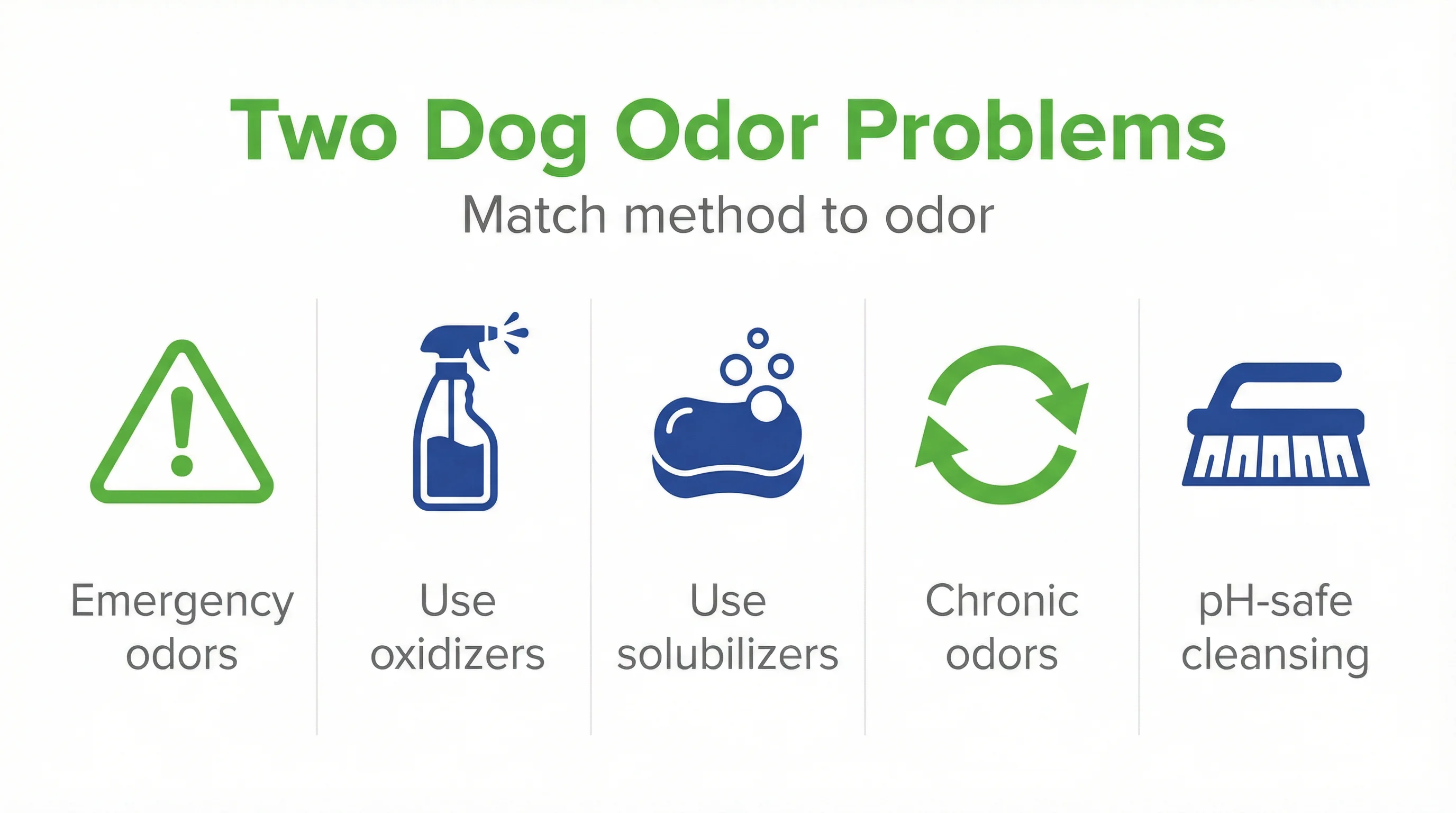
Emergency odors strike fast: skunk spray, garbage juice, or fishy secretions. These require immediate, targeted dog odor removal to limit set‑in smells and discomfort. Recurring odors develop slowly. Moisture, biofilm, or inflamed skin create “wet dog” notes that return quickly after bathing.
These two challenges need different responses. Emergency odors favor oxidizing or solubilizing approaches. Chronic odors often respond to pH‑appropriate shampoos, thorough rinsing, drying, and addressing underlying skin, ear, or anal sac problems.
Why typical perfumes and home hacks often disappoint
Cover‑up sprays may mask odors briefly but rarely neutralize the underlying compounds. Dogs perceive odor concentration differently than humans, so perfumes may not solve what they still smell, or may even annoy them.[2]
Additionally, scent preferences vary across dogs. Fragrances people enjoy may not be calming or pleasant to canines, limiting the value of scented cover‑ups in de‑skunking dog odors.[1]
Quick Decision Guide: If X, Then Y
5–7 situational decisions for skunk, garbage, fishy/anal sacs, hot spots, ear issues, and mildewy coats
- If fresh skunk spray hits the face, shield eyes with sterile lubricant, avoid water first, and apply the baking soda hydrogen peroxide skunk recipe to the body only. Rinse thoroughly.
- If garbage or dead‑fish odor coats the fur, use a degreasing dog shampoo, lather 3–5 minutes, rinse fully, and repeat once. Dry completely to prevent mildew odors.
- If a fishy odor persists around the rear, consider anal sac involvement. Gently cleanse fur externally. If scooting, licking, or swelling occurs, schedule a veterinary exam.
- If hotspots smell sour and ooze, clip surrounding hair if safe, keep the area dry, and pursue a brief antiseptic rinse. Then follow rapid care guidance in hot spot home triage.
- If ears smell yeasty or foul, avoid fragrances. Use a dog‑safe ear cleanser and a methodical routine like our vet‑informed home ear‑cleaning protocol. Seek care if pain or head tilt is present.
- If the coat smells mildewy after swimming or rain, bathe with a pH-appropriate shampoo, rinse meticulously, and dry to the skin using towels and cool air.
De‑Skunking That May Actually Help
Evidence‑informed de‑skunking mix (hydrogen peroxide + baking soda + dish soap): ratios, steps, contact times
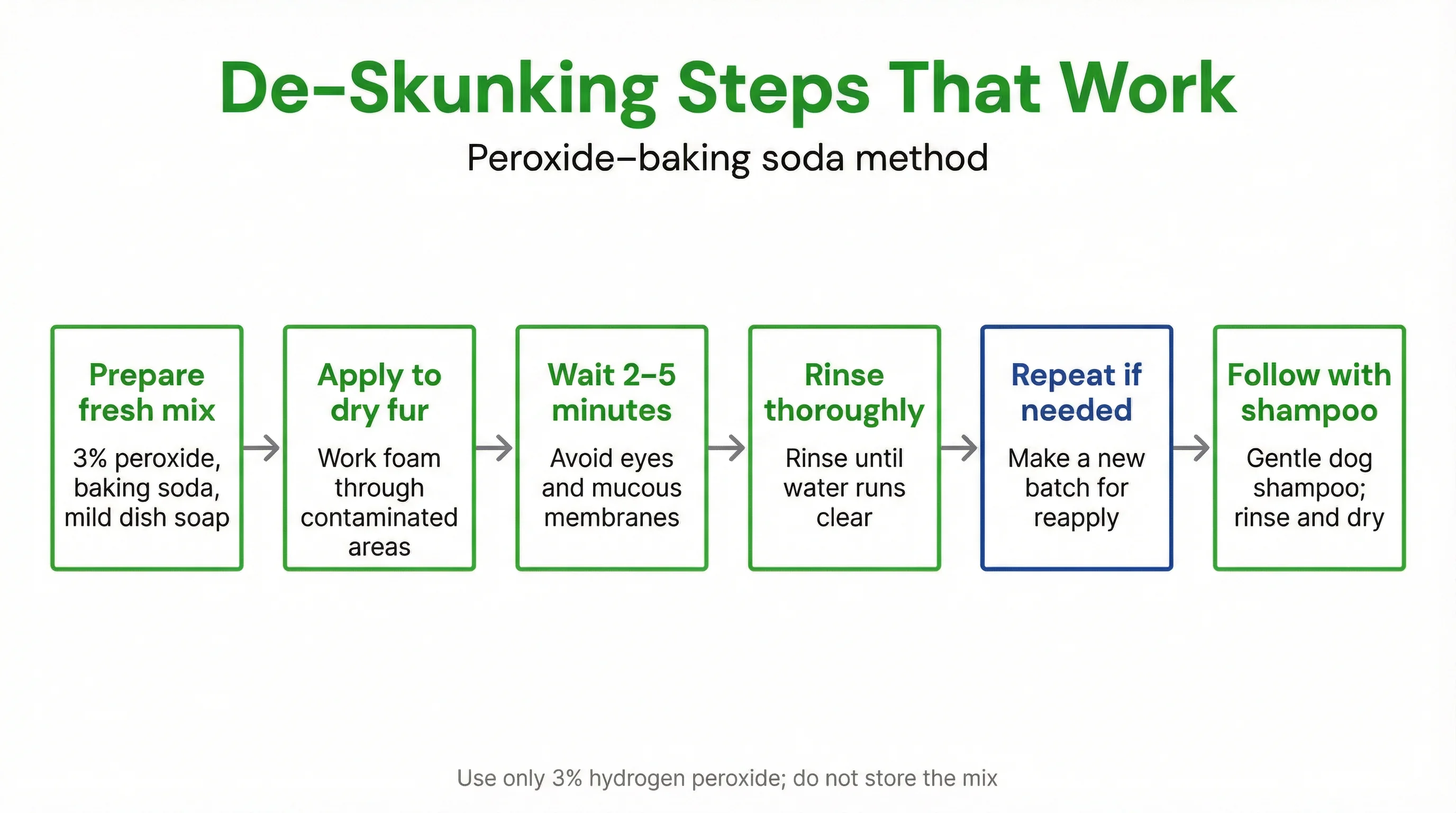
A commonly recommended mix for how to de-skunk a dog combines 1 quart (950 ml) of 3% hydrogen peroxide, 1/4 cup (60 ml) baking soda, and 1–2 teaspoons mild dish soap. Mix fresh. Do not store sealed.
Work the foam into dry fur for 2–5 minutes, avoiding eyes and mucous membranes. Rinse thoroughly. Reapply once if odor lingers. Follow with a gentle dog shampoo if fur feels coated, and rinse again.
Application workflow: protect eyes, spot test, mix fresh, rinse thoroughly, reapply if needed
First, protect eyes with sterile ocular lubricant or a veterinary‑approved gel. Spot test a small area. Wear gloves. Mix the solution immediately before use, as it loses power quickly and may off‑gas oxygen.
Apply from neck down. Keep contact time short on sensitive skin. Rinse until water runs clear and the slip is gone. Reassess. Repeat once, then transition to gentle shampoo and full drying.
Tackling Stubborn Coat Odors (Beyond Skunk)
Moisture and biofilm: why coats smell and how to disrupt it safely
Persistent “wet dog” odor often stems from moisture trapped against skin, combined with natural oils and microbial biofilm. Breaking that film requires thorough cleansing, friction, and complete drying to the skin.
Research in canine odor work shows that odors can permeate carriers and persist when matrices hold scent, a reminder that residue and dampness prolong smells if not fully removed.[4]
Shampoo strategies: pH‑appropriate dog shampoos, rinse discipline, drying
Choose a dog‑formulated, pH‑appropriate shampoo. Lather thoroughly, massage to the skin, and allow 3–5 minutes of contact. Rinse in sections until the coat squeaks. Residue amplifies odor.
Dry completely with towels and cool air. Focus on armpits, groin, neck folds, tail base, and dense undercoats. Regular brushing lifts old hair and reduces odor‑holding mats.
When odor comes from skin problems, ears, or anal sacs
Stubborn odors often signal inflamed skin, otitis, or anal sac disease. Address the source for lasting relief. For paws and moisture‑linked funk, see routines that curb yeast in yeasty or smelly paws.
If ears repeatedly smell, follow a structured cleanser routine as in gunky or itchy ears care. Fishy odors with scooting suggest anal sacs; prompt veterinary assessment is prudent.
Safety Boundaries You Shouldn’t Cross
Concentration limits, sensitive areas, and incompatible home ingredients
Use only 3% hydrogen peroxide for the skunk mix. Higher concentrations may irritate or bleach fur. Keep all de‑skunking solutions away from eyes, mouth, nose, and genitals. Do not apply to open wounds.
Avoid mixing vinegar or acids with peroxide, and never store the solution in a closed container. Decontamination research in working dogs emphasizes neutralization balanced with material compatibility—strong chemicals risk damage without better outcomes.[3]
When to pause DIY and seek veterinary care
Stop home care and call your veterinarian if eyes are affected, skin reddens or ulcerates, your dog is lethargic, or fishy odors recur with discomfort. Seek help for ear pain, head tilt, or neurologic signs.
If hotspots spread or your dog scratches relentlessly, escalate care. For broader guidance on skin triage, see hot spots and sudden itching. Early intervention may prevent secondary infections.
Monitoring: What to Watch at 7–14 Days and 4–8 Weeks
Short‑term checkpoints: skin comfort, recurrence patterns, triggers
Within two weeks, skin should appear calm, without persistent redness or flaking. Track odor recurrence after exercise, rain, or swimming. Note if certain shampoos improve or worsen itching, dryness, or odor rebound.
Record grooming frequency, drying thoroughness, and environment. This helps isolate triggers and adjust routines before issues escalate.
Long‑term checkpoints: seasonal moisture control, diet/allergy flags, recurrent gland or ear issues
At one to two months, evaluate seasonal patterns. Humidity and undercoat density often drive recurrent odors. Consider diet or allergy consultations if skin remains inflamed or ears repeatedly flare.
Recurring fishy odors suggest anal sac dysfunction, warranting veterinary evaluation. Chronic ear issues deserve culture‑guided care and an ongoing cleaning plan.
Evidence Status: What We Know and What’s Emerging
Why oxidizers may neutralize thiols/thiolates from skunk spray
Skunk spray contains sulfur‑rich compounds that strongly bind odor receptors. Oxidizers, used promptly and cautiously, may alter these molecules, reducing smell. This chemical rationale aligns with neutralization principles applied in other decontamination contexts.[3]
However, exact efficacy varies with fur length, timing, contamination level, and application technique. Always prioritize skin safety.
Where evidence is limited and expert consensus varies
Perfumed sprays lack robust evidence for true neutralization and can bother dogs with sensitive noses.[2], [1] Data on long‑term coat microbiome shifts from different shampoos are evolving. Observational outcomes currently drive many recommendations.
Odor persistence in porous carriers underscores why complete rinsing and drying matter, but translation from detection science to home grooming remains an emerging area.[4]
Practical Recipes and Product Options (Use With Care)
De‑skunking mix and storage caveats (make fresh, do not bottle)
Use this baking soda hydrogen peroxide skunk recipe: 1 quart (950 ml) of 3% hydrogen peroxide + 1/4 cup (60 ml) baking soda + 1–2 tsp mild dish soap. Mix in an open container. Apply immediately.
Do not store the solution. Off‑gassing may build pressure in sealed containers. Make a fresh batch for any reapplication, then transition to a gentle dog shampoo and full drying.
Supportive tools: dog‑safe shampoos, ear/skin cleansers, drying aids
Stock a pH‑balanced dog shampoo, a non‑stinging ear cleanser, cotton for drying ear flaps, and super‑absorbent towels. A low‑heat dryer speeds coat drying and reduces mildew odors in dense undercoats.
For surfaces, bedding, and quick touch‑ups after rinsing, many owners find Pet Home Deodorizer helpful for this task. Choose safe dog deodorizing methods that support neutralization rather than strong masking.
How This Fits Into Everyday Hygiene
Routine to reduce future odor events
After intense play, rain, or swims, rinse your dog, then dry to the skin. Brush routinely to lift undercoat and reduce odor‑holding mats. Treat hotspots early and wash collars, leashes, and bedding regularly.
Schedule periodic ear checks and paw care to lower moisture‑related odors. Dental hygiene reduces mouth odors; for breath guidance, see freshening breath and flagging emergencies.
Linking back to the dog hygiene problems hub
Odor control intersects with skin, ear, and paw health. For broader context, decision points, and when to act, return to our dog hygiene problems hub. Build a routine that prevents emergencies and supports comfort year‑round.
Frequently Asked Questions
What is the safest de‑skunking recipe for dogs?
Many veterinarians suggest a fresh mix of 3% hydrogen peroxide (1 quart/950 ml), baking soda (1/4 cup/60 ml), and a small amount of dish soap (1–2 tsp). Keep away from eyes and rinse well. Evidence suggests oxidizers may help neutralize skunk thiols.
Can I use tomato juice to remove skunk smell from my dog?
Tomato juice may mask odor briefly but often does not neutralize skunk compounds effectively. Oxidizing mixes are more commonly recommended, with careful use and thorough rinsing.
Why does my dog smell fishy even after bathing?
A fishy smell can point to anal sac issues or certain skin/ear problems. If the odor recurs or your dog scoots, licks the area, or seems uncomfortable, a veterinary exam is advisable.
How often can I repeat the peroxide‑baking soda de‑skunking?
Use as needed in the first 24–48 hours, watching for skin dryness or irritation. Avoid repeated daily use beyond the initial event, and switch to gentle, dog‑safe shampoos as the smell subsides.
Is human shampoo okay for ongoing dog odor problems?
Human shampoos may not match canine skin pH and can dry or irritate skin. A dog‑formulated shampoo is usually a better option for routine use.
Look into Healers HOCl products for gentle treatment and every-day grooming.
Conclusion: Emergencies demand swift, methodical response, while persistent coats need disciplined shampooing, meticulous rinsing, and full drying. Use oxidizing de‑skunking solutions carefully, respect safety boundaries, and monitor for recurrence. When odors signal medical issues, timely veterinary care protects comfort—and your nose.
References
- A Kokocińska et al. (2022). Canine smell preferences—do dogs have their favorite scents?. Animals. View article
- MT DeChant et al. (2021). Stimulus control of odorant concentration: pilot study of generalization and discrimination of odor concentration in canines. Animals. View article
- SL Grady et al. (2022). Routine decontamination of surfaces relevant to working dogs: neutralization of superficial coronavirus contamination. Animals. View article
- SA Kane et al. (2023). Development and assessment of Spotted Lanternfly (Lycorma delicatula) training aids for detection canines. Applied Animal Behaviour Science. View article


