

Crate and Alone‑Time Training for Working Households
Crate and Alone‑Time Training for Working Households
Long workdays clash with ideal training schedules. Many families cannot manage hourly crate rehearsals. Your dog still deserves a calm, predictable routine.
This plan recognizes fixed timetables and limited midday options. It prioritizes safety and gradual progress. You will learn a realistic weekday framework, clear decision points, and measurable checkpoints for crate comfort and independent settling.
Who this plan fits: one clear scenario
Typical weekday constraints (9–10 hours away)
This plan fits adults with a consistent 9–10 hour absence, including commute. It assumes two short morning and evening exercise windows. It expects limited live interaction during the workday. It uses predictable routines and structured relief.
What “success” looks like for a working household
Success means your dog relaxes quickly after you leave. Accidents and vocalization stay rare. The crate remains safe and inviting. You maintain a sustainable crate comfort routine. You have a gradual alone time training plan that fits weekdays.

Baseline setup: crate comfort before long alone‑time
Choosing and placing the crate
Select a size that allows standing, turning, and stretching without extra pacing room. Place the crate in a quiet, ventilated area near family life, not in isolation. Avoid direct sun, drafts, or high foot traffic. Some dogs relax with a partial cover to reduce visual noise. Confinement distress differs from pure separation anxiety, so careful introduction matters.[2]
Bedding, chews, and calming aids that may help
Use washable bedding that is firm and temperature appropriate. Provide a safe, long‑lasting chew tested for solo use. Consider predictable scent cues, like a worn T‑shirt. For sensitive dogs, steady pressure garments may support settling. Many pet owners find Healers Therapeutic & Anxiety Front Body Wrap helpful for this task. Keep first‑aid essentials on hand during acclimation, and supervise new items before leaving them in the crate.
The realistic weekday plan (6–8 weeks)
Weeks 1–2: micro‑sessions and predictable exits
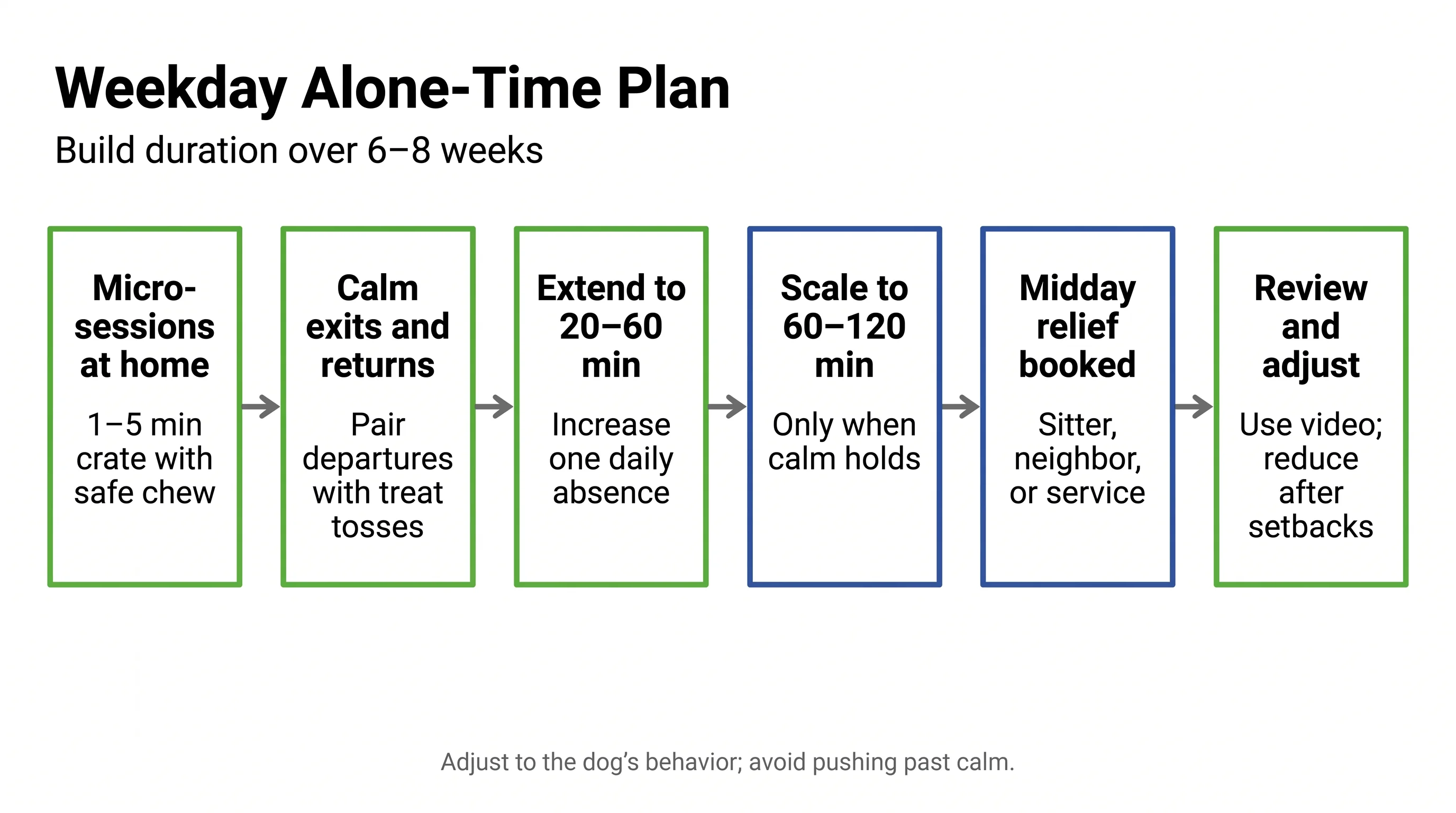
Run three to five micro‑sessions daily when you are home. Crate for 1–5 minutes with a safe chew, then release before fussing begins. Pair every exit with the same low‑key routine: cue, settle, leave quietly, return calmly. Add one short out‑of‑sight trial per day, 3–10 minutes, monitored by camera. Avoid long absences without practice first. This foundations phase builds independent settling for dogs that need clarity.
Weeks 3–4: extend alone‑time with midday relief
Increase one daily absence to 20–60 minutes, then 60–120 minutes, as calm behavior holds. Schedule a dependable midday break via a sitter, neighbor, or reputable daycare. For crate training for working owners, this relief is non‑negotiable. Space morning exercise, enrichment, and the departure window to avoid over‑arousal. Keep exits brief. Maintain one easy win each day.
Weeks 5–8: consolidating duration and variability
Consolidate to longer stretches with a guaranteed midday break. Vary durations slightly to prevent clock‑counting. Interleave crate naps with short stints in a puppy‑proofed, gated room. Practice weekend departures that mirror workdays. Continue short, successful refreshers on high‑intensity days. Stability with mild variation helps generalize calm.
Quick Decision Guide
- If your dog vocalizes more than five continuous minutes, shorten the next session by 30–50% and add a higher‑value chew.
- If accidents occur twice in a week, reduce duration, schedule a reliable midday break, and confirm last potty within 15 minutes of crating.
- If your dog resists entering the crate, feed full meals in the crate with the door open for three days, then close briefly during dessert time.
- If pacing or panting starts before you leave, add a five‑minute wind‑down walk and a calmer exit routine.
- If you cannot secure midday help, use a gated room for part of the day and limit actual crate time to shorter, proven windows.
- If your dog shreds bedding, remove soft items and offer a durable lick mat frozen with dog‑safe ingredients tested under supervision.
- If whining spikes on meeting‑heavy days, downshift that evening with decompression sniff walks and easy enrichment.
Monitoring guidance: what to check at 7–14 days and 4–8 weeks
Behavioral signals and crate‑use data
At 7–14 days, review video for time‑to‑settle, sleep percentage, and any escape attempts. Note panting, salivation, or pacing bursts. Confinement discomfort may appear even when separation moments look fine.[2] At 4–8 weeks, compare week‑over‑week trends. Aim for settling within five minutes and minimal vocalization. Case reports suggest tailored routines and management changes can reduce distress patterns over weeks, not days.[1]
Adjustments based on trends, not single events
Weigh clusters of data across three to five sessions before altering the plan. A single tough day may reflect unusual arousal or weather. Escalate support when you see repeated spikes in vocalization, elimination, or chewing across several trials.
Practical safety boundaries
Maximum durations, heat, hydration, and enrichment
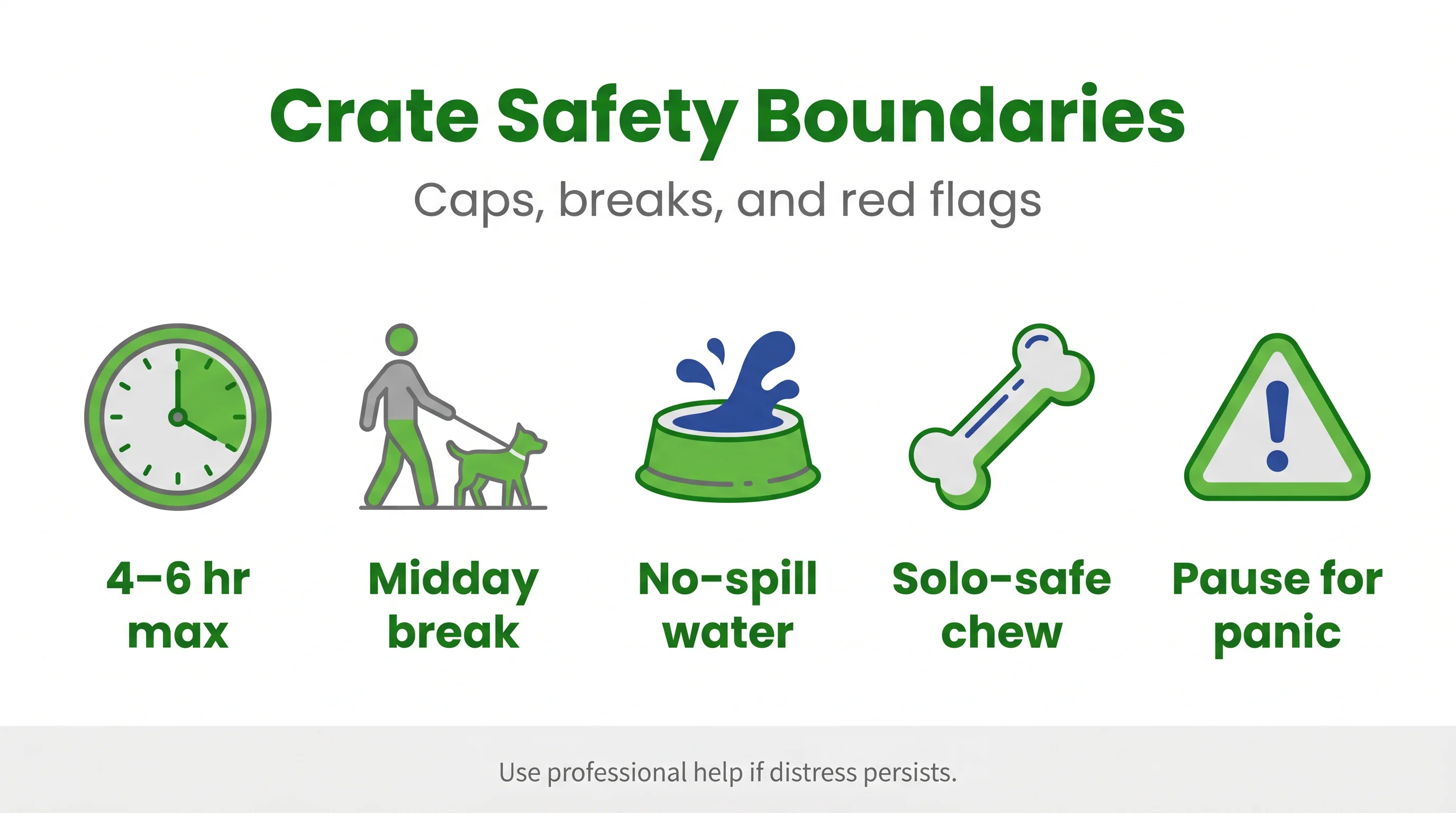
For most adult dogs, cap unbroken crate time at 4–6 hours. For 8–10 hour schedules, book midday relief every workday. Maintain a no‑spill water source if your dog drinks calmly. Control heat and airflow. Pre‑test chews for safety under supervision. Rotate enrichment to prevent frustration.
When to pause and seek professional help
Pause the plan if you observe sustained panic, injurious escape efforts, or repeated gastric upset. Evidence suggests differentials between confinement and separation anxieties matter for treatment choices.[2] Consult your veterinarian or a credentialed behavior professional for dog separation anxiety support when red flags persist.
Evidence status: what research suggests
Gradual desensitization and predictability
Gradual exposure with predictable routines may reduce distress in some dogs. Case evidence highlights individualized management, including environment changes and careful crate association, for complex separation and confinement profiles.[1] Practitioner reviews underline that confinement distress can differ from separation anxiety, guiding distinct interventions.[2]
Enrichment, exercise, and calming garments
Moderate exercise before departures, mental enrichment, and pressure garments may support calmer settling. Trainer surveys suggest methodology influences assessment and recommendations, with reward‑based strategies often favored.[4] For a deeper overview of calming garments and wraps, see our guidance on natural options. Public attitudes about crates vary, so transparent, humane use is essential for trust.[3]
Troubleshooting common setbacks
Vocalization, accidents, and crate avoidance
Reduce duration by 30–50% after tough sessions. Shift one daily nap to a gated room while you rebuild crate value with meals and easy wins. Add low‑arousal sniff walks; paw protection boots can help on hot or rough surfaces. If patterns mirror isolation distress, consider our structured starter approach in Separation Anxiety: A 30‑Day Starter Plan for Calmer Alone Time. Keep reinforcement high and exits quiet.
Rebuilding confidence after a bad day
After a setback, run three rapid‑success sessions the next day at much shorter durations. Use a top‑tier chew and pre‑departure calm. Log the trigger and adapt the schedule. If your dog is newly adopted, see our decompression guidance in Newly Adopted or Rescue Dogs: Weeks 1–6 Decompression Plan for pacing ideas.
Next steps beyond the crate
Transitioning to gated rooms and long‑term habits
Once your dog settles reliably for 2–3 hours, introduce short stints in a puppy‑proofed room with a camera and safe enrichment. Alternate crate and room days to maintain flexibility. For broader prioritization, consult our main anxiety guide for prioritization to integrate exercise, enrichment, and medical checks into your long‑term routine.
Frequently Asked Questions
How long can a dog safely stay in a crate while I’m at work?
Many adult dogs may tolerate 4–6 hours with adequate exercise, enrichment, and a midday break. For 8–10 hour schedules, plan for a sitter, neighbor, or daycare to provide relief and movement.
Should I leave food or water in the crate?
A no‑spill water source may help hydration if the dog is comfortable. Offer meals outside the crate to prevent nausea and reduce mess; use a safe long‑lasting chew to encourage calm.
Is crying normal during crate training?
Mild protest early on can be typical, but sustained panic, escape attempts, or salivation suggest distress. If intensity escalates, shorten durations and rebuild with smaller steps.
Can calming wraps or supplements help with alone‑time?
Some dogs may settle better with steady pressure garments and vet‑guided supplements. Evidence suggests these can support training but work best alongside gradual exposure and routine.
What if my dog has accidents in the crate?
First rule out medical issues and confirm appropriate crate size. Reduce duration, add a reliable midday break, and reset the plan with shorter, successful intervals.
Conclusion
Working households can deliver humane, effective crate and alone‑time training. Start with comfort, build predictable exits, and scale duration with reliable relief. Monitor trends, not one‑offs, and stay flexible. With this structure, crate training for working owners becomes achievable. Your dog gains independent settling skills. You gain a calm, sustainable weekday routine that respects wellbeing and real schedules.
References
- A Heinrich et al. (2024). Separation and confinement anxiety in a golden retriever× standard poodle dog. The Canadian Veterinary Journal. View article
- KC Ballantyne (2018). Separation, confinement, or noises: What is scaring that dog?. Veterinary Clinics: Small Animal Practice. View article
- AS Kelling et al. (2026). The crate divide: Exploring attitudes toward canine confinement. Available at SSRN 5675701 - papers.ssrn.com. View article
- T Hunter et al. (2020). Mental health disease or preventable problem? Australian dog trainers' opinions about canine separation anxiety differ with training style. Animals. View article


