

Allergies, Hot Spots, and Itchy Paws: Protect, Soothe, and Break the Cycle
Allergies, Hot Spots, and Itchy Paws: Protect, Soothe, and Break the Cycle
Does your dog start chewing their paws right after a walk? You are not alone. Many cases trace back to environmental triggers and contact irritation that spiral into hot spots. In this focused guide, we explain what drives the itch and how to use smart barriers, anti-itch routines, and complementary care to protect healing skin and break the cycle.
We will concentrate on practical steps for outdoor exposure, cleansing protocols, and safe at-home support—so your dog can get relief and you can regain control over itchy paws, allergies, and hot spots.
What’s Behind Itchy Paws and Hot Spots?
Environmental and contact allergens: grass, pollen, dust, chemicals
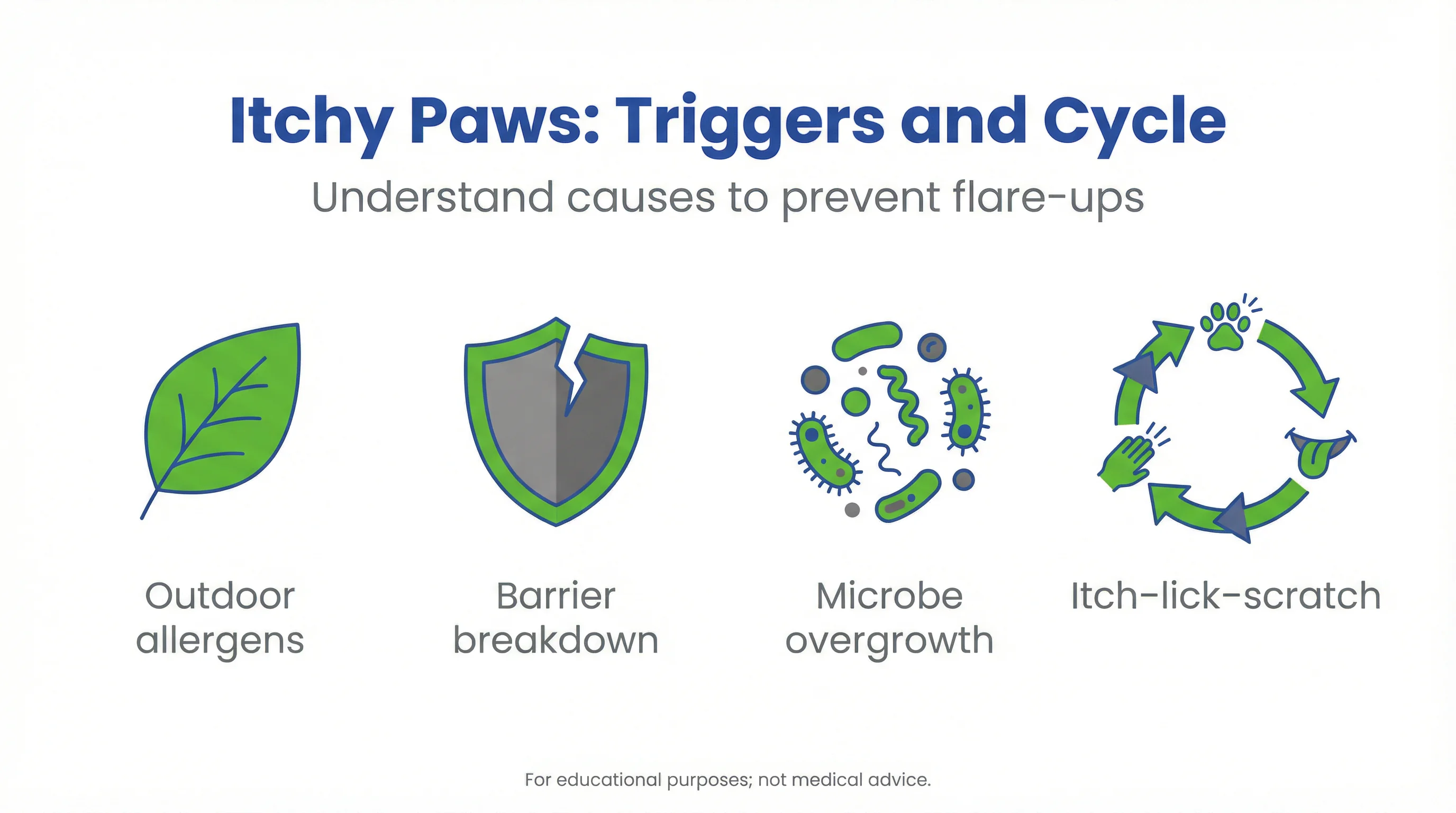
Dogs accumulate allergens on paws and lower legs with every outing. Grass pollens, mold spores, dust, and lawn chemicals are frequent irritants, especially in damp webbing between toes. This is classic canine contact dermatitis: friction plus allergens can inflame thin interdigital skin and prime an itch response that fuels dog paw chewing.
Secondary infections and the itch–lick–scratch cycle
Once the skin barrier is disrupted, normal bacteria and yeast can overgrow, intensifying itch and pain. That perpetuates the itch–lick–scratch cycle and can progress to hot spots. Managing inflammation and the barrier with topical therapies is foundational in canine atopic disease and contact flares.[2]
When paw chewing signals a vet visit
Schedule a veterinary exam if you see rapidly expanding redness, swelling, discharge, limping, or if licking persists despite barrier and cleansing routines. Recurrent hot spots, recurrent yeast odor, or signs of widespread itch suggest underlying atopic dermatitis requiring medical planning.[1]
Recognize the Signs: Paws, Pads, and Skin
Early signs: pink staining, paw flicking, interdigital redness
Catch the flare early. Look for pink or rust-colored saliva staining, paw flicking during walks, and redness where the toes meet. Dogs may pause to nibble the webbing or nails. Early attention prevents dog paw chewing from escalating into painful hot spots.
Hot spots vs. abrasions vs. yeast overgrowth
Hot spots are moist, inflamed areas that appear suddenly, often after licking. Abrasions follow rough surfaces and show scuffed pads. Yeast overgrowth tends to smell musty, with brown debris between toes. Accurate distinction guides targeted hot spot relief for dogs and appropriate topicals.[2]
Documenting patterns: seasonality, surfaces, and routines
Track when itching appears: spring pollen bursts, freshly treated lawns, hot sidewalks, or dusty trails. Note time of day, weather, and surfaces. This log helps you modify exposure and discuss patterns with your veterinarian if symptoms persist or intensify.
Outdoor Protection: Create a Barrier Before the Walk
Boot strategies for allergens, heat, and deicers (fit, breathability, traction)
Barrier gear prevents direct contact and reduces friction. Choose paw protection boots with breathable uppers, secure closures that avoid constricting the carpus, and non-slip soles for stability. For strategy details covering seasons and surfaces, see our complete paw protection guide.
Surface risk checklist: sidewalks, lawns, trails, and parking lots
Different surfaces pose different contact risks and heat loads. Assess conditions before stepping out, and adjust routes or timing accordingly. For more on heat and chemicals, review Urban paw safety for heat and chemical exposure.
| Surface | Main Risk | Pre-Walk Tip | Aftercare |
|---|---|---|---|
| Sidewalks/asphalt | Heat, grit | Test with back of hand; use boots | Rinse dust; dry webbing |
| Lawns/parks | Pollen, fertilizers | Check recent treatments; boot if unsure | Lukewarm rinse; gentle cleanser |
| Trails | Foxtails, soil microbes | Trim foot fur; boot in burr season | Inspect interdigital spaces |
| Parking lots | Deicers, oils | Avoid residue; boot for protection | Thoroughly rinse and dry |
How to condition dogs to wear boots without stress
Introduce boots indoors with short sessions, pairing with treats and calm praise. Start with one paw, then two, building duration. Keep early walks brief and positive. Troubleshooting fit and tolerance is easier with a structured approach.
How to measure, fit, and break in dog boots offers stepwise guidance.
Soothe the Itch: Cleanse, Calm, and Dry
Rinse-off routines after exposure (paws, webbing, nails)
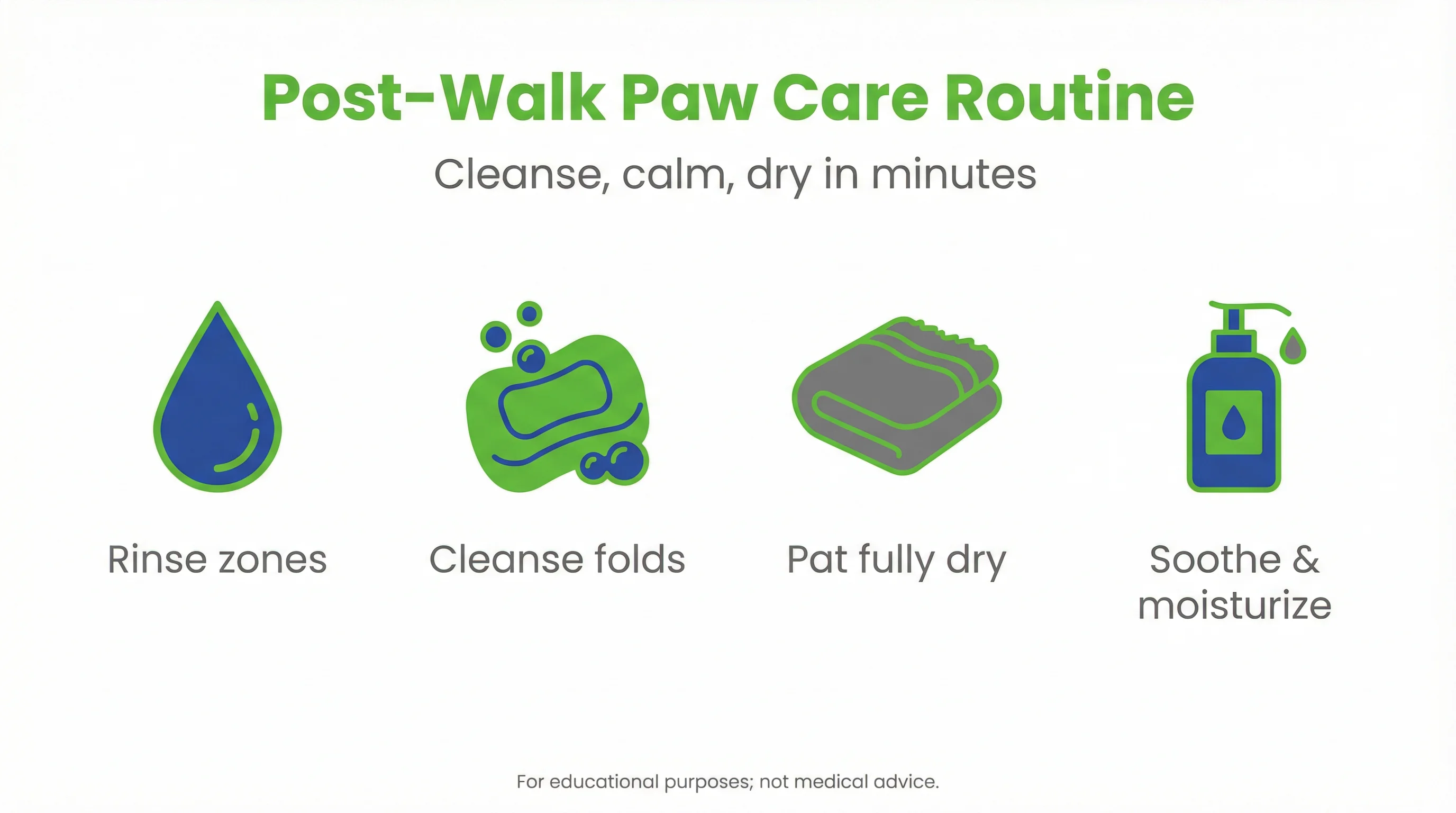
After every walk, rinse paws with lukewarm water or a pet-safe cleanser. Focus on the webbing, nail folds, and pad edges where allergens collect. Pat dry thoroughly—especially between toes—to avoid moisture that fuels yeast and bacterial overgrowth.
Evidence-informed anti-itch options and when to rotate products
Topicals with chlorhexidine, miconazole, pramoxine, colloidal oatmeal, or ceramide-based moisturizers can reduce microbial load and help restore the barrier. Hydrocortisone sprays may calm localized itch. Systemic therapies and immunotherapy are reserved for diagnosed atopic disease and require veterinary oversight.[2][4]
Safe drying: preventing moisture traps between toes
Use a soft, absorbent towel and gentle finger spacing to dry the webbing and nail folds. If needed, employ cool, low-airflow drying—never heat. Keep gear clean; see Dog Boot Care and Maintenance: Cleaning, Drying, and When to Replace for hygiene that supports skin recovery.
Protect Healing Skin: Dressings, Wraps, and Monitoring
When to bandage vs. leave open to air
Bandage when the skin is open, actively draining, or at high risk for contamination or self-trauma. Leave minor, dry irritations uncovered to breathe if your dog will not lick. For technique details, see Paw pad first aid and bandaging steps.
Non-stick coverage and breathable wraps for paw lesions
Choose non-adherent dressings, soft padding to reduce friction, and breathable wraps that avoid constriction. For covered paws outdoors, use dog booties for injured paws to keep dressings clean and dry. Many pet owners find Pet Injury Duo Pack helpful for this task.
Daily check protocol to avoid maceration and friction
Inspect dressings at least once daily. Look for dampness, swelling above or below wraps, odor, or trapped debris. Replace wet materials immediately, clean the area, reapply a fresh non-stick layer, and ensure boots and wraps are snug but not tight.
Break the Cycle: Habit Interrupts and Environment Tweaks
Lick interruption tools: schedules, mats, and enrichment
Use timed, supervised rest periods after walks. Offer food-dispensing toys or lick mats to redirect attention. Short, purposeful training sessions and scent games help satisfy needs. Reserve e-collars or recovery sleeves for acute phases when self-trauma threatens healing.
Home changes: entryway rinses, air filters, laundering textiles
Set up an entryway rinse-and-dry station. Run HEPA filtration during peak pollen seasons. Launder bedding and rugs weekly to reduce allergen reservoirs. Small environment tweaks can sharply reduce exposure that triggers canine contact dermatitis flares.
Grooming and nail care to reduce microtrauma
Keep nails short and rounded to prevent snagging. Trim excess fur around pads to limit burr pickup and moisture retention. Brush legs and undersides after walks to remove pollen and dust that migrate down to the paws.
Barrier before exposure, cleanse and dry after, and protect healing skin. These three steps break the itch–lick–scratch cycle and support consistent hot spot relief for dogs.
Complementary Support: Diet, Supplements, and Vet Care
Omega-3s and turmeric considerations (bioavailability and safety)
Marine omega-3s (EPA/DHA) can support skin barrier function and inflammatory balance. Turmeric-based supplements may help, but bioavailability varies with formulation and fat co-administration. Always discuss dosing, quality, and medication interactions with your veterinarian before starting any supplement.
Allergy workups: rule-outs, elimination trials, and veterinary plans
For recurrent signs, veterinarians may pursue flea control audits, skin scrapings, yeast cultures, and elimination diet trials. Confirmed atopic dogs may benefit from allergen-specific immunotherapy and integrated topical care to reduce flares and medication reliance.[3]
Track progress: photos, triggers, and response to interventions
Record weekly paw photos in consistent lighting. Note surfaces, weather, and products used. Track itch scores and licking frequency. Share this log with your veterinarian to refine barrier choices, cleansers, and treatment intensity over time.
Step-by-Step Routine: From Walk to Wind-Down
Pre-walk prep (barriers and boot fit check)
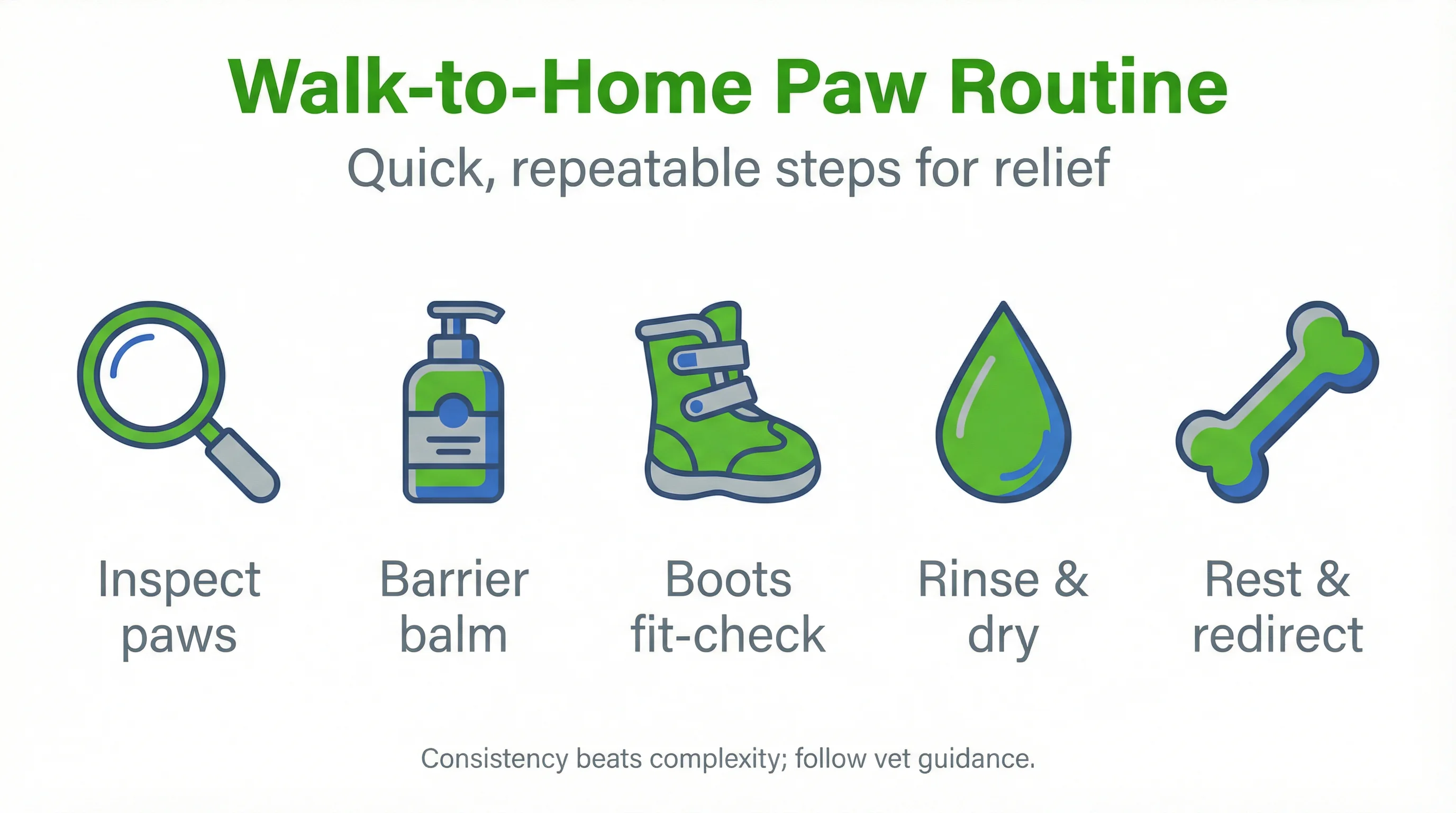
Before heading out, inspect paws for current irritation. Apply thin, vet-approved barrier balm if recommended. Fit-check paw protection boots for secure closures and breathable construction. Confirm traction and ensure no rubbing points that could irritate healing skin.
Post-walk cleanse and dry in under 5 minutes
- Rinse paws (pads, webbing, nails) with lukewarm water or pet-safe cleanser.
- Pat dry thoroughly, using a separate towel corner between each toe.
- Spot-treat irritated areas per your vet’s plan and allow complete air-dry before re-booting.
Consistency matters more than complexity; quick, repeatable steps limit allergen load efficiently.
Night routine to reduce overnight licking
Offer a calming chew or puzzle feeder before bed. Use breathable, light coverings only if your veterinarian recommends them. Provide a cool, quiet sleep area, and consider scheduled checks to interrupt any persistent licking episodes.
Frequently Asked Questions
Why does my dog chew their paws after walks?
Outdoor allergens and irritants (grass pollen, lawn chemicals, hot pavement) commonly trigger paw itching. Moisture trapped between toes can worsen irritation, leading to licking that creates hot spots.
Do dog boots help with allergies and hot spots?
Yes. Boots act as a barrier against allergens, heat, and chemical deicers, reducing contact irritation. Choose breathable, well-fitted boots and clean/dry paws after removal to prevent moisture issues.
How can I safely clean irritated paws at home?
Rinse with lukewarm water or pet-safe cleansers, then pat dry including between toes. Avoid harsh soaps or peroxide; consider HOCl-based cleansers for gentle debris removal without stinging.
When should I bandage a paw hot spot?
Bandage if the skin is open, bleeding, or at risk of contamination or self-trauma. Use non-stick dressings with breathable coverage and inspect daily; seek veterinary care if swelling, odor, or discharge persists.
Can supplements help itchy paws?
Omega-3s and turmeric-based products may support skin and inflammatory balance for some dogs. Discuss dosing and interactions with your veterinarian, especially if your dog takes other medications.
Conclusion
When itchy paws, allergies, and hot spots converge, a methodical plan works best: prevent contact outdoors, cleanse and dry after exposure, and protect healing skin with breathable support. Pair these steps with behavior management and veterinary guidance for durable relief. With consistency and the right tools, you can shorten flares, reduce dog paw chewing, and give sensitive skin a chance to recover. From surface-aware boot strategies to simple rinse-and-dry routines, small daily actions add up to healthier, happier paws.
References
- Y Drechsler et al. (2024). Canine atopic dermatitis: prevalence, impact, and management strategies. … Medicine: Research and …. View article
- D Santoro (2019). Therapies in canine atopic dermatitis: an update. Veterinary Clinics: Small Animal Practice. View article
- B Fernandes et al. (2023). Primary prevention of canine atopic dermatitis: breaking the cycle—a narrative review. Veterinary …. View article
- R Marsella et al. (2020). Comparison of various treatment options for canine atopic dermatitis: a blinded, randomized, controlled study in a colony of research atopic beagle dogs. Veterinary …. View article


