

Yeasty or Smelly Paws: Cleaning Routines That Break the Lick‑Itch Cycle
Yeasty or Smelly Paws: Cleaning Routines That Break the Lick‑Itch Cycle
Smelly dog paws are not just unpleasant. They often signal an irritated, yeast‑friendly environment between the toes. Constant licking adds saliva and moisture, which keeps the cycle running.
Breaking this loop matters because skin softens, microbes multiply, and discomfort escalates. This guide shows a targeted paw cleaning routine for dogs. You will learn cleansing, drying, and barrier tactics that may reduce odor, stains, and itch‑lick spirals safely.
Why smelly, yeasty paws keep the lick‑itch cycle alive
How moisture, allergens, and microflora interact
Paw skin traps humidity from grass, puddles, and saliva. Moisture softens the barrier and encourages Malassezia yeast and bacteria to multiply. Allergens stick to damp hair, escalating inflammation and licking. Allergic dermatitis is a leading cause of canine pododermatitis, keeping this cycle active.[4] Managing moisture and exposure is core because pododermatitis is multifactorial and often chronic.[3]
Key signs to differentiate yeast vs. irritation
Yeast signs may include a cheesy or corn‑chip odor, brown or pink staining, greasy film, and recurrent licking. Contact irritation may show diffuse redness without heavy odor. Pustules, crusts, or draining tracts suggest secondary infection requiring veterinary input. Nail folds and interdigital spaces often show earliest changes.
A focused daily routine: clean, dry, protect
Step‑by‑step cleansing (AM/PM) with gentle actives
Rinse or wipe paws with lukewarm water to remove dirt. Apply a non‑stinging, neutral cleanser to pads and between toes. Allow 30–60 seconds of contact, then blot excess. Avoid vigorous scrubbing. Many pet owners find Healers Skin & Coat Grooming Solution helpful for this task. Keep nails short to reduce friction and debris accumulation.
Drying techniques that reduce overgrowth risk
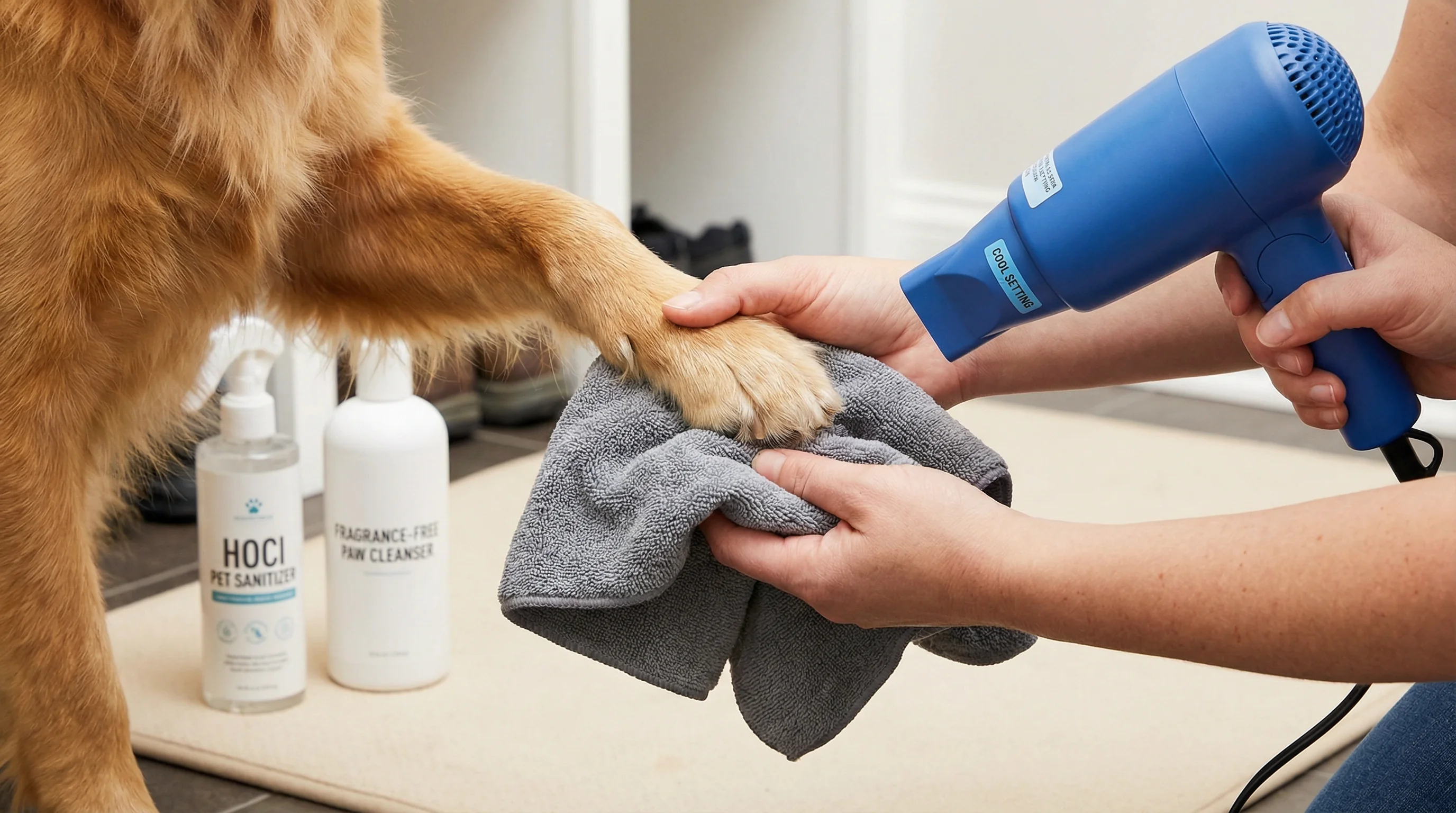
Pat thoroughly with an absorbent towel, separating toes. Use cool to low‑warm air, 30–60 seconds per paw, keeping the dryer moving. Focus on interdigital fur and nail folds. Avoid hot air and prolonged heat. Confirm skin feels dry, not tacky, before floor time.
Barrier strategies for walks, grass, and indoor hotspots
Before walks, apply a thin, breathable balm to pad edges to limit water wicking. Choose drier routes and avoid dew‑heavy grass. After walks, wipe and re‑dry quickly. Review seasonal risks and protective tactics in Seasonal Paw Hazards: Salt, Heat, Ice, and Foxtails. Indoors, place washable runners over damp entryways and near water bowls.
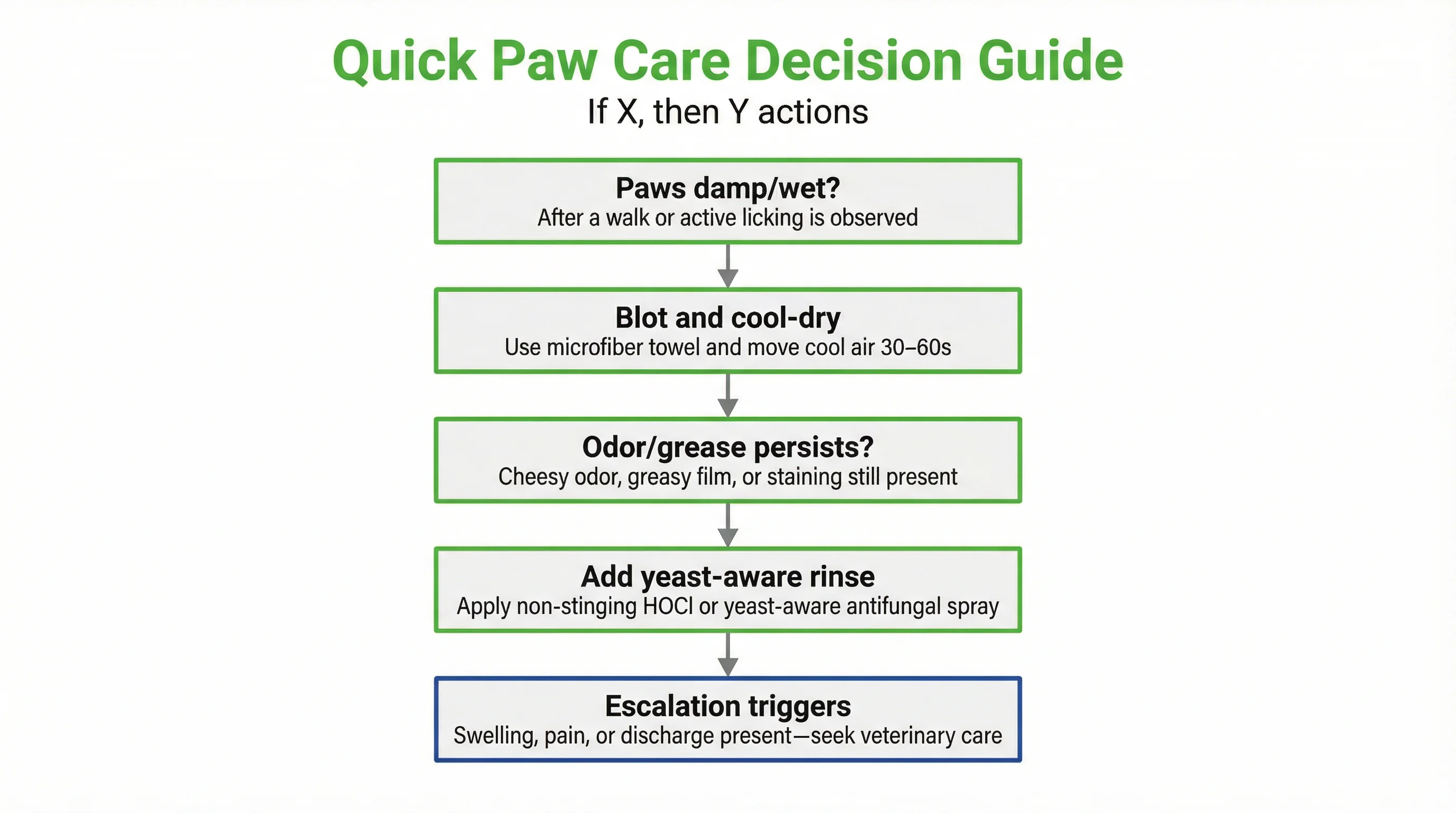
Quick decision guide: if X, then Y
If paws are damp after walks → blot + low‑heat drying
Blot with a microfiber towel, then use cool to low‑warm air for 30–60 seconds per paw. Keep fur parted and the dryer moving. Re‑check interdigital spaces for residual moisture.
If pink‑red staining and cheesy odor → add yeast‑targeted rinse
Continue gentle cleansing, then add a non‑stinging, yeast‑aware rinse or spray. Allow short contact time, then blot excess. Intensify evening drying. Track odor intensity daily to gauge trends.
If interdigital redness only → reduce friction + short nails
Trim nails and tidy excess fur that matts when wet. Use soft, breathable coverings during high‑activity periods. Add quick post‑grass wipes. Consider a washable leg bandage for brief protection during flare‑ups.
If itch spikes at night → evening cleanse + breathable covering
Perform a focused PM cleanse and dry. Use breathable protection during rest to deter licking without trapping heat. Provide a cool, low‑humidity sleep space. Reassess bedding for detergent or fabric triggers.
If outdoor allergens are likely → pre‑walk balm + post‑walk wipe
Apply a thin pre‑walk barrier to pad margins and toe webs. After walks, wipe and dry immediately. Choose routes with less tall grass. Rinse paws after heavy pollen or turf chemical exposure.
If skin is broken or oozing → discontinue harsh actives and use HOCl, then contact a vet
Stop acids or peroxides on open skin. Use a non‑stinging HOCl cleanser and protect the area from self‑trauma. Review wound hygiene basics in Minor Cuts and Scrapes: Safe Wound Hygiene for Active Dogs. Schedule a veterinary assessment.
If no change in 14 days → seek veterinary assessment
Plateaued odor, spreading redness, or persistent licking suggests deeper causes. A veterinarian can check for infection, mites, foreign bodies, or allergies. Adjust therapies based on exam findings and tests.
Monitoring progress: what to expect at 7–14 days and 4–8 weeks
7–14 days: odor trends, lick frequency, redness mapping
Expect odor to lessen and licking bouts to shorten if moisture control improves. Photograph paws under similar lighting to map redness or staining. Track nightly itch spikes. Note tolerance to walking on grass or wet surfaces.
4–8 weeks: hair regrowth, stain fade, tolerance to walks
With consistent care, stained fur may fade as new hair grows. Redness usually localizes, and tolerance to longer walks should increase. Flare‑ups may still occur with seasonal shifts. Re‑tighten drying and barrier steps during high pollen periods.
Practical safety boundaries
When not to use acids, peroxides, or essential oils
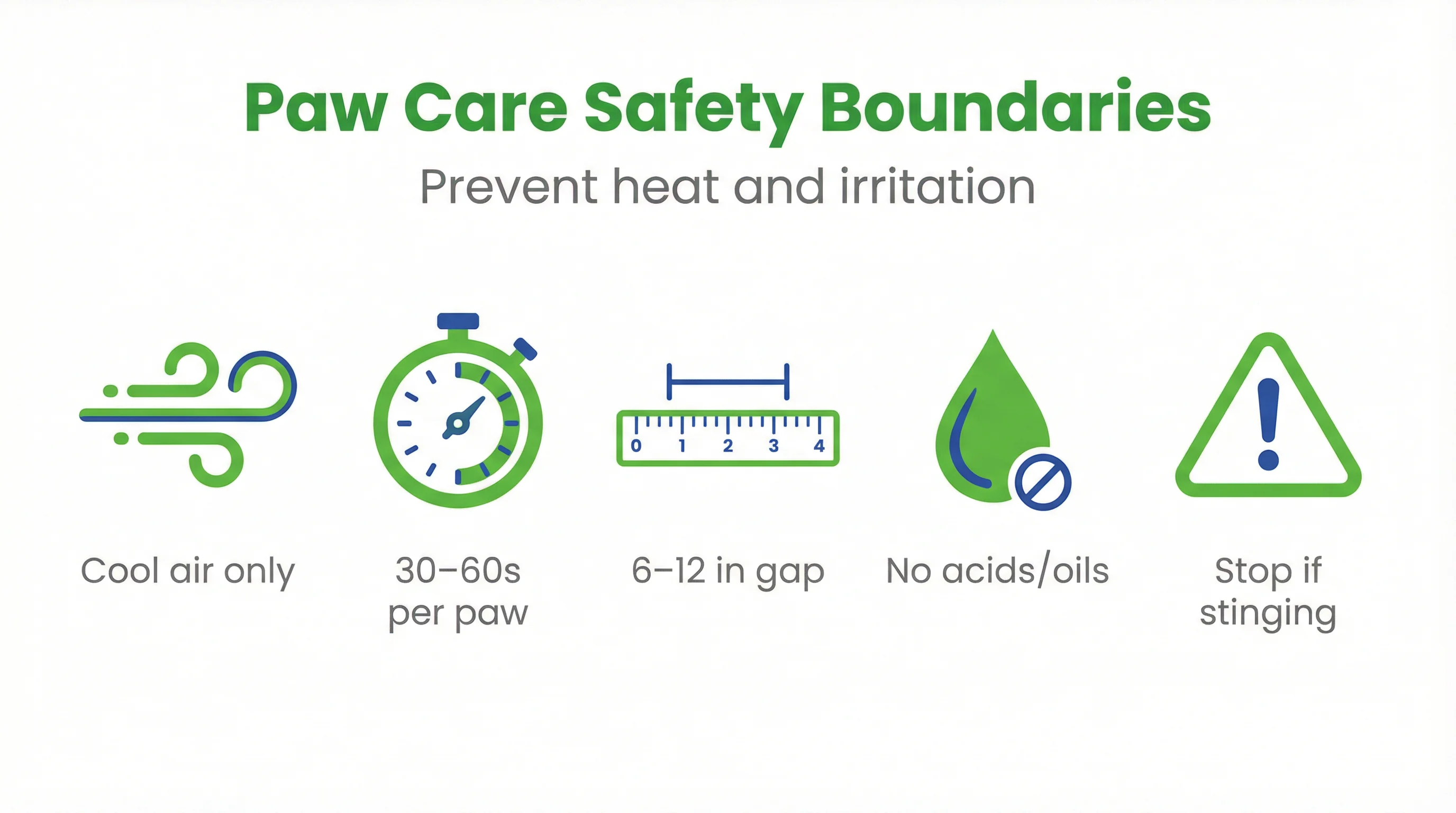
Avoid acids, peroxides, and essential oils on broken, abraded, or highly inflamed skin. Discontinue if stinging, increased redness, or rash occurs. Tea tree and phenolic oils may be irritating. Choose neutral, non‑stinging cleansers during flare‑ups.
Safe drying temperatures and contact time
Use cool to low‑warm air only. Limit to 30–60 seconds per paw and keep the dryer moving 6–12 inches away. Avoid heat mats and sunbathing immediately after soaks. Check skin temperature by touch frequently.
Signs that require veterinary care
See a veterinarian for swelling, bleeding, limping, deep redness, pustules, draining tracts, or persistent pain. Rapidly worsening odor or expanding lesions also require evaluation. Early care can prevent deeper infections and scarring.
What the evidence suggests
Cleansing frequency and moisture control
Evidence suggests pododermatitis has multiple drivers, so consistent topical hygiene and moisture reduction are foundational parts of management.[3] Regular but gentle cleansing, followed by thorough drying, may reduce odor and redness without over‑drying skin.
HOCl for skin hygiene and wound care
Guidelines emphasize topical antisepsis as a first‑line approach to reduce microbial load and limit systemic antibiotics in superficial infections.[1] Pilot data show antiseptic gels can lower bacteria and yeast in canine pododermatitis.[2] Non‑stinging HOCl sprays may support hygiene during flare‑ups.
Barrier methods and reduction of environmental triggers
Allergic dermatitis is a principal driver of paw inflammation, so minimizing allergen contact and prompt post‑exposure cleaning are logical strategies.[4] Breathable protection, route selection, and rinse‑and‑dry steps may reduce triggers that sustain the lick‑itch cycle.
Tools and materials for a low‑friction routine
Gentle cleansers and HOCl sprays
Choose neutral, non‑stinging cleansers or HOCl sprays for daily paw care. Opt for fragrance‑free, dye‑free formulas to lower irritation risk. Keep a travel‑size option near doors for quick post‑walk wiping and a larger bottle at the grooming station.
Absorbent towels, cool air, and breathable protection
Microfiber towels speed blotting between toes. A handheld dryer or fan on cool improves drying precision. During heavy pollen or wet seasons, consider breathable protection and short, frequent outings. Review weather‑specific tactics in Seasonal Paw Hazards: Salt, Heat, Ice, and Foxtails.
Allergen‑aware walk setups
Prefer dry sidewalks over dewy lawns. Avoid recently treated turf. Stage a threshold station with wipes, towels, and a mat. For bandage hygiene principles that translate to careful coverage, see Post‑Surgery Hygiene at Home: Keep Incisions Clean and Stress Low.
Frequently Asked Questions
How often should I clean yeasty or smelly dog paws?
Evidence suggests once to twice daily during flare‑ups, then taper to post‑walk wipes and scheduled maintenance. Over‑washing may dry skin, so balance frequency with gentle products and thorough drying.
What’s the safest way to dry my dog’s paws after cleaning?
Pat with an absorbent towel, then use cool to low‑warm air for 30–60 seconds per paw, keeping the dryer moving. Avoid hot air and prolonged heat to reduce irritation or burns.
Can I use vinegar or essential oils for yeasty paws?
Diluted acids and essential oils may irritate sensitive skin and are not well‑tolerated by some dogs. Many pet parents choose neutral, non‑stinging options like HOCl for routine hygiene.
When should I see a vet for smelly paws?
If there is bleeding, swelling, open sores, persistent limping, severe pain, or no improvement after 14 days of careful home care, a veterinary exam is recommended to rule out infection or deeper issues.
Do breathable booties help reduce paw licking?
Breathable protection may reduce contact with allergens and deter self‑trauma between cleanings. Evidence suggests combining barrier methods with regular hygiene can lower irritation triggers.
Conclusion: stabilizing paws for long‑term comfort
Smelly, yeasty paws thrive on moisture and exposure. A consistent routine—gentle cleansing, precise drying, and smart barriers—may interrupt the lick‑itch cycle and restore comfort. Track changes at two and eight weeks, then fine‑tune frequency as seasons shift. If progress stalls, partner with your veterinarian to explore underlying allergies or infections. For broader hygiene priorities that support whole‑body comfort, visit our dog hygiene hub. Thoughtful daily care can turn flare‑ups into manageable blips.
References
- A Loeffler et al. (2025). Antimicrobial use guidelines for canine pyoderma by the International Society for Companion Animal Infectious Diseases (ISCAID). Veterinary …. View article
- I Yevtushenko et al. (2021). Clinical manifestation and methods of treatment of pododermatitis in dogs. 2021 - dspace.dsau.dp.ua. View article
- J Bajwa (2023). Canine pododermatitis: a complex, multifactorial condition. The Canadian Veterinary Journal. View article
- P Bouza-Rapti et al. (2023). Canine pododermatitis: A retrospective study of 300 cases. Journal of the …. View article


