

Tear Stains and Eye Gunk: Gentle Daily Care Without Irritation
Tear Stains and Eye Gunk: Gentle Daily Care Without Irritation
Stains beneath the eyes look worrying, and crusts can form quickly. You want relief without risking your dog’s delicate eye surface. The right routine makes that possible.
This guide explains why tear staining persists, how to clean safely, and when to escalate. Learn a two–five minute protocol, practical decision paths, and sensible boundaries. For broader context, visit our dog hygiene orientation hub.
Why some dogs develop tear stains and eye gunk
Common contributors (epiphora, hair irritation, allergies, anatomy)
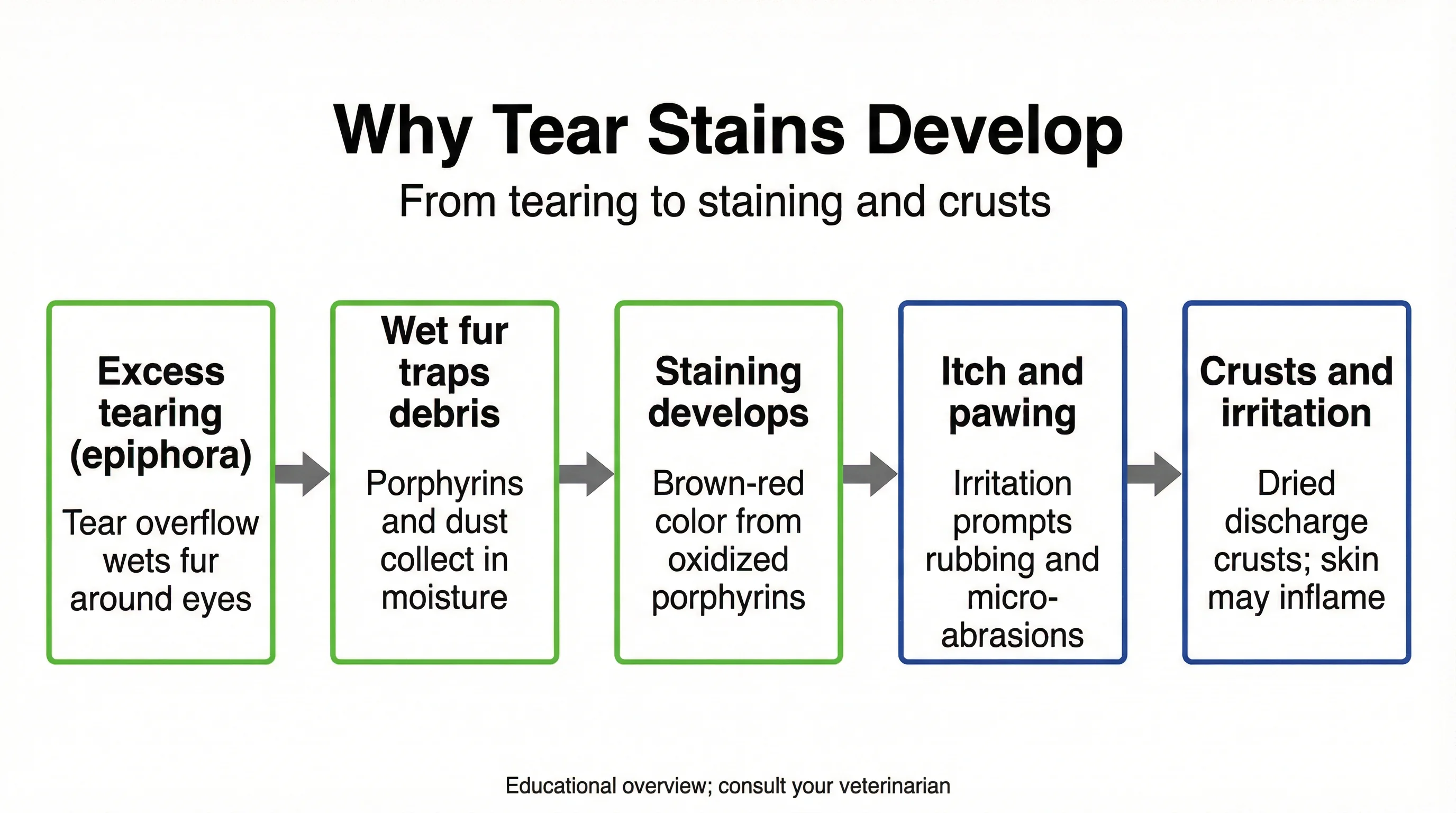
Most staining starts with epiphora, which is excessive tearing that wets the face. Overflow mixes with porphyrins and environmental debris, producing brown tear stains in dogs with light coats. Hair rubbing the eye margin adds irritation.
Allergies may increase tear production and itch, encouraging pawing and secondary crust formation. Eyelid and facial anatomy also matter. Brachycephalic breeds may have shallow orbits, medial canthal entropion, or poor tear drainage that predispose to staining and discharge[2].
Conformation-related eyelid issues, including entropion, can lead to chronic epiphora and debris that accumulate at the inner corner and along the lid margin[4]. Population studies highlight how breed-linked eyelid disorders affect welfare and require evidence-based management[1].
When normal discharge becomes a concern
Clear discharge that dries to a soft crust can be normal. It should not be copious, malodorous, or colored. Squinting, reddened whites, or frequent pawing suggest irritation rather than cosmetic staining.
Watery eyes that persist despite trimming peri-ocular hair and gentle care may reflect anatomical or inflammatory causes needing veterinary assessment[2]. Thick yellow or green discharge suggests infection or corneal injury and warrants prompt evaluation.
Monitor for swelling, excessive blinking, or light sensitivity. These may indicate a painful process. Excessive brown tear stains in dogs can also irritate skin, leading to moist dermatitis if not managed calmly and consistently.
Gentle daily cleaning routine that protects the eye surface
Step-by-step: 2–5 minute routine
1) Wash your hands. Sit your dog on a non-slip surface with good light. Reward calm behavior. Keep movements slow and deliberate.
2) Moisten a soft, lint-free pad with sterile ophthalmic saline or a canine-safe cleanser. Avoid dripping fluid directly onto the cornea unless directed by your veterinarian.
3) With your non-dominant hand, gently lift the upper lid to shield the eye surface. With the pad, wipe the fur beneath the inner corner outward, following hair growth. Replace pads as they soil.
4) For minor crusts, hold a warm, damp pad against the area for 10–20 seconds to soften, then wipe away. Do not pick or scrape.
5) Dry the area carefully. Comb or part peri-ocular hair to reduce contact with tears. If more discharge is present in the ears, review our vet-informed home ear-cleaning protocol for coordinated hygiene.
What to use vs. what to avoid
Preferred options include sterile saline, pH-balanced canine cleansers, and safe eye wipes for dogs free of alcohol, parabens, added fragrance, or antibiotics. Hypochlorous-acid (HOCl) solutions formulated for ocular use may support gentle cleaning and odor control.
Avoid hydrogen peroxide, boric acid concentrations intended for pools, apple cider vinegar, essential oils, and human cosmetics. These can disrupt the tear film or harm the cornea.
For practical daily cleaning, many pet owners find Healers Ear & Eye Wash Solution helpful for this task. Use a light touch around the eye margin and always prevent solution from pooling directly on the eye surface unless your veterinarian approves.
Quick decision guide: if X, then Y
Situational prompts for day-to-day choices
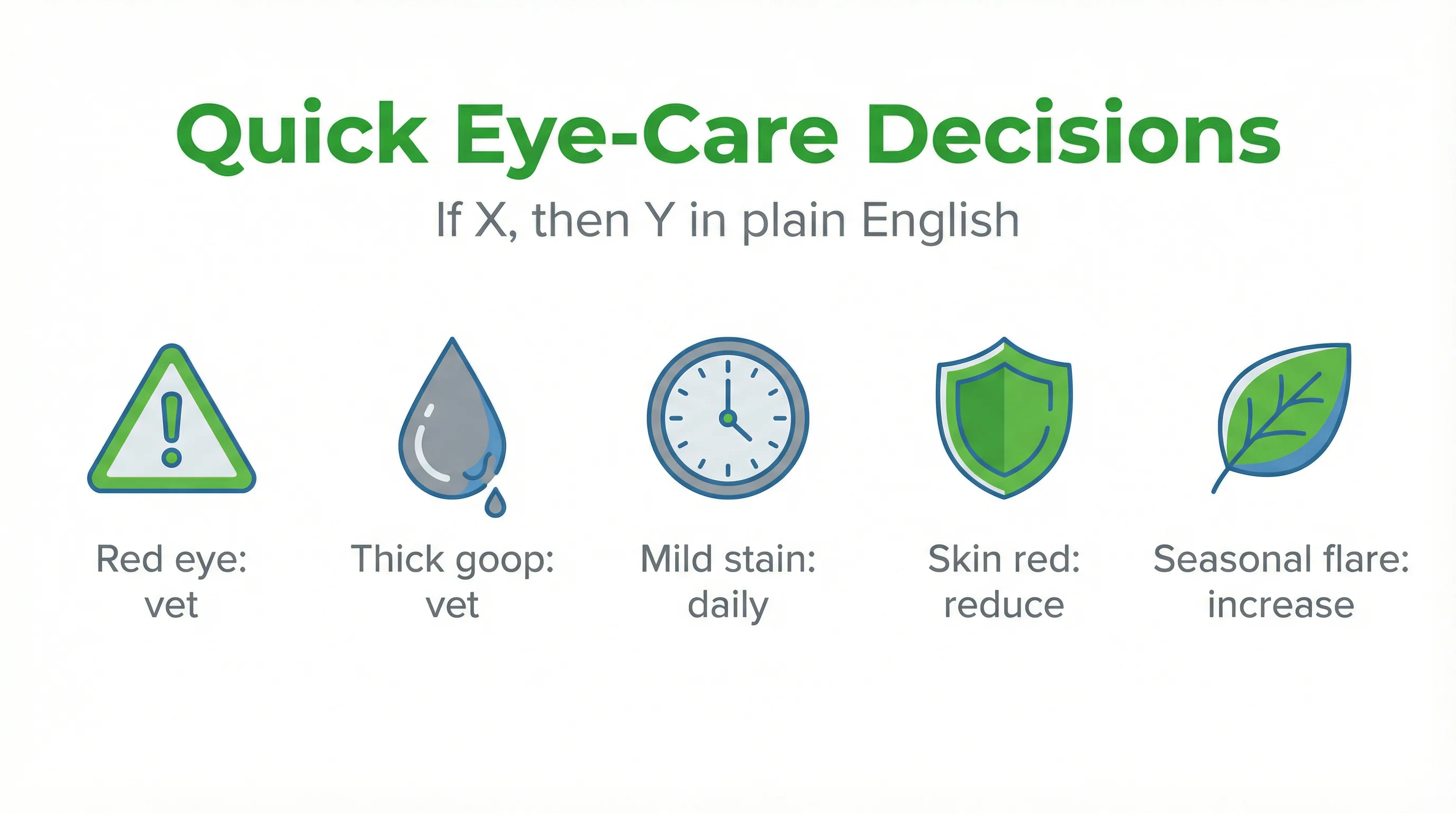
- If hair touches the eye or wicks tears, then part hair daily and request a professional trim of peri-ocular tufts.
- If crusts are dry and adherent, then apply a warm, damp compress for 10–20 seconds before gently wiping.
- If discharge is clear and odorless, then clean once daily and dry thoroughly to reduce staining.
- If discharge turns yellow, green, or thick, then stop home treatments and contact your veterinarian promptly.
- If skin becomes pink, damp, or tender, then reduce frequency to every other day and add careful drying after each clean.
- If your dog resists or blinks hard, then pause, reward calm, and resume with slower motions and better support of the upper lid.
- If staining worsens despite two weeks of gentle care, then seek veterinary evaluation for allergies, eyelid conformation, or tear drainage issues.
Monitoring progress: 7–14 days and 4–8 weeks
Short-term signs to watch
Over 7–14 days, expect easier wipe-away of debris, reduced crust formation, and less dampness under the eye. The skin should look calm, not red, and free of odor.
Track frequency of cleaning. Many households progress from twice daily to once daily as peri-ocular hygiene for dogs stabilizes. If seasonal allergies are suspected, monitor concurrent itch or sneezing and discuss options with your veterinarian.
If tearing fluctuates with pollen or dust, environmental control and veterinary-directed anti-itch strategies may help. If redness, squinting, or colored discharge occurs, escalate care without delay[2].
Longer-term indicators and next steps
By 4–8 weeks, aim for lighter staining borders, healthier skin, and calmer behavior during cleaning. Some dogs with conformational eyelid issues may show persistent epiphora that needs veterinary correction[4].
Note whether stains reappear rapidly after bathing or trimming. That suggests ongoing hair contact or tear overflow. A veterinary exam can evaluate tear ducts and lid position, especially in predisposed breeds[1].
If allergic triggers are prominent, discuss systemic support and targeted therapies with your clinician. For skin that becomes itchy or inflamed, our rapid home triage for hot spots and sudden itching offers practical strategies to break the itch cycle while you seek guidance.
Practical safety boundaries for eye-area care
Handling, frequency, and product-safety limits
Stability matters. Support the head, use calm praise, and keep hands visible. Avoid pinning or forced restraint, which raises blink force and risks corneal contact.
Frequency should match severity. Heavy tearers may need twice-daily routines initially. Taper to once daily as the skin improves. If irritation appears, pause for 24 hours, then resume every other day with shorter sessions.
Limit products to pH-balanced, ophthalmologist- or veterinarian-tested options. Avoid antibiotic-based tear-stain removers unless prescribed. Never use household cleaners or undiluted acids. If any solution enters the eye and causes rubbing or squinting, flush with sterile saline and contact your veterinarian.
When trimming peri-ocular hair, request a professional groomer’s help to protect the eyelid margin. Avoid pointed scissors near the eye. Keep sessions brief and reinforce calm behavior.
What the evidence says (and doesn’t)
Ingredients and practices with supportive evidence
Evidence supports addressing conformational causes when epiphora persists. Entropion and medial canthal issues may drive chronic tearing and surface irritation; surgical or targeted management can reduce overflow and staining in suitable cases[4].
Brachycephalic breeds show characteristic ocular risks, including exposure-related dryness and impaired drainage. Routine peri-ocular cleaning and protection are emphasized in clinical guidance for these patients[2]. Population research reinforces prioritizing breed-related eyelid disorders in welfare planning[1].
Routine cleaning with sterile saline and non-irritating formulas is widely recommended by clinicians to maintain hygiene without disrupting the tear film. Regular hair management reduces mechanical irritation at the lid margin.
Areas where evidence is limited or mixed
Diet-based tear-stain fixes show mixed outcomes. Some dogs improve with allergy-focused diets, while others show little change. Retrospective analyses underscore variability in ocular presentations and responses to care[3].
Over-the-counter “tear stain removers” vary widely in composition. Evidence suggests caution with products containing antibiotics or harsh acids due to resistance and irritation risks. Choose gentle, pH-balanced options with clear ophthalmic guidance.
Home remedies using vinegar, peroxide, or essential oils may irritate eyes and adjacent skin. Controlled data on their safety near the canine cornea are lacking, so avoidance is prudent.
How this ties into broader hygiene care
Explore the dog hygiene orientation hub
Eye care is one piece of a larger routine. Align peri-ocular care with ear hygiene, skin health, and first-aid readiness for the best results. For ears, begin with our home ear-cleaning protocol to reduce head-shake driven tearing.
If peri-ocular skin becomes abraded from constant wiping, apply the same principles used for minor wounds—gentle cleansing, drying, and protection—outlined in our guide to safe wound hygiene for active dogs. When allergies flare, coordinated itch management supports calmer eyes; see our advice for rapid home triage of hot spots and itching.
Consistent, gentle routines reduce stress for both of you and build the foundation for cleaner eyes, healthier skin, and fewer flare-ups over time.

Frequently Asked Questions
What causes brown tear stains on dogs?
Brown stains often relate to porphyrins in tears exposed to air, plus constant tearing from factors like hair rubbing the eye, shallow tear ducts, or allergies. Certain breeds with facial folds or light coats show stains more visibly.
How often should I clean my dog’s eye area?
Once daily may help for moderate staining; twice daily for heavy tearers can be appropriate. Reduce frequency if skin looks irritated and consult your veterinarian if redness, odor, or squinting appear.
Are tear stain remover drops safe?
Safety varies by formula. Products free of antibiotics and harsh acids are generally preferred; evidence suggests pH-balanced, ophthalmologist- or veterinarian-tested solutions may be safer around the eye.
When should I see a vet for eye discharge?
Seek care promptly if discharge turns yellow/green, your dog squints or paws the eye, the white of the eye reddens, there’s swelling, or stains worsen despite gentle care over 2 weeks.
Can diet changes reduce tear stains?
Some dogs may improve with elimination of irritants or allergens, but results are individualized. Evidence is mixed; consider a vet-guided diet trial if staining persists.
Conclusion
Chronic staining and minor crusts respond best to calm, consistent routines that protect the cornea and respect skin integrity. Start with gentle cleaning, smart frequency, and careful monitoring. Escalate promptly for pain, color change, or persistent tearing.
Use pH-balanced products, soft tools, and professional grooming support around the eyes. Measured steps today help prevent bigger problems tomorrow and keep your dog comfortable, clean, and confident—one careful wipe at a time.
References
- DG O'Neill et al. (2025). Conformational eyelid disorders in dogs under primary veterinary care in the UK-Epidemiology and clinical management. Plos one. View article
- MM Riera (2021). Ophthalmology in Practice for Brachycephalic Breeds. Health and Welfare of Brachycephalic (Flat-faced) …. View article
- A Verma et al. (2025). Prevalence and Pattern of Eye Affections in Canine Patients: A Retrospective Study. Journal of Animal …. View article
- A Estrada-Araya et al. (2024). Comprehensive review of canine entropion: types, surgical techniques, and prognosis. 2024 - preprints.org. View article


