

Outdoor Paw Protection for Dogs: The Complete Guide by Healers Pet Care
Outdoor Paw Protection for Dogs: The Complete Guide by Healers Pet Care
From scorching sidewalks to icy sidewalks, outdoor surfaces can quietly sabotage healthy paws, with urban paw safety in city environments—addressing hot pavement, ice melt, and sidewalk hazards and seasonal paw hazards—summer heat, winter salt, and shoulder‑season risks tailored to US regions—through simple heat testing, route planning, post-walk rinse routines, and everyday boot recommendations, plus medical vs. everyday dog boots—when to use each and why it matters—along with how to measure, fit, and break in dog boots to curb slippage and accommodate dewclaws and sensitive paws—adding another layer to consider, while a vet‑approved trail and hiking paw protection kit equips you for off‑road adventures as well.
A proactive plan, especially for dogs prone to allergies, hot spots, and itchy paws, helps your dog enjoy every walk, trail, and romp without setbacks. This comprehensive guide from the Healers PetCare Team covers seasonal risks, boot types, fit, first aid, and maintenance—including cleaning, drying, and when to replace to maintain protection and traction—while outlining a paw pad first aid: HOCl wound care, bandaging, and booting protocol for times when injuries do occur, and a veterinarian-informed post-injury and surgical recovery approach using medical dog booties, elastic wraps, and calm support to keep bandages clean, prevent licking, and protect incisions.
Whether you need everyday paw protection boots or medical dog boots for recovery, you will find clear steps, evidence‑based insights, and practical checklists. Let’s build a smart, year‑round strategy for resilient, comfortable paws outdoors.
Why Paw Protection Matters Outdoors
Healthy paws drive mobility, comfort, and confidence. Protecting them outdoors prevents small issues from becoming costly injuries.
Common outdoor hazards by season
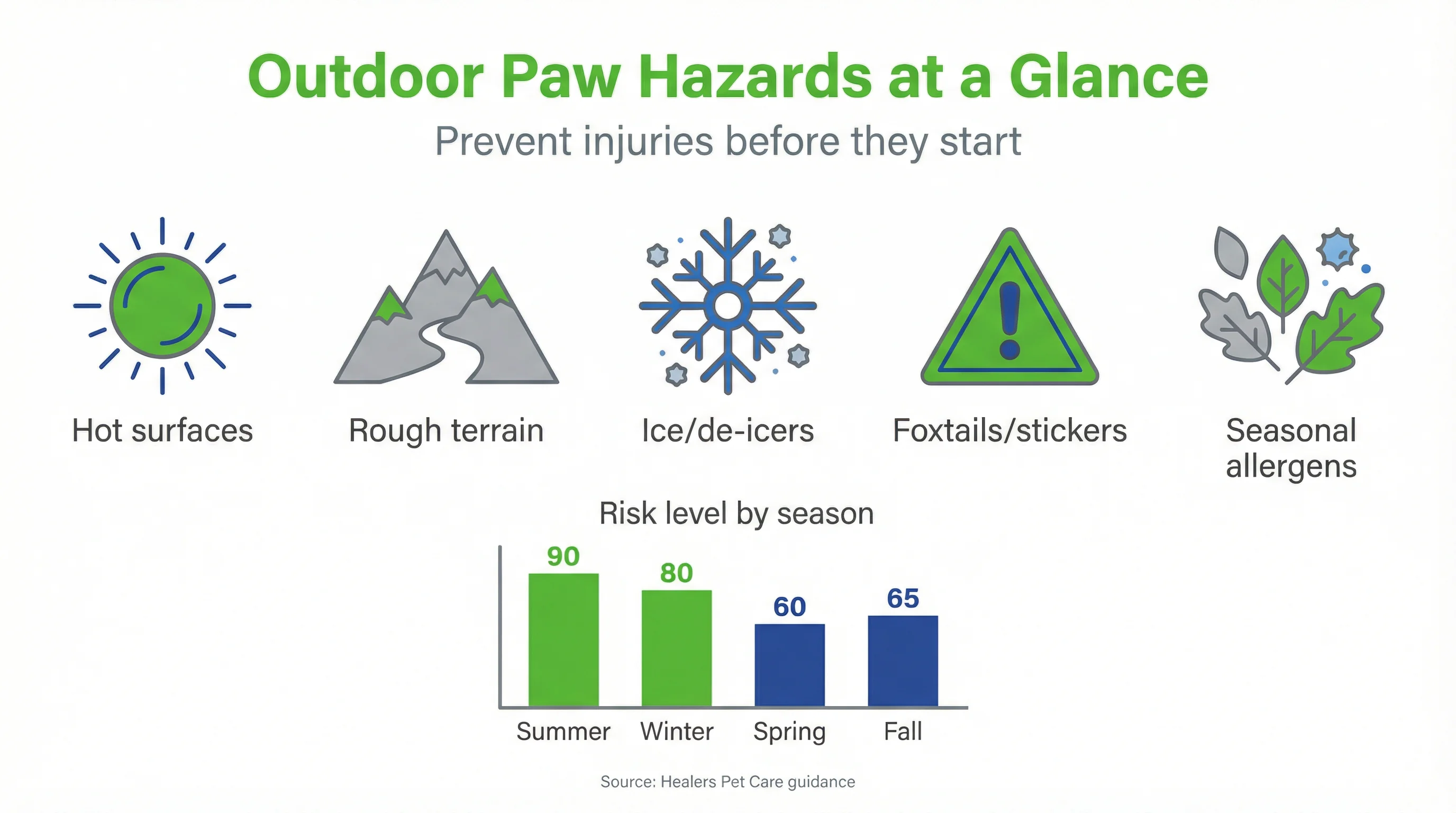
Summer heat, abrasive trails, foxtails, and stickers can damage pads quickly. Winter brings ice, de‑icers, and frostbite risk. Spring and fall add allergens, mud, and bacteria. Urban debris—glass, metal, and chemicals—appears year‑round, demanding consistent protection.
Signs your dog needs paw protection now
Watch for licking, lifting, or favoring paws after walks. Look for pad thinning, cracks, or redness between toes. Hesitation on hot or icy surfaces and sudden sensitivity are red flags that boots or barriers are needed.
Seasonal Risks and Prevention Strategies
Match hazards to gear and care routines to stay ahead of problems.
| Season | Key Hazard | Primary Prevention |
|---|---|---|
| Summer | Hot pavement | Heat timing, shaded routes, boots |
| Winter | Ice and salt | Boots, rinse/dry, balm |
| Shoulder seasons | Allergens/mud | Rinse, dry, anti‑itch care |
Summer: hot pavement, trail abrasives, foxtails
Walk during cooler hours and check asphalt with your palm. Trail grit abrades pads; foxtails lodge between toes. Boots or socks reduce friction, while post‑walk rinsing removes embedded debris and thermal residue.
Winter: ice, de‑icers, snowballing between pads
De‑icers irritate skin and can be toxic if licked. Ice creates micro‑tears, and snowballs pull hair and skin. Choose insulated, water‑resistant boots, trim fur between toes, and rinse/warm‑soak paws after outings.
Spring/Fall: allergens, mud, bacterial overgrowth
Pollen and molds adhere to fur and webbing, fueling itch. Mud traps microbes against skin. Gentle cleansing and thorough drying, plus protective boot wear, reduce flare‑ups and secondary infections from persistent licking.
Regional nuances across the U.S.
Desert heat, mountain scree, coastal salt, and Midwestern ice each require tailored strategies. Know your region’s dominant hazards and equip accordingly with breathable boots, rinse routines, and targeted after‑care protocols.
See the full guide: Seasonal paw hazards and prevention checklist
Use this seasonal checklist to time walks, select gear, and audit your kit.
Boot Types Explained: Medical vs. Everyday
Selecting the right category—medical or everyday—ensures comfort, safety, and consistent wear.
When dogs need boots: medical vs. everyday use cases
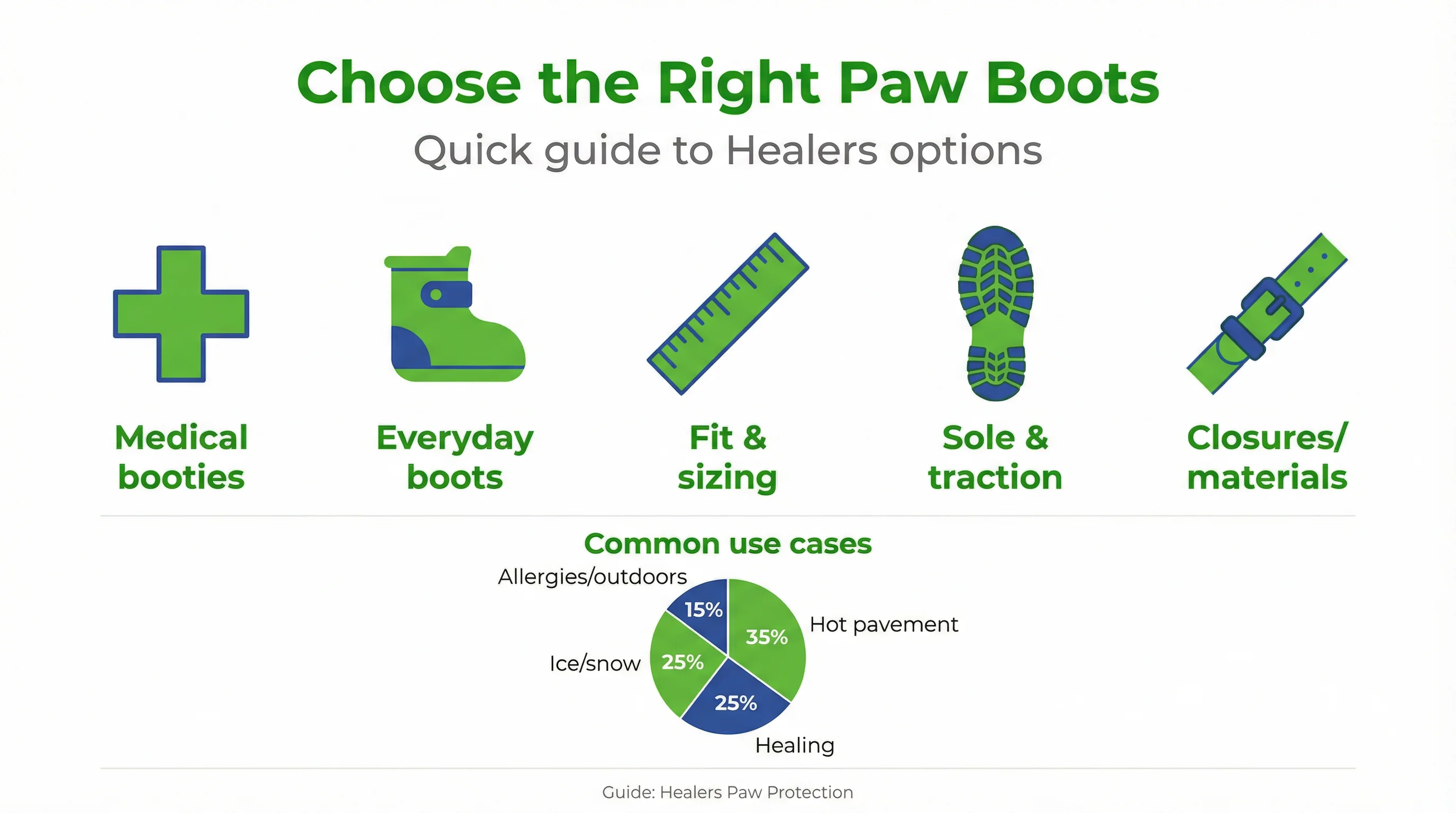
Everyday boots protect healthy paws from heat, ice, or rough terrain. Medical booties shield bandages and sensitive skin during healing. Research shows boots can alter ground reaction forces, so allow acclimation and monitor gait.[1][3]
Materials that matter: breathable, non‑slip, non‑stick linings
Look for breathable uppers, non‑slip soles, and interior fabrics that do not adhere to healing tissue. Many pet owners find Urban Walkers III helpful for this task, balancing traction, ventilation, and weather protection on daily routes.
Use cases: injury, allergies, hot/cold surfaces, rough terrain
Medical dog boots and dog booties for injured paws protect bandages and fragile skin. Everyday paw protection boots guard against heat, ice, and rocks. For post‑procedure or chronic issues, canine recovery boots reduce re‑injury risk.
Fit and Sizing: Getting Boots to Stay On
Correct fit prevents rubs, slippage, and dewclaw stress.
How to measure and fit dog boots correctly
Measure width with the paw weight‑bearing. Confirm closure placement clears the dewclaw. Test indoors, then adjust straps for even compression without pressure points.
- Have the dog stand on paper; trace weight‑bearing paw.
- Mark the widest points; measure width in millimeters.
- Compare to the brand’s sizing chart; account for bandages.
- Secure closures above the carpal pad, avoiding dewclaws.
Break‑in period and training tips
Start with brief indoor sessions, reward calm standing, then add movement. Increase duration gradually and monitor for rubs. Studies recommend habituation periods because boots can temporarily alter gait mechanics.[3]
Troubleshooting slippage and dewclaw irritation
Check sizing, strap placement, and sock liners for friction reduction. Keep nails trimmed and dewclaws rounded. Persistent slippage often indicates oversizing; irritation suggests repositioning the closure or choosing a different height.
Outdoor Scenarios: Trail, Beach, and City
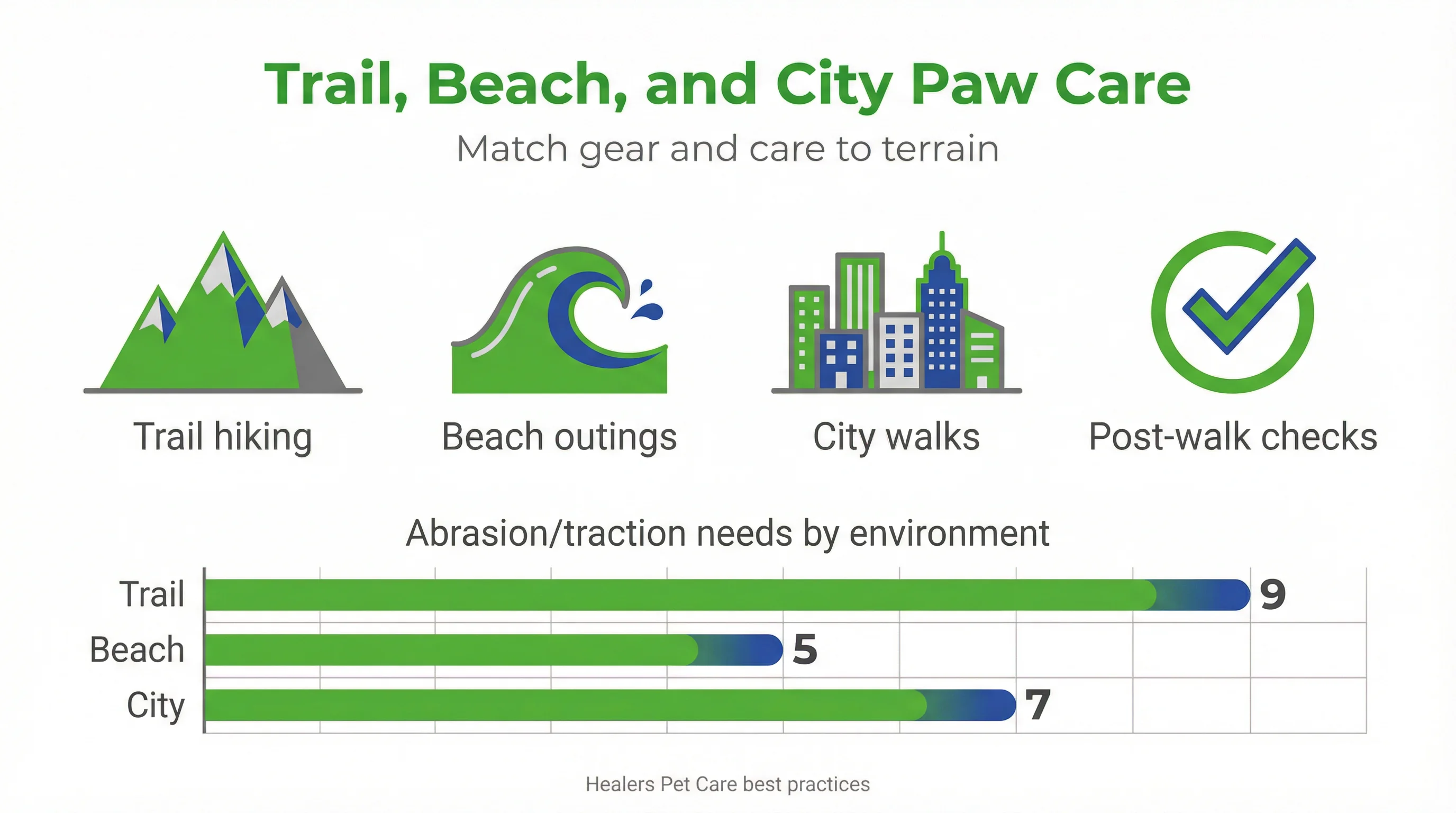
Match traction, coverage, and post‑activity care to your environment.
Trail and hiking paw protection plan
Pre‑hike, inspect pads and trim fur between toes. On rocky or abrasive trails, boots reduce wear and improve traction. Handlers identify paw protection and warm‑up routines as key injury‑prevention facilitators.[4]
Urban paw safety: heat maps, salt, and city hazards
Plan cooler routes using shade and turf, and avoid fresh de‑icer. In cities, boots shield against heat, salt, glass, and chemicals. Rinse and dry post‑walk to prevent residue‑related irritation and licking.
Beach and water: sand abrasion and post‑swim care
Sand acts like sandpaper on wet pads. Use light boots on hot or shell‑strewn beaches, then rinse with fresh water. Dry thoroughly between toes to discourage yeast overgrowth and maceration.
First Aid and Injury Prevention
A simple protocol prevents minor issues from escalating quickly.
Paw pad first aid: HOCl wound care, bandaging, and booting
Clean abrasions with HOCl, pat dry, then apply a non‑stick dressing. Wrap snugly without constricting and cover with a breathable boot. Replace dressings as directed to maintain a clean, moist healing environment.
Blisters, cuts, and torn dewclaws: when to see a vet
Seek care for deep cuts, persistent bleeding, limping, odor, or exposed tissue. Working‑dog literature shows paw pad trauma is a common field injury, underscoring prompt assessment and protection.[2]
Daily inspection routine to prevent problems
After each outing, check pads, webbing, nails, and dewclaws. Rinse away grit and salt, then dry thoroughly. Early intervention—clean, dry, cover—keeps micro‑tears and hotspots from turning into infections.
Key takeaway: Clean, dry, and protect paws within 10 minutes after exposure to heat, salt, mud, or debris.
Allergies, Hot Spots, and Lick–Scratch Cycles
Barrier protection and skin‑care hygiene break the itch‑lick cycle.
Allergies, hot spots, and itchy paws: protect and break the lick–scratch cycle
Allergens collect on fur and between toes, fueling inflammation. Rinse after exposure, dry completely, and protect with boots outdoors. Combine with vet‑guided anti‑itch care to prevent self‑trauma and secondary infections.
Barrier methods: socks, medical booties, and wraps
Soft socks or medical booties preserve skin integrity during flares. Use breathable linings to avoid moisture traps. For persistent itch, add light wraps indoors to discourage licking while allowing normal movement.
Bathing, drying, and anti‑itch protocols
Use a gentle, pH‑appropriate cleanser and tepid water. Blot dry, then use a cool dryer on low to reach webbing. Follow with vet‑approved anti‑itch sprays or creams, and maintain short, frequent sessions.
Recovery at Home: Protecting Healing Paws
Structured protection supports safe, steady recovery.
Post-injury and surgical recovery: using medical booties and wraps
Cover dressings with medical booties that ventilate and resist slipping. Rotate pairs to keep one clean and dry. Add calm‑support strategies and controlled activity to prevent setbacks during fragile phases.
Cleanliness, ventilation, and changing dressings
Change dressings per veterinary instructions, inspecting for moisture or odor. Let paws air out between changes. Choose non‑stick interiors and breathable shells to minimize maceration and promote tissue regeneration.
Activity reintroduction timeline
Reintroduce activity in tiers: leashed walks on smooth surfaces, then varied textures, then light hills. Monitor for licking or heat. Document progress and adjust gear based on tolerance and healing milestones.
Care and Maintenance of Paw Gear
Proper care extends lifespan and ensures hygiene.
Boot care and maintenance: cleaning, drying, and replacements
Remove debris after each use, then hand‑wash or machine‑wash per label. Air‑dry fully to prevent odor and bacteria. Inspect soles and closures; replace when traction fades or linings fray.
How many pairs do you need?
For frequent use, keep two pairs—one active, one drying. Medical scenarios benefit from three: indoor, outdoor, and a backup. Rotations maintain cleanliness and ensure a dry boot is always available.
Storage, inspection, and lifespan
Store dry, loosely fastened, and away from direct heat. Monthly inspections catch wear early. Lifespan depends on terrain, mileage, and dog size; track use to plan timely replacements for safety.
- Rinse after salt or sand exposure
- Air‑dry with inserts removed
- Check stitching and strap elasticity
- Record miles per pair
Buyer’s Guide: Choosing Healers Paw Protection
Align boot features with environment, health status, and daily mileage.
Buying guide: choosing Healers booties and paw protection kits
For dog first aid for paws, prioritize breathable medical booties with non‑stick interiors. For daily walks on hot or icy surfaces, choose durable outsoles and reflective details. Build a kit that suits your routine.
Matching product to activity level and climate
High‑mileage urban walkers need traction and heat resistance. Trail dogs benefit from robust soles and secure closures. In cold regions, add insulation; in humid climates, emphasize ventilation to prevent moisture buildup.
Essential add‑ons for a complete paw‑care kit
Include HOCl wound spray, non‑stick dressings, cohesive wrap, and lightweight socks. Add a paw balm for winter salt, a drying towel, and spare closures. Keep a compact kit in both home and car.
Frequently Asked Questions
How do I know if my dog needs boots for outdoor walks?
If pavement feels too hot or cold to your palm, if your dog licks or lifts paws after walks, or if you see pad wear, boots can prevent injury. Dogs with allergies, healing wounds, or urban exposure to salt and glass also benefit.
What’s the difference between medical dog booties and everyday boots?
Medical booties prioritize breathability, non‑stick interiors, and protection for bandaged or sensitive paws. Everyday boots focus on durable outsoles and traction for routine walks on hot, cold, or rough surfaces.
How do I measure my dog’s paw for the right boot size?
Have your dog stand on paper, mark the widest points of the weight‑bearing paw, and measure width. Compare to the brand’s sizing chart and consider dewclaw placement and closure style for a secure fit.
Can boots help dogs with allergies or hot spots on paws?
Yes. Boots act as a barrier to allergens and prevent licking that worsens hot spots. Combine with gentle cleansing, thorough drying, and vet‑approved anti‑itch care to break the itch–lick cycle.
How should I clean and maintain dog boots after hikes or winter walks?
Rinse debris, hand‑wash or machine‑wash per label, and air‑dry fully to prevent odor and bacteria. Inspect closures and soles, and rotate pairs to extend lifespan.
Conclusion
Outdoor paw protection for dogs is a year‑round commitment: anticipate hazards, choose the right boots, fit them correctly, and maintain a simple first‑aid and cleaning routine. With thoughtful gear—from everyday boots to medical booties—and consistent inspection, you can prevent injuries and support faster recovery when issues arise. Build a tailored plan for your climate and activities, and your dog will step into every adventure with comfort, traction, and confidence.
References
- B Bieber et al. (2022). Changes in ground reaction forces and center of pressure parameters of paws when wearing dog boots in dogs. Frontiers in veterinary …. View article
- L Palmer (2021). Operational canine. Veterinary Clinics: Small Animal Practice. View article
- K Shorter et al. (2019). Ground force kinetic adaptations associated with canine boots. Biologia Futura. View article
- A Essner et al. (2022). Dog handler beliefs regarding barriers and facilitators to canine health promotion and injury prevention in swedish working dog trials and competitions. Veterinary …. View article


