

Hot Spots and Sudden Itching in Dogs: Rapid Home Triage and Relief
Hot Spots and Sudden Itching in Dogs: Rapid Home Triage and Relief
Few skin issues escalate as quickly as a dog’s hot spot. A calm morning can become frantic by evening. Immediate, structured care limits damage and discomfort.
Acting early matters because hot spots trap moisture and invite bacterial overgrowth. That can intensify pain and itching quickly. This guide shows you rapid, safe home steps to clean, dry, protect, and monitor.
What counts as a hot spot—and why sudden itching spirals fast
Typical signs you can spot in minutes
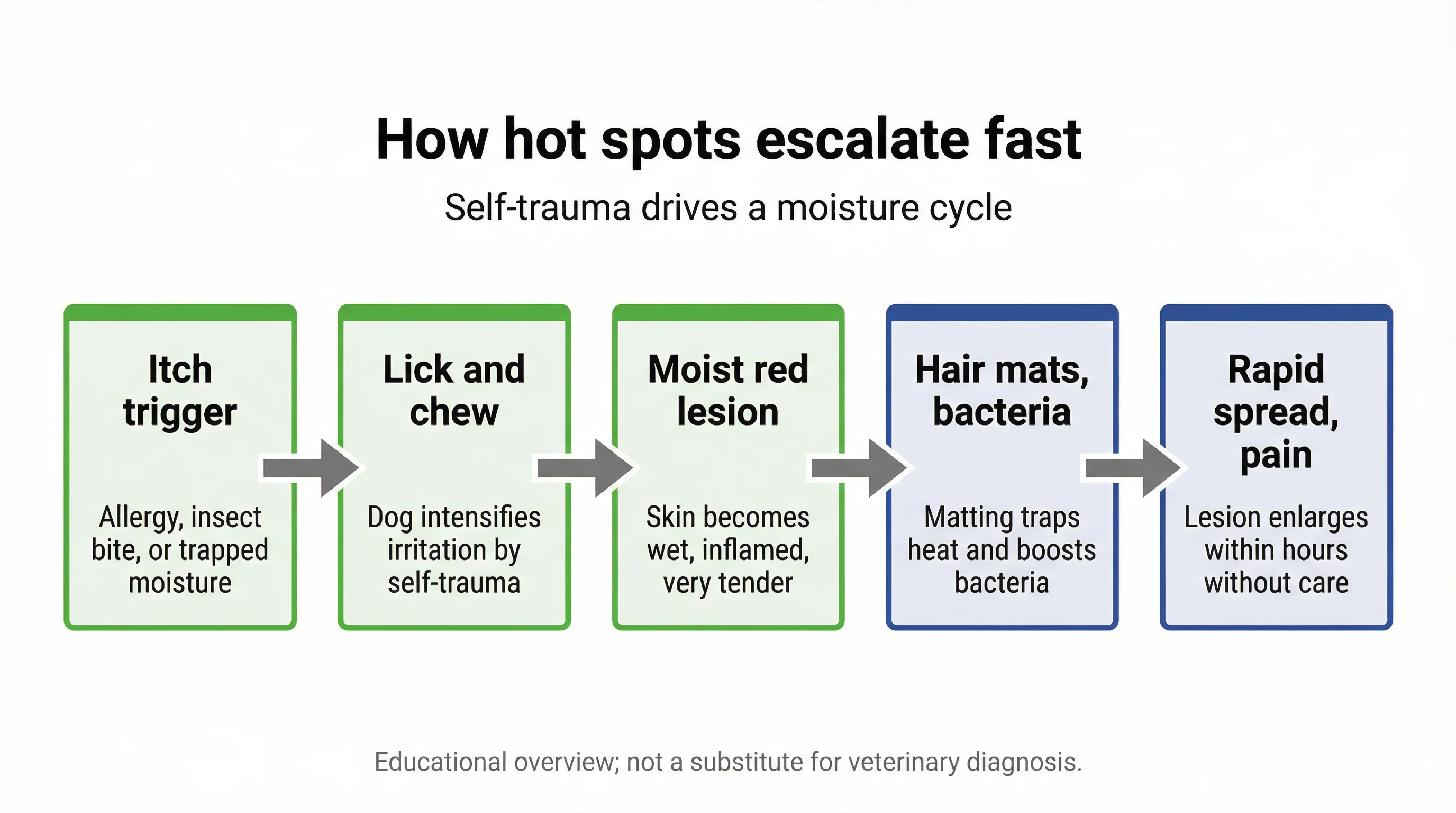
A hot spot, or acute moist dermatitis, is a rapidly developing, localized skin lesion. It often appears as a moist, reddened plaque with hair matting and intense itch. Scratching or licking worsens it.
You may notice sudden chewing, a circular wet patch, and a sharp odor. Hair loss can appear within hours as the dog self-traumatizes the area. Pain on touch is common, and the area may ooze.
Because moisture remains trapped under fur, the lesion can expand quickly. Fast triage helps interrupt this cycle before secondary infection establishes a foothold.[4]
Common triggers that may set off a hot spot
Frequent triggers include flea bites, swimmer’s moisture, minor abrasions, and underlying allergies. Dogs with atopic dermatitis or food sensitivities may be predisposed to acute moist dermatitis in dogs.[3]
Grooming clipper irritation, dense undercoats, and humid weather may accelerate onset. Environmental allergens can amplify itch and self-injury. For broader context on related hygiene conditions, see our common hygiene problems overview.
Rapid triage at home: clean, dry, protect, and calm
Step 1: Clip and expose the area (if safe) to stop moisture lock
Begin by exposing the lesion to air. If your dog is calm and the area is not near delicate skin, carefully trim the fur with blunt-tipped scissors or clippers.
Remove only enough coat to see the edges of the lesion clearly. Aim for a 1–2 inch margin around the redness. If your dog is painful or reactive, postpone clipping and seek help.
Clipping reduces moisture lock and helps you cleanse thoroughly. Evidence-based field protocols emphasize gentle hair removal to control maceration and visualize borders.[4]
Step 2: Gentle cleanse (HOCl) and thorough drying techniques
Use a pet-safe antiseptic. A HOCl wound cleanser for dogs offers broad antimicrobial action with low sting. Spray the area, then let it air-dry.
Target “dry to touch” within minutes. Use soft gauze and cool airflow from a dryer on low, held far from the skin. Avoid occlusive ointments initially, which may trap moisture.
For routine spot care, many pet owners find Healers Skin & Coat Grooming Solution helpful for this task. Topical antisepsis and moisture control are prioritized before systemic medications in current guidance.[1]
Step 3: Physical protection to block licking and scratching
Barrier methods reduce self-trauma. Use a soft cone, light shirt, or protective dog booties if the lesion is on a limb. Choose breathable materials and ensure the area remains dry underneath.
Recheck the skin every 8–12 hours for moisture buildup. If covering a limb, use a light, non-adhesive layer that does not constrict. Protection prevents repeat injury while the skin settles.[4]
Step 4: Soothe itch and reduce irritation
For dog sudden itching relief, start with cool compresses for several minutes, then dry completely. A pet-safe, non-stinging spray may calm the surface while you monitor closely.
Mild, veterinarian-guided topicals may support comfort. Avoid human creams unless instructed. Early control of itch reduces scratching, which helps the lesion stabilize within 24–48 hours.[4]
Step 5: Short‑term comfort and environmental control
Lower humidity and keep your dog cool. Limit high-friction activities for a few days. Brief, calm walks are fine if protection is in place and the area remains dry.
This “clean, dry, protect” framework forms the backbone of dog hot spot treatment at home. If signs escalate or your dog seems unwell, contact your veterinarian promptly.
Quick decision guide: if this happens, do this
- If the area is wet, red, and expanding, clip safely and begin HOCl cleansing, then dry thoroughly.
- If your dog keeps licking the spot, apply breathable protection and supervise closely between checks.
- If pain is significant or trimming is unsafe, stop and contact your veterinarian the same day.
- If odor, pus, or fever appears, seek veterinary evaluation for possible infection.
- If the lesion is near eyes, genitals, or thin skin, avoid clipping and get professional help.
- If progress stalls after 48 hours of proper care, schedule an appointment to reassess triggers.
Monitoring: what to watch over 48 hours, 7–14 days, and 4–8 weeks
0–48 hours: early response markers
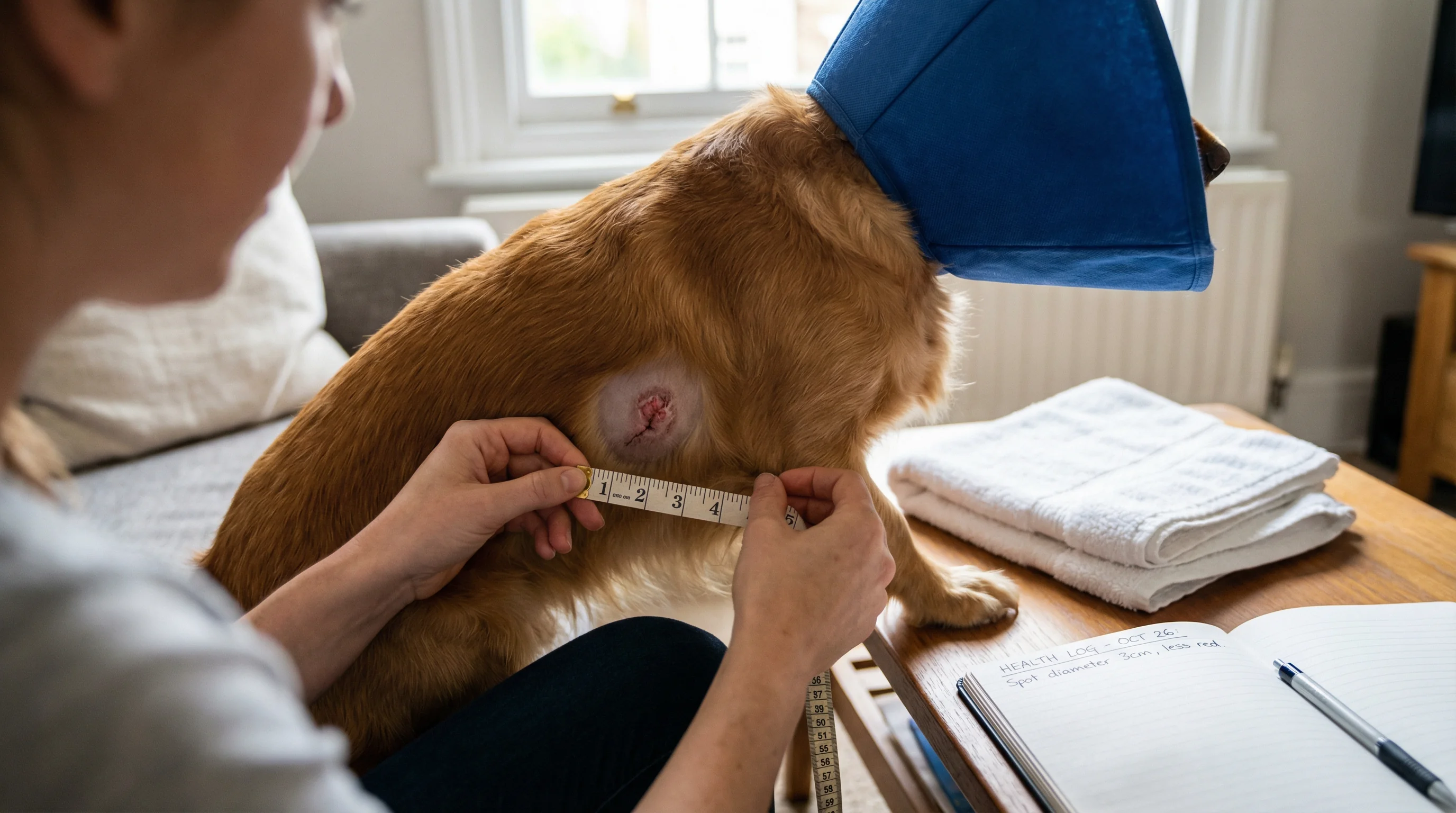
Expect less moisture, reduced redness at the edges, and lower licking frequency. The surface should look drier and less painful to touch. Measure the diameter every 12 hours to track change.
Persistent wetness, spreading beyond your trim line, or foul odor suggests complications. Consider veterinary care if these appear, especially if your dog becomes lethargic or febrile.[1]
7–14 days: healing trajectory and relapse checks
By one to two weeks, the lesion should be dry, less inflamed, and building a fragile surface barrier. Hair regrowth often starts around the edges as skin normalizes.
Relapses at the same site may indicate an underlying cause, such as fleas, moisture retention, or allergy. For paw-licking triggers, see routines that break the cycle in yeasty or smelly paws care.[3]
4–8 weeks: root‑cause prevention
Address allergens, moisture exposure, and grooming habits. Allergy evaluation may help if hot spots recur seasonally or after baths. Evidence links hypersensitivity diseases with recurring hot spots.[3]
Maintain regular drying after swims and trims. Reinforce proactive paw and skin hygiene. If your dog’s skin remains reactive, discuss long-term control strategies with your veterinarian.
Practical safety boundaries you should not cross
Avoid tight or occlusive wraps that trap moisture and heat. Skip alcohol or peroxide on inflamed skin, which may burn or delay healing. Do not force clipping on a painful or anxious dog.
Be cautious with human hydrocortisone and antibiotic creams. Many products are unsafe if licked and may complicate diagnosis. Current guidance recommends reserving systemic antibiotics for diagnosed infections, not routine hot spots.[1]
Evidence status: what current research suggests
Topical cleansing and moisture control
Field protocols emphasize clipping, gentle antisepsis, and meticulous drying to stabilize lesions. These steps may reduce self-trauma and secondary infection risk in pyotraumatic dermatitis.[4]
Guidelines for canine pyoderma caution against reflex antibiotic use. Topicals and targeted diagnostics are encouraged to limit resistance and support responsible care.[1]
Itch relief and barrier methods
Early itch control and physical barriers reduce self-injury, which may prevent lesion expansion. Practical field reports support soft cones, breathable protection, and frequent checks to maintain dryness.[4]
Nutritional support and inflammation
Allergic skin disease often underlies recurrent hot spots. Dietary strategies and allergy management may help regulate inflammation over time, though individual response varies and requires veterinary guidance.[3]
Some modalities, such as photobiomodulation, show emerging promise for hot spots but require further study before routine home use is advised.[2]
Supplies checklist for a fast, low‑stress response
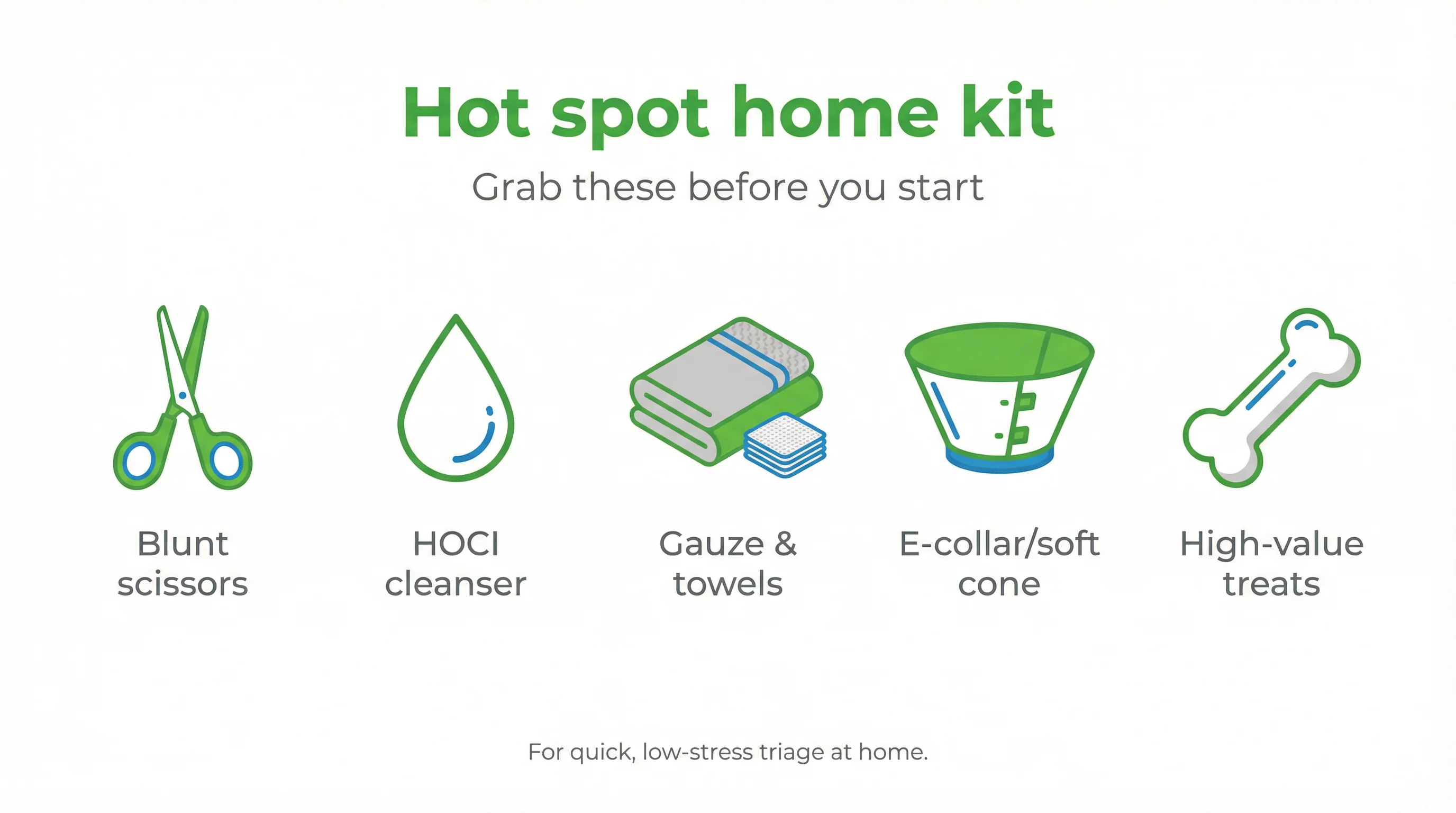
- Blunt-tipped scissors or clippers for careful hair removal
- HOCl wound cleanser for dogs and soft gauze pads
- Clean towels and a cool, low-setting dryer for swift drying
- Breathable protective dog booties, soft cone, or light garment
- Treats for cooperation and a phone to track photos and measurements
How this fits into broader hygiene care
Hot spots often intersect with daily grooming and moisture exposure. Regular drying after swims, gentle detangling, and seasonal skin checks lower risks. Consistent hygiene also helps you notice small issues earlier.
If your dog licks or chews paws, a structured cleaning routine may reduce triggers; explore practical steps in yeasty or smelly paws routines. For minor abrasions that can seed irritation, review safe care in minor cuts and scrapes.
When ongoing care feels complex, step back to fundamentals and revisit our common hygiene problems overview for patterns, prevention, and timing of action.
Frequently Asked Questions
What is the fastest way to treat a dog’s hot spot at home?
Trim the fur to expose the skin if safe, cleanse with a gentle antiseptic like HOCl, pat completely dry, and prevent licking with a barrier such as a bootie or wrap. Monitor every 12 hours for spreading, odor, or pain.
When should I take my dog to the vet for a hot spot?
Seek veterinary care if the area is rapidly enlarging, foul‑smelling, very painful, deeply oozing, or your dog has fever, lethargy, or repeated hot spots. Puppies, seniors, and immunocompromised dogs should be assessed sooner.
Can I use human hydrocortisone or antibiotic creams on my dog’s hot spot?
Avoid unsupervised use of human creams. Some ingredients may be unsafe if licked or may delay healing. A pet‑safe cleanser and physical protection are safer first steps; consult your veterinarian for medications.
How do I stop my dog from licking a hot spot without a cone?
Use breathable protective booties or wraps to block access, plus soft garments or short‑term supervision. Ensure the area is fully dry before covering and check skin twice daily.
Why do hot spots appear suddenly after swimming or grooming?
Moisture trapped under dense fur and minor skin irritation can trigger rapid bacterial overgrowth. Thorough drying, gentle cleansing, and early protection may reduce risk.
Conclusion
Hot spots demand fast, calm action that prioritizes cleaning, drying, and protection. With measured monitoring and clear safety limits, most mild cases stabilize quickly. If escalation occurs, partner with your veterinarian to address deeper causes and prevent recurrence.
References
- A Loeffler et al. (2025). Antimicrobial use guidelines for canine pyoderma by the International Society for Companion Animal Infectious Diseases (ISCAID). Veterinary …. View article
- L Luciani et al. (2025). Photobiomodulation with fluorescent light energy as a sole treatment of pyotraumatic dermatitis (hot spot): a case series. Journal of the American Veterinary …. View article
- CW Bradley et al. (2023). A review of cutaneous hypersensitivity reactions in dogs: A diagnostician's guide to allergy. Veterinary Pathology. View article
- LE Palmer (2018). Picture This: Management of Canine Pyotraumatic Dermatitis (aka, Hot Spot).. Journal of Special Operations Medicine: a Peer …. View article


