

Common Hygiene Problems in Dogs: What to Watch, Why It Happens, and When to Act
Common Hygiene Problems in Dogs: What to Watch, Why It Happens, and When to Act
Dog hygiene issues show up fast and can worsen quietly, especially after procedures when keeping dog incisions clean and stress low is critical. A small smell or itch today can become infection tomorrow. Early recognition protects comfort and prevents costly complications.
This guide orients you to what matters most first. You will learn quick daily checks, the big red flags, and safe paths to deeper help. Use it to prioritize decisions with confidence.
Start here: what to prioritize first
Know what’s normal vs. not
Healthy coat and skin are smooth, with minimal odor and occasional scratching. Ears may have light wax without redness or pain. Breath is mild, not sour, fishy, or metallic.
Prioritize skin, ears, and mouth because they drive the largest welfare impact when neglected. Data from primary-care records highlight these as frequent, high‑burden problems across breeds and ages.[4]
Simple daily checks before products
Scan nose to tail in good light. Note changes in smell, moisture, redness, discharge, matting, or over‑licking. Watch for head shaking, scooting, paw chewing, or flinching when touched.
Think “observe, clean, protect.” Replace harsh fixes with gentle rinsing and drying. If pain, bleeding, or spreading lesions appear, pause and escalate to veterinary care promptly.
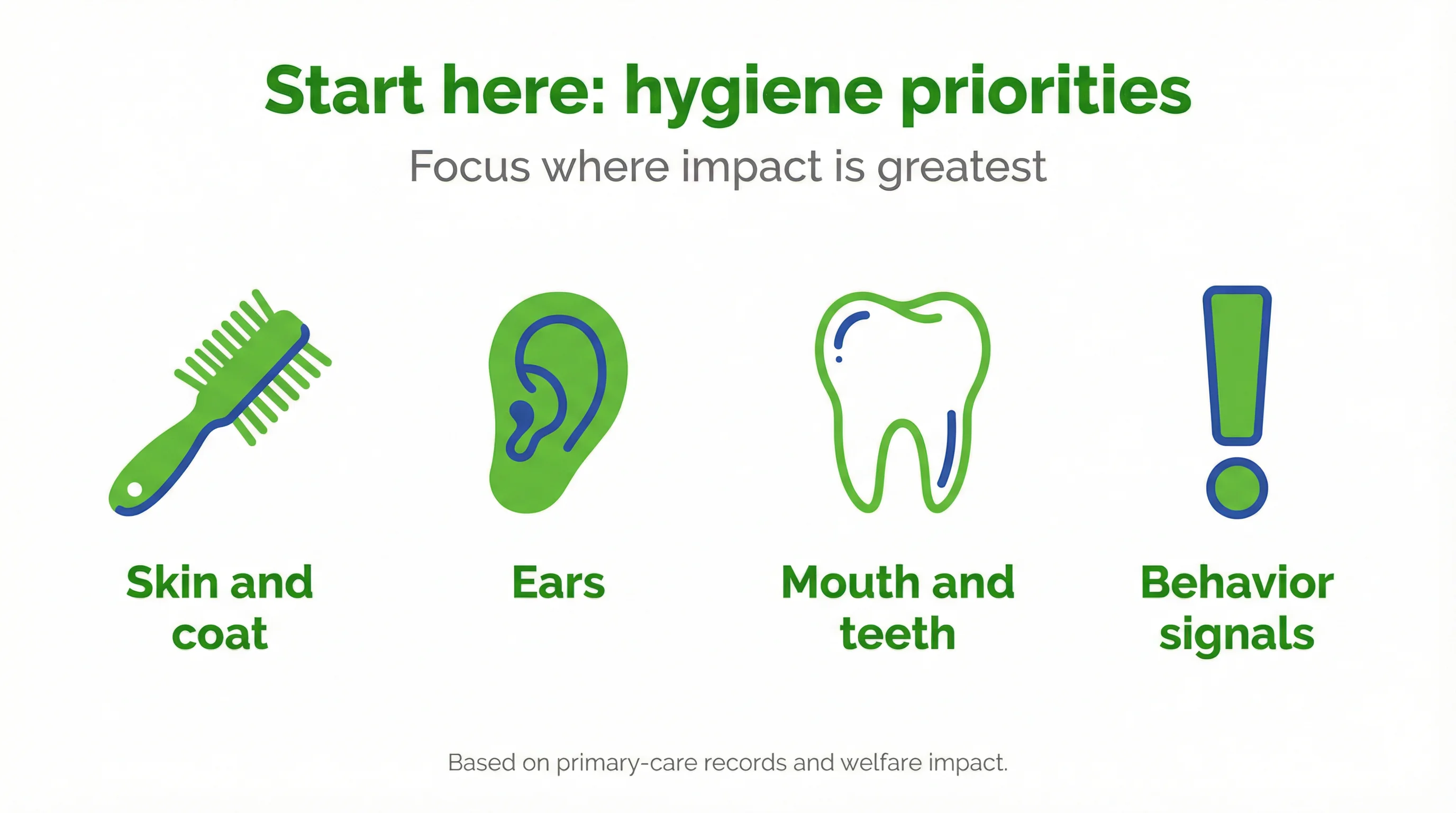
Skin and coat: itch, hot spots, and odor
Typical signs and common triggers
Look for persistent scratching, hair loss, red or moist patches, dandruff, and a yeasty or rancid odor. Triggers include moisture trapped under fur, seasonal allergens, fleas, and friction.
Shifts in behavior—like relentless licking or sleep disruption—often predict underlying dog skin problems, including dermatitis or infection. Monitor patterns, not single events, to catch issues early.[2]
What not to do yet and where to learn more
Avoid shaving inflamed areas, over‑bathing with strong detergents, or sealing moisture under ointments without guidance. Do not mask odor with perfumes.
If you see a fast‑spreading hot spot or sudden itch surge, pause home fixes and follow structured next steps in Step‑by‑step triage for hot spots and acute itchy patches.
Paw care: odors, staining, and over‑licking
Clues from color, smell, and behavior
Smelly dog paws often carry a “corn chip” or yeasty scent, pointing to moisture and microbe overgrowth. Rust‑colored fur between toes suggests porphyrin staining from chronic licking.
Over‑licking can be stress relief, but it also signals pain, allergies, or trapped debris. Consider environment: salt, heat, mud, or foxtails. Paw protection and gentle grooming reduce repeat irritation.
Safe next steps and deeper guidance
Think rinse, dry, then protect exposure points. Inspect between pads, nails, and webbing for grime, burrs, or redness before applying any product.
For structured decision routes and gentle routines, see How to clean smelly or yeasty dog paws safely.
Ear hygiene: wax, head shaking, and odor
Patterns that signal a problem
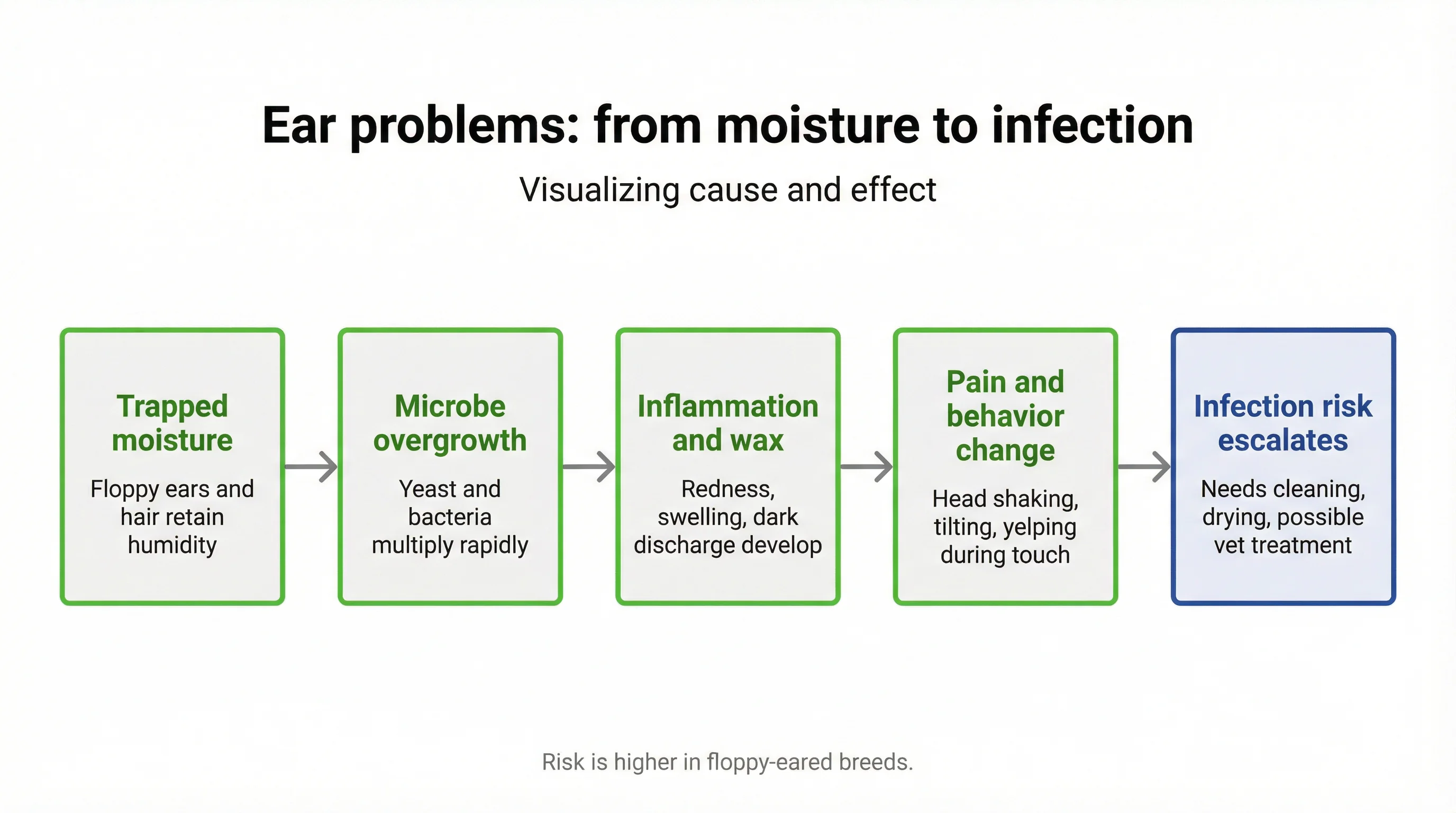
Flag repetitive head shaking, ear scratching, tilting, dark wax, or sharp odor. Floppy‑eared and hair‑laden canals trap humidity, increasing risk for inflammation and infection in some breeds.[3]
Behavior change, such as avoiding petting or yelping during ear touch, is a priority signal. Persistent discharge or swelling warrants veterinary evaluation, not repeated home cleaning.
Avoid these mistakes and follow the route
Do not insert cotton swabs deep into the canal or use alcohol or vinegar on irritated tissue. Choose gentle, pH‑appropriate rinsing and dry the outer ear flap completely.
For routine build‑up or mild odor, many pet owners find Healers Ear & Eye Wash Solution helpful for this task. When you need a protocol, follow Home ear cleaning for dogs with wax, odor, or head shaking.
Mouth and eyes: breath, buildup, and tear stains
What routine looks like
Dog dental hygiene starts with regular inspection, gentle mechanical cleaning, and monitoring for gum redness or cracked teeth. Owner‑led hygiene meaningfully shapes the plaque microbiome and disease risk over time.[1]
Eyes should be clear, without squinting, swelling, or colored discharge. Tear stains are cosmetic but can signal irritation, hair contact, or debris. Use non‑stinging approaches and avoid fragrances near eyes.
When to pause and read the deep dives
Pause home care if you see oral bleeding, broken teeth, facial swelling, or eye pain. For stain‑safe methods, see Managing dog tear stains without irritating the eyes.
General odor control, first aid, and seasonal risks
Common sources and simple triage
General odor commonly stems from damp undercoats, dirty paws, ear wax, or dental plaque. Rarely, strong metallic or rotten smells indicate infection or other medical issues that need rapid attention.
Use the “clean, dry, ventilate” rule before deodorizers. For routine needs, grooming and odor solutions, first‑aid essentials, paw protection, and supportive supplements keep hygiene on track without over‑treating.
Links to safe hygiene how‑tos
For persistent external odors after skunk or organic messes, review De‑Skunking and Stubborn Dog Odors: What Actually Works before you bathe. It outlines safe sequencing and fabric‑safe tactics.
Common mistakes and misconceptions
What pet parents often get wrong
- Masking odor with perfume instead of drying and addressing moisture or biofilm.
- Scrubbing sensitive skin or ears with harsh chemicals that worsen irritation.
- Over‑bathing without conditioning the skin barrier, leading to rebound itch.
- Chasing symptoms while missing behavior clues that predict disease progression.[2]
Better principles to follow
- Prioritize high‑impact areas first: skin, ears, and mouth, using gentle methods.[4]
- Observe patterns over days, not single moments. Track scent, discharge, and behavior.
- Clean, protect, then reassess. Escalate when pain, swelling, or rapid change appears.
- Match care to environment: wet, salty, dusty, or allergen‑heavy conditions need extra drying and inspection.
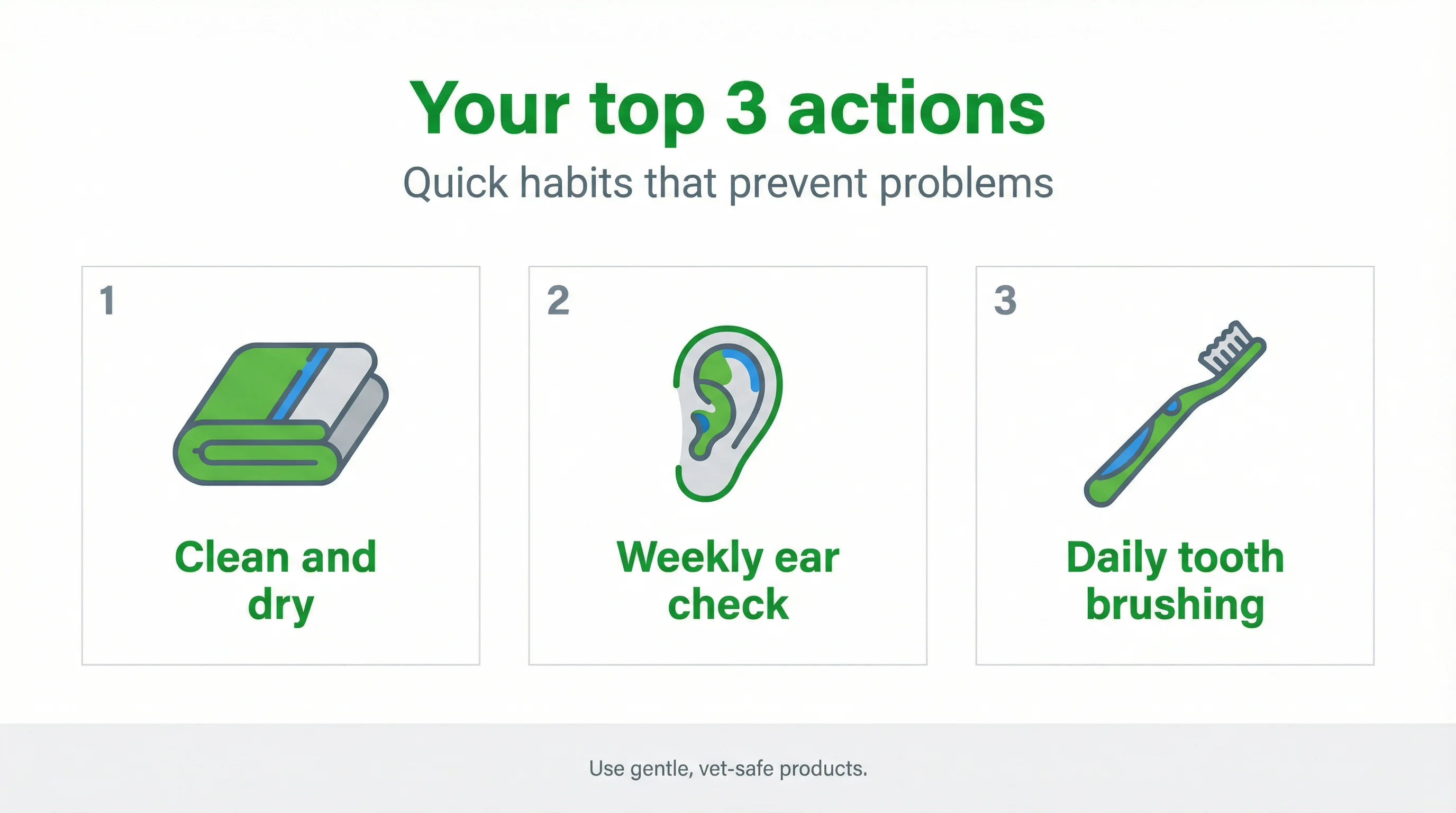
Highlight: your top 3 actions
Daily scan routine
Check skin, paws, ears, mouth, and eyes in good light. Note new smells, moisture, or behavior changes. Small shifts are your earliest alerts for dog hygiene issues.
Clean, protect, then reassess
Rinse away debris, dry thoroughly, and shield exposure points with appropriate gear. Avoid fragrances on irritated tissue. Recheck after activity and adjust based on response.
Know when to escalate
Pain, discharge, bleeding, feverish behavior, or fast‑worsening lesions demand veterinary input. Stop home treatments and document observations for clear communication.
Frequently Asked Questions
What’s a normal dog smell vs. a hygiene red flag?
A mild, doggy scent after play is normal. Sharp, yeasty, fishy, or metallic odors—especially with redness, discharge, or persistent licking—suggest a problem that needs attention.
How often should I clean my dog’s ears or paws?
Frequency depends on breed, activity, and environment. Focus on regular checks and gentle cleaning when you see buildup, odor, or after dirty, wet, or salty exposures.
When should I see a vet for hygiene issues?
Escalate if you notice pain, swelling, discharge, bleeding, rapid worsening, fever, lethargy, or if home hygiene doesn’t improve things within a short observation window.
Can diet affect my dog’s skin, coat, and breath?
Yes. Balanced nutrition and hydration support skin barrier health and oral freshness. Food sensitivities can drive itch or odor; discuss persistent issues with your veterinarian.
Are home remedies safe for hot spots or ear issues?
Many DIY fixes can irritate sensitive tissue or mask symptoms. Use gentle, pet‑safe approaches and follow vetted guides; avoid harsh chemicals without professional direction.
How these recommendations were developed
Practice insights
Our framework reflects common hygiene problems in dogs seen by veterinarians and groomers, plus field feedback from recovery and active‑dog households. It emphasizes quick observation, gentle cleaning, barrier protection, and appropriate escalation.
Literature and product observation
We considered welfare‑impact prioritization, behavior‑linked disease signals, and owner‑driven oral care evidence to shape decision rules, not prescriptions. We also evaluated how medical‑grade materials and gentle formulations support consistent, low‑stress care at home.
References
- J Yu et al. (2024). Evidence supporting oral hygiene management by owners through a genetic analysis of dental plaque bacteria in dogs. Veterinary Sciences. View article
- SC Kim (2025). Development of a Program to Predict Canine Diseases through Changes in Canine Behavior Patterns and Health Monitoring Questionnaires: A Pilot Study.. International Journal of Contents. View article
- F Dale et al. (2024). Demography, common disorders and mortality of Shih Tzu dogs under primary veterinary care in the UK. Canine Medicine and …. View article
- JF Summers et al. (2019). Health-related welfare prioritisation of canine disorders using electronic health records in primary care practice in the UK. BMC Veterinary …. View article


