

Bad Breath vs. Dental Disease in Dogs: Freshen Breath and Flag Emergencies
Bad Breath vs. Dental Disease in Dogs: Freshen Breath and Flag Emergencies
Bad breath can sneak up fast. One day is normal, the next is eye-watering. Most cases are simple hygiene hiccups, but some signal urgent dental or medical trouble.
This matters because untreated oral disease can cause pain and systemic strain. Use this focused guide to spot the difference, start safe home care, and know when to escalate. For a broader hygiene framework, see our main dog hygiene guide.
Scenario: Your dog’s breath smells bad—hygiene hiccup or a dental problem?
Start with odor quality and context. “Food or plaque” breath smells stale and slightly sour. That often follows missed brushing, leftover food debris, or a new treat. It usually improves with consistent cleaning and better water bowl hygiene.
Sulfurous, metallic, or putrid odors raise concern. These may reflect infection, tissue decay, or bleeding. Canine periodontal disease is very common and frequently underrecognized, so err on the side of screening gums and tartar closely[4].
Typical “food or plaque” breath vs. sulfurous, metallic, or putrid odors
“Food or plaque” breath is mild and transient. It lessens after brushing, wipes, or a chew session. Sulfur or rotten-egg notes suggest bacterial byproducts and deeper plaque. Metallic or blood-tinged odors suggest bleeding gums, oral trauma, or a fractured tooth.
Paired symptoms that separate nuisance breath from disease
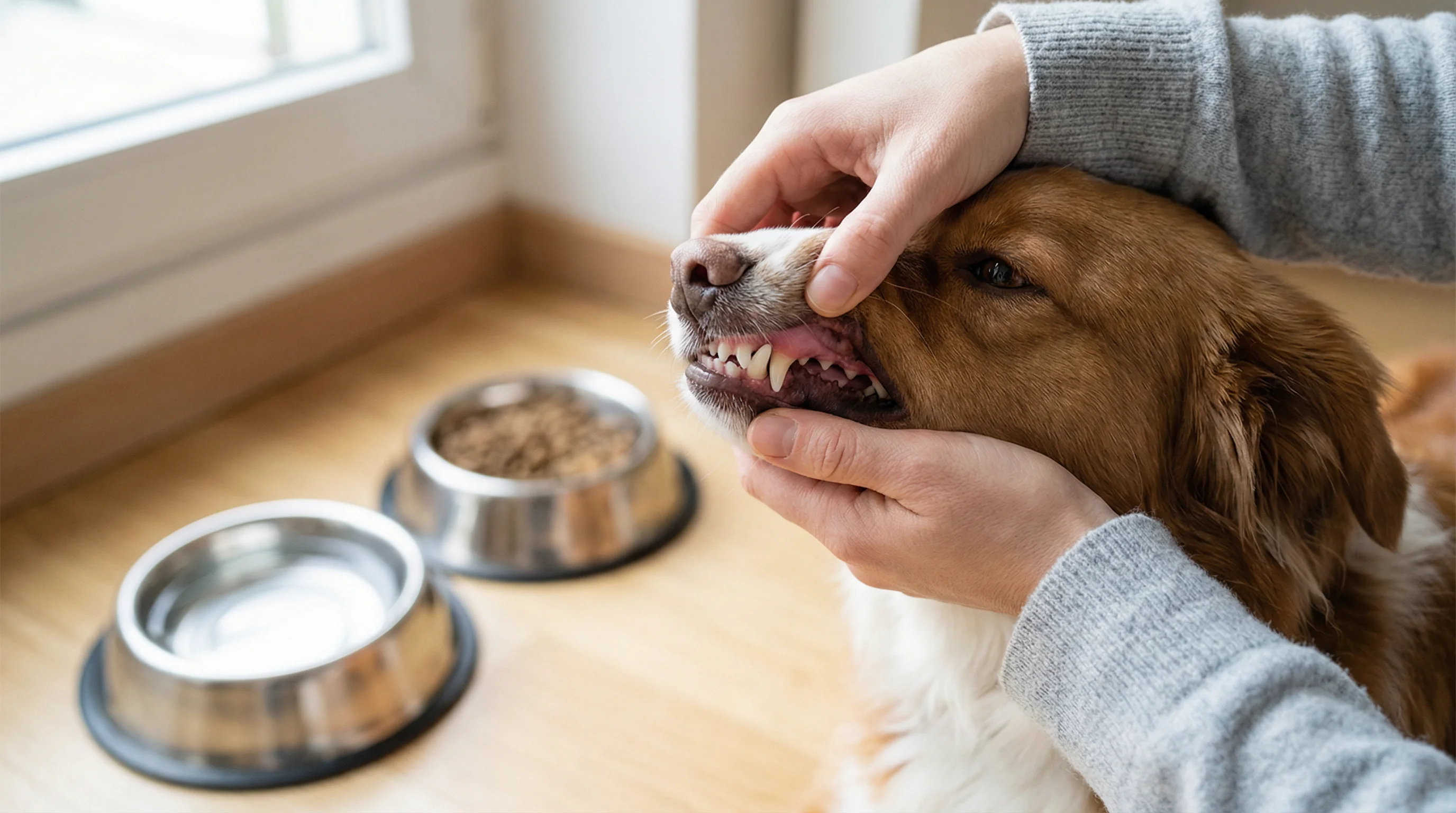
Concerning pairings include red or recessed gums, brown/yellow tartar, drooling, pawing at the mouth, or one-sided swelling. Reduced appetite, slow chewing, or dropping food suggests oral pain. Fever, lethargy, or nasal discharge warrants veterinary assessment promptly.
Quick decision guide
If odor is mild and gums look pink → start a home routine
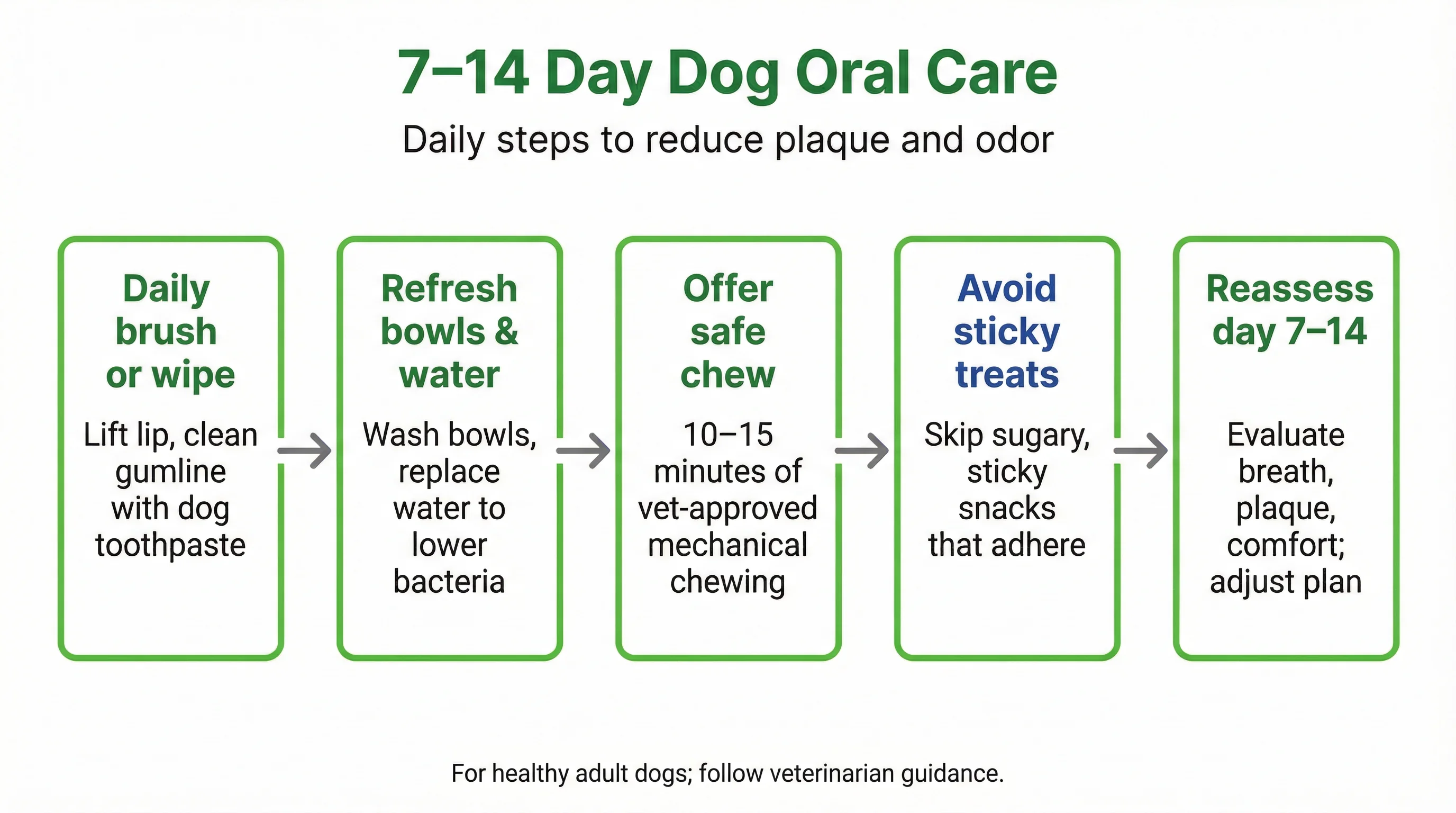
Begin a simple dog oral hygiene routine immediately. Brush or wipe daily for 7–14 days. Refresh bowls, offer safe chews, and reassess. Mild dog halitosis often responds quickly to consistent cleaning and water hygiene.
If odor is foul with drooling, pain, or one-sided swelling → contact a vet
These signs may reflect abscess, deep infection, or severe gingivitis. Do not delay. Call your veterinarian for a dental exam. Painful dogs should avoid hard chews until evaluated to prevent further damage.
If sudden fishy/urine-like breath with drinking/urinating more → book a medical check
Breath changes with increased thirst or urination can accompany metabolic disease. Schedule a medical workup. Bring a urine sample if asked. Continue gentle oral care only if comfortable and cleared by your veterinarian.
If brown/yellow tartar with red gums → schedule a dental exam
Visible tartar plus inflamed gums suggests plaque mineralization and gingivitis. Professional cleaning may be needed to restore gum health. Maintain comfort until the visit with soft foods and gentle wipes.
If a fractured tooth, bleeding, or refusal to eat → urgent veterinary visit
These are urgent red flags. Avoid brushing the affected area. Withhold hard chews and toys. Call your veterinarian for same-day guidance, as fractures and bleeding can escalate quickly.
If puppy breath changes with teething but no pain → monitor and clean gently
Teething can shift odors temporarily as baby teeth loosen. If your puppy eats and plays normally, clean gently with a soft brush or gauze. Use soft chews designed for puppies and monitor closely.
At‑home oral care routine (7–14 days)
Daily cleaning: brush or wipe, water and food bowl hygiene
Brush daily with enzymatic dog toothpaste, or use dental wipes if brushing is new. Wipe the gumline where plaque accumulates. Wash bowls daily and refresh water twice. Clean silicone mats and slow feeders to prevent biofilm growth.
Breath‑friendly diet habits: chew time, avoid sugary treats
Offer safe, vet-approved chews for 10–15 minutes to encourage mechanical cleaning. Avoid sticky or sugary treats that adhere to teeth. If your dog gulps, select longer-lasting textured chews sized to outmatch rapid swallowing tendencies.
Supportive products: enzymatic paste, dental wipes, safe chews
Evidence suggests daily mechanical removal is the cornerstone, while dental chews may reduce halitosis and plaque when used appropriately[1]. Wipes are practical for reluctant brushers, and enzymatic pastes may support plaque control alongside brushing[3]. Choose VOHC-accepted items and monitor calories.
Escalation criteria and emergencies
Red flags that suggest periodontal disease or infection
Look for gum redness, bleeding on contact, recession, loose teeth, or pus at the gumline. Persistent putrid odor, facial swelling, or pain on opening the mouth signals likely infection. Professional evaluation mitigates progression of canine periodontal disease[4].
When bad breath may signal systemic illness
Fishy, ammonia, or acetone-like odors with excessive thirst, urination, weight change, or lethargy may indicate metabolic disease. Seek a medical exam. Maintain gentle oral care only if your dog tolerates it comfortably.
Monitoring: what to observe at 7–14 days and at 4–8 weeks
7–14 days: changes in odor, visible plaque, and comfort while eating
By day 7–14, mild odor should decrease, and soft plaque should reduce with daily care. Eating should remain comfortable. Worsening smell, new drooling, or gum bleeding suggests escalation and veterinary consultation.
4–8 weeks: gum condition, persistent tartar, and stable weight
By 4–8 weeks, gums should look pinker with a crisper margin, and new plaque should remain manageable. Persistent brown tartar or gum recession suggests professional cleaning. Ensure stable weight and normal energy.
Practical safety boundaries
Avoid techniques and products that can damage
Avoid human toothpaste, hydrogen peroxide, essential oils, and xylitol-containing products. Do not scrape with metal tools at home. Be cautious with weight-bearing bones, antlers, and very hard nylon toys that may fracture teeth.
When to stop home care and seek evaluation
Stop if you see blood beyond a light pink smear, repeated flinching, swelling, or refusal to eat. Halt hard chews if a tooth chips. Pain shifts the plan from home care to veterinary assessment.
State of the evidence
What the evidence suggests about brushing, wipes, and dental diets
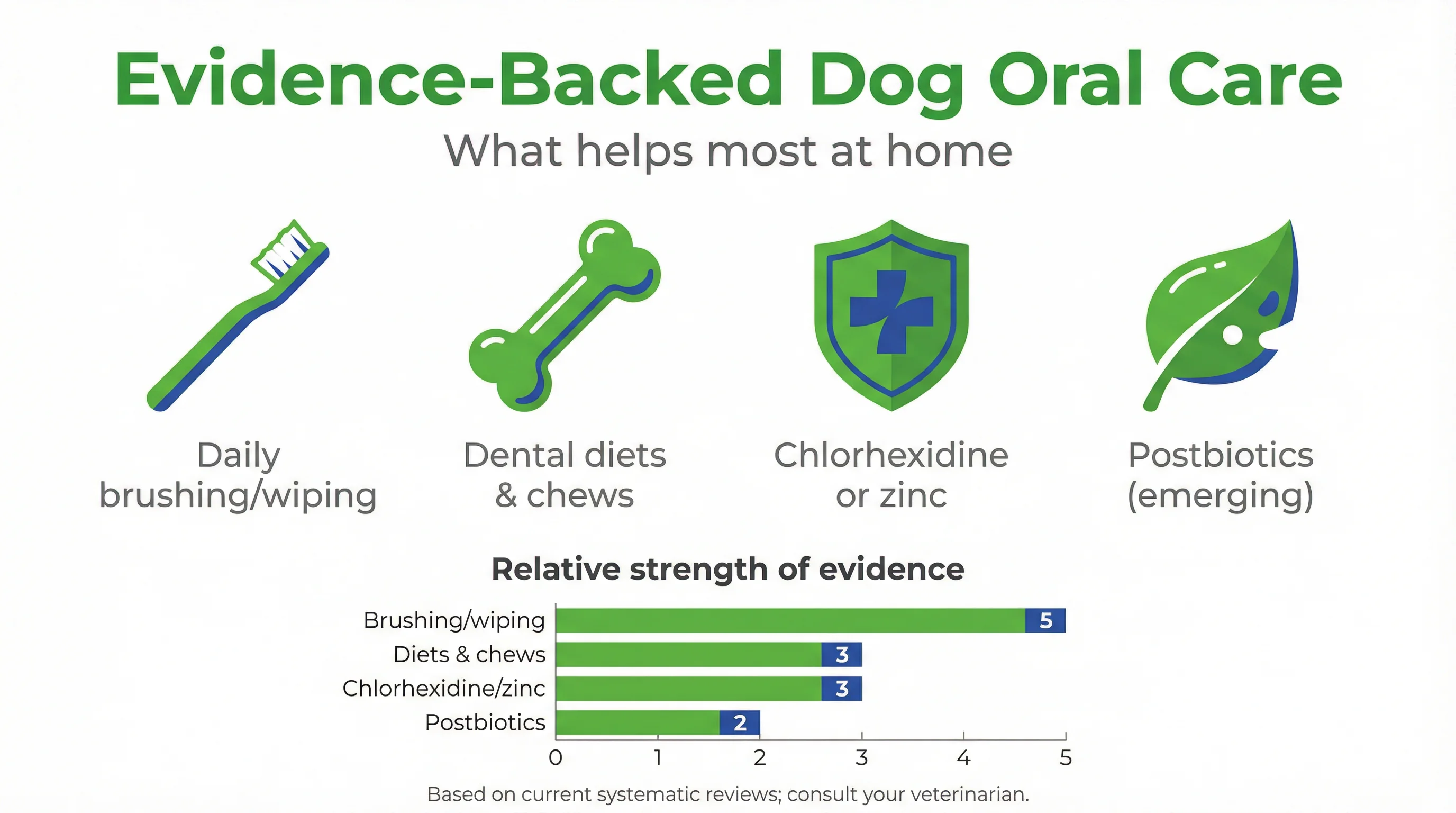
Systematic reviews indicate daily mechanical plaque control—brushing or wiping—is the most reliable at-home strategy, with dental diets and chews offering adjunctive benefits when appropriately selected[3]. Some diets and functional ingredients may reduce halitosis and gingival indices, though effects vary by formulation[4].
Breath fresheners, supplements, and rinses: potential benefits and limits
Chlorhexidine and zinc formulations may reduce oral bacteria but often work best with brushing. Early data suggest postbiotic approaches may lower dog halitosis, though broader validation is needed[2]. Treat “dog bad breath home remedies” cautiously, prioritizing safety and evidence-based care.
How this fits with daily hygiene and overall protection
Sustainable routines for a healthy mouth
Keep routines short and consistent: daily brush or wipe, water refresh, and brief chew time. Add a monthly mouth check. For broader hygiene habits that prevent odor and infections, see our guidance in the comprehensive hygiene playbook.
Links with wound care, paw protection, and wellness
Clean environments reduce bacterial load from bowl to paw. Explore safe wound cleaning and HOCl use in first-aid and minor cut care. Protect pads and reduce contaminant tracking with seasonal paw protection and booties. Address persistent paw odor with a targeted paw‑cleaning routine to limit cross-contamination.
Frequently Asked Questions
What does it mean if my dog’s breath suddenly smells like metal or blood?
A metallic or bloody smell may indicate gum inflammation, oral bleeding, or a fractured tooth. If paired with pain, drooling, or swelling, seek prompt veterinary care.
Can brushing alone fix my dog’s bad breath?
Brushing may reduce plaque and odor if the issue is surface bacteria. If tartar is heavy or there is gum disease, a professional dental cleaning is often needed.
Are dental chews enough to control halitosis?
Chews may support mechanical cleaning but often work best alongside brushing or wipes. Choose VOHC‑accepted options and monitor for choking or calorie excess.
When is bad breath a medical emergency?
Severe pain, refusal to eat, facial swelling, or one‑sided nasal discharge can indicate abscess or severe infection. Contact your veterinarian urgently.
How long should I try home care before seeing a vet?
If odor does not improve within 7–14 days of consistent care, or if you notice red flags at any point, arrange a dental evaluation.
Conclusion
Not all bad breath is equal. Mild, food-related odors usually improve with a disciplined dog oral hygiene routine. Sulfurous, metallic, or putrid smells—especially with pain or swelling—signal likely disease and demand action. Use the quick decisions, 7–14 day playbook, and safety boundaries to act confidently. When in doubt, escalate. Early care protects comfort today and health long term—for fresher breath, happier meals, and a safer smile.
References
- MQ Carroll et al. (2020). Effects of novel dental chews on oral health outcomes and halitosis in adult dogs. Journal of animal …. View article
- A Sordillo et al. (2025). A novel Postbiotic reduces canine halitosis. Animals. View article
- E Barbosa et al. (2023). Strategies to improve the home care of periodontal disease in dogs: A systematic review. Research in Veterinary …. View article
- E Cunha et al. (2022). Revisiting periodontal disease in dogs: how to manage this new old problem?. Antibiotics. View article


