

Using Therapeutic and Anxiety Wraps for Post‑Surgical Calm and Support
Using Therapeutic and Anxiety Wraps for Post‑Surgical Calm and Support
After surgery, even steady dogs can become restless. Pain, new sensations, and restricted routines raise stress. Over‑movement and anxious licking may jeopardize healing.
Therapeutic and anxiety wraps for dogs can offer gentle, structured support. They may calm nerves and moderate movement without harsh restraint. In this guide, you will learn how to configure modular body wraps, place hot or cold packs safely, and avoid irritating incisions during post‑surgical dog recovery.
Scenario focus: Calm, controlled movement for dogs after surgery
What wraps can and cannot do in the first 2–4 weeks
Wraps provide light compression and tactile feedback that may reduce arousal. Dogs often settle sooner when they feel predictable, even pressure. Preliminary veterinary and welfare observations suggest canine anxiety wrap use may ease agitation in clinical contexts, though outcomes vary by dog and procedure.[1]
However, wraps are not rigid braces. They do not immobilize joints or block all grooming. Dogs inclined to chew bandages can still reach sutures. Expect wraps to support calmer posture and controlled transitions, not eliminate the need for supervision. Use them as one component of post-surgical dog recovery, aligned with your veterinarian’s plan.
Matching wrap configuration to incision location (front vs. rear)
Match the wrap’s modules to your dog’s anatomy and incision site. For thoracic, shoulder, or sternum incisions, front‑body configurations distribute pressure across the chest and withers. They can bypass axillae to avoid chafing.
For flank, hip, or rear limb procedures, rear‑body or pelvic‑girdle configurations offer targeted coverage while keeping straps clear of the suture line. Many pet owners find Healers Therapeutic & Anxiety Front Body Wrap helpful when gentle front‑chest compression is indicated as an e‑collar alternative during quiet rest.
For broader planning and pacing milestones, see the core injury recovery guide to align wrap sessions with controlled activity blocks and rest windows.
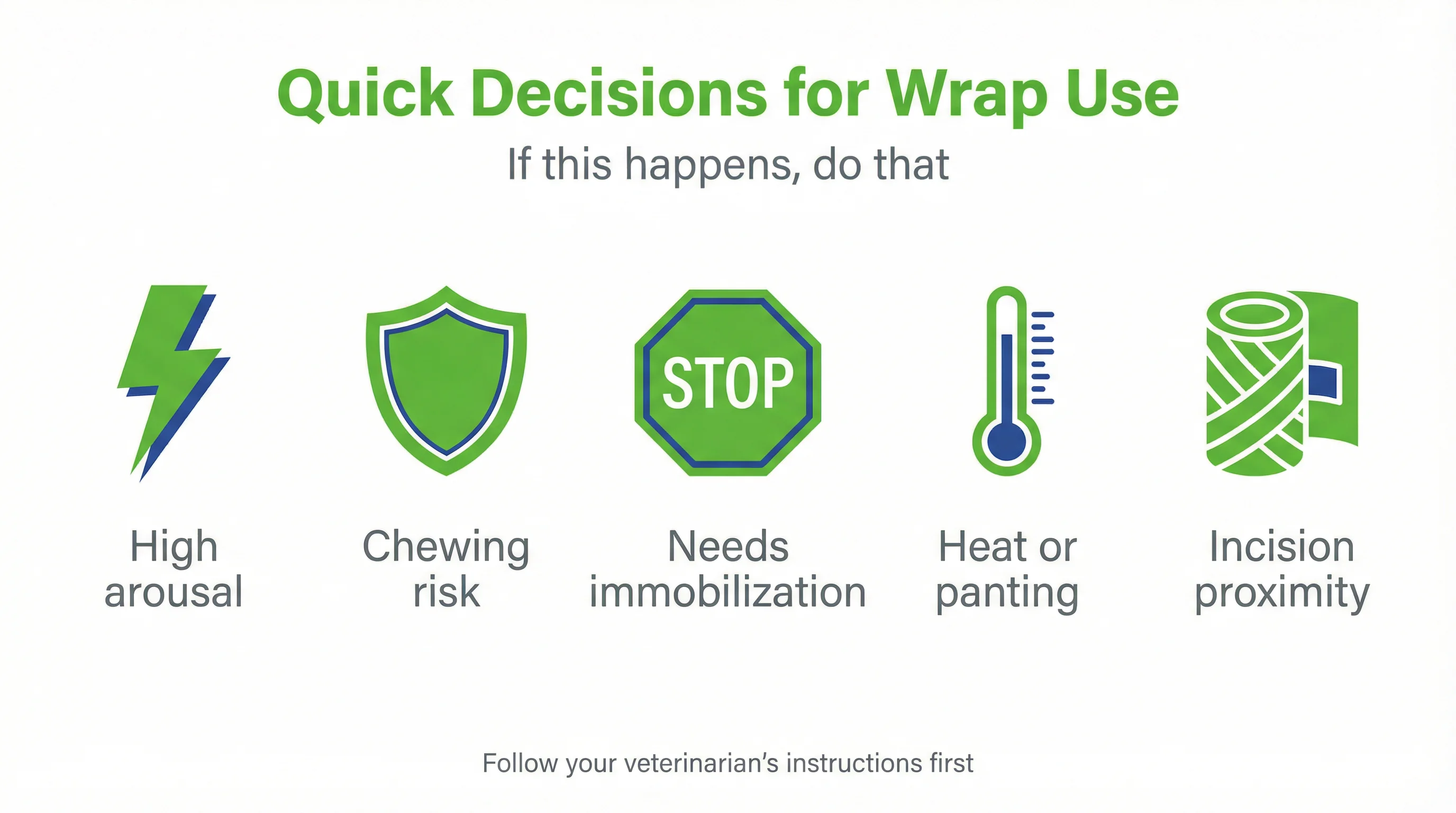
Quick decision guide: If this, then do that
5–7 common situations and recommended next steps
- If your dog starts pacing after medication wears off, then apply the wrap for a 60–90 minute calm session and reassess comfort.
- If there is persistent pawing near sutures, then reroute straps to bypass the incision and add a lightweight T‑shirt barrier.
- If you notice swelling in the first 48 hours, then consider cold packs for 10–15 minutes with a towel barrier and rest afterward.
- If stiffness emerges after day three, then consider brief warmth sessions with gentle range‑of‑motion only if your veterinarian approves.
- If skin redness appears under the wrap, then remove it immediately, let skin air, cleanse as directed by your vet, and try a looser configuration later.
- If nighttime anxiety escalates, then schedule the wrap before bedtime with quiet cues and dim lighting to promote restful sleep.
- If attempts to lick persist, then reintroduce the cone or a fabric e‑collar during unsupervised periods to reduce licking after surgery.
How to fit and use modular wraps without irritating incisions
Sizing, placement, and tension checks
Select a size that matches girth, not just weight. Place primary panels so seams and closures sit away from sutures. Begin with modest tension and verify chest expansion during breathing. You should slide two fingers under any strap.
Watch for shifting during standing, lying, and rising. Recheck fit after 10–15 minutes as fabric settles. If your veterinarian requires adjunct stabilization, consider pairing with an Elastic Wrap Leg Bandage on a limb far from the incision to avoid friction over surgical sites.
Positioning hot/cold packs safely (timing and barriers)
Cold packs may help limit post‑operative edema during the first 48–72 hours. Evidence from orthopedic recovery in people indicates ice wraps can decrease pain and swelling compared with certain injections, though protocols differ by tissue and procedure.[3]
Use chilled, pliable packs in the wrap’s pockets. Always add a thin towel or liner as a barrier. Apply 10–15 minutes, then remove for at least 45–60 minutes. For warmth later in recovery, warming wraps have restored body temperature effectively after anesthesia in human trials, supporting judicious canine use with veterinary oversight.[4]
Keep “warm” at a soothing level. Avoid hot surfaces. For wound support items, ensure you have First‑Aid Kits and HOCl Cleanser available per your veterinarian’s instructions.
Layering with booties or leg bandages when needed
When paw or distal limb protection is required, position the body wrap first. Confirm no strap crosses the incision. Then add Medical Dog Booties or a light limb dressing to prevent contamination and slipping on floors.
Layer minimal, breathable materials. Avoid stacking bulky pads that create pressure ridges. Reassess circulation at toes after layering. Warm, pink toes and normal paw use indicate acceptable perfusion.
Monitoring guidance: What to watch at 7–14 days and 4–8 weeks
Comfort, mobility, and skin checks
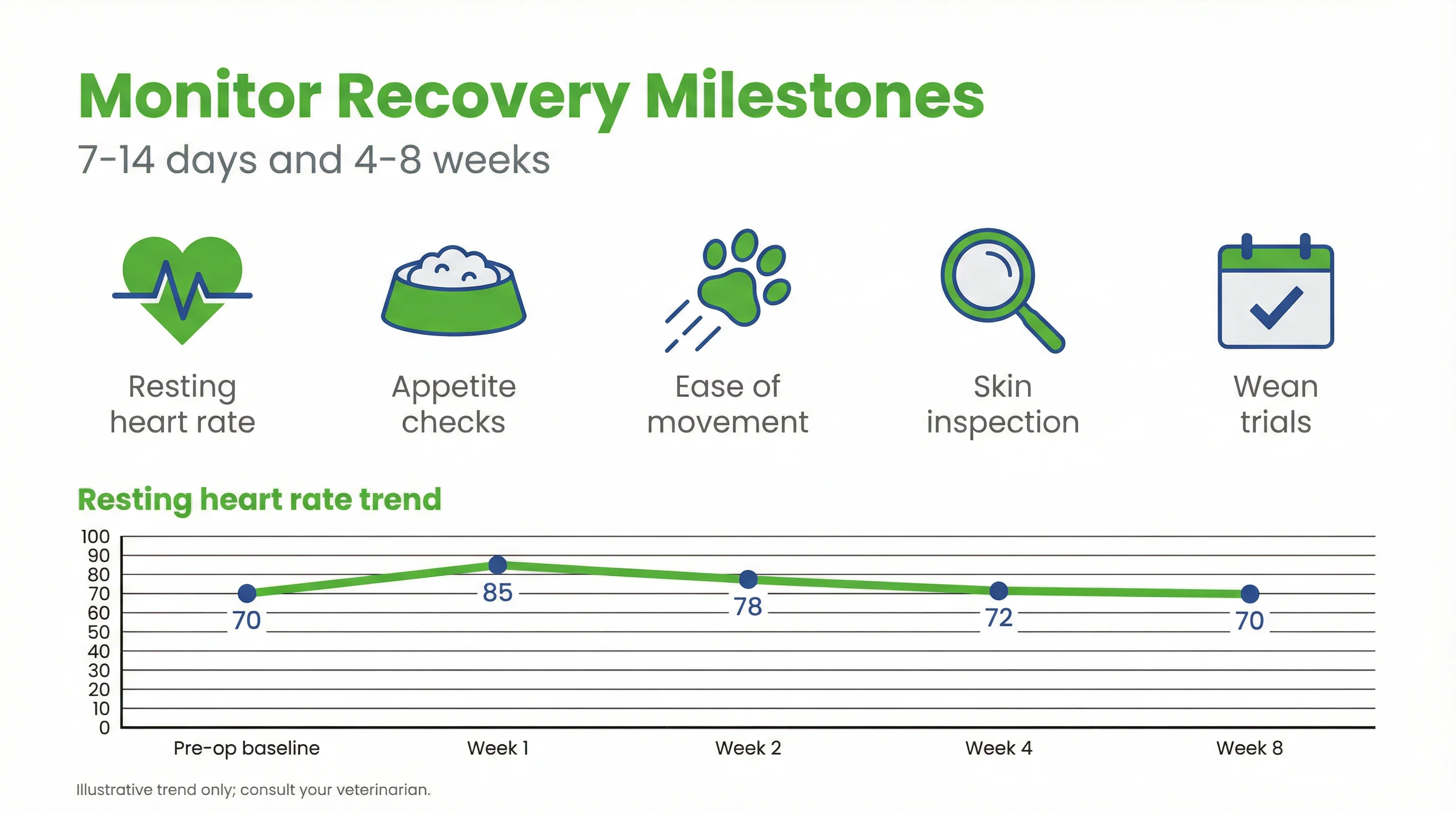
At 7–14 days, observe resting heart rate, appetite, and ease of lying down and rising. Inspect skin under edges and closures daily. Look for hair breakage, redness, or moisture accumulation.
By 4–8 weeks, your dog should tolerate brief, supervised periods without the wrap during quiet activity. Persistent agitation or focal skin irritation warrants veterinary review. Photograph the incision line weekly to document progress.
Activity progression and tapering wrap use
In week one, limit wear to 1–2 hour sessions before naps. Add a second session if anxiety reappears. In weeks two to three, align sessions with controlled leash walks and post‑walk settle time.
After suture removal or veterinary clearance, taper to targeted times: car rides, stranger visits, or crate rest. If anxiety spikes during taper, step back one stage for three days, then try again more gradually.
Practical safety boundaries
When to pause wrap use and call your veterinarian
Stop immediately and contact your veterinarian if you see discharge, heat, or rapid swelling around the incision. Pause if your dog pants persistently while wearing the wrap, or if gait worsens after sessions.
Call your clinic if your dog attempts to chew the wrap aggressively, or if behavioral changes emerge, such as withdrawal or restlessness at night. These signs may suggest pain, infection, or wrap intolerance.
Heat/cold exposure limits and skin protection rules
Follow conservative dosing. Cold: 10–15 minutes with a cloth barrier, then off for at least 45–60 minutes. Heat: 10 minutes, warm not hot, with veterinary approval after the acute phase.
Never place packs directly over fresh sutures. Avoid placing elastic tension across incisions. If skin becomes damp, allow full drying before reapplying. Rotate pack locations slightly to minimize repeated pressure on one spot.
Evidence status: What research and clinical experience suggest
Compression and pressure-distribution for calm and support
Gentle, evenly distributed compression may reduce arousal and improve handling tolerance in dogs. Preliminary canine reports describe calmer behavior with anxiety wraps, although controlled trials remain limited and outcomes vary.[1]
Human pediatric recovery literature also reports that structured wraps can assist with comfort and anxiety modulation during post‑anesthesia transitions, underscoring the rationale for compassionate, low‑risk tactile support when appropriately fitted.[2]
Thermotherapy (heat/cold) considerations in canine recovery
Cold therapy may reduce swelling and pain after orthopedic procedures in people, offering a model for cautious canine use under veterinary guidance.[3] Controlled warmth has been shown to aid return to normothermia after anesthesia in clinical studies, supporting careful application to comfort stiff tissues later in recovery.[4]
Translate these principles prudently. Dogs vary by coat density, skin sensitivity, and surgical context. Always defer to your veterinarian’s protocol.
Product fit within your recovery toolkit
Where wraps complement wound cleansers, bandages, and booties
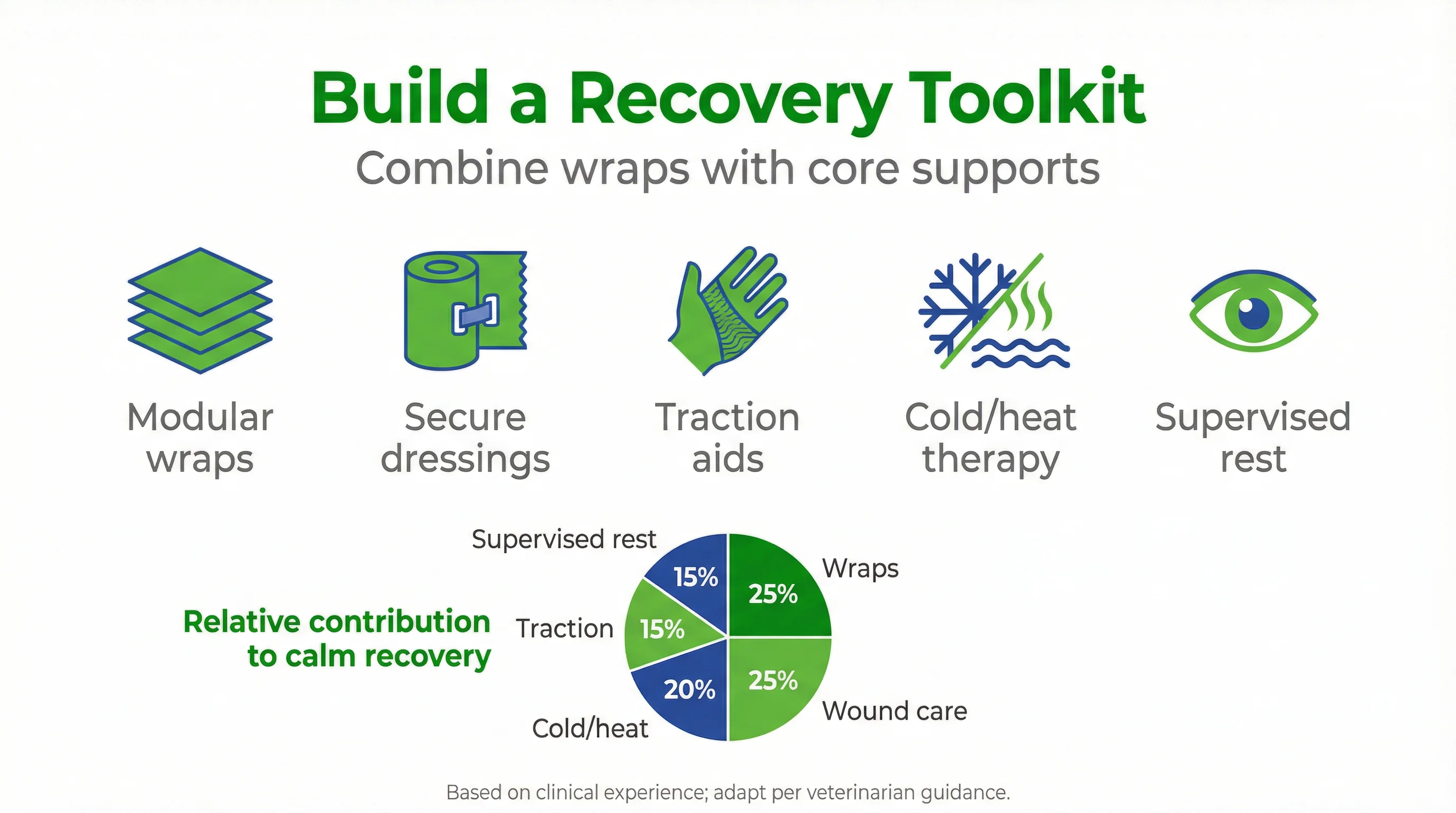
Modular body wraps for dogs are one element in a complete recovery system. Combine them with wound cleansing, secure dressings, and traction protection to stabilize healing environments.
Use them to encourage calm downs, protect against sudden starts, and position dog hot cold therapy packs. Pair with evidence‑aware wound hygiene and adjunct tools as advised by your veterinary team.
Selecting front vs. rear wrap modules for targeted support
Choose front‑body modules for chest, shoulder, or sternum sites. Select rear or pelvic modules for hips, thighs, and flank areas. Prioritize designs that allow strap routing around, not across, suture lines.
Measure twice before ordering. Confirm that panels cover intended zones without riding into axillae or groin. Balanced pressure and clean strap lines help maintain comfort and reduce rubbing during quiet rest.
Frequently Asked Questions
Can therapeutic wraps replace the cone after my dog’s surgery?
Wraps may reduce anxiety and over‑movement but do not prevent all licking or chewing. Many dogs still need an e‑collar or direct supervision, especially during the first 10–14 days.
How tight should a dog anxiety wrap be after surgery?
Snug but not restrictive. You should fit two fingers under the wrap, see normal chest expansion, and observe warm toes with normal color. Recheck tension after 10–15 minutes.
When should I use cold vs. heat with the wrap’s pockets?
Cold may help in the first 48–72 hours to limit swelling (10–15 minutes, towel barrier). Heat may be introduced later for stiffness if your vet agrees (10 minutes, warm not hot).
Can I place a wrap directly over the incision?
Avoid direct pressure and friction on fresh incisions. Use breathable barriers and route straps to bypass the suture line. Stop if you see redness, discharge, or rubbing.
How long can my dog wear the wrap each day?
Many dogs tolerate intermittent wear for 1–3 hour sessions with skin checks in between. Breaks allow the coat and skin to breathe. Follow your veterinarian’s timeline.
References
- S Uccheddu (2025). Not Only Anxiety, Preliminary Data on New Clinical Applications of Anxiety Wrap. Animal Behaviour and Welfare Cases. View article
- J Haley et al. (2023). Safety and feasibility of the paediatric post-cardiac catheterisation Wrap: a pilot study. Cardiology in the …. View article
- YS Kara et al. (2020). A comparison of ice wrap and subacromial injection for postoperative pain and edema control following arthroscopic rotator cuff repair. Journal of Orthopaedics …. View article
- N Smith et al. (2020). An open‐label, randomised controlled trial on the effectiveness of the Orve + wrap® versus Forced Air Warming in restoring normothermia in the postanaesthetic care …. Journal of clinical …. View article


