

Natural Anti-Inflammatory Support: Turmeric Paste for Dogs
Natural Anti-Inflammatory Support: Turmeric Paste for Dogs
Recovery demands patience, consistency, and the right tools. Turmeric paste is one option pet parents consider for comfort and mobility support during healing. It is not a cure. It may help alongside your veterinarian’s plan.
This guide explains when turmeric paste for dogs makes sense in recovery and when to pause. You will learn dosing logic, how to introduce it safely, interactions to consider, and what to monitor. If you prefer a pre-measured blend, review the formulation details of Golden Turmeric Paste for Dogs for curcumin strength, oil content, and piperine.
When turmeric paste makes sense during recovery
One clear scenario: post-injury stiffness and low-grade inflammation
Turmeric paste may support comfort after the acute phase of an injury or surgery. Consider it when swelling is controlled and your dog shows residual stiffness, mild lameness, or delayed-onset soreness after activity. This scenario often follows soft-tissue strains, stable sprains, or chronic changes like early osteoarthritis flare-ups. The goal is to complement, not replace, your veterinarian’s pain-control strategy. It may serve as a natural anti-inflammatory for dogs during the reconditioning window, especially when combined with rest, controlled exercise, and physical therapy guidance. Introduce it once appetite is stable, GI function is normal, and any prescribed medications are well tolerated.
When to avoid or delay introduction
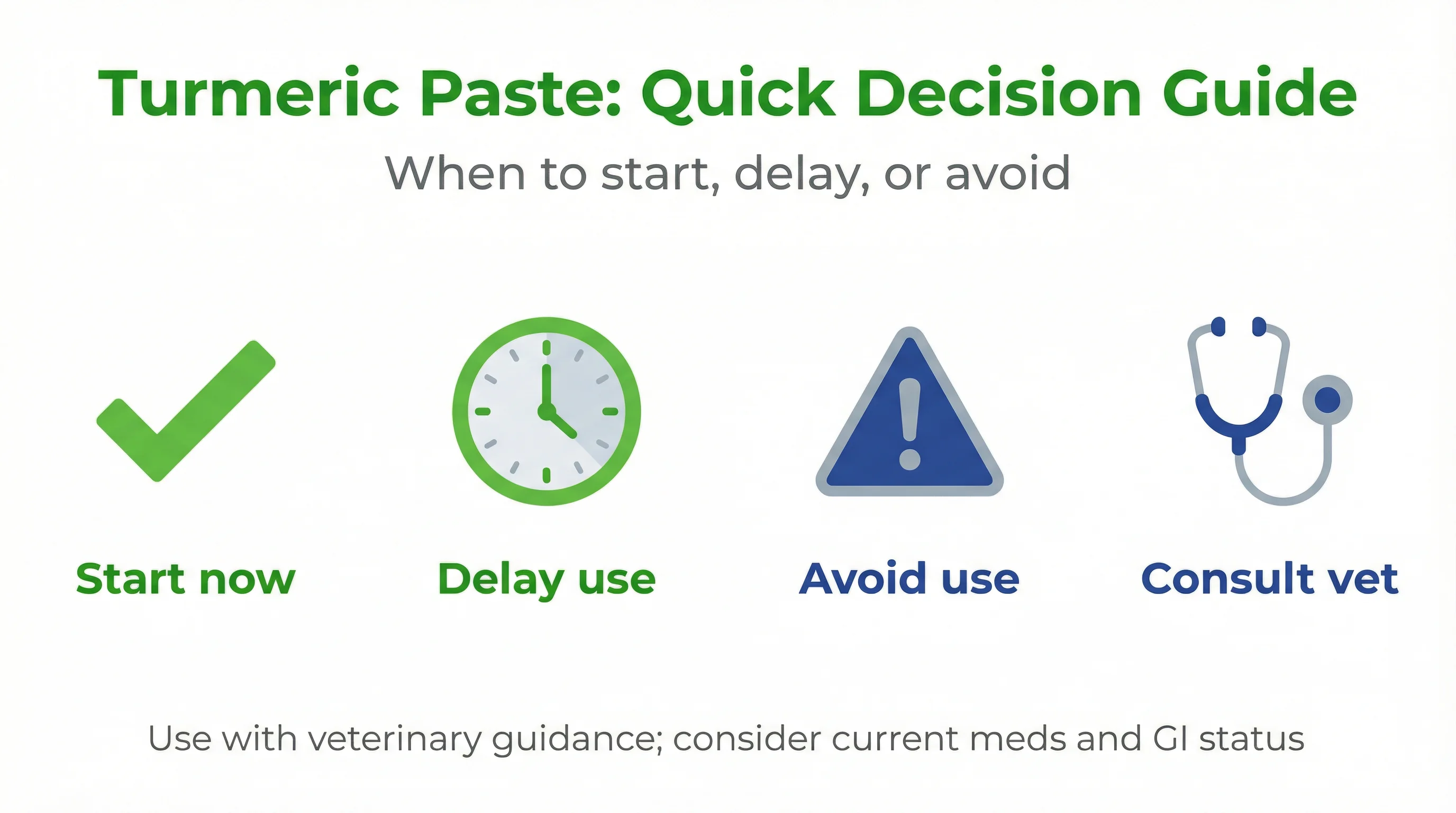
Delay turmeric paste if your dog has active GI upset, poor appetite, vomiting, or diarrhea. Avoid during uncontrolled bleeding, before procedures, or in dogs on anticoagulants unless your veterinarian approves. Use caution with gallbladder disease, pancreatitis, or bile duct obstruction, as turmeric and added fats may aggravate these conditions. Do not start during the first 24–48 hours of a significant injury when swelling and bleeding risk remain highest. Puppies, pregnant, or lactating dogs require individualized veterinary advice before any supplementation. If your dog resists food or is on complex medication regimens, wait and consult your veterinarian for timing and suitability.
Quick decision guide
If X situation, then Y action (5–7 pathways)
- If the injury is acute with visible swelling, then prioritize rest, cold compression, and prescribed medications; revisit turmeric paste after 48–72 hours.
- If your dog is on carprofen or meloxicam, then consult your veterinarian before adding turmeric to assess GI and bleeding risk.
- If stiffness appears after controlled walks, then trial a low dose with food and monitor comfort, stool quality, and appetite.
- If your dog has diarrhea or vomiting, then stop any turmeric and reintroduce only after full GI normalization.
- If surgery is scheduled within a week, then avoid turmeric paste unless your veterinarian directs otherwise.
- If your dog is on blood thinners or has a clotting disorder, then avoid turmeric paste without veterinary clearance.
- If there is no observable improvement after 4–8 weeks, then taper off and discuss alternative strategies or diagnostics with your veterinarian.
Evidence status: what research suggests
Mechanisms and outcomes with cautious interpretation
Curcumin, the active component of turmeric, is studied for anti-inflammatory and antioxidant effects. Proposed mechanisms include modulation of NF-κB, COX-2, and cytokine signaling. However, curcumin’s oral bioavailability is low. Formulations that include fat and piperine may enhance absorption, though magnitude varies by product and individual dog. Evidence in canine health remains emerging, with most data extrapolated from human and in vitro studies. A recent review highlights potential benefits but notes limited controlled trials specifically in dogs, underscoring the need for cautious dosing and realistic expectations during recovery phases.[1]
Where claims are stronger vs. uncertain
Preliminary veterinary trials suggest curcumin-containing combinations may support comfort in osteoarthritis, a context relevant to post-injury stiffness. A study on a co-micronized palmitoyl-glucosamine and curcumin formulation helped maintain meloxicam-induced pain relief, indicating potential adjunctive value.[2] Another clinical trial found improved mobility scores with a curcumin derivative plus boswellic acid alongside standard nutraceuticals, though combined ingredients limit attribution to curcumin alone.[3] Additional work indicates that curcumin combined with glucosamine and chondroitin may alleviate osteoarthritis signs in dogs, but results require confirmation across broader populations.[4]
How to introduce turmeric paste safely
Dosing by weight and formulation notes
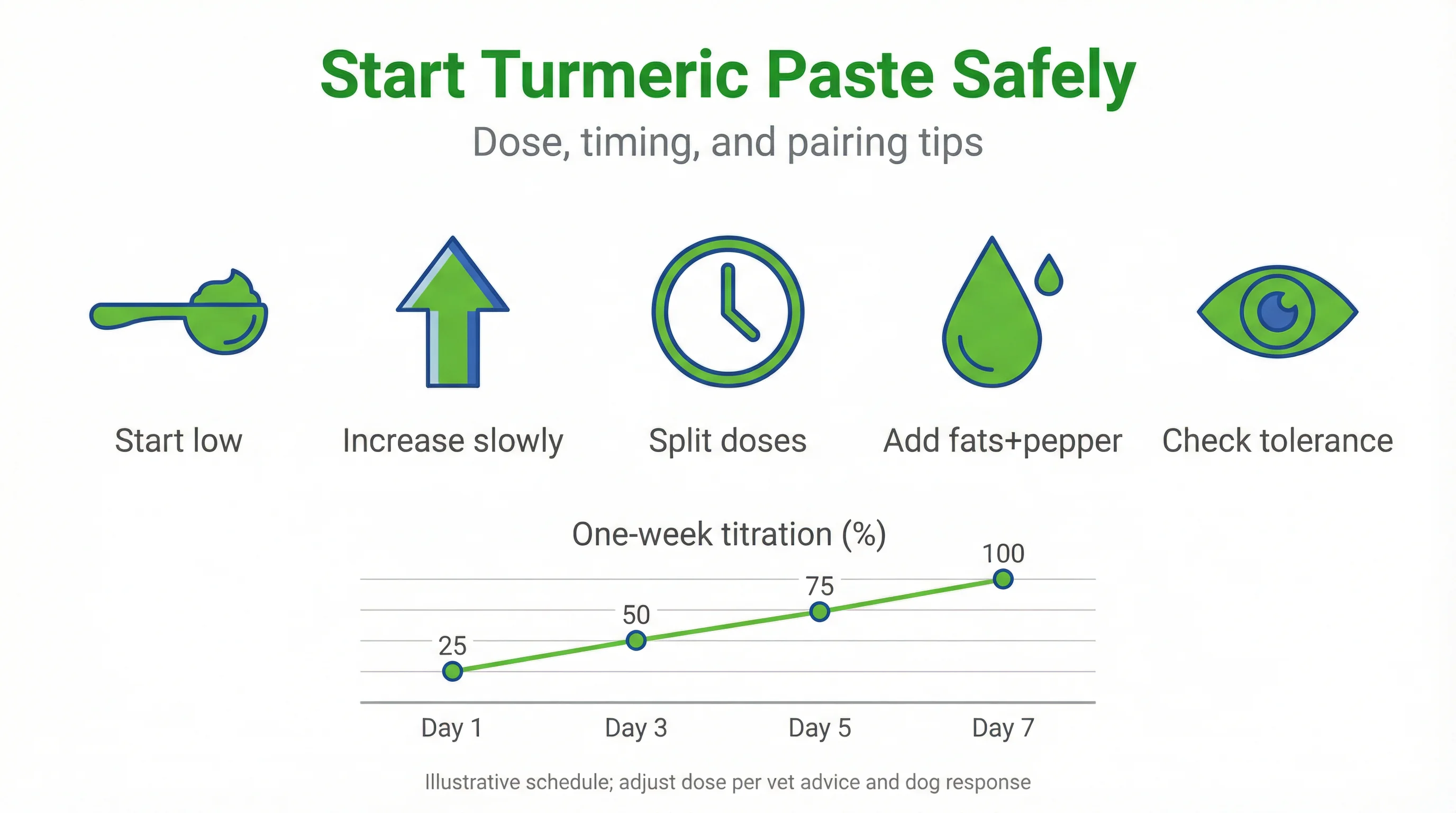
For turmeric for dogs dosing, start conservatively. A common range is 0.25 teaspoon per 10 pounds twice daily, increasing slowly if tolerated. Some dogs do well near 0.5 teaspoon per 10 pounds. The curcumin content of turmeric powder varies, often near 3–5%, so consistent formulation matters. Golden paste for dogs typically includes a fat source like coconut oil to aid absorption and piperine to enhance bioavailability. Confirm ingredient quality, batch testing, and clear label directions. Always give with food to minimize GI irritation.
Step-up schedule and with-food tips
Begin with 25–50% of your target dose for 3–4 days, then increase gradually over a week. Split the daily amount into two or three feedings, paired with regular meals. Avoid administering on an empty stomach. Provide adequate water and monitor for stool changes, especially loose stools or yellow discoloration, which may signal over-supplementation or fat sensitivity. If your dog refuses the paste, blend a smaller amount into a palatable wet food topper. Hold dosing steady for 10–14 days before making further adjustments.
Practical safety boundaries
Drug and condition interactions
Turmeric and curcumin may interact with anticoagulants and antiplatelet agents, potentially influencing clotting time. Use caution when combining with NSAIDs or corticosteroids due to additive GI risk. Discuss with your veterinarian if your dog is on carprofen, meloxicam, prednisone, or blood thinners. Avoid in dogs with a history of pancreatitis, active GI ulcers, or significant liver or gallbladder disease without veterinary oversight. Stop turmeric paste at least several days before elective procedures unless your veterinarian advises otherwise. If your dog has diabetes, monitor glucose closely, as supplements can complicate consistency in management.
Side effects and when to stop
Potential turmeric dogs side effects include soft stools, diarrhea, gassiness, reduced appetite, or yellow-tinted feces. Rarely, dogs may experience increased bruising or delayed clotting when combined with other medications. Stop immediately if vomiting, lethargy, black stools, or signs of abdominal pain occur. Reintroduce only after symptoms fully resolve and with veterinary guidance. If side effects repeatedly occur at low doses, discontinue and consider alternate strategies for anti-inflammatory support. Always log any changes in comfort, activity, or behavior to share with your veterinary team.
Monitoring recovery: 7–14 days and 4–8 weeks
Short-term checkpoints
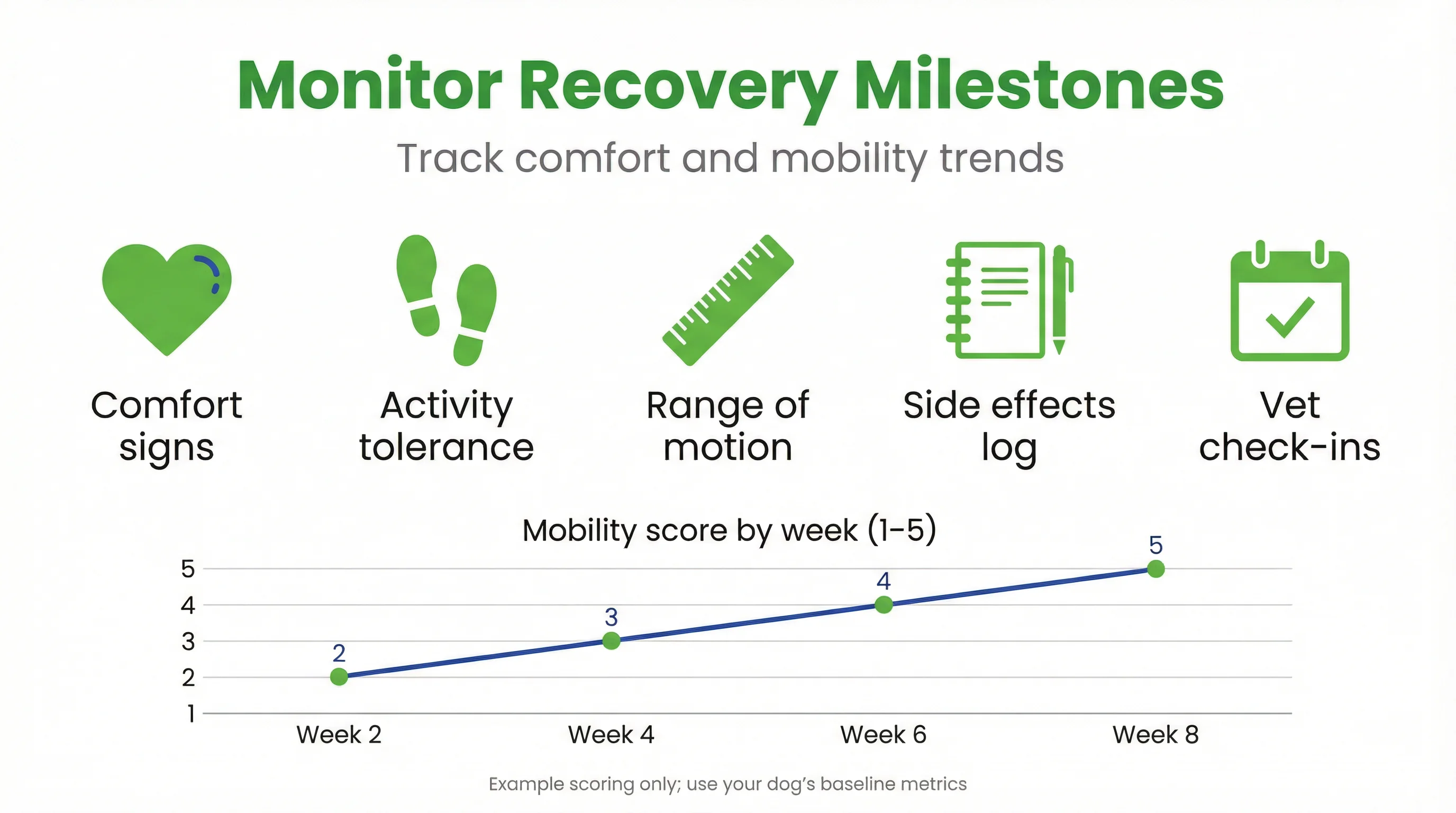
Within 7–14 days, look for small but meaningful shifts in comfort. Track ease of rising, willingness to walk, and post-activity stiffness duration. Record stool quality and appetite daily. Reduce the dose if stools loosen or appetite dips. If your dog is paw-sensitive or returning to light activity, supportive gear like Medical Dog Booties can improve confidence and reduce surface-related discomfort. Maintain consistent rest schedules and avoid sudden increases in activity volume until mobility appears reliably improved across multiple days.
Longer-term reassessment and vet alignment
At 4–8 weeks, evaluate larger trends. Consider objective measures such as step counts, walk duration without limping, and range-of-motion tolerance during gentle home exercises. If progress plateaus or reverses, meet your veterinarian to reassess the plan. Options may include imaging, physical rehabilitation, or medication adjustments. If turmeric paste provides no clear benefit, taper off over a week. If benefits are modest, maintain the lowest effective dose while emphasizing conditioning, weight control, and joint-friendly environments. Continually align supplementation with your veterinarian’s recommendations.
Frequently Asked Questions
How much turmeric paste can I give my dog?
A common starting range is 0.25 tsp per 10 lb (4.5 kg) twice daily, increasing gradually to a typical ceiling of about 0.5 tsp per 10 lb if well tolerated. Always start low, give with food, and adjust to your dog’s response.
Is turmeric paste safe with pain medications like NSAIDs?
Turmeric may interact with anticoagulants and can irritate sensitive stomachs when combined with NSAIDs. Discuss with your veterinarian before combining, especially if your dog is on carprofen, meloxicam, or any blood thinners. Monitor stools and appetite closely.
How long before I might notice benefits?
Some dogs show changes in comfort or mobility within 7–14 days, while others need 4–8 weeks. Track activity, stiffness scores, and any GI changes to guide adjustments. Maintain consistent dosing and avoid abrupt activity increases.
Can puppies or pregnant dogs use turmeric paste?
Use caution. Safety data are limited for puppies, pregnant, or lactating dogs. Consult your veterinarian before use in these groups. Individual risk profiles vary, and growth or gestational needs may change dosing decisions.
What form of turmeric is best for dogs?
A paste with a high-curcumin turmeric, a fat source like coconut oil, and piperine (black pepper extract) may support absorption. Choose products with clear sourcing and batch testing. Confirm directions and adjust to your dog’s tolerance.
How turmeric paste fits into a complete recovery plan
Complementary supports and when to escalate care
Turmeric paste is one tool among many. Pair it with structured rest, controlled leash walks, and surface management to reduce slips. Support skin integrity and minor abrasions with safe cleansing practices; see step-by-step guidance in our HOCl wound cleanser article. Keep essentials organized with a well-stocked First-Aid Kit to manage small setbacks quickly and confidently. For a broader framework—including pacing, home set-up, and escalation triggers—review our injury recovery hub and align supplements with the overall plan. If pain persists, lameness worsens, or function stalls despite structured care, escalate promptly with your veterinarian for diagnostics, rehabilitation, or medication adjustments. Careful monitoring, measured activity, and collaborative decision-making remain the core of successful recovery.
References
- J Kępińska-Pacelik et al. (2023). Turmeric and curcumin—health-promoting properties in humans versus dogs. International Journal of Molecular Sciences. View article
- G Della Rocca et al. (2023). Palmitoyl-glucosamine co-micronized with curcumin for maintenance of meloxicam-induced pain relief in dogs with osteoarthritis pain. BMC veterinary …. View article
- C Caterino et al. (2021). Clinical efficacy of Curcuvet and Boswellic acid combined with conventional nutraceutical product: An aid to canine osteoarthritis. PLoS …. View article
- E Zheng et al. (2025). A Nutritional Supplement Containing Curcumin C3 Complex, Glucosamine, and Chondroitin Alleviates Osteoarthritis in Mice and Canines. Veterinary …. View article


