

Injury Recovery for Dogs: A Pet Parent’s Orientation Hub
Injury Recovery for Dogs: A Pet Parent’s Orientation Hub
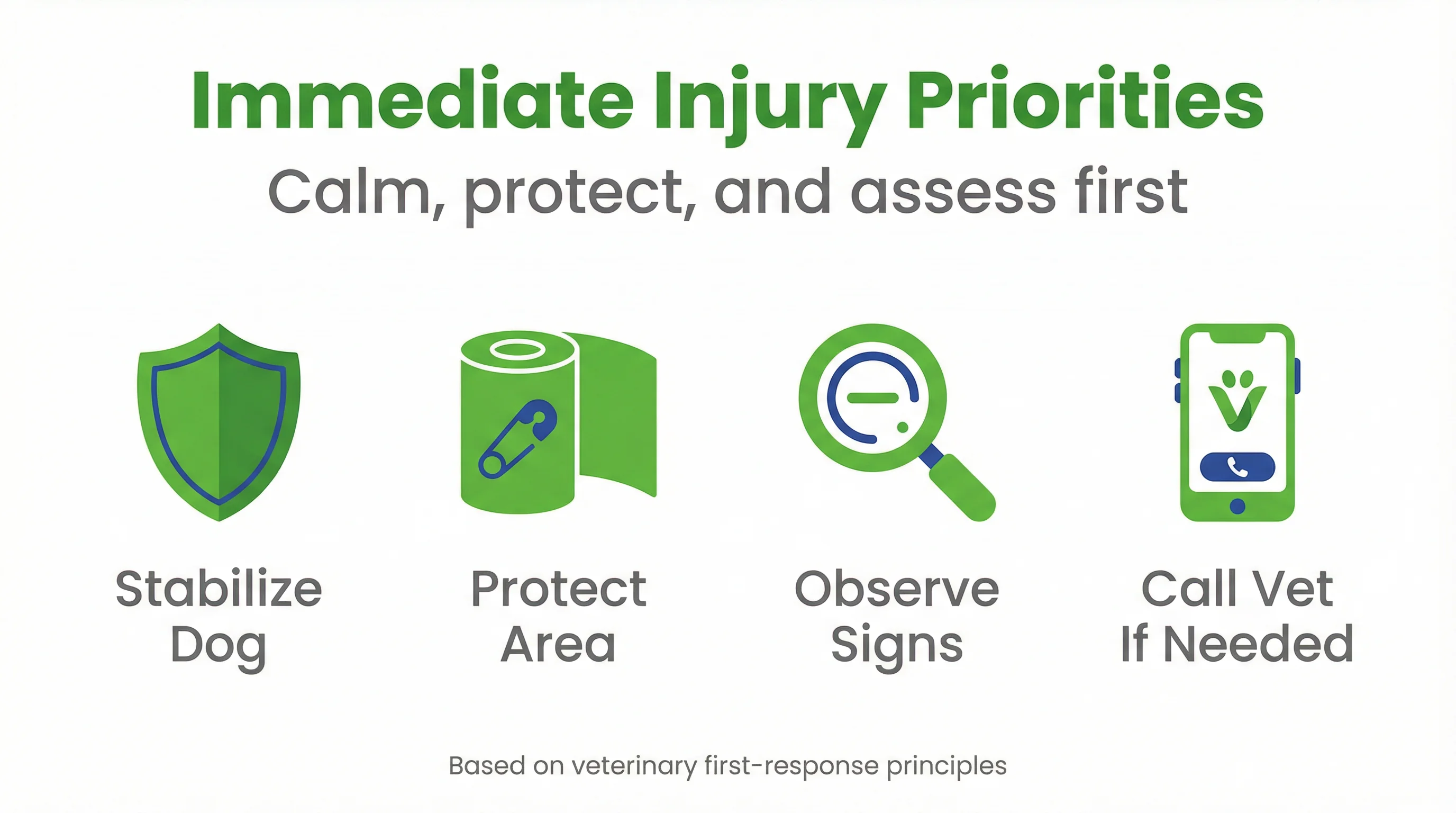
When a dog gets hurt, seconds feel long and decisions feel heavy. Confidence comes from a simple, proven order of operations.
This guide prioritizes stabilization, protection, and observation. You will learn how to choose safe hygiene, when medical dog boots and wraps help, and how to build practical first-aid readiness at home and on the go.
What to Prioritize First: Stabilize, Protect, Observe
Triage and timing: what matters in the first window
Start with calm stabilization. Secure your dog to prevent sudden movement and reassess breathing, bleeding, and obvious pain. If you see uncontrolled bleeding, severe lameness, or deformity, seek veterinary care immediately.
For minor wounds or sprains, reduce motion of the affected area and prevent self-trauma. Early, controlled protection supports tissue healing and functional outcomes when paired with veterinary guidance.[1]
For fast orientation to paw-specific injuries, see First 24 Hours After a Paw Injury: Stabilize, Protect, and Monitor.
Clean vs. cover: choosing safe, simple hygiene
Think “clean, then protect,” not “scrub until spotless.” Use skin-safe cleansers and avoid harsh agents that delay healing. A moist, clean environment supports normal tissue repair when appropriately protected.[1]
Choose breathable, non-adherent coverings when protection is needed. Remove soiled barriers promptly and observe the skin before re-covering. For canine wound care basics with HOCl, visit Cleaning Dog Wounds at Home with HOCl: Step‑by‑Step and Safety Checks.
Top 3 actions for dog injury recovery
- Stabilize calmly and prevent further motion or self‑trauma.
- Clean gently with skin‑safe products, then protect with breathable barriers.
- Observe frequently and escalate to veterinary care when red flags appear.
Protection vs. Mobility: Boots, Wraps, and Rest
When protective boots help—not hinder—healing
Medical dog boots protect sensitive tissue and bandages from contamination while allowing air exchange and gentle traction. They are tools for protection, not fashion or distance walking.
Use them to prevent licking, pad abrasion, and slipping on smooth floors. Early, thoughtful protection paired with appropriate activity supports better recovery without unnecessary immobilization.[4]
For fit and wear principles unique to recovery, see Dog Boots for Recovery vs. Outdoor Use: Fit, Sizing, and Wear Schedules.
Support and compression: gentle stability without overdoing it
Compression can limit swelling and offer proprioceptive support, but it must remain gentle and breathable. Over‑tight wrapping can restrict circulation or trap moisture.
Consider an elastic leg bandage for dogs when the goal is light stability, not rigid immobilization. Reassess often for comfort and skin changes. Support should never replace veterinary evaluation for suspected ligament or bone injury.[4]
Review decision rules before applying any wrap in When and How to Use Elastic Leg Bandages on Dogs. In orthopedic cases, structured, early rehabilitation under professional guidance can be safe and beneficial for function when appropriately directed.[3]
Skin and Hot Spot Triage: Prevent Self‑Trauma
Spotting itch‑driven lesions early
Hot spots begin with itch, moisture, and friction. Watch for sudden hair loss, redness, and a warm, weeping patch. Early action reduces self‑trauma and speeds dog injury recovery.
Address triggers such as moisture under fur, environmental irritants, or anxiety. For fast relief strategies that emphasize comfort and breathability, read Hot Spots and Itchy Lesions: Fast Relief Without the Cone of Shame.
Comfort aids that reduce licking and scratching
Breathable barriers, recovery sleeves, and medical dog boots create safe boundaries without heavy restriction. Gentle, well‑fitted aids can reduce anxiety‑driven chewing by providing light sensory feedback and protection when used judiciously.[4]
Preparedness: Build Your Home, Car, and Trail Kit
Core first‑aid components pet parents actually use
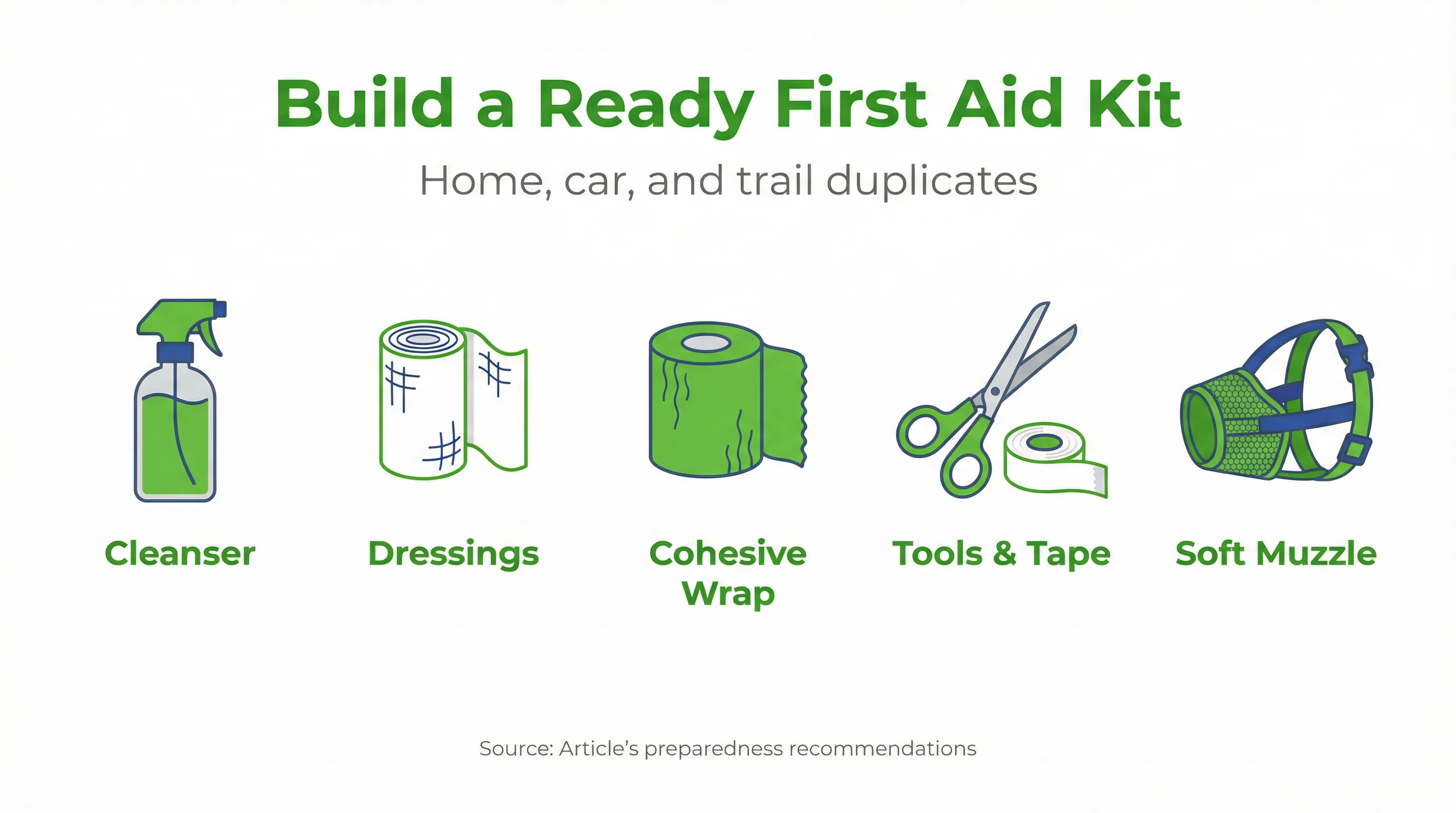
Dog first aid essentials include a skin‑safe cleanser, non‑adherent dressings, cohesive wrap, scissors, tape, gloves, a soft muzzle, tweezers, a towel, and a protective boot or wrap option.
Keep duplicates of critical items for home, car, and trail. Many pet owners find Healers Comprehensive First Aid Kit helpful for this task. For component checklists and organization, see Building a Dog First‑Aid Kit for Home, Car, and Trail.
Where to store and how to keep supplies ready
Store kits where they are easy to grab with one hand. Add your veterinarian’s information and an emergency note. Replace used or expired items and reseal after every check.
Consider seasonal risks and adjust your kit for temperature, surfaces, and terrain. See prevention guidance in Seasonal Paw Hazards: Winter Salt, Summer Asphalt, and Trail Risks.
Nutrition and Daily Care Before Supplements
Hydration, routine, and low‑stress handling come first
Good hydration, calm handling, and predictable routines reduce stress and support healing. Older dogs may require extra environmental support and measured activity adjustments during recovery to maintain function and comfort.[2]
When to explore natural anti‑inflammatory support
Consider natural options only after foundations—rest, protection, hygiene, and veterinary guidance—are in place. Inflammation is a normal healing phase, so support should complement, not override, tissue recovery dynamics.[1] Explore considerations in Natural Anti‑Inflammatory Support: Turmeric Paste for Dogs (Evidence, Dosing, Safety).
Common Mistakes and Misconceptions to Avoid
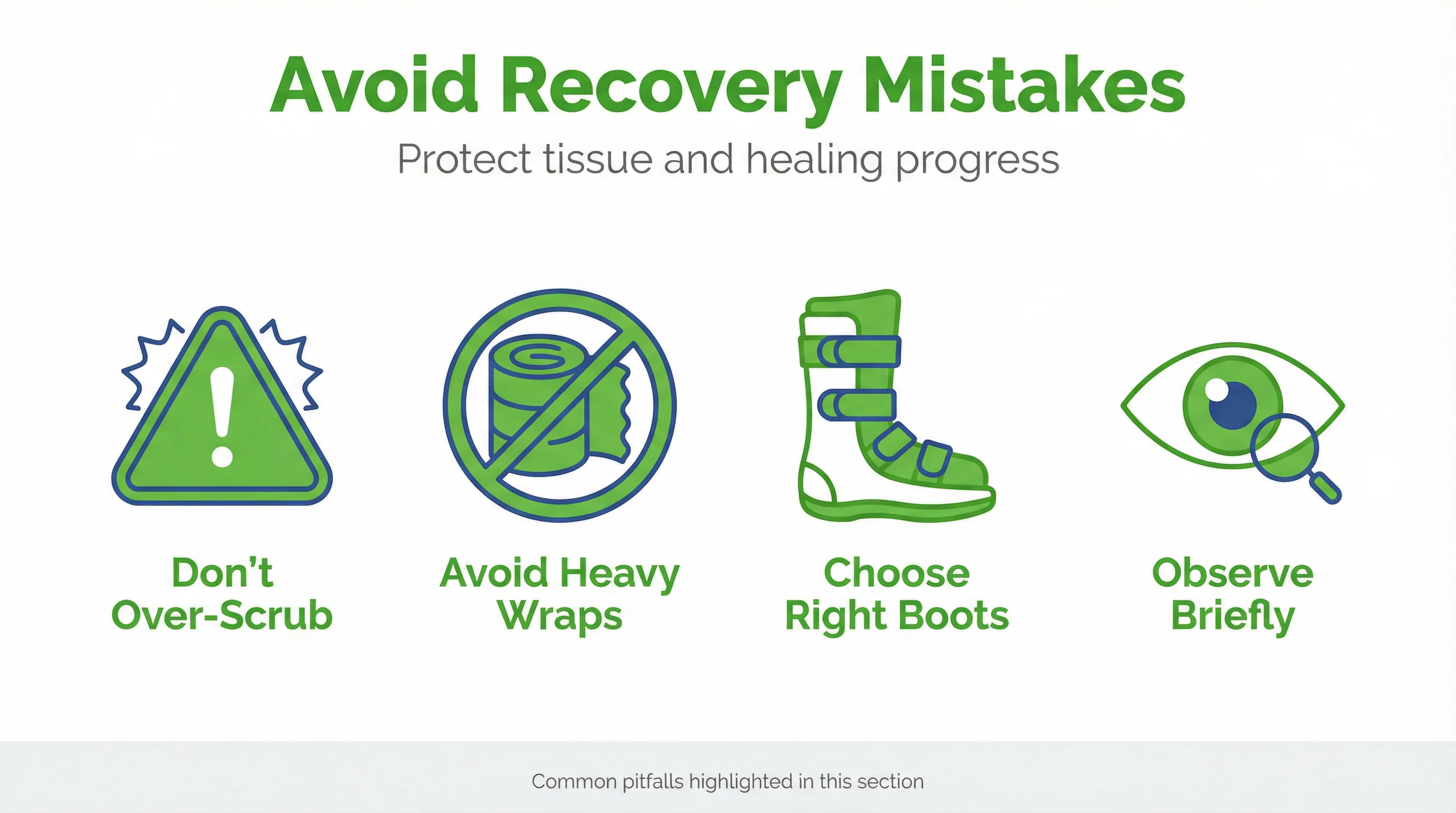
Over‑cleaning, over‑wrapping, and skipping observation
Excessive scrubbing can damage fragile tissue and slow repair. Heavy, prolonged wrapping can trap moisture or impair circulation. Frequent, brief observations catch problems early and guide safer decisions.[1][4]
Confusing outdoor boots with medical recovery boots
Trail or snow boots focus on abrasion and weather. Medical recovery boots prioritize breathability, bandage protection, and indoor traction. Using rugged outdoor boots over healing tissue can trap moisture and delay recovery.
How These Recommendations Were Developed
Practice insights, literature scanning, and product observation
These recommendations synthesize core principles of tissue healing, veterinary rehabilitation practice, and observed product performance in real‑world settings to help you prioritize decisions with clarity and confidence.[1][4]
Where this hub fits in your recovery learning path
This orientation hub guides high‑level choices for injury recovery for dogs. Use it to decide what comes first, then move into focused deep dives when you are ready for implementation details.
Frequently Asked Questions
What should I do first when my dog is injured?
Prioritize calm stabilization, basic protection of the affected area, and observation. Keep things clean and avoid complex procedures until you’ve reviewed simple hygiene steps.
Do dogs need special boots for recovery?
Yes, medical‑grade recovery boots differ from outdoor boots. They’re designed to protect sensitive tissue and bandages while allowing breathability and gentle traction.
When should I use a leg bandage on my dog?
Use gentle support when stability and protection are needed, avoiding tight or prolonged wrapping. Review clear criteria before applying any compression or support.
How do I prevent my dog from licking a hot spot?
Reduce itch triggers, protect the area with breathable barriers, and choose comfort aids that calm without restricting movement. Address early to prevent self‑trauma.
What belongs in a basic dog first‑aid kit?
Include a skin‑safe cleanser, protective dressings, a way to stabilize limbs, and a breathable boot or wrap option. Keep duplicates in home, car, and trail setups.
References
- K Kirkby Shaw et al. (2020). Fundamental principles of rehabilitation and musculoskeletal tissue healing. Veterinary …. View article
- C Frye et al. (2022). Canine geriatric rehabilitation: considerations and strategies for assessment, functional scoring, and follow up. Frontiers in Veterinary Science. View article
- BJ Carr et al. (2025). Best Practices in Physical Rehabilitation After Cranial Cruciate Ligament Injury in Dogs. … in Small Animal …. View article
- K Niebaum et al. (2018). Rehabilitation physical modalities. … medicine and rehabilitation. View article


