

Hot Spots and Itchy Lesions: Fast Relief Without the Cone of Shame
Hot Spots and Itchy Lesions: Fast Relief Without the Cone of Shame
When a hot spot erupts, minutes matter. Dogs can turn a small itch into a raw, weeping sore fast. Interrupt the itch–lick cycle early and you protect skin integrity.
This guide delivers a rapid-response routine for moist dermatitis in dogs. You will learn how to identify a hot spot, cleanse and cool safely, and apply breathable protection without a cone. We also outline monitoring checkpoints, safety boundaries, and evidence-informed tips to reduce self-trauma quickly.
A rapid-response routine to stop the itch–lick cycle
Identify: hot spot or another skin issue?
Hot spots present as sudden, moist, inflamed patches. The area may be red, painful, and exuding serum. Fur often mats, and a distinct odor may develop. These itchy skin lesions in a dog usually arise from scratching, chewing, or underlying allergy triggers. Rule out wounds, fungal infections, or parasites if the lesion pattern looks atypical or spreads rapidly. If the dog is lethargic, febrile, or highly painful, pause home care and call your veterinarian.
Cleanse, cool, and protect in minutes
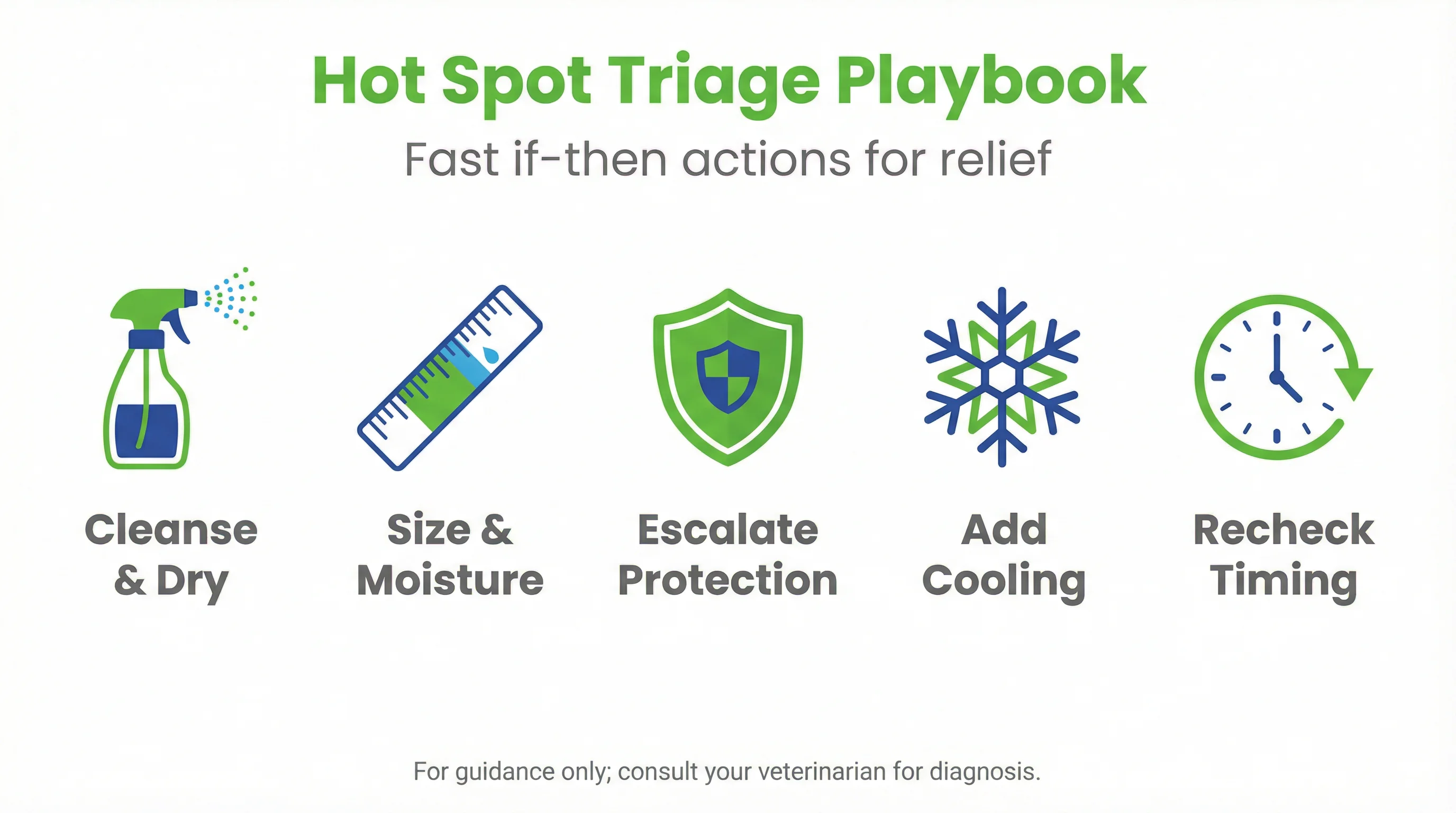
Clip or part hair around the lesion to expose skin. Gently cleanse with a pet-safe dog wound care HOCl solution or similar non-stinging antiseptic. Pat thoroughly dry. Apply a cool compress for 3–5 minutes to reduce heat and itch. Then introduce a breathable barrier to block licking. Many pet owners find Healers Cut and Wound Spray For Pets helpful for this task. Reassess every few hours on day one, adjusting protection to maintain airflow and dryness.
Quick decision guide: if this, then do that
5–7 common scenarios and best next steps
- If the lesion is small (quarter-sized) and moist, then cleanse with HOCl, air-dry, and protect with a light, breathable barrier for 4–6 hours. Recheck frequently.
- If your dog keeps scratching or chewing, then escalate protection: use protective dog booties for paws or a light wrap for legs, and add a cold compress cycle.
- If the area is hot, painful, and expanding, then contact your veterinarian promptly. Early anti-pruritic care may reduce self-trauma and secondary infection risk.[1]
- If paw irritation follows a walk on salt or hot pavement, then rinse, dry, and apply temporary boot protection. Review seasonal hazard prevention tips later.seasonal paw hazards
- If your dog resists handling, then stage care in brief sessions. Offer calm, low-distraction breaks between steps. Consider a helper for safe restraint and comfort.
- If you see pus, streaking redness, or systemic signs, then stop home measures and seek veterinary care the same day.
- If your dog has a history of allergic flares, then integrate a short, structured dog anti-itch routine early to minimize recurrence risk.[2]
How to apply protection without a cone
Localized lesions: paws, legs, rump
For paw hot spots, use breathable, medical-grade booties sized to allow circulation and airflow. Learn how recovery boots differ from outdoor boots and how to fit them well in our guide on dog boots for recovery vs. outdoor use. For lower-leg lesions, pair non-adhesive gauze with a gentle elastic wrap; review safe tension and anchor points in when and how to use elastic leg bandages. For rump or flank lesions, consider light garments or a T-shirt hack, ensuring the fabric does not chafe or trap moisture.
Materials and fit to keep skin breathing
Choose soft, wickable layers that avoid occlusion. Keep dressings minimal and change them if damp. Avoid adhesive sticking to fur or inflamed skin. Cleanse before each re-dressing; see cleaning dog wounds at home with HOCl for step-by-step technique. Ensure you can insert two fingers under wraps. Prioritize comfort and mobility while preventing access to the lesion.
Monitoring: what to track over 7–14 days and 4–8 weeks
Short-term healing checkpoints
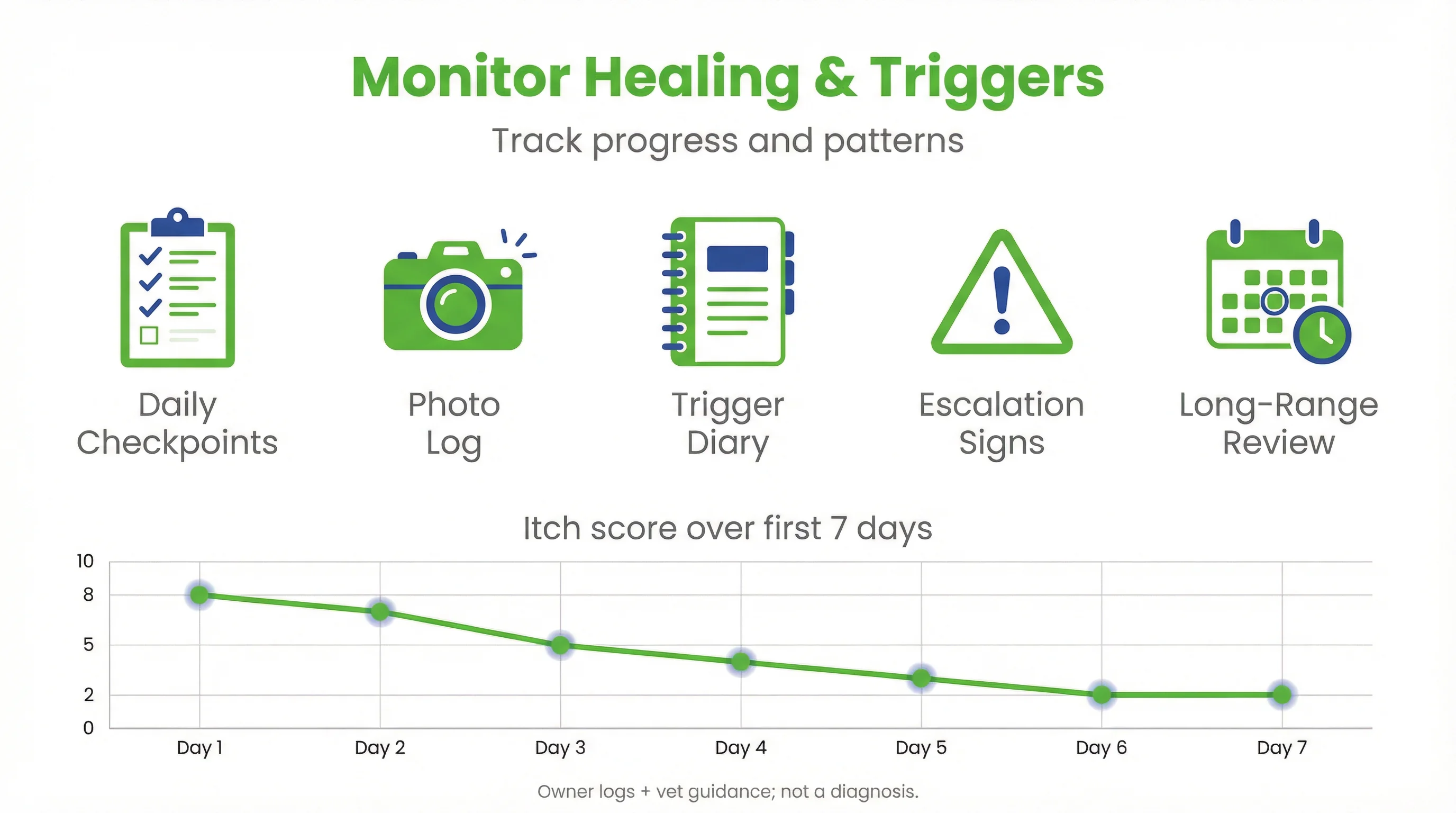
Within 24–48 hours, itching should ease, and exudate should lessen. By days 3–5, edges may dry and crust lightly as inflammation reduces. If pruritus persists or worsens despite protection and cleansing, contact your veterinarian. Early anti-pruritic relief is central to stabilizing skin and preventing self-trauma in acute flares.[3]
Longer-term triggers and prevention
Across 4–8 weeks, log patterns: seasonality, diet changes, new detergents, or environmental exposure. Many dogs with recurrent moist dermatitis have underlying allergies. Ongoing management plans often address environmental allergens and skin barrier support.[2] For broader recovery and prevention strategies, bookmark our dog injury recovery hub for structured checklists and tracking templates.
Practical safety boundaries
When to pause home care and contact a veterinarian
Stop home care and call your vet if pain escalates, redness spreads beyond the trimmed margin, or pus, fever, or lethargy appear. If your dog cannot tolerate handling or protection, seek professional support. Discuss appropriate antipruritic options, as choices depend on diagnosis, severity, and comorbidities, and some systemic drugs require careful oversight.[4]
Hygiene, dressing intervals, and product compatibility
Change any barrier that becomes damp. Re-cleanse and fully dry skin before reapplying protection. Avoid layering multiple products at once unless advised by your vet, as interactions may irritate. Do not seal moist lesions under occlusive plastic. Keep scissors and clippers disinfected, and trim fur conservatively to prevent razor burn.
What the evidence says (and where it’s evolving)
HOCl cleansing and moisture control
Guidelines support multimodal management of pruritic skin disease, which may include gentle topical antiseptics to limit secondary bacterial overgrowth and reduce irritants.[1] Dog wound care HOCl solutions are non-stinging and may help cleanse without disrupting fragile tissue. Keeping the lesion clean and dry reduces maceration, a key driver of discomfort in acute moist dermatitis.
Barrier methods to reduce self‑trauma
Breaking the itch–lick cycle is essential to prevent enlargement of lesions and aid barrier repair. Evidence indicates that rapid antipruritic control, coupled with protecting the area from scratching or chewing, supports faster stabilization and recovery.[3] Breathable physical barriers may reduce mechanical irritation, supporting topical care adherence.
Turmeric (curcumin) for systemic support
Curcumin is being explored for its potential to support a healthy inflammatory response. While not a replacement for diagnosis or primary therapies, it may complement skin wellness strategies. For formulation, dosing, and safety fundamentals, see Natural Anti‑Inflammatory Support: Turmeric Paste for Dogs. Discuss any supplement plan with your veterinarian.
Step-by-step: the first 24 hours
Set up a calm zone
Choose a quiet space away from foot traffic. Gather tools: clippers or blunt scissors, pet-safe HOCl cleanser, non-adhesive gauze, elastic wrap, breathable booties, and a cool pack. Wash hands and trim nearby fur to expose skin. Prepare treats for cooperative handling. Keep sessions short and reassuring. This reduces stress-driven scratching and supports accurate, gentle care.
Cleanse, cool, protect, and recheck
Cleanse the lesion with HOCl using gentle blotting. Pat completely dry. Apply a cool compress for 3–5 minutes. Cover with minimal, breathable protection suited to location: bootie for paws, gauze plus light wrap for legs, soft garment for rump. Set a timer to recheck in 4–6 hours. Replace any damp dressing, re-cleanse, and let air circulate for 15–20 minutes before re-covering. See first 24 hours after a paw injury for additional protection rhythm tips.
Troubleshooting common setbacks
Persistent licking or chewing
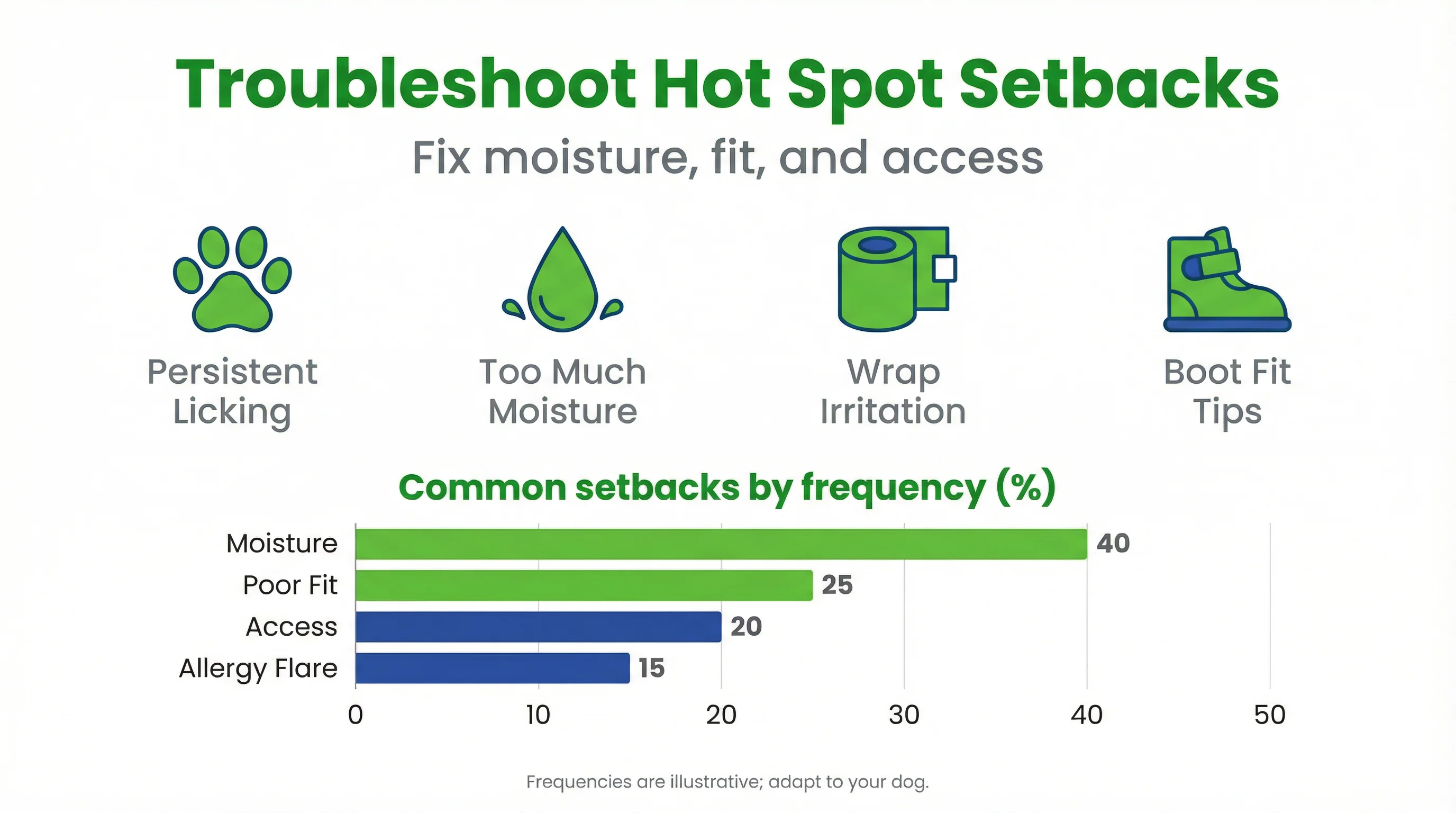
Increase supervision and upgrade protection. Use well-fitted protective dog booties for paws and adjust wrap coverage for limbs. Add short cooling sessions to reduce itch. If distress persists, consult your veterinarian about antipruritic options to stabilize the cycle early.[4]
Weeping lesions and odor
Frequent moisture suggests inadequate drying or occlusion. Shorten dressing intervals, cleanse gently, and allow more air exposure between covers. Avoid petrolatum on actively weeping spots. Reassess for infection if odor intensifies or pain grows. Stock replacement gauze, wraps, and cleanser using our guide on building a dog first‑aid kit.
Bandage slippage or moisture build-up
Check fit and anchoring technique. Reduce bulk and tension. Consider a lighter wrap or a bootie designed for recovery wear to maintain airflow. Rotate gear to keep materials dry. Persistent slippage near joints may need a different configuration or veterinary input.
Frequently Asked Questions
What is the fastest way to calm a dog’s hot spot at home?
Gently trim surrounding fur, cleanse with a pet-safe HOCl solution, pat dry, apply a vet-approved anti-itch or drying aid if recommended, and protect the area to prevent licking. Recheck every 4–6 hours the first day.
Do hot spots always need antibiotics?
Not always. Mild, early lesions may improve with cleansing, moisture control, and preventing self-trauma. Worsening pain, spreading redness, pus, fever, or lethargy warrant veterinary evaluation for possible antibiotics.
How can I prevent licking without using a cone?
Use breathable barriers sized to the body area, such as medical dog booties for paws or elastic wraps with non-adhesive gauze for legs. Ensure airflow and check skin every few hours for moisture or pressure marks.
How long do dog hot spots take to heal?
Small, uncomplicated lesions may improve within 2–3 days and crust over in 5–7 days with consistent care. Larger or infected areas can take longer and may need veterinary treatment.
Can turmeric support dogs with recurrent skin flare-ups?
Evidence suggests curcumin may support a healthy inflammatory response. Use dog-formulated products and discuss dosing with your veterinarian, especially if your dog takes other medications.
Conclusion: stabilize now, prevent the next flare
Early action stops the itch–lick spiral and protects healing skin. Cleanse gently, keep moisture controlled, and use breathable barriers instead of defaulting to a cone. Track short- and long-term patterns to refine your plan. If signs escalate, involve your veterinarian promptly. Build skills and supplies so your rapid routine becomes second nature. For more tools and checklists that reinforce ongoing recovery habits, see our collection of ongoing recovery habits resources.
References
- J Miller et al. (2023). 2023 AAHA management of allergic skin diseases in dogs and cats guidelines. Journal of the …. View article
- Y Drechsler et al. (2024). Canine atopic dermatitis: prevalence, impact, and management strategies. … Medicine: Research and …. View article
- CA Outerbridge et al. (2021). Current knowledge on canine atopic dermatitis: Pathogenesis and treatment. … in small animal …. View article
- V Bruet et al. (2022). Clinical guidelines for the use of antipruritic drugs in the control of the most frequent pruritic skin diseases in dogs. Veterinary …. View article


