

Cleaning Dog Wounds at Home with HOCl: Step‑by‑Step and Safety Checks
Cleaning Dog Wounds at Home with HOCl: Step‑by‑Step and Safety Checks
Minor scrapes happen fast. Clear, safe cleaning keeps small wounds from turning into big problems. Hypochlorous acid (HOCl) offers gentle antimicrobial support without the sting of harsh chemicals.
This guide focuses on exact, at‑home steps using HOCl for minor wounds and for post‑vet maintenance. You will learn a practical cleaning flow, decision points, safety boundaries, and when to escalate to a clinic for help.
When HOCl Home Care Fits (and When It Doesn’t)
Minor wound criteria you can manage at home
Home care suits shallow scrapes, minor abrasions, and small nicks under two inches that are not gaping, deeply punctured, or heavily contaminated. Bleeding should stop within ten minutes of firm pressure. Your dog should bear weight and act normally. The wound should not expose bone, tendon, or fat. If you have a stocked kit and can maintain clean technique, HOCl may support safe cleansing. Consider organizing First‑Aid Essentials & Kits so supplies are ready before you begin care.
Red flags that need a veterinary visit first
See a veterinarian promptly for deep punctures, crushing injuries, large wounds, uncontrolled bleeding, embedded debris, or bites. Also escalate for wounds near eyes, genitals, or major joints, or if you see spreading redness, heat, swelling, or bad odor. Fever, lethargy, severe pain, or limping also warrant evaluation. Post‑surgical or drain‑managed sites should follow the clinic’s instructions before you add HOCl.
Step‑by‑Step: Cleaning a Minor Dog Wound with HOCl
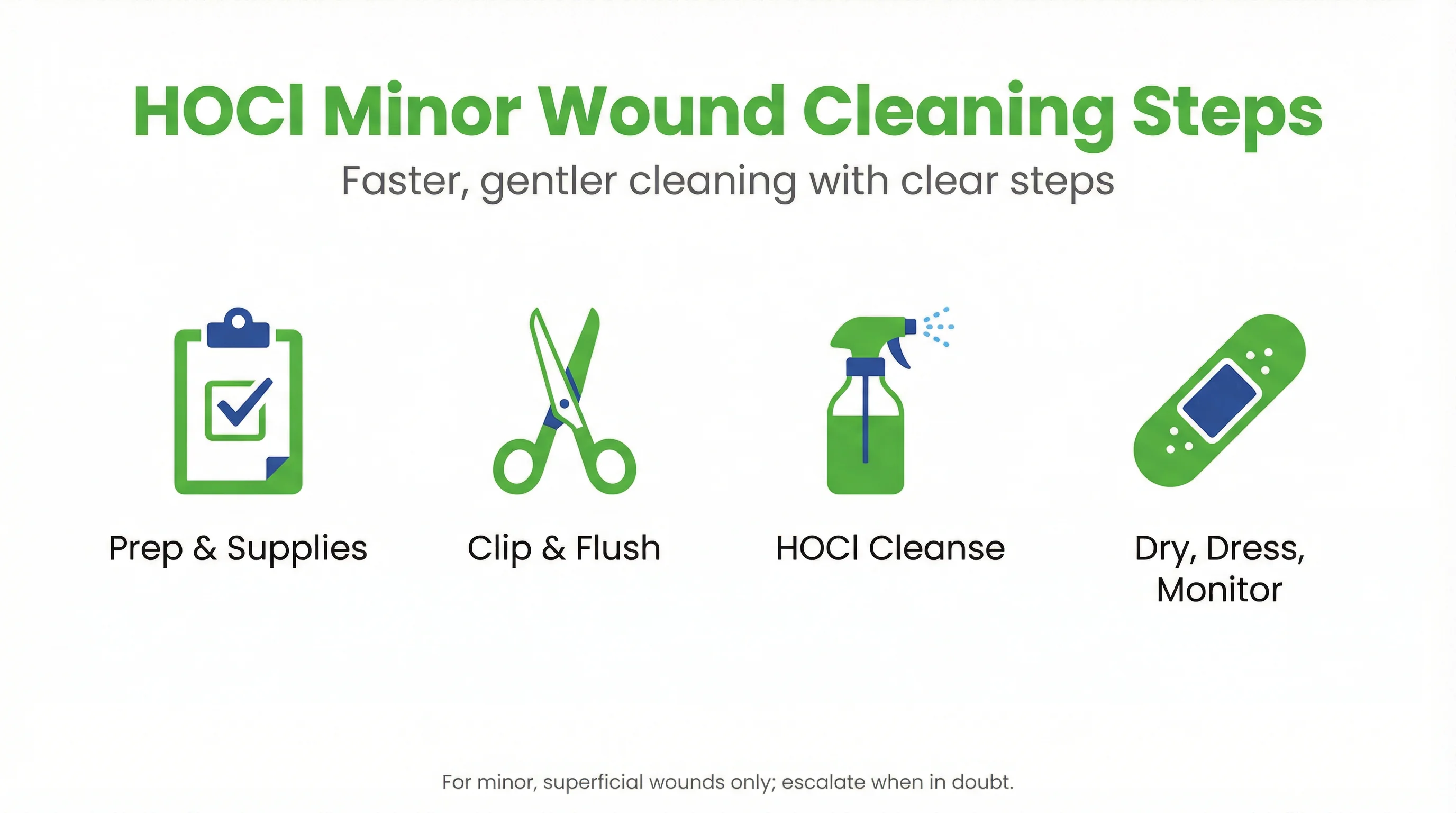
Prepare your space and supplies
Choose a quiet, well‑lit area. Wash your hands, and use clean gloves if available. Gather gauze squares, clean towels, blunt‑tip scissors, a saline rinse or clean water, and your HOCl wound cleanser. Keep treats nearby to reduce stress. Secure your dog comfortably with a helper if needed.
Gentle debris removal and initial flush
Clip hair away if it mats into the wound. Avoid shaving too close to the skin. Loosen dirt with sterile saline or lukewarm water. Use gentle pressure only. Wipe outward from the wound center with moistened gauze. Do not use hydrogen peroxide, alcohol, or full‑strength iodine, which may delay healing and irritate tissues.
HOCl application and contact time
After the initial rinse, saturate the area with HOCl. Ensure full coverage of creases and edges. Allow the solution to remain in contact for approximately 30 seconds to two minutes. Evidence suggests HOCl offers broad antimicrobial activity and acts quickly, including against biofilm, while being gentle on tissues[3]. Many pet owners find Healers Wound Cleanser helpful for this task.
Drying, protecting, and preventing licking
Gently blot away excess moisture with clean gauze. Avoid rubbing. Leave the wound lightly moist, not wet. If protection is needed, use a breathable, non‑stick pad and soft wrap. For paw sites, consider breathable, non‑stick protection for sensitive paws to limit licking and contamination. Ensure airflow and avoid tight occlusion that traps moisture.
Frequency and duration of care
For fresh, minor wounds, clean two to three times daily for 48–72 hours, then reduce to once or twice daily as the area improves. Maintain this routine until the skin closes and pink, healthy tissue forms. If redness escalates, drainage persists, or pain worsens after 48 hours, re‑assess and consider a veterinary visit.
Quick Decision Guide (if X, do Y)
5–7 situational prompts to choose next action
- If bleeding persists beyond ten minutes, apply firm pressure and seek veterinary care.
- If the wound edges gape or fat/tendon is visible, cover with a clean dressing and go to a clinic.
- If mild oozing decreases after two days, continue HOCl cleansing and light protection.
- If redness spreads more than half an inch around the wound, stop home care and call your veterinarian.
- If your dog cannot stop licking, add a protective barrier and consider a cone alternative. Reassess daily.
- If odor develops or thick pus appears, escalate to a clinic promptly.
- If normal activity resumes and the wound looks smaller and drier, taper cleaning frequency.
Practical Safety Boundaries
Skin, product, and handling limits to respect
Use veterinary‑labeled HOCl only; avoid homemade or highly concentrated solutions. Do not mix HOCl with soaps or peroxides during the same session. Keep solutions out of eyes and deep ear canals. Avoid forceful irrigation into punctures or under the skin. Replace soiled gauze promptly, and do not reuse applicators. Store HOCl as directed to preserve activity. If the skin blanches, becomes excessively damp, or shows new irritation, reduce frequency or pause and consult your veterinarian. HOCl’s tissue compatibility is generally favorable compared with harsher agents, but individual sensitivities can occur[4].
Monitoring Guidance: 7–14 Days and 4–8 Weeks
Short‑term healing checkpoints
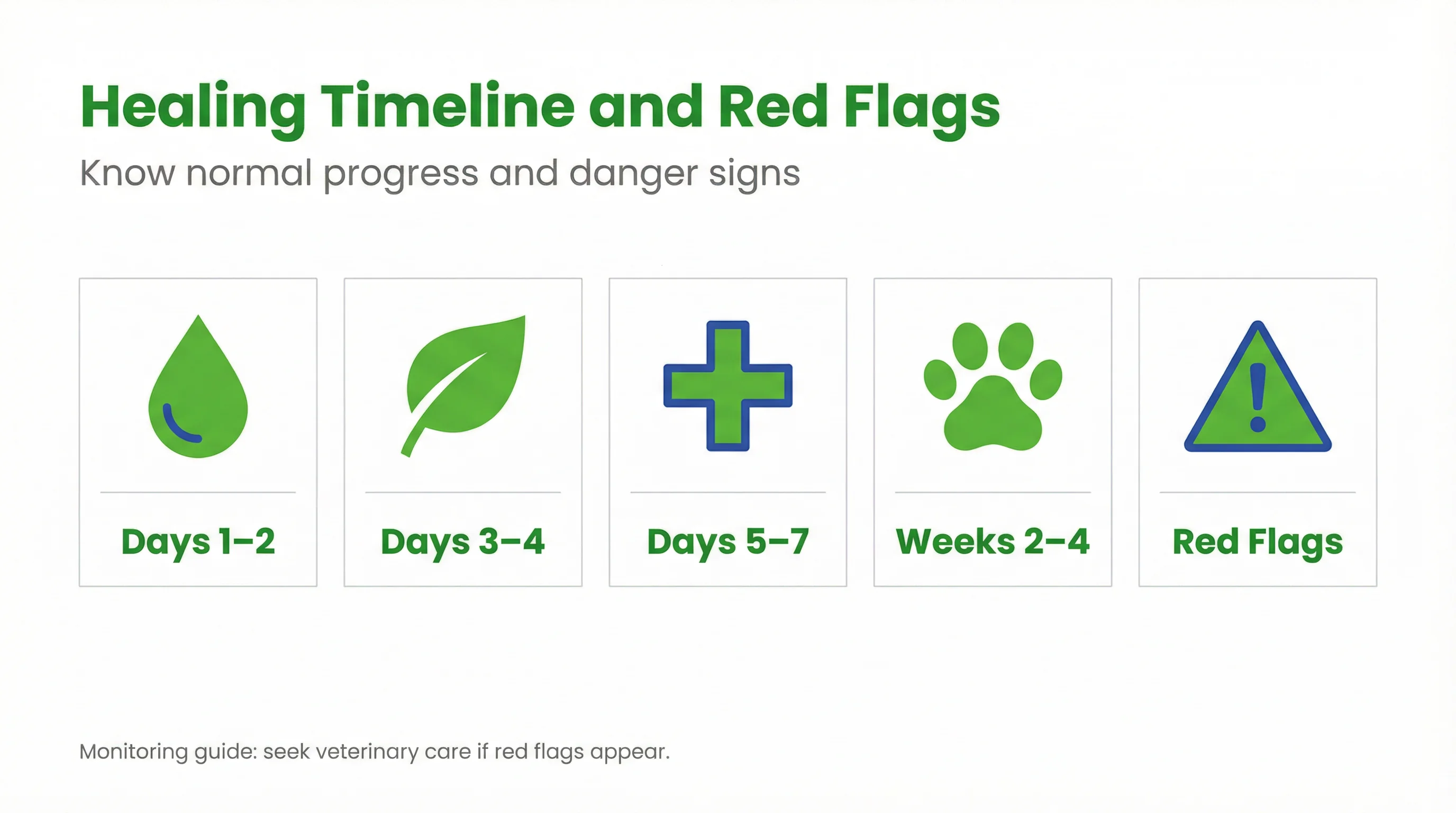
By days 2–4, expect less moisture and calmer edges. By days 5–7, a thin, pink layer may form. Itch often increases slightly as healing progresses. Pain should decrease. Foul odor, heat, or expanding swelling are not normal. If scabs soften and the skin whitens, reduce moisture and improve airflow. Re‑evaluate if steady improvement is not visible by day seven.
Longer‑term reassessment and scar care
Over four to eight weeks, most minor wounds fully close and hair regrows. The area should remain flat, flexible, and non‑tender. Gentle massage around—not on—new skin may support pliability. Sun exposure can darken healing skin, so limit intense sunlight. Persistent thickening, color change, or recurrent drainage merits veterinary assessment. Prolonged routine HOCl use is typically unnecessary after closure unless your veterinarian advises.
Evidence Status: What Research Suggests About HOCl
Antimicrobial activity and biofilm disruption
Laboratory and in vivo studies indicate HOCl has broad‑spectrum antimicrobial activity and may disrupt biofilms, which can complicate healing[3]. In veterinary contexts, HOCl has been evaluated in dog bite wound management as an antiseptic option following surgical care, supporting bacterial load reduction compared with other approaches[1].
Irritation profile and tissue compatibility
Dermatologic literature suggests stabilized HOCl is generally non‑stinging and well tolerated on skin and mucosa compared with harsher antiseptics, providing a favorable balance of antimicrobial effect and tissue compatibility[4]. This profile may help sustain consistent care when frequent cleaning is required.
Where evidence is still developing
Optimal contact times, dosing frequencies, and long‑term effects in diverse canine wounds continue to be studied. Comparative trials in naturally contaminated wounds are expanding but remain limited in scope and size[3][1]. Always integrate HOCl within veterinarian‑guided plans, especially for complex or chronic wounds.
Post‑Vet Care: Using HOCl Between Appointments
Aligning home care with discharge notes
Follow the clinic’s instructions precisely. Use HOCl to gently cleanse before applying any prescribed ointments or dressings, unless your veterinarian directs otherwise. Allow brief contact time, then lightly blot. If instructions conflict, prioritize the veterinarian’s timing and sequence of medications.
Dressings, booties, and wraps without over‑occlusion
Protect healing skin while allowing airflow. Use non‑stick pads with light wrap pressure. If your veterinarian recommends additional support, an Elastic Wrap Leg Bandage (with Gauze) can help stabilize dressings without trapping heat and moisture. Check under wraps twice daily for dampness, swelling, or slipping, and refresh protection after each cleaning.
Troubleshooting Common Setbacks
Excess moisture, maceration, and odor
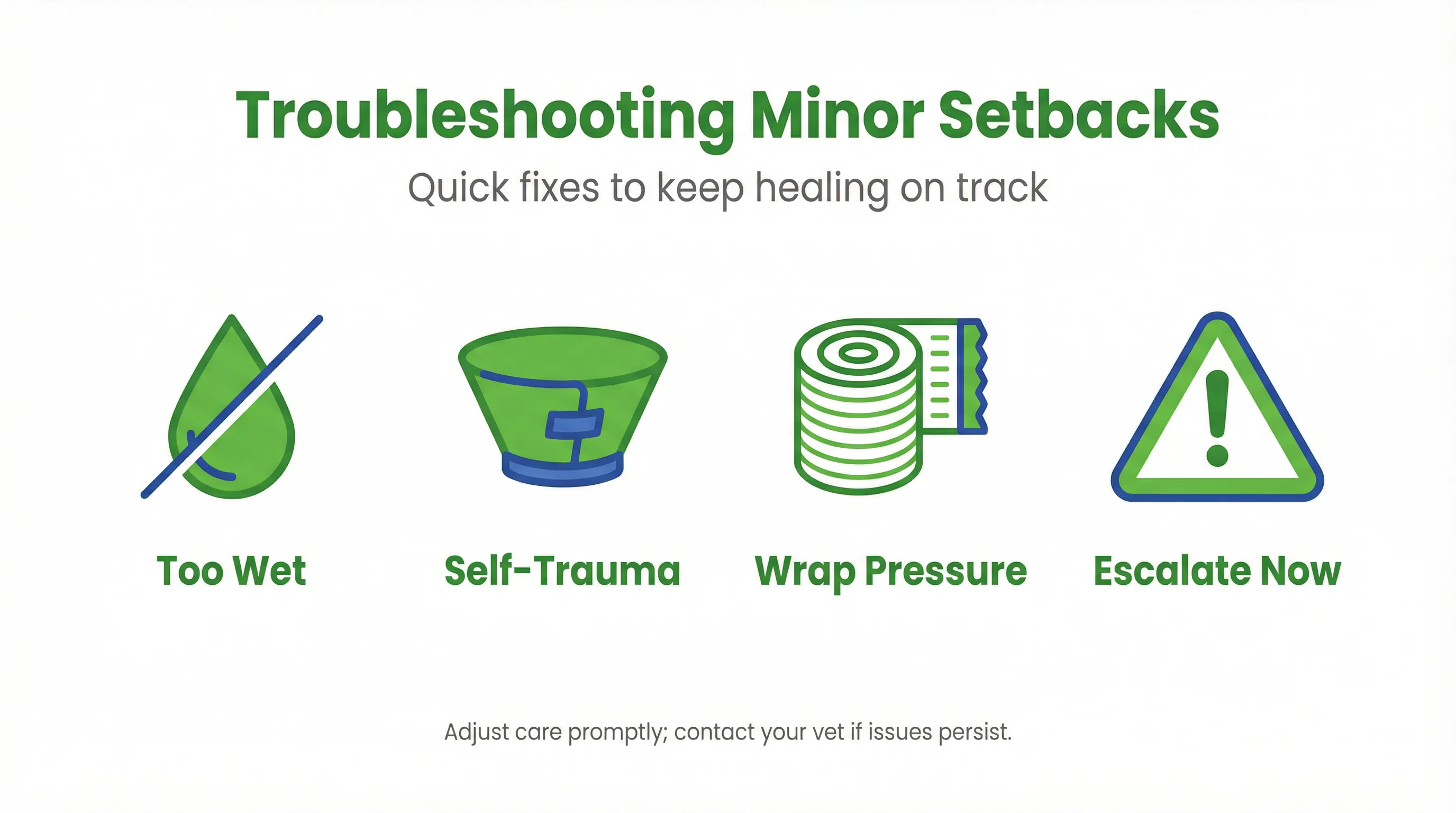
If the skin turns pale, soft, or wrinkled, you may be over‑hydrating the area. Reduce cleaning frequency and improve ventilation. Switch to lighter dressings or brief, supervised air exposure. Persistent odor or purulent discharge suggests infection risk. Escalate to your veterinarian promptly for culture‑guided care.
Licking and scratching control
Use barriers to prevent self‑trauma. Consider booties, cones, or recovery garments. Offer enrichment and short, calm activities to reduce anxiety. Trim nails to limit accidental scratching. Reinforce calm handling during cleaning sessions so restraint remains minimal and safe.
Frequently Asked Questions
Is hypochlorous acid (HOCl) safe for cleaning my dog’s minor wound?
Veterinary‑use HOCl solutions may be safe for intact surrounding skin and superficial wounds when used as directed. Choose pet‑labeled HOCl, avoid homemade mixes, and stop if irritation appears.
How often should I apply HOCl to a small cut or scrape?
Many minor wounds can be flushed or sprayed 2–3 times daily for the first 48–72 hours, then 1–2 times daily as the area improves. Reduce frequency if the skin looks overly moist or macerated.
Can I use HOCl with my dog’s antibiotic ointment or vet‑prescribed meds?
Often yes, but apply HOCl first, allow brief contact time, gently pat dry, then follow your veterinarian’s medication schedule. If directions conflict, follow the vet’s instructions.
What signs mean I should stop home care and see a vet?
Worsening redness, swelling, heat, pain, pus, bad odor, fever, lethargy, bleeding that won’t stop, or wounds near eyes/genitals/joints warrant veterinary evaluation.
Do I need to bandage after using HOCl?
Not always. Small superficial wounds may heal better uncovered if the dog won’t lick. If protection is needed, use breathable, non‑stick dressings and avoid tight or prolonged occlusion.
Conclusion
Cleaning dog wounds with HOCl can be straightforward, gentle, and effective when you select appropriate cases and follow consistent technique. Keep sessions brief, maintain airflow, and reassess progress every few days. At any sign of setback, consult your veterinarian. For broader recovery context and protective gear choices, visit our main injury recovery guide to align home care with safe activity, monitoring, and long‑term healing goals.
References
- M Peters et al. (2025). Dog-to-dog bite wound management-Comparison of the antiseptic efficacy of polyhexanide and hypochlorous acid with regard to reducing the use of …. The Veterinary …. View article
- M Peters et al. (2026). Dog-to-dog bite wound management-Comparison of the antiseptic efficacy of polyhexanide and hypochlorous acid (in two different concentrations) with regard to …. Available at SSRN … - papers.ssrn.com. View article
- D Boecker et al. (2023). Antimicrobial efficacy, mode of action and in vivo use of hypochlorous acid (HOCl) for prevention or therapeutic support of infections. GMS hygiene and …. View article
- MH Gold et al. (2020). Topical stabilized hypochlorous acid: The future gold standard for wound care and scar management in dermatologic and plastic surgery procedures. Journal of cosmetic …. View article


