

Building a Dog First‑Aid Kit for Home, Car, and Trail
Building a Dog First‑Aid Kit for Home, Car, and Trail
A dog first aid kit is only useful if it is ready, right-sized, and easy to deploy. Preparedness supports calm, efficient responses that protect healing momentum. For a fuller framework, see our injury recovery orientation.
This guide distills one evidence-aware packing list into three carry formats. You will learn exactly what to pack, how to rotate supplies, and which dosing tools to include. You will also gain decision prompts, monitoring targets, and safety boundaries.
Focus: One Kit System, Three Sizes (Home, Car, Trail)
Why this matters in the injury recovery journey
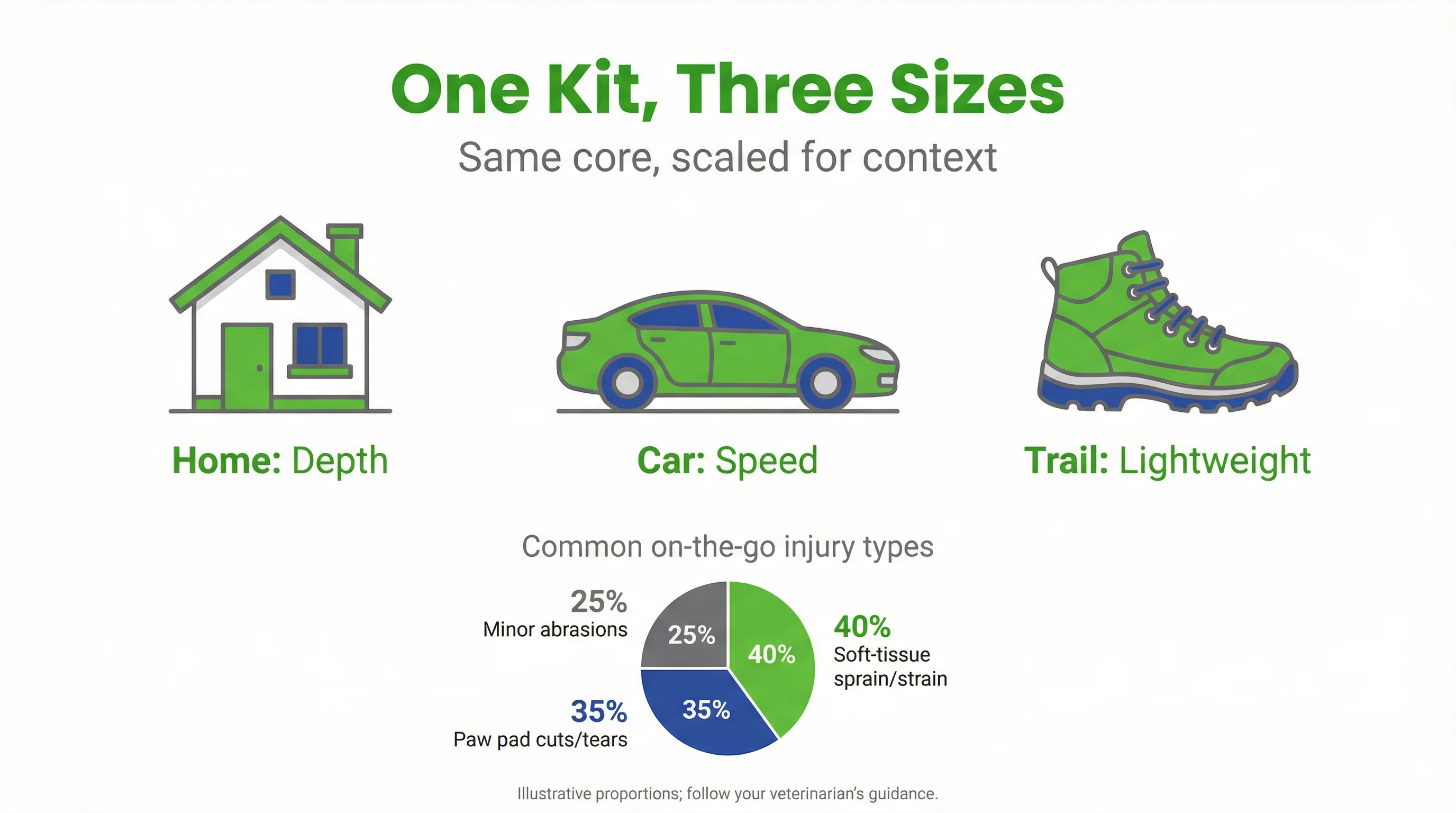
Most canine injuries on the go involve soft tissues, paw pads, and minor trauma. A modular system keeps bleeding control, cleansing, and protection accessible anywhere you are.[1]
How to adapt one core list to three carry formats
Keep the same core items across home, car, and trail. Scale quantities, container sizes, and redundancy. Home holds depth. Car emphasizes speed. Trail prioritizes ultralight, multi-use tools for trail dog first aid.
Exact Checklists by Kit Size
Home kit (full capability)
Purpose: Complete dog wound care and stabilization until veterinary care. Store in a clearly labeled bin.
- HOCl wound cleanser for dogs (8–16 oz) and saline pods; see cleaning dog wounds at home with HOCl.
- Non-stick pads (various sizes), sterile gauze squares, gauze rolls (2–4 in), and cohesive wrap.
- Elastic wrap with integrated gauze and tape; review using elastic leg bandages on dogs.
- Blunt-tip scissors, tweezers, tick tool, nail file, and digital thermometer with probe covers.
- Booties or paw protection to offload and protect; see sizing guidance for fit and scheduling dog boots.
- 2-in-1 eye and ear wash, saline eyewash, cotton rounds, and soft washcloth.
- Oral dosing syringes (1, 3, 5, 10 mL), pill cutter, and labeled containers for vet-approved meds.
- Nitrile gloves, emergency blanket, trauma shears, small flashlight, and instant cold pack.
- Hydration supplies: foldable bowl, oral rehydration packets, and a water jug.
- Lamination pouch with weight-based notes, vet contacts, microchip number, and recent weight.
Car kit (rapid response trunk box)
Purpose: Fast access for roadside injuries and post-trail transitions. Heat-aware storage.
- Travel-size HOCl spray (2–4 oz), saline pods, non-stick pads, 2 gauze rolls, and cohesive wrap.
- One elastic wrap with gauze, small tape roll, and a compact bootie pair.
- Blunt scissors, tweezers, tick tool, 1–3 mL syringes, thermometer, nitrile gloves, and emergency blanket.
- Compact water bottle, fold-flat bowl, and a reflective leash.
- Quick-reference dosing card and vet-only medication placeholders (empty, for pharmacy pick-up).
Many pet owners find Healers Comprehensive First Aid Kit helpful for this task, as it packs pet first aid essentials like HOCl cleanser and eye/ear wash into a durable, portable format.
Trail kit (ultralight pack)
Purpose: Stabilize, protect, and evacuate. Strip redundancy. Favor multi-use items.
- Mini HOCl spray (1–2 oz), 2 saline pods, 4 non-stick pads, and 1 gauze roll.
- 1 cohesive wrap, 1 compact elastic wrap, and lightweight booties.
- Mini tweezers, small blunt scissors, tick tool, 3 mL syringe, gloves, and a space blanket.
- Fold-flat bowl, electrolyte packet, and a small signal whistle or light.
- Writable tape flag with dog’s weight, baseline temp, and vet number.
Rotation Schedules and Storage
Expiry cadence and climate control
Set calendar reminders. Replace opened HOCl, saline, and ointments every 3–6 months in hot cars; heat may degrade efficacy. Store trunk kits in shaded bins. Label everything with month/year stickers.
Quick audit method (5‑minute quarterly check)
Empty each bag. Line items up by category, then restock. Tug-test wraps, check pad counts, and verify batteries. Preparedness audits matter because few owners proactively assemble medical supplies.[4]
Dosing and Measurement Tools
Oral dosing syringes and weight‑based notes
Pack 1, 3, 5, and 10 mL syringes. Record the dog’s current weight and veterinarian-approved mg/kg guidance for specific medications. Add a quick conversion table for mL per dose to avoid mental math under stress.
Marking safe ranges and vet‑only medications
Use labeled containers with “Vet-approved only” tags. Note upper limits and contraindications. Avoid over-the-counter pain relievers unless your veterinarian confirms safety and dosing. Field data emphasize rapid stabilization and early transport over guesswork.[2]
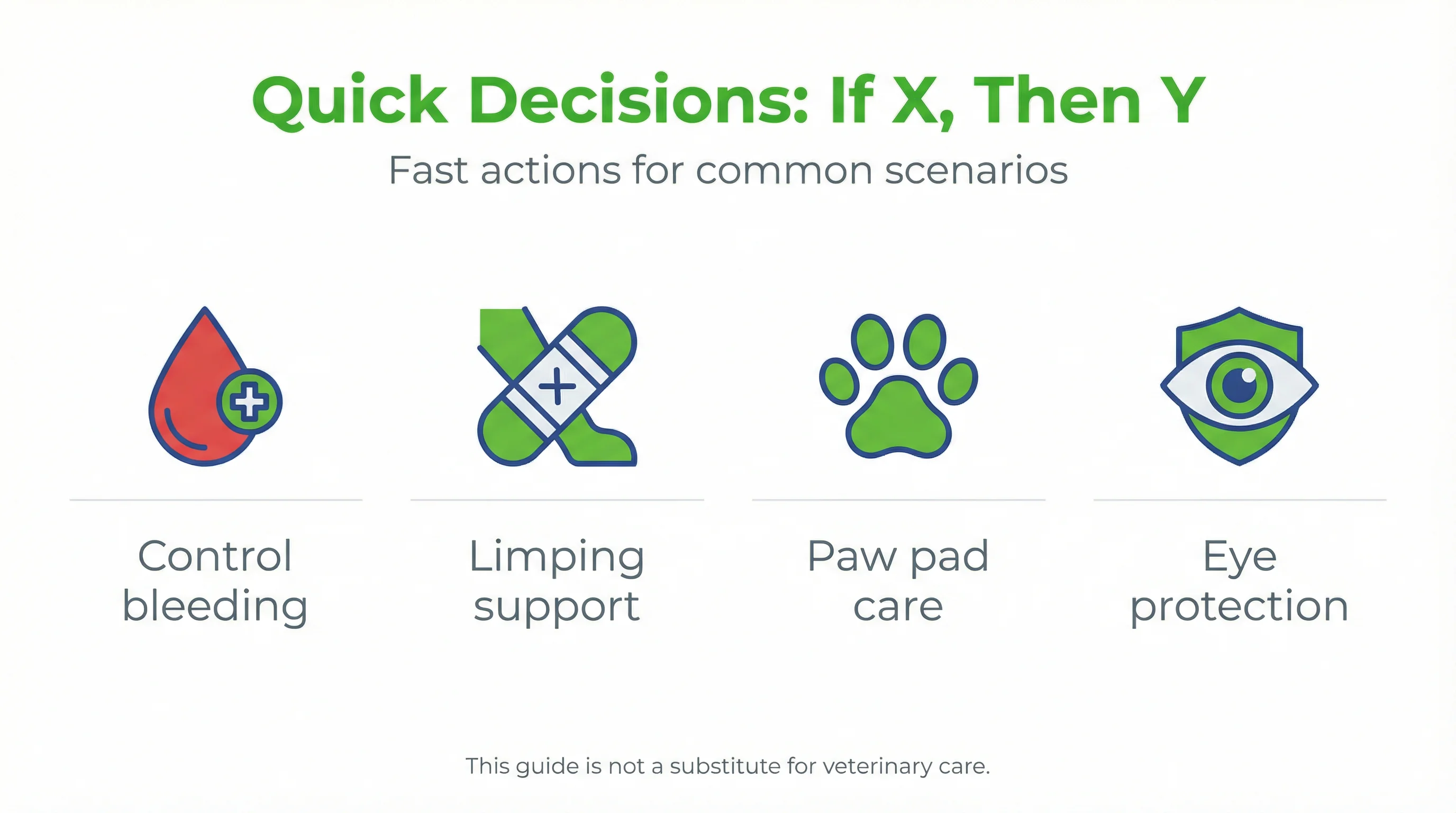
Quick Decision Guide: If X, Then Y
Bleeding, cuts, and paw pad injuries
Apply direct pressure with gauze for 3–5 minutes. Clean with HOCl, pad with non-stick dressing, and secure with cohesive wrap and a bootie. Elevate briefly if tolerated. Reinforce protection during walks.
Sprains and suspected fractures
Leash, minimize movement, and avoid manipulation. Apply a light compression wrap above and below the joint if trained, then stabilize for transport. Avoid tight bandaging that impairs circulation. Seek prompt veterinary assessment.[2]
Hot spots and mild skin irritation
Clip surrounding hair carefully, cleanse with HOCl, and keep dry. Protect from licking with a soft barrier or bootie. If spreading, painful, or foul-smelling, contact your veterinarian for targeted therapy.
Eye debris and ear discomfort
Flush the eye with sterile saline from the inner corner outward. Do not rub. For minor ear debris, use a gentle ear wash. Seek urgent care for squinting, bleeding, or suspected foreign objects.
Heat, cold, and insect stings
Move to shade or warmth. Offer water slowly. Use a cold pack wrapped in cloth for localized swelling. Monitor for facial swelling or breathing changes. Escalate immediately if symptoms progress.
Gastro upset on the road
Provide small sips of water and a rest period. Avoid food until vomiting settles. Track frequency. If vomiting persists, blood appears, or energy plummets, proceed to veterinary evaluation.
When to stop and seek emergency care
Uncontrolled bleeding, deep punctures, eye injuries, collapse, or severe pain warrant immediate transport. Field priorities emphasize hemorrhage control and rapid evacuation for definitive care.[2]
Monitoring Guidance
What to track at 7–14 days
Log wound edges for closure progress, absence of discharge, and reduced swelling. Note gait quality, paw pad tolerance, and skin calmness. Stable or improving metrics suggest home measures may support recovery.
What to reassess at 4–8 weeks
Confirm full return to baseline activity, intact footpads, and durable skin health. Persistent lameness, recurring hot spots, or frequent re-injury indicate that a veterinary recheck and prevention plan may be needed.
Practical Safety Boundaries
Red‑flag symptoms that override home care
Profuse bleeding, deep lacerations, visible bone, severe pain, breathing difficulty, altered consciousness, rapidly spreading swelling, or eye trauma require emergency care. Do not delay transport for prolonged at-home attempts.
Medication and bandaging limits
Avoid unapproved human pain medications; many are unsafe for dogs. Limit compression to snug, not tight; check toes for warmth and color. Evidence suggests over-tight wraps risk ischemia and delayed healing.[1]
Evidence Status: What’s Well‑Supported vs. Emerging
Wound cleansing and dressing principles
Irrigation to remove debris, followed by non-adherent dressings and protected pressure, remains foundational. HOCl solutions may reduce bioburden without tissue damage, supporting timely dog wound care in field settings.[1]
Compression, cold/heat, and anti‑itch care
Early compression may limit swelling in soft-tissue injuries; brief cold application can modulate pain. Avoid heat in acute phases. Anti-itch sprays or barriers may help maintain skin integrity between veterinary evaluations.[2]
Nutritional adjuncts and turmeric
Some caregivers consider anti-inflammatory nutrition as adjunct support. Evidence is mixed, but turmeric preparations may assist comfort in select cases. For context on dosing and safety, see our guide to turmeric paste evidence and dosing before use.
Packing Tips for Home, Car, and Trail
Waterproofing and labeling
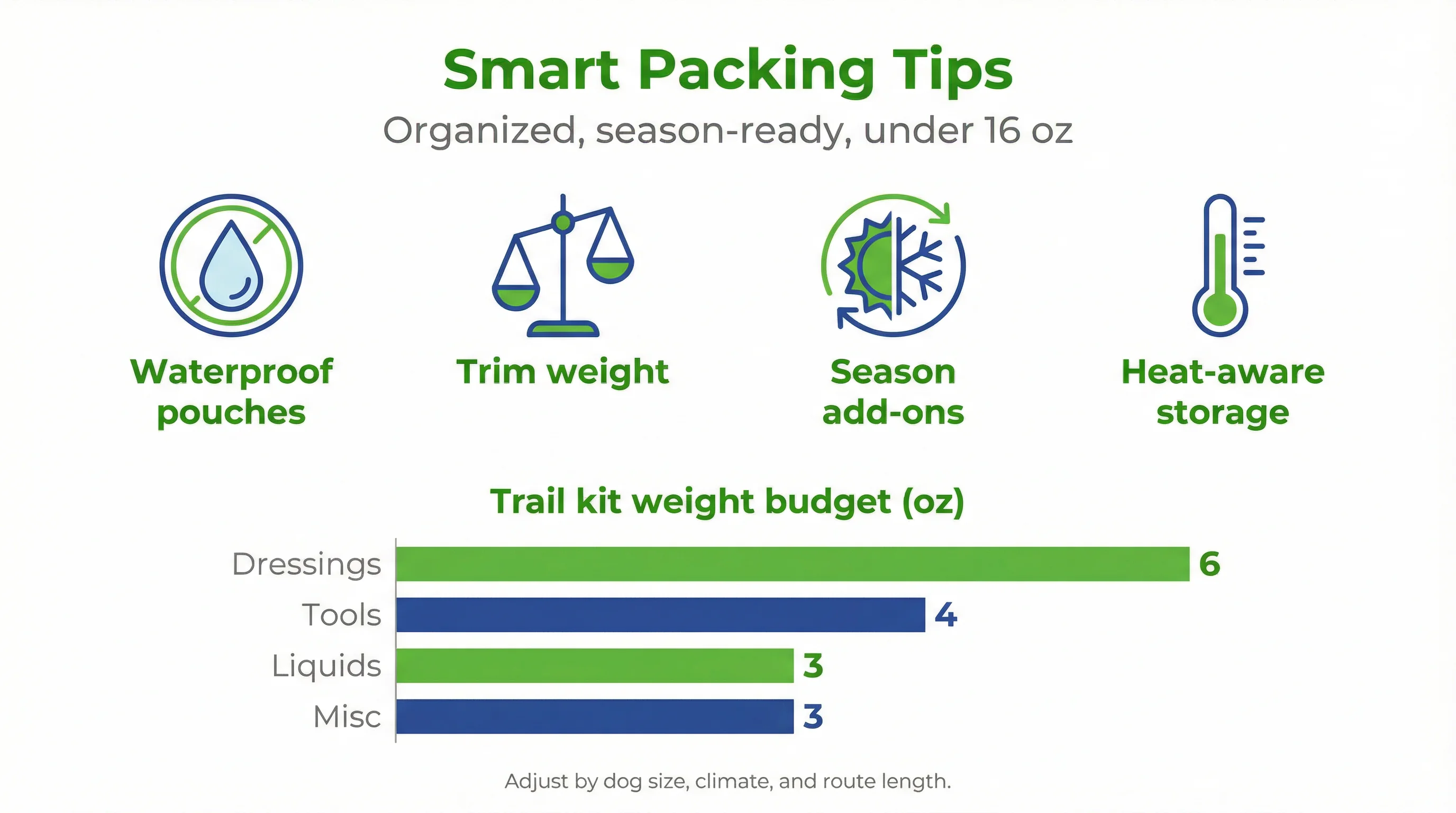
Use waterproof pouches and zip-bags. Color-code by task: red for bleeding control, blue for cleansing, green for tools. Label each pouch’s contents and add a checklist card for rapid restocking.
Weight, redundancy, and seasonal swaps
Keep the trail kit under 16 oz by choosing multi-use items. Add paw salve and extra booties in winter, and more water in summer. Field teams emphasize hydration planning alongside kits.[3]
Appendix: Consolidated Item Lists
Core items shared across kits
- HOCl wound cleanser for dogs, sterile saline pods, non-stick pads, gauze squares, gauze rolls, cohesive wrap.
- Elastic wrap with gauze, medical tape, blunt-tip scissors, tweezers, tick tool, thermometer, and nitrile gloves.
- 2-in-1 eye/ear wash, small flashlight, emergency blanket, oral dosing syringes, and weight-based dosing card.
- Compact booties, foldable bowl, water source, and a leash or slip lead for control.
- Contact card with primary vet, emergency clinic, microchip number, and recent weight.
Add‑ons unique to each kit
- Home: Extra dressings, multiple wraps, trauma shears, clippers, larger HOCl, spare booties, and a dedicated hydration jug.
- Car: Heat-stable trunk bin, reflective leash, instant cold pack, and duplicates of cleansing and wrap items.
- Trail: Ultralight versions, space blanket, electrolyte packet, whistle, and minimal redundancy to conserve pack weight.
Frequently Asked Questions
What should be in a basic dog first‑aid kit?
Include wound cleanser (e.g., HOCl), non‑stick pads, gauze roll, cohesive wrap, blunt‑tip scissors, tweezers, tick tool, antiseptic wipes, saline eye wash, digital thermometer, oral dosing syringe, nitrile gloves, emergency blanket, and a weight‑based dosing card.
How often should I replace items in my dog’s first‑aid kit?
Review quarterly and replace anything expired, opened, or heat‑damaged. Saline, HOCl, ointments, and medications may degrade faster in cars; rotate these every 3–6 months in hot climates.
What’s different about a trail dog first‑aid kit?
A trail kit prioritizes lightweight, multi‑use items such as cohesive wrap, non‑stick pads, a small HOCl spray, booties, a fold‑flat water bowl, and a compact emergency blanket. Redundancy is minimized to fit in a daypack.
Can I use human medications in a dog first‑aid kit?
Some human medications can be unsafe for dogs. Keep a vet‑approved list with weight‑based guidance and avoid giving any medication unless your veterinarian has confirmed dose and safety for your dog.
How do I know when to stop home care and see a vet?
Seek urgent care for uncontrolled bleeding, deep or puncture wounds, eye injuries, altered breathing, collapse, suspected fractures, severe pain, or if symptoms worsen after initial first aid.
Conclusion
One system, three sizes. That approach keeps your canine first aid kit consistent and deployable at home, in the car, and on the trail. Commit to quarterly audits, documented dosing, and clear safety limits. Evidence-informed packing supports confident action and earlier recovery moments. Pair readiness with calm handling, quick protection, and timely veterinary follow-up. Thoughtful preparation turns pet first aid essentials into reliable outcomes—wherever your next steps lead together.
References
- L Palmer (2021). Operational canine. Veterinary Clinics: Small Animal Practice. View article
- EA Kuhl et al. (2023). EMS Canine Tactical Medicine Trauma Survey and Treatment. 2023 - europepmc.org. View article
- D Discepolo et al. (2025). The Working Dog: A Canine Multi-tool that Assists in Rescue, Disease, and Conservation Initiatives. The Palgrave Handbook …. View article
- SE DeYoung et al. (2020). Disaster preparedness among service dog puppy-raisers (human subject sample). Animals. View article


